
Table of Contents >> Show >> Hide
- What Are Polymetallic Nodules?
- Why Would Anyone Compare Ocean Nodules to Batteries?
- The “Dark Oxygen” Discovery: What Scientists Reported
- Why the Battery Idea Is Still Controversial
- Why This Matters for Deep-Sea Mining
- How Could a Rock Behave Like a Battery?
- What We Know, What We Suspect, and What We Do Not Know
- Could Dark Oxygen Change Our View of Life on Earth?
- What Future Research Needs to Prove
- Experiences and Reflections: What This Topic Teaches Us
- Conclusion
Imagine a field of dark, potato-shaped rocks scattered across the deep ocean floor, thousands of feet below sunlight, far beyond beach umbrellas, snorkels, and most human bad decisions. These strange mineral lumps are called polymetallic nodules, and they have become one of the most talked-about objects in modern ocean science. Why? Because they contain metals used in electric vehicle batteries, smartphones, wind turbines, and other clean-energy technologies. But recently, scientists asked a much stranger question: could polymetallic nodules on the ocean floor work like batteries themselves?
The idea sounds like science fiction with a scuba certification. In 2024, researchers reported that oxygen levels increased in experiments conducted on the abyssal seafloor, where no sunlight reaches and photosynthesis should be impossible. They proposed that mineral-rich nodules might generate tiny electric currents capable of splitting seawater molecules and producing oxygen in the dark. This possible phenomenon quickly earned the dramatic nickname “dark oxygen.”
That phrase is catchy enough to make a movie trailer, but the science is more complicated. Some researchers see the finding as a potentially revolutionary clue about deep-sea chemistry, early life on Earth, and the hidden role of minerals in marine ecosystems. Others argue the battery-like explanation is not yet proven and may conflict with basic thermodynamics. In other words, the nodules are fascinating, but they have not yet passed the “please explain exactly how this works” test.
What Are Polymetallic Nodules?
Polymetallic nodules, also known as manganese nodules, are naturally occurring mineral concretions found on parts of the deep seabed. They often look like lumpy black potatoes, though they are less useful in soup and much more interesting to geologists. These nodules form extremely slowly over millions of years as dissolved metals in seawater and sediment accumulate around small nuclei, such as shell fragments, shark teeth, or older mineral particles.
Their chemistry is the reason they attract so much attention. Polymetallic nodules commonly contain manganese, nickel, cobalt, copper, iron, and other trace metals. These are not random ingredients from the periodic table’s junk drawer. Nickel and cobalt are important in many rechargeable battery chemistries. Copper is essential for electrical wiring and renewable-energy infrastructure. Manganese is used in steelmaking and certain battery technologies. That makes the nodules both scientifically intriguing and economically tempting.
Some of the richest nodule fields are found in the Clarion-Clipperton Zone, a vast region of the Pacific Ocean between Hawaii and Mexico. This zone has become a focal point for deep-sea mining discussions because it contains enormous quantities of metal-rich nodules lying on or just under the sediment. To mining companies, the seafloor looks like a future supply chain. To many marine scientists, it looks like a fragile ecosystem that we barely understand.
Why Would Anyone Compare Ocean Nodules to Batteries?
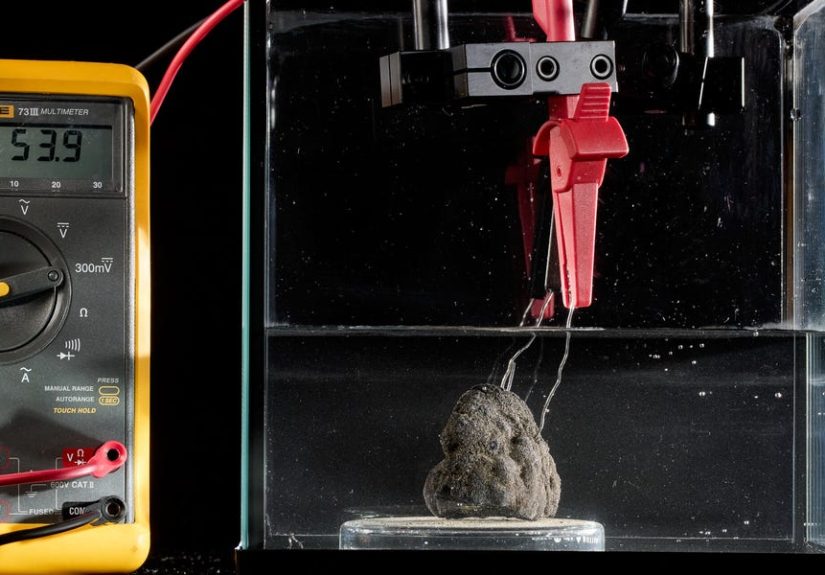
A battery works by moving electrons through chemical reactions. It has materials with different electrochemical properties, an electrolyte, and a path for charge to move. Polymetallic nodules are made of mixed metal oxides, and they sit in seawater, which contains dissolved salts and ions. That setup naturally raises a fascinating question: could these rocks create small voltage differences the way different metals in a battery cell do?
In the controversial “dark oxygen” hypothesis, nodules may act like natural electrochemical systems. The proposed idea is that the mineral surfaces create tiny electric potentials. If strong enough, those potentials could theoretically drive reactions that split water into oxygen and hydrogen, a process known as electrolysis. It is a neat idea because the nodules contain many metals already associated with battery technology. The same metals wanted for human-made batteries might also be involved in natural electrochemical behavior on the seafloor.
However, “could” is doing a lot of heavy lifting here. Measuring voltage on a mineral surface is not the same thing as proving that a rock is splitting seawater at meaningful rates. Electrolysis requires enough energy, the right conditions, and evidence of the expected products. If oxygen is produced, scientists would also expect related chemical signals, such as hydrogen or other reaction products. Without those pieces, the battery comparison remains an intriguing metaphor rather than a settled mechanism.
The “Dark Oxygen” Discovery: What Scientists Reported
The excitement began when researchers studying the abyssal seafloor reported an unexpected rise in oxygen inside benthic chamber experiments. These chambers are placed on the seafloor to measure how much oxygen marine organisms and sediments consume. Normally, oxygen levels should decline because deep-sea animals, microbes, and chemical processes use oxygen. Instead, in some experiments, oxygen appeared to increase.
That result was surprising because the seafloor at depths of around 13,000 feet or more is completely dark. No sunlight means no photosynthesis, the process most people associate with oxygen production. The researchers proposed that polymetallic nodules might be responsible for generating oxygen through an electrochemical process. Suddenly, the humble seafloor nodule went from “weird mineral potato” to “possible natural battery with a secret oxygen side hustle.”
If confirmed, the implications would be enormous. It could change how scientists think about oxygen sources in deep environments. It might also influence debates about deep-sea mining, because removing nodules could disturb not only physical habitat but also unknown chemical processes. The finding even stirred speculation about early Earth and icy worlds beyond our planet, where sunlight is absent but minerals and water may interact in unexpected ways.
Why the Battery Idea Is Still Controversial
The best science usually comes with excitement in one hand and a fire extinguisher in the other. After the original report, other researchers raised serious questions. Critics argued that the electrolysis explanation may not have enough energy behind it. Splitting water is not easy; nature does not hand out free oxygen like samples at a grocery store.
Some scientists have also questioned whether the oxygen rise could have been caused by experimental artifacts. Deep-sea measurements are difficult. Equipment must survive crushing pressure, cold temperatures, long deployments, and the general inconvenience of being on a planet mostly covered by water. A trapped air bubble, sensor drift, chamber ventilation issue, or unaccounted chemical reaction could potentially create confusing data.
Another major concern is reproducibility. Extraordinary claims need repeated confirmation by independent teams using carefully controlled methods. If polymetallic nodules really produce oxygen in the dark, future studies should be able to detect the process again, measure the chemical pathway, and identify the energy source. Until then, the careful answer is: polymetallic nodules might show battery-like electrochemical behavior, but whether they produce dark oxygen through electrolysis remains unproven.
Why This Matters for Deep-Sea Mining
The question is not just academic. Polymetallic nodules are at the center of a global debate over deep-sea mining. Supporters argue that harvesting nodules could provide critical minerals for clean-energy technologies while reducing reliance on some land-based mining operations. They point to the demand for nickel, cobalt, copper, and manganese as the world builds more batteries and electrifies transportation.
Opponents argue that deep-sea mining could damage ecosystems that are slow-growing, poorly studied, and difficult to restore. Nodule fields are not empty rock gardens. They provide habitat for deep-sea organisms, including sponges, corals, small invertebrates, microbes, and animals that may depend on hard surfaces in an otherwise muddy abyss. Remove the nodules, and you may remove the only apartment buildings in a very dark neighborhood.
Mining machines could also stir sediment plumes, create noise and light pollution, crush organisms, and alter seafloor chemistry. Because nodules grow over geological timescales, a mined area would not simply bounce back next season like a lawn after rain. Recovery could take decades, centuries, or longer. If nodules are also involved in unknown oxygen-related chemistry, the environmental stakes become even higher.
How Could a Rock Behave Like a Battery?
To understand the battery comparison, picture a simple classroom experiment: stick two different metals into a lemon and connect them with a wire. The lemon’s juice acts as an electrolyte, allowing ions to move, while the metals create a voltage difference. Congratulations, you have made a tiny battery and possibly ruined a perfectly good lemon.
On the ocean floor, the situation is much more complex. Polymetallic nodules contain layers of different metal oxides. Seawater and porewater in sediment contain ions. Microbes may influence chemical reactions at mineral surfaces. Gradients in oxygen, pH, and dissolved metals can create small electrochemical differences. In theory, these conditions could allow electron transfer reactions to occur naturally.
But a natural electrochemical reaction is not automatically the same as a useful battery or an oxygen factory. A battery must have a sustained energy source and a complete reaction pathway. If nodules generate small voltages, scientists still need to determine whether those voltages are strong enough to drive water splitting under deep-sea conditions. They also need to know whether the process occurs at meaningful rates across large areas or only appears under certain experimental setups.
What We Know, What We Suspect, and What We Do Not Know
What We Know
We know polymetallic nodules exist in large numbers across certain abyssal plains. We know they contain metals valuable to battery and clean-energy industries. We know they form very slowly and can serve as habitat for deep-sea life. We also know that measuring oxygen on the deep seafloor is technically challenging and scientifically important.
What Scientists Suspect
Some researchers suspect that nodules may participate in electrochemical reactions that have been underestimated. They may interact with seawater, sediment chemistry, microbes, and oxygen in ways that are not yet fully mapped. Even if the strongest “natural battery” claim turns out to be wrong, the debate may still reveal new details about mineral-driven chemistry in the deep ocean.
What Remains Unknown
The biggest unknown is whether polymetallic nodules truly generate oxygen in the dark through electrolysis. Scientists also need to determine whether any observed oxygen increases are biological, chemical, physical, or experimental in origin. Future missions will need better controls, more sensors, measurements of hydrogen and related chemistry, and independent replication across multiple sites.
Could Dark Oxygen Change Our View of Life on Earth?
If dark oxygen production is confirmed, it could open a new chapter in the story of life. Oxygen is central to complex life on Earth, but most oxygen production is associated with photosynthesis. A light-free oxygen source would suggest that some environments may produce oxygen without plants, algae, or cyanobacteria. That would be a big deal for understanding deep-sea ecosystems and possibly early Earth environments before oxygen became abundant in the atmosphere.
It could also influence astrobiology. Scientists studying icy moons such as Europa or Enceladus are interested in how water, minerals, and chemical energy might support life without sunlight. A mineral-driven oxygen process on Earth’s seafloor would give researchers another model for thinking about habitability beyond our planet. Of course, that is a long leap from “odd oxygen readings in a chamber” to “aliens have mineral batteries,” so let’s keep our helmets on.
Even if the dark oxygen hypothesis is revised or rejected, the debate is useful. Science advances not only through discoveries but also through challenges, corrections, and better experiments. Sometimes a bold idea survives. Sometimes it gets replaced by a more accurate explanation. Either way, the ocean gets a little less mysterious, which is impressive considering it still hides creatures that look like they were designed during a fever dream.
What Future Research Needs to Prove
For the battery-like nodule idea to become widely accepted, future studies must answer several questions. First, can oxygen production be repeatedly measured in natural nodule fields under well-controlled conditions? Second, are nodules directly responsible, or are microbes, sediments, sensors, or chamber effects involved? Third, is there enough voltage and available energy to split water? Fourth, are hydrogen or other expected reaction products present?
Researchers will also need to compare nodule-rich and nodule-poor areas, test different nodule compositions, and study how sediment disturbance changes oxygen chemistry. Ideally, independent teams should run similar experiments using different equipment. The deep ocean is not an easy laboratory, but this is exactly why careful confirmation matters.
The outcome could reshape environmental assessments for deep-sea mining. If nodules perform important chemical or ecological functions, removing them would have consequences beyond the loss of minerals and habitat. If the oxygen result is an artifact, policymakers still need to consider biodiversity, sediment plumes, slow recovery, and the ethical challenge of industrializing one of Earth’s least understood environments.
Experiences and Reflections: What This Topic Teaches Us
Thinking about polymetallic nodules as possible natural batteries offers a powerful lesson in humility. For decades, many people imagined the abyssal seafloor as a cold, empty plain where not much happened. That view has been fading for years. The deep ocean is not empty. It is active, strange, delicate, and full of life adapted to conditions that would make humans file a formal complaint with the universe.
One useful experience related to this topic is the feeling of seeing an ordinary object become extraordinary under scientific attention. A nodule is not shiny like gold, dramatic like a volcano, or charismatic like a dolphin. It is a dark lump sitting quietly in mud. Yet inside that lump is a record of ocean chemistry stretching across millions of years. Around it may be microbes, tiny animals, and chemical reactions we are only beginning to understand. The lesson is simple: nature often hides its most interesting machinery inside things that look boring at first glance.
This topic also shows why environmental decisions should not be rushed just because a resource is valuable. Battery metals are important. Climate technology is important. But “important” does not automatically mean “dig first, understand later.” The clean-energy transition needs materials, but it also needs wisdom. If solving one environmental problem creates another in a remote ecosystem, the solution starts looking less clean and more like sweeping dust under a very deep rug.
Another experience is the way this debate captures how science actually works. Public headlines often make discoveries sound final: “Ocean rocks make oxygen!” Then follow-up studies arrive, critics respond, and suddenly the story becomes messier. That messiness is not failure. It is the process. A strong scientific claim must survive skepticism. The dark oxygen debate is a reminder that uncertainty is not the enemy of knowledge; it is the doorway through which better knowledge enters.
For students, writers, ocean lovers, and clean-tech readers, polymetallic nodules are a perfect case study in connected thinking. They link geology, chemistry, biology, engineering, climate policy, mining economics, and ethics. A single rock on the seafloor can lead to questions about electric cars, marine biodiversity, the origin of oxygen, and whether humans should extract resources from places we have barely visited. That is a lot of responsibility for something shaped like a burnt meatball.
The most practical takeaway is this: polymetallic nodules may or may not work like batteries in the oxygen-producing sense, but they definitely work like warning lights. They warn us that the deep sea is more complex than our business plans. They warn us that clean technology still depends on physical materials with real environmental footprints. And they warn us that before we remove ancient structures from the ocean floor, we should know what roles those structures play.
So, could polymetallic nodules on the ocean floor work like batteries? The honest answer is: possibly in some electrochemical ways, but the strongest claim remains under investigation. They are mineral archives, potential resources, habitats, and scientific puzzles. Whether they are also natural oxygen-making batteries is a question that future research must settle with better data. Until then, these deep-sea nodules deserve attention, caution, and maybe a little respect. After all, any rock that can start a global scientific argument from 13,000 feet underwater is clearly not just sitting there doing nothing.
Conclusion
Polymetallic nodules are among the most fascinating objects in the deep ocean. They contain metals essential to modern battery technology, form over immense timescales, and support ecosystems that remain poorly understood. The idea that they might behave like natural batteries and produce “dark oxygen” is exciting, but it is not yet proven. Current evidence has sparked both scientific curiosity and serious criticism, especially around whether electrolysis is physically plausible under abyssal conditions.
The smartest position is neither hype nor dismissal. Polymetallic nodules may hold important clues about deep-sea chemistry, but more research is needed before scientists can say exactly what they do. As deep-sea mining debates continue, one thing is clear: the ocean floor is not a lifeless storage room for battery metals. It is a living, chemical, geological frontier. Before humanity starts collecting its mineral potatoes, we should understand the garden.





 Close
Close