
Table of Contents >> Show >> Hide
- What Is the Cube Chair (+Subtraction)?
- The Meaning Behind “+Subtraction”
- RO/LU and the Spirit of Plain Design
- The R.M. Schindler Connection
- Why Plywood Works So Well
- How the Chair Balances Sculpture and Function
- Where the Cube Chair (+Subtraction) Fits in Interior Design
- Styling Tips for a Cube Chair-Inspired Space
- What Designers Can Learn From the Cube Chair (+Subtraction)
- Is the Cube Chair (+Subtraction) Comfortable?
- Collector Appeal and Design Value
- Cube Chair (+Subtraction) as a Design Metaphor
- Experiences Related to the Cube Chair (+Subtraction)
- Conclusion
The Cube Chair (+Subtraction) is the kind of furniture piece that makes people stop mid-sentence and ask, “Wait, is that a chair, a sculpture, or a very confident plywood box?” The answer is yes. Designed by RO/LU, the Minneapolis-based art and design studio known for turning plain materials into surprisingly poetic objects, this chair belongs to that fascinating category where furniture design, architecture, math, and visual wit all sit down together for coffee.
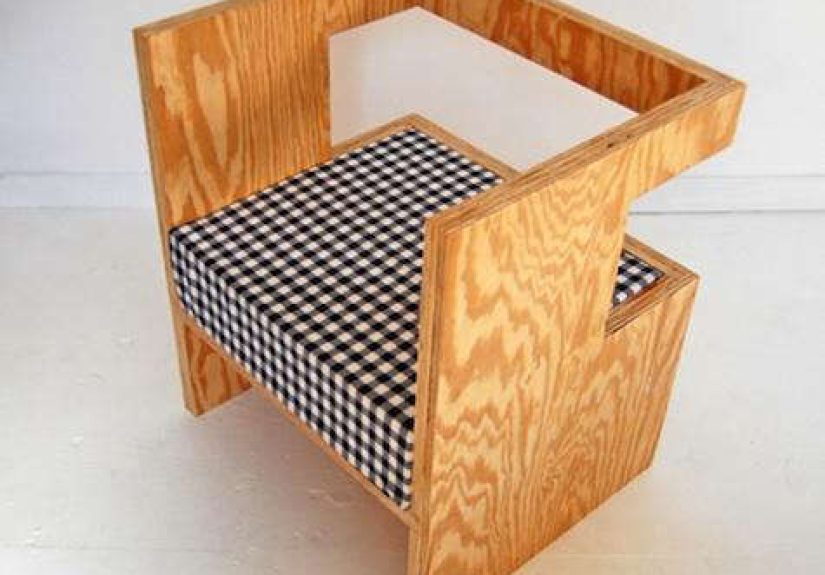
At first glance, the Cube Chair (+Subtraction) looks simple: a blocky plywood lounge chair with a cushion and a strong geometric attitude. But the longer you look, the more it reveals. Its name gives away the trick. “Cube” refers to its box-like structure and spatial discipline. “Subtraction” refers to the design move that makes it special: a portion of the cube has been removed, creating a seat, an opening, and a new relationship between mass and void. In other words, this chair is not just built; it is edited.
That editing is what gives the chair its charm. Many chairs are designed by adding parts: legs, arms, backrests, stretchers, upholstery, decorative trim, and sometimes enough hardware to make a hardware store blush. The Cube Chair (+Subtraction) works in the opposite direction. It begins with a strong, almost architectural volume, then subtracts from it until the remaining form becomes useful, sculptural, and surprisingly approachable.
What Is the Cube Chair (+Subtraction)?
The Cube Chair (+Subtraction) is a handmade plywood lounge chair created by RO/LU around 2010. The piece is associated with the studio’s early furniture experiments, which often used ordinary construction materials such as plywood and oriented strand board to explore modernist ideas in an informal, approachable way. The chair includes a thick cushion, giving its otherwise severe geometry a softer, more livable personality.
Its visual language is intentionally direct. There is no hidden ornament, no fussy carving, no attempt to disguise the material. The plywood is allowed to look like plywood. The sides are broad and planar. The chair’s geometry feels measured, almost diagrammatic, as if someone took a cube, gave it a design-school pep talk, and carved out the minimum amount needed to make it comfortable.
That is the beauty of the concept. The Cube Chair (+Subtraction) does not try to look luxurious in the conventional sense. Instead, it feels thoughtful. It suggests that good design can come from proportion, balance, structure, and restraint. It is not loud, but it is memorable. It does not beg for attention; it quietly rearranges the room’s entire mood.
The Meaning Behind “+Subtraction”
The phrase “+Subtraction” sounds playful because it is. It combines addition and removal into one idea. The plus sign suggests design action, while subtraction describes the method. The result is a chair that feels like a small architectural lesson: sometimes what you remove is just as important as what you add.
In furniture design, subtraction can make an object feel lighter, more useful, and more expressive. A solid block becomes a chair when space is taken away. A square volume becomes inviting when an opening appears. A rigid form becomes human when it acknowledges the body. This is the quiet intelligence of the Cube Chair (+Subtraction): it uses absence as a feature.
The concept also makes the chair unusually photogenic. From some angles, it reads as a chunky modern lounge chair. From others, it becomes a study in negative space. Seen directly from the front, the proportions can create a strong square composition, turning the chair into something between furniture and a graphic symbol.
RO/LU and the Spirit of Plain Design
RO/LU began as a landscape-focused practice and later expanded into furniture, public art, architecture-related projects, writing, performance, and other experimental forms. That background matters because the studio’s furniture often feels less like isolated product design and more like a spatial proposal. The chair is not only a place to sit; it is a way of thinking about space.
The studio’s work has often been described as open, concept-driven, and connected to modernist influences. RO/LU’s furniture does not usually chase slick perfection. Instead, it embraces directness. The pieces can look raw, unfinished, or intentionally plain, but that plainness is not laziness. It is a design position. It says: let the form, material, and idea do the heavy lifting.
With the Cube Chair (+Subtraction), that philosophy is easy to see. The chair uses plywood, a material associated with construction, utility, affordability, and modern experimentation. Rather than hiding it under a polished skin, the design lets plywood carry the personality of the object. The material becomes part of the story.
The R.M. Schindler Connection
The Cube Chair (+Subtraction) draws inspiration from the work of architect R.M. Schindler, one of the major figures in early California modernism. Schindler’s architecture and furniture often explored modularity, compact living, built-in forms, and bold experiments with space. His chairs and interiors were not merely decorative; they were connected to the architecture around them.
This influence helps explain why the Cube Chair (+Subtraction) feels architectural. It is not a chair that wants to disappear under a dining table. It has presence. It occupies space like a tiny building. Its planes, openings, and proportions make it feel as though it could belong in a modernist house, an art gallery, a design studio, or a carefully edited living room where every object has earned its spot.
Schindler’s furniture also reminds us that chairs can be experiments. They do not always need to follow the familiar formula of four legs, a back, and a polite smile. A chair can be a volume. A chair can be a frame. A chair can be a spatial puzzle that happens to support a human being.
Why Plywood Works So Well
Plywood is one of the great democratic materials of modern design. It is practical, strong, relatively efficient, and visually honest. Designers have used it for everything from humble utility furniture to museum-worthy modernist icons. In the Cube Chair (+Subtraction), plywood supports both the concept and the construction.
The layered edge of plywood adds subtle visual rhythm. The broad surfaces create a clean geometric presence. The material is sturdy enough to make the chair feel grounded, but it also keeps the piece from becoming overly precious. This is not velvet-and-gold furniture that whispers, “Please do not touch me.” It is a chair that looks like it understands work, tools, dust, and real rooms.
That said, the Cube Chair (+Subtraction) is not just a DIY box with a cushion tossed on top. Its proportions are carefully considered. The angles, openings, and scale all contribute to the experience. The chair uses a familiar material but elevates it through composition.
How the Chair Balances Sculpture and Function
One of the most interesting things about the Cube Chair (+Subtraction) is that it lives in the gray area between art object and usable furniture. It is functional, but it is not anonymous. It invites sitting, but it also invites looking. That dual role makes it especially appealing to collectors, designers, architects, and anyone who likes furniture with a little intellectual mischief.
As a lounge chair, it offers a low, grounded seating experience. The cushion softens the plywood structure, creating contrast between hard and soft, square and yielding, object and body. The chair’s mass gives it a stable, anchored presence. It does not look like it will scoot across the floor every time someone sneezes nearby.
As a sculptural object, it creates a strong focal point. It can sit alone in a corner and still feel complete. It can pair with a minimal side table, a stack of art books, or a simple floor lamp. In the right room, it becomes the kind of piece guests ask about before they ask where the bathroom is.
Where the Cube Chair (+Subtraction) Fits in Interior Design
Minimalist Interiors
In a minimalist room, the Cube Chair (+Subtraction) feels right at home. Its clean geometry, visible material, and lack of unnecessary decoration align beautifully with pared-back interiors. Place it near a white wall, polished concrete floor, or simple wool rug, and it becomes a calm but powerful anchor.
Modern Rustic Spaces
The chair also works well in modern rustic settings. Plywood brings warmth, especially when paired with natural fibers, ceramics, linen, and warm lighting. The form is modern, but the material keeps it from feeling cold. It is the furniture equivalent of a very smart person wearing work boots.
Creative Studios and Offices
For design studios, galleries, and creative offices, the Cube Chair (+Subtraction) communicates taste without looking corporate. It says, “Ideas happen here,” which is much better than the usual office chair message: “My wheels are clogged with carpet lint.”
Gallery-Like Homes
In homes that treat furniture as collectible design, the chair can function almost like a small installation. It has enough conceptual strength to stand alone, yet it remains practical enough to justify its footprint. That balance is rare and valuable.
Styling Tips for a Cube Chair-Inspired Space
Because the Cube Chair (+Subtraction) is visually bold, it benefits from thoughtful styling. The goal is not to bury it under pillows until it looks like a confused sofa. Let the geometry breathe.
Start with contrast. A soft rug can balance the hard plywood lines. A round side table can soften the cube-like structure. A sculptural lamp can echo the chair’s artistic personality without competing with it. Keep nearby colors restrained if you want the chair to remain the star, or use one strong accent color if your room can handle a little drama.
Books also work beautifully with this kind of chair. Architecture monographs, design magazines, and art catalogs reinforce the piece’s intellectual side. A small stack nearby makes the setting feel intentional, not staged. Just avoid piling so many books around it that the chair becomes a shrine to your unread ambitions.
What Designers Can Learn From the Cube Chair (+Subtraction)
The Cube Chair (+Subtraction) offers several useful lessons for designers, makers, and design students. First, a strong concept can guide every decision. The idea of subtracting from a cube gives the chair a clear logic. Nothing feels random.
Second, simple materials can produce sophisticated results. Plywood is not exotic, but in the right hands it becomes expressive. The chair proves that material honesty can be more compelling than decorative excess.
Third, proportion matters. A cube-inspired chair can easily become bulky or awkward. The success of this design depends on careful relationships between width, depth, height, opening, and cushion. Geometry may look simple, but it is not forgiving. A bad proportion announces itself immediately, usually with the confidence of a karaoke singer who missed every note.
Finally, the piece shows the power of negative space. The removed section is not empty in a boring way. It is active. It defines the object, creates function, and gives the chair its identity.
Is the Cube Chair (+Subtraction) Comfortable?
Comfort in conceptual furniture is always an interesting question. The Cube Chair (+Subtraction) is not designed like a plush recliner that swallows you whole and steals your afternoon. It is more structured, more upright, and more spatially defined. The cushion adds comfort, while the plywood frame gives support and presence.
This makes the chair best suited for intentional lounging, reading, conversation, or display seating. It is the kind of chair you sit in with a book, a coffee, or a strong opinion about modern design. It may not replace the family sectional for movie night, but that is not its job. Its job is to make sitting feel designed.
Collector Appeal and Design Value
The Cube Chair (+Subtraction) has appeal beyond everyday use because it belongs to the collectible design world. RO/LU’s work has appeared in gallery, fair, and auction contexts, and the Cube Chair (+Subtraction) has been associated with design exhibitions and secondary-market sales. That history gives the chair cultural value as well as visual value.
Collectors are often drawn to pieces that tell a story. This chair does exactly that. It connects a Minneapolis design studio, modernist architecture, plywood experimentation, conceptual furniture, and the simple but powerful act of subtraction. That is a lot of narrative packed into one seat.
For design lovers, owning or even studying the chair is less about having another place to sit and more about engaging with an idea. It is furniture as conversation starter, design lesson, and sculptural presence.
Cube Chair (+Subtraction) as a Design Metaphor
The chair also works as a metaphor for good creative work. Many projects improve not when we add more, but when we remove the unnecessary. A room becomes calmer when clutter disappears. A sentence becomes stronger when extra words leave the party. A chair becomes clearer when a cube is cut down to its essential relationships.
That is why the Cube Chair (+Subtraction) feels relevant even years after its creation. It speaks to a broader design truth: restraint is not emptiness. Simplicity is not the absence of thought. In many cases, simplicity is what remains after the thinking gets serious.
Experiences Related to the Cube Chair (+Subtraction)
Encountering a chair like the Cube Chair (+Subtraction) in person can be surprisingly different from seeing it in a photograph. Online, it may look like a clever plywood object. In a room, it becomes more physical. You notice the thickness of the material, the shadows inside the cut-out space, the way the cushion changes the severity of the form, and the way people instinctively circle it before sitting down. It has that rare quality of making visitors behave like polite detectives.
One common experience with cube-like furniture is the initial uncertainty. People often hesitate before using it. Is it art? Is it allowed? Will an alarm go off if someone sits down? That hesitation is part of the fun. The chair challenges the automatic assumptions we have about domestic objects. Most chairs explain themselves immediately. This one makes you look twice, then rewards you for paying attention.
In a living room, a Cube Chair-inspired piece can change how people gather. Because it has a strong orientation and sculptural mass, it does not fade into the background like ordinary accent seating. It creates a destination. Someone may sit in it during a conversation and suddenly become the unofficial panel moderator. That is the subtle power of furniture with presence: it shapes behavior without shouting instructions.
Design students often respond to the chair as a lesson in restraint. It is easy to design by addition because adding feels productive. Add a curve, add a leg detail, add a color, add a pattern, add another idea because the first five were apparently lonely. The Cube Chair (+Subtraction) suggests a more disciplined path. Start with a clear form. Remove what is needed. Let the remaining structure speak. That lesson applies to furniture, interiors, writing, branding, architecture, and honestly, packing for a weekend trip.
For makers, the chair also sparks practical curiosity. How are the panels joined? How does the cushion sit? How does the scale affect comfort? What happens if the material changes from plywood to solid wood, metal, recycled plastic, or cork? The concept is strong enough to inspire variations, yet specific enough that careless copying would miss the point. The magic is not merely “box plus hole.” The magic is proportion, intention, and the relationship between body and volume.
In everyday use, a chair like this encourages slower attention. You become more aware of posture, material, and space. You notice how light moves across flat plywood. You notice how the removed section creates shadow. You notice how a simple cushion can make a severe object feel welcoming. These small observations are part of the pleasure of living with thoughtful design.
The Cube Chair (+Subtraction) also teaches that playful design does not have to be childish. Its name is witty, its form is clever, and its concept is almost mathematical, but the final object remains elegant. It has humor without becoming a novelty. That balance is difficult to achieve. Too much seriousness and a chair becomes intimidating. Too much joke and it becomes furniture that feels funny once and annoying forever. RO/LU’s design sits comfortably between the two.
Ultimately, the experience of the Cube Chair (+Subtraction) is about seeing ordinary things differently. A cube becomes a chair. Plywood becomes collectible design. A missing piece becomes the main idea. That is the kind of design that stays with you, not because it is complicated, but because it makes simplicity feel alive.
Conclusion
The Cube Chair (+Subtraction) is more than a plywood lounge chair with a clever name. It is a compact argument for clarity, material honesty, and the creative power of removal. Inspired by modernist thinking and shaped by RO/LU’s experimental practice, the chair turns a basic geometric volume into something functional, sculptural, and memorable.
Its appeal comes from contrast: hard plywood and soft cushion, cube and void, utility and art, seriousness and play. It proves that a chair can be both practical and philosophical without becoming unbearable at dinner parties. For designers, collectors, and anyone who loves furniture with a story, the Cube Chair (+Subtraction) remains a smart example of how subtraction can add meaning.
Note: This article is written for web publication in original wording and synthesized from reputable design, gallery, auction, museum, and architecture references. Source links are intentionally not included in the body copy.







 Close
Close