
Table of Contents >> Show >> Hide
- First, who is “Gary” in Pokemon Red and Blue?
- Why the “Dead Raticate” theory exists at all
- The timeline: S.S. Anne to Pokemon Tower (the “missing rat window”)
- The case for “Yes, the Raticate died”
- The case against it: why the theory isn’t canon (and probably isn’t true)
- 1) The “Pokemon die” quote is a misquote
- 2) Battles are framed as “fainting,” not dying
- 3) The simplest explanation is also the most boring: he boxed it
- 4) There’s also a practical in-world reason: Pokemon Tower is packed with Ghost-types
- 5) Team design: rival battles are built for variety and pacing
- 6) Even fan explainers usually admit it’s not “very likely”
- So… did Gary’s Raticate really die?
- Why this fan theory refuses to faint
- Player Experiences: how the “Dead Raticate” rumor lives in the wild
- Conclusion
If you played Pokemon Red and Blue in the era of link cables, bedtime limits, and suspiciously sticky Game Boy buttons, you’ve probably heard the rumor:
you didn’t just beat your rivalyou killed his Raticate. And then he showed up in the Pokemon Tower (the franchise’s spookiest real estate listing)
to mourn it… or maybe to settle the score with the unblinking fury of a kid whose rodent got “perma-fainted.”
It’s one of the most famous Gen 1 fan theories because it feels like it should be true: the timing lines up, the location is a graveyard, the missing Pokemon is real,
and the vibes in Lavender Town are already doing the most. But here’s the real question: does the game actually support “Raticate died,” or are we just projecting
true-crime energy onto an 8-bit rat with big teeth?
First, who is “Gary” in Pokemon Red and Blue?
In the original games, your rival’s default name is Blue (though you can rename him to anything your 10-year-old heart desires).
“Gary” is the name many fans use because the anime popularized Gary Oak as the rival identity. So when people say “Gary’s Raticate,” they usually mean:
Blue’s Raticate from the Red/Blue rival battles.
Why the “Dead Raticate” theory exists at all
The theory is built on a simple, oddly compelling stack of observations:
- You battle your rival on the S.S. Anne, and he uses a Raticate.
- The next major rival battle happens in Pokemon Tower in Lavender Town… a literal Pokemon cemetery.
- In that Tower battle, the rival’s Raticate is goneand it never shows up again in his later teams.
That combination makes players go, “Wait… why is he here?” and “Wait… where did the rat go?” And once you ask those two questions in a graveyard,
your brain basically lights a candle and starts writing fan fiction.
The timeline: S.S. Anne to Pokemon Tower (the “missing rat window”)
S.S. Anne: the last confirmed sighting
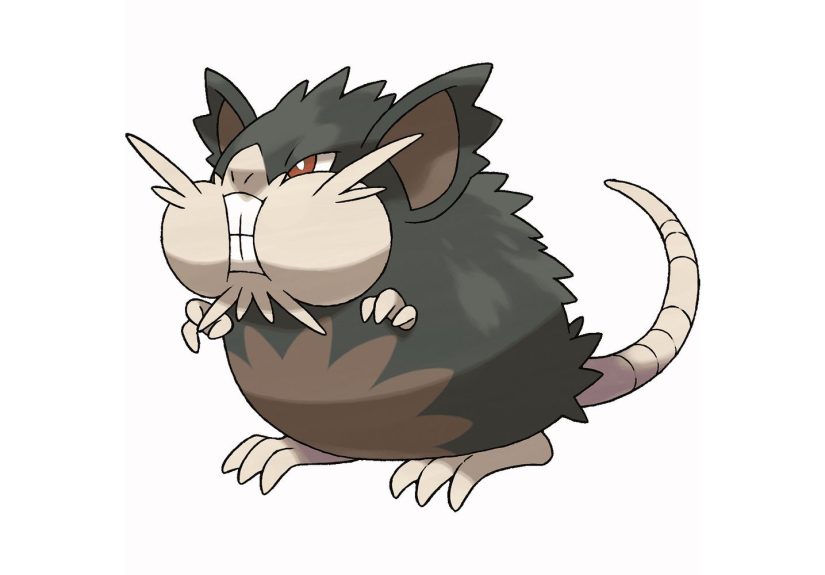
Around the S.S. Anne rival fight, Blue’s earlier Rattata has evolved into Raticatea stronger, faster Normal-type that can smack you around with
moves like Hyper Fang if you waltz in underleveled. This is the battle most people point to as “the moment something happened.”
Pokemon Tower: the spooky reunion
When you meet your rival inside the Pokemon Tower, the game does not open with a grief monologue. It opens with him doing what he always does:
showing up uninvited and starting problems. His actual line is famously snarky:
“Your POKEMON don’t look dead! I can at least make them faint! Let’s go, pal!”
That line is important because it’s the foundation of a common misquote: some versions of the rumor claim he asks,
“Do you know what it’s like to have a Pokemon die?” He doesn’t. The real dialogue is trash talkgraveyard-flavored trash talk, sure,
but still trash talk.
The case for “Yes, the Raticate died”
To be fair: the theory didn’t become famous because it’s obviously ridiculous. It became famous because it’s plausible enough to be fun.
Here’s the best version of the pro-theory argument, without the urban-legend glitter:
1) The Raticate vanishes right after S.S. Anne
Players can verify the pattern: Raticate appears in the S.S. Anne battle, then disappears in the Pokemon Tower battle, and never returns in later rival fights.
The disappearance is real, even if the explanation is not.
2) Pokemon Tower is a graveyard, and the game openly talks about death
This is key: the original games absolutely acknowledge dead Pokemon. Pokemon Tower is full of grieving trainers, ghosts, and lines that are surprisingly direct.
So the setting primes players to interpret absence as loss.
3) The rival showing up there “feels” like mourning
Narratively, it’s a clean little tragedy: your rival catches an early-game companion, it gets too badly hurt, he can’t save it, and now he’s at the cemetery.
It adds emotional weight to a character who otherwise communicates primarily through smugness and “smell ya later” energy.
4) The rumor fits the old-school Pokemon “dark undertones” vibe
Gen 1 is full of weirdly heavy moments: ghost encounters, abandoned buildings, Team Rocket crime, and a town whose music has been fueling internet creepiness
for decades. The “dead Raticate” theory fits that tone like a perfectly awful puzzle piece.
The case against it: why the theory isn’t canon (and probably isn’t true)
Now for the part that makes the internet sigh loudly: there is no explicit confirmation in Pokemon Red and Blue that Blue’s Raticate dies.
In fact, the strongest pieces of evidence point in the opposite direction.
1) The “Pokemon die” quote is a misquote
The theory often depends on a line that simply isn’t in the game. The real Pokemon Tower dialogue is a flex, not a confession. And that matters,
because if the writers wanted to tell a death story, they had the vocabulary to do itand they used it elsewhere in the Tower.
2) Battles are framed as “fainting,” not dying
Pokemon Red and Blue consistently treat battle outcomes as fainting. Pokemon Centers heal “tired, hurt or fainted” Pokemon, and trainers talk about recovery
as routine, not rare. If your rival’s Raticate died because you KO’d it once, that would imply Kanto has a massive youth sports fatality problem.
And yet trainers keep battling like it’s Tuesday.
3) The simplest explanation is also the most boring: he boxed it
The games repeatedly show that PCs exist for storage and are easy to use. And competitively (or even casually), Raticate is an early-game workhorse that can
get outclassed as teams diversify. A rival who’s trying to become Champion might reasonably bench a Normal-type rodent to make room for stronger coverage and higher stats.
4) There’s also a practical in-world reason: Pokemon Tower is packed with Ghost-types
Normal-type attacks don’t affect Ghost Pokemon. And Pokemon Tower is basically a haunted house full of Gastly and friends. So from a strategy standpoint,
bringing Raticate to a Ghost-heavy location is like bringing a butter knife to a chainsaw convention.
5) Team design: rival battles are built for variety and pacing
From a game design perspective, rival teams shift to keep battles interesting and to showcase different Pokemon.
If Blue kept every early-route catch forever, he’d look less like a rising Champion and more like someone who refuses to delete apps he hasn’t opened since 2017.
6) Even fan explainers usually admit it’s not “very likely”
Many modern writeups that cover the theory treat it as a fun mystery, not a confirmed plot point.
They’ll highlight the disappearance and the graveyard setting, then point out the misquote and the “boxed Pokemon” explanation as the grounded answer.
So… did Gary’s Raticate really die?
There’s no canon proof in Pokemon Red and Blue that Blue’s Raticate dies.
What we do have is (1) a real roster change, (2) a perfectly creepy setting that invites interpretation, and (3) a misremembered quote that spreads like pokerus.
The most reasonable conclusion is: Blue likely boxed the Raticate (or otherwise rotated it out) as his team matured.
The most entertaining conclusion is: you “killed” it and he went to the Tower to cope.
And fandom, being fandom, politely chose: “Why not both, but with dramatic music?”
Why this fan theory refuses to faint
The “Dead Raticate” theory endures because it’s the perfect Pokemon urban legend: small, checkable details with a big emotional payoff.
You can see the roster change with your own eyes. You can stand in the graveyard while your rival cracks a joke about dead Pokemon.
And you can feeljust for a secondlike Gen 1 is hiding a secret story under the pixels.
It’s also a nostalgia trap in the best way. Early Pokemon had gaps: fewer cutscenes, fewer explanations, fewer guardrails. That emptiness is a playground.
Fans fill it with theories because it makes the world feel deeper, stranger, and more alive… even when the theory is about something allegedly not alive.
Player Experiences: how the “Dead Raticate” rumor lives in the wild
If you want to understand why this theory stuck, you have to remember what playing Pokemon Red and Blue felt like before every mystery had a wiki page,
a YouTube breakdown, and a 47-part thread arguing about whether a sprite blinked in Morse code.
The first “experience” most players share is the moment of accidental discovery: you beat Blue on the S.S. Anne, feel like a tactical genius,
then wander into Lavender Town later and fight him againonly to notice something’s off. Maybe you don’t catch it immediately. You’re busy dealing with
the Tower’s ghost gimmick, the unsettling music, and the creeping realization that this game is darker than the cartoon commercials suggested.
But sooner or later, someone says it: “Wait… where’s his Raticate?”
Then comes the second shared experience: rumor transmission. You hear it from a cousin, a kid on the bus, a classmate who definitely swears his uncle works at Nintendo,
or a friend who read it on a forum at 1:00 a.m. on dial-up. The story spreads because it’s short, dramatic, and easy to retell:
“You killed his Pokemon. That’s why he’s at the graveyard.”
It’s basically the Pokemon version of “don’t swallow gum” but with more emotional damage.
The third experience is the “playground investigation phase,” where kids become tiny detectives with terrible evidence rules. Someone loads an old save file,
someone else insists they remember a different line of dialogue, and at least one person claims they saw a ghost sprite that looked like a rat
(and no, it does not matter that the Tower is full of literal ghost Pokemondetails are the enemy of myth).
You start looking at everything like it’s a clue: the timing, the music, the rival’s attitude, the fact that Lavender Town has grieving NPCs.
Suddenly, the game feels like it has a secret plotone that only the worthy can uncover by pressing A on every tombstone.
The fourth experience, for modern players, is the “debunking rollercoaster.” You look it up and find out the famous “Do you know what it’s like to have a Pokemon die?”
line isn’t real. The actual line is more like your rival doing stand-up comedy at a funeralmorally questionable, but on brand.
That debunk doesn’t kill the theory; it upgrades it. People start arguing about subtext instead of text.
“He’s masking grief!” “He’s coping through sarcasm!” “He’s doing what all emotionally constipated rivals do: picking a fight.”
The fifth experience is the “meta realization”: Pokemon Red and Blue were designed with limitations. Rival teams changed for balance and variety.
Normal moves don’t hit Ghost-types, so a Normal-heavy pick like Raticate isn’t exactly the MVP of a haunted tower.
And boxing Pokemon is normal gameplayso normal, in fact, that the games actively encourage you to store extras.
Once you see those design reasons, the theory becomes less “hidden canon” and more “great storytelling accident.”
And finally, the lasting experience: even after you decide it’s probably not true, the theory still makes Lavender Town feel different.
You’ll always notice that missing slot in his roster. You’ll always hear that line about your Pokemon not looking dead and think,
“Okay, buddy, that’s a weird thing to say in a cemetery.” The rumor becomes part of how people remember Gen 1like MissingNo,
the truck by the harbor, and every other delightful bit of Pokemon folklore that refuses to stay in its Poké Ball.







 Close
Close