
Table of Contents >> Show >> Hide
- Why a DIY Front Walk Is Worth the Effort
- Start with the Plan Before You Touch a Shovel
- Best Materials for a DIY Front Walk
- Before You Dig: Important Prep Work
- How to Build a DIY Front Walk Step by Step
- Budget-Friendly DIY Front Walk Ideas
- Design Tips That Instantly Improve Curb Appeal
- Common DIY Front Walk Mistakes to Avoid
- How to Maintain a DIY Front Walk
- Final Thoughts
- Experiences with a DIY Front Walk: What People Usually Learn Along the Way
A great front walk does two jobs at once: it gets people safely from the curb, driveway, or gate to your door, and it quietly whispers, “Yes, this house has its life together.” That is a lot of pressure for a strip of stone, brick, or gravel. The good news is that a DIY front walk is one of the most realistic hardscape projects for homeowners who want better curb appeal without hiring a small army of contractors.
The trick is knowing that a front walkway is not just decoration. It is drainage, grading, comfort, safety, edging, and a little bit of theater. A path should guide the eye, feel natural underfoot, suit the house, and avoid turning into a puddle parade every time it rains. Build it well, and it looks polished for years. Build it badly, and you get wobbly pavers, wandering gravel, and a welcome path that feels more like an obstacle course.
This guide breaks down how to plan, build, and finish a DIY front walk that looks good, lasts longer, and does not make you regret your weekend ambitions by Sunday afternoon.
Why a DIY Front Walk Is Worth the Effort
Most front yards need a visual anchor. A proper walkway creates structure, defines the route to the front door, and makes landscaping look intentional instead of like plants are freelancing. It can also improve drainage near the entry, reduce muddy foot traffic, and make the front of the home feel more welcoming.
From an aesthetic standpoint, a front walk adds rhythm to the yard. Straight paths feel formal and tidy. Curved paths feel relaxed and garden-like. Large concrete pavers can look modern. Brick feels classic. Gravel says, “I have charm and possibly a hydrangea problem.” Flagstone delivers a natural, established look. The best choice depends on your house style, budget, climate, and how much maintenance you can tolerate without staging a dramatic speech in the yard.
Start with the Plan Before You Touch a Shovel
Think about width first
One of the most common front-walk mistakes is building a path that is too narrow. A front walk should feel comfortable, not like a balance beam with landscaping. In many homes, a width of about 3 to 4 feet works well. If the path is the main route to the front door, if two people may walk side by side, or if accessibility matters, lean wider rather than narrower. A skinny path can look stingy even when the rest of the yard is lovely.
Match the path to the house
The material and pattern should support the architecture of the home. A simple brick or rectangular paver layout fits traditional homes beautifully. Large-format pavers and crisp borders often suit modern or minimalist exteriors. Irregular flagstone feels right with cottage, farmhouse, or naturalistic landscapes. Gravel can be excellent for informal homes, though it works best when edged well and used where loose stone will not constantly spill into a lawn or driveway.
Decide whether the walk should be straight or curved
A straight front walk is efficient and formal. It gets guests to the door without existential questions. A curved walk softens the yard and can make a front garden feel larger, but only if the curve looks purposeful. Tiny zigzags look less like design and more like indecision. If you curve the path, keep the arc broad and graceful.
Best Materials for a DIY Front Walk
Concrete pavers
Concrete pavers are one of the best all-around choices for a DIY front walk. They are widely available, easy to plan around, and come in many colors, textures, and sizes. They create a neat, durable surface and can be repaired more easily than a poured slab because individual units can be lifted and reset. They do, however, require careful base prep. Ignore the base, and the pavers will eventually express their opinions through shifting and settling.
Brick
Brick is timeless and warm. It works especially well on traditional homes, colonials, cottages, and historic-style exteriors. A brick walk can be laid in patterns such as running bond or herringbone for extra visual character. Reclaimed brick can look fantastic, though sizing can vary, which adds charm and a little extra work.
Flagstone
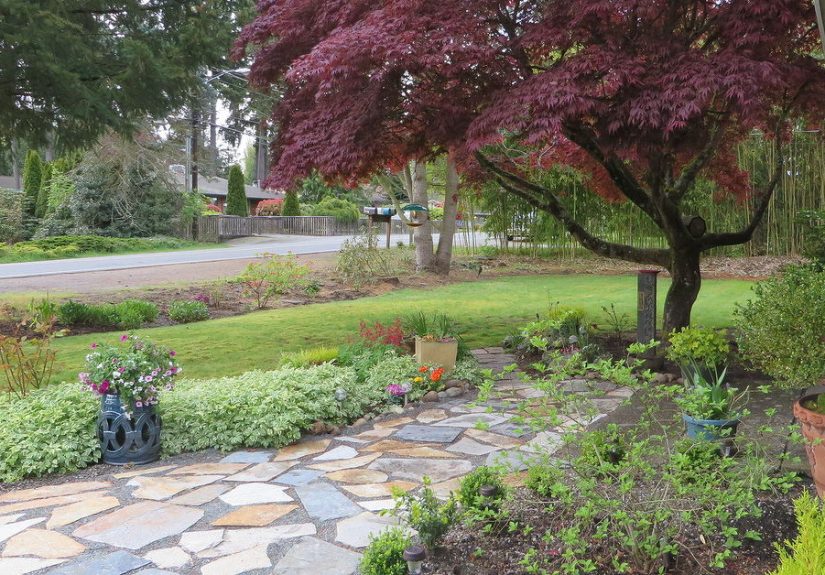
Flagstone gives a front yard an established, natural look. It is great for informal landscapes and homes that need softness instead of strict geometry. The challenge is fitting irregular pieces and creating a stable walking surface. Choose stones thick enough for foot traffic and keep the tops reasonably even. A beautiful path loses some romance when it tries to twist an ankle.
Gravel
Gravel is budget-friendly, fast to install, and excellent for informal paths. It drains well and can look surprisingly elegant with crisp edging. The downside is movement. Loose gravel migrates, weeds appear if the base is sloppy, and snow shovels tend to treat gravel as a personal enemy. If you want a low-cost front walk and do not mind periodic raking and topping off, gravel is a strong contender.
Stepping stones
Stepping stones work well for secondary approach paths, cottage gardens, or shorter walks where a more relaxed look makes sense. They can be set in gravel, mulch, or grass. The key is spacing them naturally for a comfortable stride and making sure each stone is stable. Randomly wobbling stones make guests feel like they are in a game show.
Before You Dig: Important Prep Work
Call 811
Before you dig even a few inches, have underground utilities marked. This is not the glamorous part of a DIY front walk, but it is the part that prevents turning your landscaping project into an accidental neighborhood power event.
Check drainage and slope
A front walk should generally slope away from the house so water does not collect near the foundation or the entry. In many cases, a drop of about 1/4 inch per foot is a solid rule of thumb for hardscape surfaces. If your yard already drains poorly, deal with that before building the path. Sometimes the answer is a simple regrade. Other times you may need a swale, permeable materials, or a more serious drainage solution nearby.
Know your local conditions
Soil type, freeze-thaw cycles, heavy rain, and local code requirements all matter. Clay soils hold water longer. Cold climates can push and shift pavers if the base is too shallow or poorly compacted. If your area gets harsh winters, be extra generous with prep and follow local recommendations for base depth.
How to Build a DIY Front Walk Step by Step
1. Lay out the path
Use stakes, string, marking paint, or a garden hose to map the shape. Walk it several times before digging. Seriously. A path can look perfect on paper and strangely awkward in real life. This quick test helps you judge width, curve, and how the path meets steps, porches, and driveways.
2. Excavate the area
Remove grass, roots, and soil to the depth needed for your chosen system. For many paver walks, that means enough room for the pavers, about 1 inch of bedding sand, and several inches of compacted base below. Gravel paths often need less structure, but still benefit from proper excavation, edging, and a stable sub-base. Keep the trench slightly wider than the finished path so edging or restraints can fit correctly.
3. Shape the slope
As you dig, establish a consistent slope away from the house. Use a long level, straight board, or screed setup so the path does not dip and hold water. Front walks should feel smooth and intentional, not like a collection of tiny drainage experiments.
4. Add and compact the base
This is the part that determines whether your DIY front walk stays handsome or starts sulking. Add compactible gravel base in layers rather than dumping it all in at once. Compact each lift thoroughly with a tamper or plate compactor. For paver walks, a compacted gravel base is what provides long-term strength and helps prevent settling. For gravel paths, a paver base or crushed stone layer beneath the top gravel helps keep the surface more stable.
5. Install edging or restraints
Edging keeps the walkway from slowly blurring into the yard. For pavers, edge restraints help hold the field in place. For gravel, borders are even more important because loose stone loves freedom a little too much. Metal edging gives a clean look, plastic restraints are common and easy to use, and stone or brick borders can add character.
6. Add the bedding layer
For many paver systems, a layer of bedding sand is spread over the compacted base and screeded smooth. This creates a level setting bed so the pavers can be adjusted precisely. Do not use the sand layer to fix major grading problems. That is a shortcut with a future complaint department.
7. Lay the surface material
Set pavers or bricks in your chosen pattern, working carefully and checking alignment often. For flagstone, dry-fit pieces like a puzzle and aim for stable, comfortable placement. For stepping stones, keep the spacing consistent with a normal stride. For gravel, spread the top layer evenly to the planned depth.
8. Fill joints and lock everything in
Paver and brick walks usually need sand swept into the joints. Polymeric sand is often used because it helps reduce joint washout and weed growth when installed correctly. Make sure the surface is clean and dry before applying it, then follow watering directions carefully. For flagstone, the joints may be filled with stone dust, gravel, or planting material depending on the look you want.
9. Finish the edges and clean up
Backfill along the sides, adjust grades, and blend the walk into nearby planting beds or lawn. This final step is where the project stops looking like construction and starts looking like a design decision made by someone who owns a level and uses it on purpose.
Budget-Friendly DIY Front Walk Ideas
If you want curb appeal without blowing the budget, you still have good options:
- Gravel with steel or brick edging: affordable, fast, and classic.
- Concrete stepping stones with gravel infill: modern look, fewer materials.
- Basic rectangular concrete pavers: clean and easy to plan.
- Reclaimed brick: charming and often less expensive than premium stone.
- Simple border detail: even a basic path looks richer with a contrasting edge.
One of the smartest budget moves is keeping the design simple. A straightforward pattern with good proportions almost always beats a fussy, overcomplicated layout. You are building a front walk, not auditioning for a Roman plaza reconstruction show.
Design Tips That Instantly Improve Curb Appeal
Use lighting
Low path lights or subtle entry lighting make the walkway safer and more attractive. Even a beautiful front walk can disappear after dark if the lighting is weak or poorly placed.
Frame the path with planting
A front walk looks better when it is anchored by planting beds, ground cover, or low shrubs. Keep plants scaled to the width of the path so they soften the route without swallowing it. Nobody wants to fight ornamental grasses on the way to the front door.
Repeat materials from the house
If the home has brick accents, dark trim, limestone, or clean concrete lines, echo that palette in the walkway. Repetition creates harmony and makes the path look like it belongs there.
Common DIY Front Walk Mistakes to Avoid
- Skipping proper base prep: the number one cause of settling and shifting.
- Making the path too narrow: it hurts comfort and curb appeal.
- Ignoring drainage: water pooling near the house is never cute.
- Using no edging: borders help hold shape and improve the finish.
- Choosing style over function: slippery, uneven, or unstable paths will age badly.
- Forgetting maintenance: weeds, moss, drifting gravel, and dirty joints add up fast.
How to Maintain a DIY Front Walk
Once the walk is finished, maintenance is pleasantly boring, which is exactly what you want.
- Sweep debris regularly so dirt and seeds do not settle into joints.
- Pull weeds early before they become tiny landlords.
- Top off gravel when bare spots appear.
- Replenish joint sand if needed after heavy weather.
- Wash stains and moss before they turn the path slippery.
- Reset any stones or pavers that start to move instead of waiting for the problem to multiply.
In colder climates, use deicers carefully and choose products that are compatible with your paving material. Gentle snow removal techniques also help protect edges and joints.
Final Thoughts
A well-built DIY front walk can completely change the feel of a home. It improves first impressions, makes the front yard more usable, and gives landscaping a sense of purpose. More importantly, it proves that curb appeal is not always about expensive overhauls. Sometimes it is about a practical, attractive path that feels right from the first step.
The secret is to treat the walkway like infrastructure dressed as design. Put most of your energy into planning, slope, excavation, and base work. Then choose a material that matches your house and your patience level. If you do that, your new front walk will look good, function well, and avoid becoming that project you point at every spring while muttering, “I should have done that differently.”
Experiences with a DIY Front Walk: What People Usually Learn Along the Way
One of the most common experiences people have with a DIY front walk is discovering that the project looks deceptively simple at first. On paper, it is “just a path.” In reality, it becomes a lesson in layout, drainage, and the remarkable ability of a single crooked line to ruin your mood. Many homeowners say the planning stage takes longer than expected, but it also saves the project. When they test the route with string or a garden hose, they often realize the original path was too narrow, too straight, or aimed awkwardly at the porch steps. That little mock-up stage is where a lot of good decisions are made.
Another common experience is learning that base preparation matters more than the surface material. People often begin excited about brick color, paver shape, or whether the path should have a rustic flagstone vibe. Then they hit the digging and compaction stage and suddenly understand why professionals obsess over the foundation. Homeowners who rush this part almost always notice problems later, such as low spots, wobbling stones, or pavers drifting out of alignment. The ones who take their time with excavation, leveling, and compaction tend to be much happier with the final result.
There is also usually a moment when the project stops feeling theoretical and starts feeling very physical. A DIY front walk involves hauling gravel, moving stone, tamping base material, and kneeling more than most people expect. In other words, your front yard may temporarily become a free outdoor gym with fewer mirrors and more dust. Still, many homeowners find that satisfying. It is the kind of project where progress is visible. At the end of each day, the path actually looks different, and that makes the work feel worthwhile.
People also learn that details create the polished look. Clean edges, consistent spacing, and smooth transitions into the lawn or planting beds make a big difference. A basic walkway can look custom if the borders are crisp and the proportions are right. On the flip side, even expensive materials can look unfinished when the edges are messy or the path does not quite meet the porch correctly. This is why so many DIYers say the final trimming, sweeping, sanding, and planting around the walkway are what make the whole thing click.
Finally, there is the experience of living with the finished walk. That might be the best part. People often notice that guests naturally follow the route, the entry feels more welcoming, and the front yard suddenly looks organized. Everyday tasks improve too. Carrying groceries, rolling bins, walking in the rain, and getting to the door after dark all feel easier on a proper path. A DIY front walk may start as a curb appeal project, but it often ends up being one of those upgrades that quietly improves daily life every single day.





 Close
Close