
Table of Contents >> Show >> Hide
- Why This Upcycled Basket Project Actually Works
- Materials and Tools You Will Need
- Before You Start: A Few Smart Prep Tips
- How to Make a DIY Woven Basket From a Tomato Cage
- Best Materials for the Look You Want
- Where to Use Your Woven Tomato Cage Basket
- Common Mistakes to Avoid
- Why Readers Love This DIY Basket Project
- Experience and Lessons From Making a Tomato Cage Basket
- Final Thoughts
Some craft projects are born from genius. Others are born from staring at a tomato cage and thinking, “You know what? You look like a basket with unresolved potential.” This project falls happily into the second category. If you have an old tomato cage, a pile of twine, and the kind of optimism usually reserved for people who say things like “I’ll just make one quick DIY,” you can turn that humble garden helper into a stylish woven basket.
A DIY woven basket from a tomato cage is one of those rare projects that checks every box: budget-friendly, beginner-friendly, useful, and weirdly satisfying. It gives new life to an item that usually spends its career being rained on, splashed with dirt, and judged by cucumbers. Better yet, the finished basket can work in a living room, bathroom, bedroom, laundry room, craft corner, or entryway without looking like it escaped from the vegetable patch.
This guide walks you through the full process, from choosing materials to weaving the sides, finishing the rim, and styling the basket once it is done. Along the way, you will also learn how to avoid the most common mistakes, customize the look, and make the finished piece feel less “garden aisle emergency” and more “I absolutely meant to do that.”
Why This Upcycled Basket Project Actually Works
The reason this tomato cage craft works so well is simple: the wire frame already gives you structure. In most basket projects, the hardest part is building a sturdy form that can hold its shape. A tomato cage solves that problem immediately. Once trimmed and flipped the right way, it creates a tapered frame with a stable opening, a defined base, and evenly spaced supports that are perfect for weaving twine, cotton rope, fabric strips, or yarn.
It also has the kind of forgiving charm that makes handmade decor feel special. A perfectly machine-made basket is lovely, sure. But a woven basket with a little texture, a few natural variations, and obvious human effort has more personality. It says, “Yes, I organize my blankets, but I also have depth.”
From an SEO and practical standpoint, this project also hits several popular trends at once: upcycled home decor, budget DIY storage, rustic basket decor, tomato cage crafts, and handmade woven baskets. That means it is not only fun to make, but also highly relevant for readers looking for creative storage ideas with character.
Materials and Tools You Will Need
Basic Materials
- 1 metal tomato cage
- Cotton twine, jute twine, or soft cotton rope
- Optional trim such as pom-poms, tassels, or fringe
- Optional fabric liner
- Optional beads or colored yarn for decoration
Tools
- Wire cutters
- Pliers
- Work gloves
- Hot glue gun and glue sticks
- Scissors
- Metal file or sandpaper for rough edges
If you want a more polished finish, you can also spray-paint the frame before weaving. Black gives a modern look, white leans coastal, and bronze or gold makes the basket feel a little more dressed up. Neutral twine works beautifully for farmhouse, boho, coastal, and cottage-style rooms, while colorful yarn or wrapped thread can make the design more playful.
Before You Start: A Few Smart Prep Tips
Before you go full basket wizard, take a minute to prep the frame. This is not the glamorous part, but it is the part that keeps your hands from making dramatic speeches later.
First, inspect the tomato cage for rust, bent wires, or cracked welds. A slightly weathered cage is usually fine, but a cage with severe corrosion or sharp damage is not worth the trouble. Second, wear gloves before cutting anything. Wire edges can be surprisingly rude. Third, after cutting the frame, use pliers to tuck or flatten any rough tips, then smooth them with a metal file or coarse sandpaper.
If the cage is dirty, wipe it down with warm water and mild soap, then dry it completely. Twine and rope are not big fans of trapped moisture. Neither is your future basket.
How to Make a DIY Woven Basket From a Tomato Cage
Step 1: Cut the Tomato Cage to Basket Size
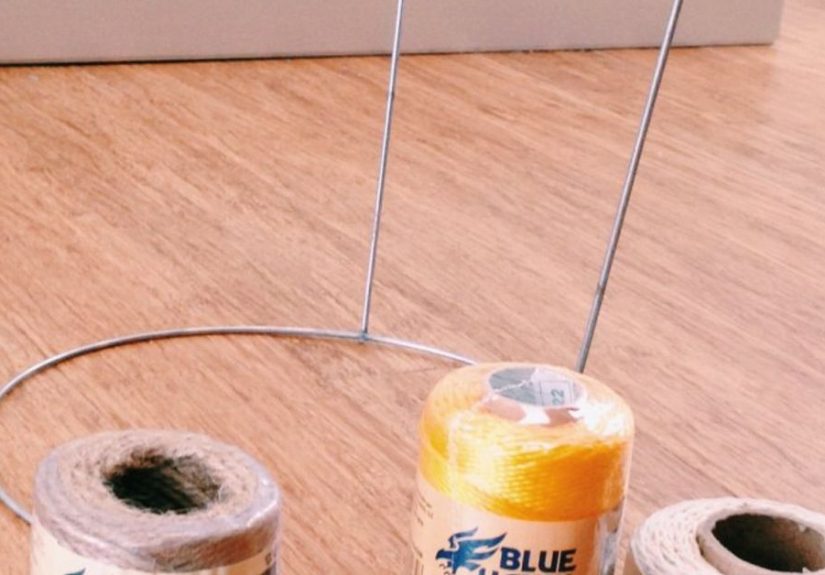
The easiest way to turn a tomato cage into a basket frame is to cut just below the second ring so you keep the upper section. That section usually gives you a practical basket size with enough height for storage but not so much height that the basket starts looking like it wants its own zip code.
Once cut, flip the piece so the wider end becomes the basket opening. Check that it sits evenly. If it wobbles, gently adjust the wire with pliers until the frame is balanced.
Step 2: Build the Bottom
Tie your twine securely to one of the vertical supports near the base. Then pull the twine across the bottom to the opposite side, loop it around the ring, and bring it back through the center. Repeat this process, spacing each loop slightly around the circle so the strands gradually fill the base.
The key here is tension. Keep the twine taut but not so tight that it warps the frame. You want a woven base that supports lightweight contents without sagging immediately the moment someone tosses in a rolled towel. As the strands cross the center, they form a web-like foundation. Continue until the base feels covered and stable, then knot off the end securely.
If you want extra support, weave a second layer over the first in the opposite direction. This is especially useful if the basket will hold yarn, magazines, or bathroom supplies.
Step 3: Create the Vertical Structure
Now that the bottom is done, the sides need a woven path to follow. Tie a fresh length of twine to the same vertical support you used before. Bring the twine up and over the top ring, then down through the center and around the lower edge. This creates a figure-eight pattern that anchors the side weave.
As you repeat the pattern, the vertical strands begin to form a framework. A good rule is to keep the spacing even and consistent. If the bottom has visible gaps, you can align two vertical strands with each gap for a fuller look. This part feels a little awkward at first, but once your hands understand the rhythm, it becomes oddly meditative. Suddenly you are not just crafting. You are communing with geometry.
Step 4: Weave the Sides
Once the vertical framework is established, continue wrapping and weaving until the sides look full. Some crafters prefer a tight, close weave with very little open space. Others like a looser, more airy basket that shows off the pattern. Neither is wrong. It simply depends on how you want to use the finished piece.
For a sturdy woven basket, keep each pass snug against the previous one. If your twine runs out, tie on a new section with a small, neat knot and keep going. Try to position knots toward the back or inside of the basket when possible.
If you are using thicker rope instead of standard twine, the basket will build faster and look chunkier. If you are using thinner string, the weave will take longer but allow more detail. Cotton twine tends to be easier on the hands than rough synthetic rope, and it usually produces a softer, cleaner finish.
Step 5: Finish the Rim
Once the weaving reaches the top, tie off the twine firmly and tuck the end neatly inside the basket. At this point, you can leave the rim simple or dress it up with trim, wrapped rope, tassels, or fabric edging. A little hot glue can help secure decorative details, but use it with restraint. Too much glue can make a basket look less artisan and more “school project completed at 11:47 p.m.”
If you want handles, create them carefully and keep them decorative unless the basket is very lightly loaded. Rope handles can look great, but they should not be trusted with a basket full of hardback books and your emotional baggage.
Best Materials for the Look You Want
For a Rustic or Farmhouse Basket
Use jute twine, natural cotton cord, or tea-stained fabric strips. Add a simple liner in muslin or ticking stripe fabric. This creates a warm, handmade look that works beautifully with wood furniture and neutral interiors.
For a Coastal Basket
Choose white or sandy beige rope, wrap the rim with blue thread accents, and keep the weave fairly clean and open. This version looks right at home with rolled towels, seashell decor, or a breezy bedroom corner.
For a Boho Basket
Layer in soft cream yarn, tassels, pom-pom trim, or a few wooden beads. A boho tomato cage basket is the easiest excuse you will ever have to be unapologetically extra.
For a Modern Basket
Paint the frame matte black before weaving and use a simple off-white cotton cord. Skip the trim and let the shape and texture do all the work. Clean, understated, and suspiciously expensive-looking.
Where to Use Your Woven Tomato Cage Basket
One of the best things about this basket DIY is how flexible it is. Once finished, it can be used for all sorts of lightweight storage around the house.
- Living room: Store throw blankets, magazines, or remote controls
- Bathroom: Hold rolled hand towels, washcloths, or extra toilet paper
- Bedroom: Corral slippers, scarves, or decorative pillows
- Laundry room: Collect dryer sheets, small linens, or stray socks waiting to reconnect with their soulmates
- Craft room: Organize yarn, fabric scraps, ribbon, or paper supplies
- Entryway: Catch hats, gloves, or dog leashes
Because the basket is woven rather than solid, it works best for soft, dry, lightweight items. If you need to store small objects that might slip through the weave, add a fabric liner or tuck a cloth bin inside the frame.
Common Mistakes to Avoid
Using the Wrong Cage
Not every tomato cage is equally charming. Flimsy cages can bend too easily and may not hold their shape during weaving. A sturdier metal cage will give you a better result.
Skipping Edge Cleanup
Freshly cut wire can snag twine, fabric, and skin. Always smooth the cut points before weaving. Your future self will be grateful and slightly smug.
Weaving Too Loosely
Loose weaving can look relaxed in theory and messy in practice. Keep the twine snug and even so the basket feels intentional instead of tired.
Overloading the Basket
This is an upcycled decor basket, not a weightlifting champion. It is ideal for towels, yarn, soft toys, and blankets, but not for dumbbells, canned goods, or enough books to start a side hustle as a mobile library.
Why Readers Love This DIY Basket Project
There is something deeply satisfying about making decor that looks good and solves a problem. This DIY woven basket from a tomato cage does exactly that. It transforms a practical garden item into something warm, textured, and stylish. It also gives you the kind of handmade result that looks thoughtful rather than trendy-for-five-minutes.
It is approachable for beginners, customizable for more experienced DIYers, and affordable enough that making a second one does not feel reckless. In fact, once you finish your first basket, there is a strong chance you will start eyeing every tomato cage like it owes you more storage solutions.
Experience and Lessons From Making a Tomato Cage Basket
The real charm of making a woven basket from a tomato cage is not only in the finished piece, but in the experience of making it. This is the kind of project that starts out feeling slightly ridiculous and ends with you standing back, genuinely impressed that a garden support somehow turned into home decor. At first, the tomato cage looks awkward, overly practical, and a little too committed to its former career in vegetable support. Then you cut it, flip it, weave into it, and suddenly it starts to change personality. By the middle of the project, it no longer looks like something from a backyard garden center. It looks like possibility.
One of the biggest lessons from this kind of DIY is that structure matters more than perfection. The frame does a lot of the heavy lifting, which means the weaving does not have to be flawless to look good. In fact, tiny irregularities often make the basket more attractive. A perfectly uniform weave can feel manufactured, while a slightly organic pattern feels handmade in the best way. That is a helpful reminder for anyone who hesitates to try craft projects because they are worried the result will not be “Pinterest perfect.” Honestly, perfection is overrated. Character is better.
Another experience many people have with this project is discovering how calming repetitive handwork can be. The over-under rhythm of weaving, wrapping, tightening, and adjusting creates a pace that is almost meditative. You start by thinking about whether the twine is straight, but somewhere along the way your mind quiets down and the basket takes over. It becomes one of those rare projects where your hands are busy and your brain finally decides to stop hosting a chaotic group chat.
This project also teaches patience in a sneaky way. Not dramatic, noble-movie patience. Just regular, practical patience. The kind that tells you to slow down, keep your spacing even, and stop trying to finish the whole basket at top speed. Rushing usually shows up in the final result through sloppy knots, uneven sides, or suspicious amounts of hot glue. Taking your time almost always produces a basket that looks cleaner, stronger, and more intentional.
There is also a nice sense of creative freedom in choosing the final style. A basket made with natural jute feels earthy and rustic. One wrapped in soft cotton rope feels cleaner and more modern. Add tassels, beads, or a liner, and the whole look changes again. That flexibility makes the project rewarding because it does not trap you into one aesthetic. It lets you respond to your own space, your own taste, and your own tolerance for decorative pom-poms.
Most of all, the experience proves that useful decor does not have to be expensive or complicated. A tomato cage, some twine, and a little persistence can become something practical, good-looking, and conversation-worthy. And that is the magic of this project. It is not just about making a basket. It is about seeing ordinary materials differently, trusting the process, and ending up with something that is both clever and genuinely useful. Not bad for an object that used to spend its days holding up tomatoes.
Final Thoughts
If you love upcycled decor, affordable storage, and DIY projects that actually earn their keep, a DIY woven basket from a tomato cage is well worth making. It is stylish without being fussy, practical without being boring, and customizable enough to fit almost any room. With the right twine, a little patience, and a tomato cage that is ready for its glamorous second act, you can create a basket that feels handmade, helpful, and full of personality.
So the next time you spot an old tomato cage in the garage, do not dismiss it as leftover garden hardware. Look at it like a future basket. A slightly weird future basket, maybe, but a very good one.






 Close
Close