
Table of Contents >> Show >> Hide
- The Story That Made People Pay Attention
- Why This Tattoo Meant More Than Ink
- What Childhood Cancer Can Do to Self-Image
- Why Josh Marshall’s Response Worked So Well
- The Internet Loved the Tattoo, But the Real Lesson Is Bigger
- What Other Families Can Learn From This
- When a Scar Becomes a Story Instead of a Stigma
- Related Experiences: Why This Story Keeps Resonating
- Conclusion
Some stories spread online because they are outrageous. Others go viral because they are adorable. And then there are the rare ones that stop people mid-scroll, make them blink twice, and quietly mutter, “Well, that’s one extraordinary dad.” This is one of those stories.
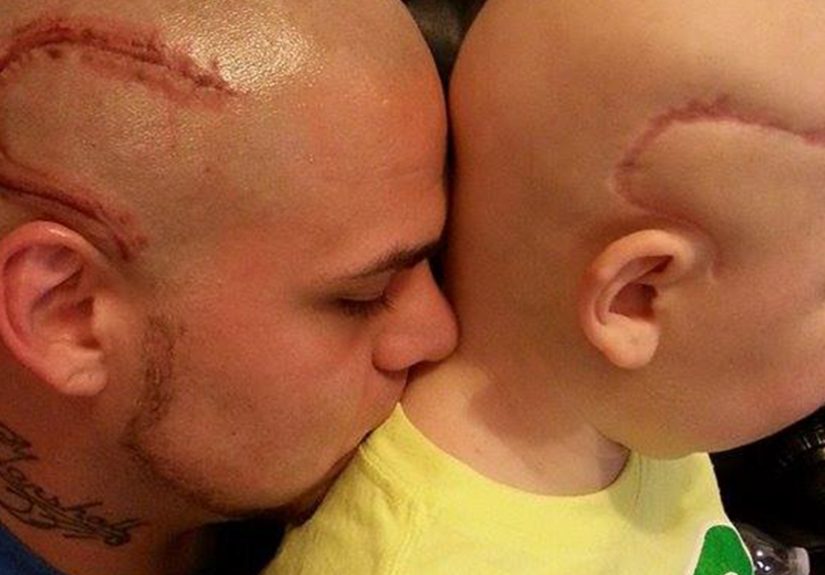
When Kansas father Josh Marshall saw how deeply his young son Gabriel was struggling after brain cancer surgery, he did not reach for a clever speech or a stack of motivational posters. He reached for solidarity. Gabriel’s surgery had left a large scar on the side of his head, and the child became painfully self-conscious about it. So Josh shaved his own head and had the same scar tattooed onto his scalp. It was bold, unconventional, and unmistakably loving.
On the surface, it was a tattoo story. Underneath, it was really about childhood cancer, body image, family resilience, and the quiet genius of a parent who understood that confidence is often rebuilt one act of belonging at a time. The gesture resonated far beyond one family because it touched a universal fear: the fear of looking different and being treated differently because of it.
The Story That Made People Pay Attention
Gabriel Marshall was a young boy from Kansas who underwent surgery after being diagnosed with a rare brain tumor. The operation helped save his life, but it also left a visible scar on his head. For adults, scars can already carry emotional weight. For a child, especially one trying to move through school, friendships, and everyday life, a visible scar can feel enormous. Kids do not always have the language to say, “I’m experiencing body-image distress.” They are more likely to say something heartbreakingly direct. In Gabriel’s case, his father shared that the boy felt self-conscious and ashamed of the scar.
Josh Marshall’s response was simple but profound: if the scar made his son feel singled out, then he would no longer let the boy carry that feeling alone. He had the scar replicated as a tattoo on his own head. Suddenly, Gabriel was not the only one walking into a room with that mark. He had a teammate. Better yet, he had a teammate who happened to be Dad, which is a bit like showing up to an emotional battle with a superhero sidekick who also pays the electric bill.
The image of father and son together quickly spread across news outlets and social media. It hit people because it bypassed sentimentality and went straight to action. Josh did not just say, “You’re perfect as you are.” He physically entered his son’s experience. That kind of empathy is hard to ignore.
Why This Tattoo Meant More Than Ink
It turned a visible difference into a shared symbol
Children are often acutely aware of anything that makes them look “different.” A scar, hair loss, mobility aid, facial asymmetry, or medical device can become the thing they assume everyone notices first. Josh’s tattoo changed the emotional math. The scar no longer belonged only to Gabriel. It became a family symbol, a shared badge rather than a lonely burden.
It reduced the power of staring
One of the hardest parts of visible medical changes is not always pain. Often, it is the social reaction. Stares, whispered questions, and awkward silence can wear a child down. By copying the scar onto his own head, Josh essentially said: if people are going to look, let them look at both of us. That is not just support. That is strategic love.
It gave Gabriel a new story about himself
Before the tattoo, the scar may have represented fear, treatment, and feeling unlike other kids. After the tattoo, it could also represent connection, courage, and a father’s very public loyalty. That shift matters. Self-confidence is not built by pretending something hard never happened. It grows when the hard thing is reframed in a way that restores dignity.
What Childhood Cancer Can Do to Self-Image
This story landed so strongly because it reflects a larger reality in childhood cancer care. Treatment can change a child’s appearance in ways that are visible and emotionally loaded. Surgery can leave scars. Chemotherapy can cause hair loss. Steroids can alter weight and facial shape. Radiation and other treatments can create lasting physical reminders of illness. Medical teams work to save lives first, of course, but survivorship is not only about scans and lab results. It is also about how a child feels in their own skin afterward.
That is one reason experts in cancer survivorship increasingly talk about emotional health, body image, and psychosocial support as essential parts of care. A child may be medically stable and still feel nervous about going back to school. A teen may be in remission and still avoid mirrors, photos, or social situations. Parents often notice this before anyone else. They see the hesitation before a haircut, the refusal to take off a hat, the sudden dislike of swimming, or the shrug that means much more than “I’m fine.”
Research and clinical guidance have repeatedly pointed to the emotional weight carried by visible treatment effects. Scars and other physical changes are not shallow concerns. They can shape confidence, social comfort, and even long-term quality of life. In other words, the scar is never “just a scar” if the person carrying it feels marked by it every day.
Why Josh Marshall’s Response Worked So Well
Parents cannot fix every hard thing. That is one of the cruel lessons of serious illness. But they can influence how a child interprets those hard things. Josh’s tattoo worked because it addressed several emotional needs at once.
First, it offered acceptance without pity
Children are surprisingly good at detecting when adults are treating them like a fragile project. Pity can make them feel even more separate. Josh’s gesture did not frame Gabriel as broken. It framed him as worth standing beside.
Second, it was concrete
Big feelings often need tangible reassurance. “You’re strong” is nice. “I put your scar on my head because I’m with you” is unforgettable. Kids, especially younger ones, often understand actions far more deeply than abstract encouragement.
Third, it restored control
Cancer takes a staggering amount of control away from children. They get poked, scanned, examined, scheduled, and told what happens next. A symbolic act that transforms a scar from an unwanted mark into something meaningful can give back a sliver of ownership. That sliver matters.
The Internet Loved the Tattoo, But the Real Lesson Is Bigger
It would be easy to flatten this story into a feel-good headline and move on. But that misses the deeper point. Josh Marshall did not become a memorable dad because he got a tattoo. He became memorable because he paid close attention to what was hurting his child emotionally, not just medically.
That is the real headline. He noticed the confidence problem. He treated the shame as real. He understood that surviving illness is not the same as feeling whole again. And then he responded in a way that made his son feel seen rather than singled out.
That insight applies well beyond cancer. Parents of children with visible differences, chronic illness, disability, medical devices, or surgery scars often face the same question: how do you help a child live in a world that can be curious, rude, or simply unkind? There is no single answer, but stories like this suggest a few reliable principles. Name the hurt honestly. Do not minimize what the child feels. Build confidence through action, not clichés. And whenever possible, make sure the child knows they are not handling the social part alone.
What Other Families Can Learn From This
Support can be creative
Not every parent is going to get a head tattoo, and that is probably fine for family holiday photos. But support does not have to look conventional to be meaningful. It can be shaving your head with your child, helping them choose hats they actually like, rehearsing answers to intrusive questions, or working with a counselor when confidence takes a hit.
Visible changes deserve emotional care
Families are often so focused on treatment schedules and physical recovery that appearance-related distress gets pushed aside. It should not. A child’s discomfort with a scar or changed appearance is not vanity. It is part of healing.
Community matters
Support groups, survivorship programs, school guidance, and peer communities can make a major difference. Children and parents alike benefit from meeting other families who understand the weird mix of gratitude, fear, exhaustion, and fierce protectiveness that illness can bring. Sometimes the most healing sentence in the world is simply, “Us too.”
When a Scar Becomes a Story Instead of a Stigma
One of the most moving things about this story is that Josh Marshall did not try to erase the scar. He did not treat it as something that had to be hidden away before life could resume. Instead, he helped transform it into part of a story about survival, family, and love with a backbone.
That matters because children often borrow their earliest beliefs about themselves from the adults closest to them. If a scar is treated like a shameful problem, the child may absorb that message. If it is treated like a mark of endurance, complexity, and life, the child may begin to see it differently too.
There is also something refreshingly direct about Josh’s choice. Modern parenting advice can sometimes sound like it was written by a committee of very polite robots. This story cuts through that. Here was a father saying, in effect, “I see what is hurting you, and I’m going to meet you there.” No jargon. No performance. Just commitment.
Related Experiences: Why This Story Keeps Resonating
The emotional pull of Josh and Gabriel Marshall’s story has lasted because many families dealing with illness recognize pieces of themselves in it. A visible scar can change how a child walks into school, how they pose for pictures, or whether they want to join a sleepover, a sports team, or even a haircut appointment. Those moments may sound small from the outside, but they can feel huge when a child is already carrying memories of hospitals, medications, and uncertainty.
Clinicians and support organizations have long noted that body image after cancer treatment is not a side issue. It is woven into daily life. Children may worry about being stared at. Teens may fear being defined by treatment instead of personality. Parents, meanwhile, are often trying to strike a delicate balance between celebrating survival and making space for grief over what changed. That balancing act is exhausting. You can be profoundly thankful and still heartbroken that your child feels uncomfortable in their own reflection. Those emotions are not contradictory; they are roommates.
Many survivors and families describe a similar pattern. The medical crisis eventually becomes less acute, but the social aftermath lingers. The first day back at school may feel harder than expected. A child who was brave during procedures may become shy at the pool. A teenager who handled treatment with grit may still struggle with dating, photos, or casual conversations about appearance. That is why support needs to continue after the dramatic hospital chapter ends.
Stories like Josh’s are also not entirely unique. Other families have used tattoos, matching haircuts, public advocacy, or shared rituals to help a child feel less alone in a changed body. In another widely covered recent case, a father tattooed his baby son’s heart-surgery scars on his own chest, again using his own body as a message of solidarity. Different diagnosis, different family, same core idea: love sometimes shows up as resemblance.
Adults living with cancer or survivorship have described similar experiences too. Some later choose tattoos, reconstructive art, or other forms of body reclamation not because scars are ugly, but because meaning matters. A mark on the body can begin as a reminder of fear and gradually become a symbol of endurance, tenderness, or identity. The shift is not automatic, and it does not happen because strangers say, “You should be proud.” It happens when people are given room to process, adapt, and define the story for themselves.
That may be the most useful takeaway from this headline-making dad gesture. The goal is not to force children to “love” every scar on command. The goal is to help them feel safe, accepted, and less isolated while they figure out what those marks mean in their own lives. Sometimes that comes through counseling. Sometimes through peer support. Sometimes through family humor, patience, and a thousand reassuring conversations. And sometimes, apparently, it comes through a dad who looks at a painful situation and says, “Fine. We’re matching now.”
Conclusion
“Dad Tattoos His Son’s Cancer Scar On His Own Head To Boost Son’s Self-Confidence” became a viral story because it was visually striking, yes, but it endured because it captured something true about childhood illness and parenting. Medical recovery is only part of the journey. Confidence, identity, and belonging matter too.
Josh Marshall’s choice was dramatic, but the emotional principle behind it is universal: children heal better when they know the people who love them are not merely cheering from the sidelines. They are stepping onto the field with them. In a world that often teaches kids to hide what makes them different, this father offered a louder message. You do not have to hide. I’m right here with you.




 Close
Close