
Table of Contents >> Show >> Hide
- What’s the Difference Between Mold and Mildew?
- Short Answer: Does Vinegar Kill Mold and Mildew?
- What Vinegar Works For
- What Vinegar Does Not Work For
- When Vinegar Can Make Things Worse
- How to Use Vinegar for Small Mold and Mildew Cleanup (Safely)
- What Works Better Than Vinegar in Some Situations?
- When You Should Skip DIY and Call a Pro
- How to Prevent Mold and Mildew from Coming Back
- Bottom Line: Should You Use Vinegar for Mold and Mildew?
- Experience-Based Examples: What Homeowners Learn the Hard Way (and the Smart Way)
If you’ve ever stared at a suspicious black spot in your shower and thought, “Please let this be soap scum,” welcome to the club. Mold and mildew are the unwanted roommates of damp homes everywhere. And when they show up, vinegar is usually the first thing people grab from the pantryright after panic and paper towels.
So, does vinegar kill mold and mildew? The honest answer is: sometimes, yesbut not always, and not on every surface. Vinegar can help with small, surface-level mold and mildew in certain situations. But it is not a magic wand, it does not fix the moisture problem, and it can absolutely damage some materials if you use it in the wrong place.
This guide breaks down what vinegar can do, what it can’t do, when to use something else, and how to clean safely without turning your bathroom into a chemistry experiment.
What’s the Difference Between Mold and Mildew?
In everyday conversation, people use the words mold and mildew like they’re identical twins. They’re more like cousins. Mildew is often used as a general term for certain kinds of mold or fungal growth, and it tends to appear flatter on surfaces. Mold is a broader category of fungi and can grow in fuzzy, patchy, or slimy forms depending on the species and the material it’s growing on.
Translation: whether you call it mold or mildew, the game plan is the sameremove the growth and fix the moisture source. If you skip the moisture fix, the fungus will be back like a sequel nobody asked for.
Short Answer: Does Vinegar Kill Mold and Mildew?
Yes, vinegar can kill some mold and mildew on some surfaces, especially small areas and surface growth. White vinegar is acidic, and that acidity can help disrupt fungal growth.
But here’s the catch: vinegar does not kill every type of mold equally well, and performance varies by species, concentration, and surface type. Lab evidence and real-world cleaning advice do not support the idea that vinegar is universally effective. In other words, vinegar is usefulbut it is not a guaranteed “kill-all” solution.
Why the Internet Sounds So Confident About Vinegar
You’ll see lots of articles claiming vinegar kills mold quickly and deeply. Some practical home-cleaning guides recommend undiluted white vinegar for small, visible spots. That advice can work for minor cleanup on non-porous or lightly affected surfaces.
At the same time, research and remediation guidance make an important point: mold cleanup is not just about killing spores. Even dead mold can still trigger allergic reactions, and visible growth still needs to be physically removed. So the real job is not “spray and pray.” It’s clean, remove, dry, and prevent.
What Vinegar Works For
1) Small, Surface-Level Mildew in Bathrooms
Vinegar can be helpful for light mildew on shower tile, around sinks, and on other damp, non-porous surfaces. It may also help reduce that musty smell that says, “This bathroom fan has been emotionally supportive but not operational.”
2) Routine Maintenance Cleaning in Moisture-Prone Areas
Some allergy organizations include vinegar solution as one option for cleaning mold from walls or hard surfaces in the home. Used correctly and safely, it can be part of a maintenance routine for small problem spots.
3) Mild Staining and Odor (Sometimes)
Vinegar may help with discoloration and odors, but don’t expect perfection. It can reduce stains, yet it may not fully remove dark marksespecially if the stain has penetrated grout, caulk, paint, or porous material.
What Vinegar Does Not Work For
1) Large Mold Problems
If the moldy area is more than about 10 square feet (roughly a 3-by-3-foot patch), you’re beyond the “spray bottle and optimism” stage. Large contamination often needs professional remediation, especially if there was significant water damage.
2) Deep Mold in Porous Materials
Drywall, ceiling tiles, carpet, insulation, upholstery, and some wood products can trap mold inside their structure. EPA guidance notes that porous materials may need to be discarded because mold can grow into crevices where cleanup is difficult or impossible.
This is one of the biggest misunderstandings online: even if vinegar touches the surface, it may not reach what’s deeper inside.
3) “Sterilizing” a Space
Mold spores exist naturally in the environment. The goal is not to create a sterile bubble; the goal is to stop active growth by removing mold and controlling moisture. If the leak, humidity, or condensation continues, mold returnswhether you used vinegar, bleach, or your grandmother’s secret cleaner.
4) Fixing the Cause
Vinegar does not fix roof leaks, plumbing leaks, poor ventilation, condensation, or humidity. It cleans symptoms. Moisture control prevents the relapse.
When Vinegar Can Make Things Worse
Don’t Mix Vinegar with Bleach
This is the most important warning in the whole article: never mix vinegar and bleach. The combination can produce toxic chlorine gas, which can seriously irritate or damage your lungs. “Natural cleaner” plus “strong disinfectant” does not equal “super cleaner.” It equals “open the windows and call poison control” territory.
Be Careful with Other Cleaners, Too
In general, don’t mix cleaning products unless the label specifically says it is safe. Mold cleanup already has enough drama without surprise fumes.
Don’t Use Vinegar on Every Surface
Vinegar’s acidity can damage certain materials. It may etch or dull natural stone (especially calcareous stone), weaken unsealed or damaged grout, and cause wear on some rubber parts and finishes. It can also be hard on certain metals and coatings.
If you’re cleaning a stone shower, marble vanity, granite countertop, or older grout, vinegar may solve one problem and create a new one called “Why is my surface cloudy now?”
How to Use Vinegar for Small Mold and Mildew Cleanup (Safely)
If the growth is limited, visible, and on a suitable surface, here is a practical approach.
What You’ll Need
- Distilled white vinegar (plain white vinegar)
- Gloves (nitrile, rubber, or similar)
- Eye protection (goggles)
- Mask/respirator (at least an N95 for mold cleanup is often recommended for safer work)
- Spray bottle
- Detergent and water
- Scrub brush or sponge
- Clean cloths or paper towels
Step-by-Step
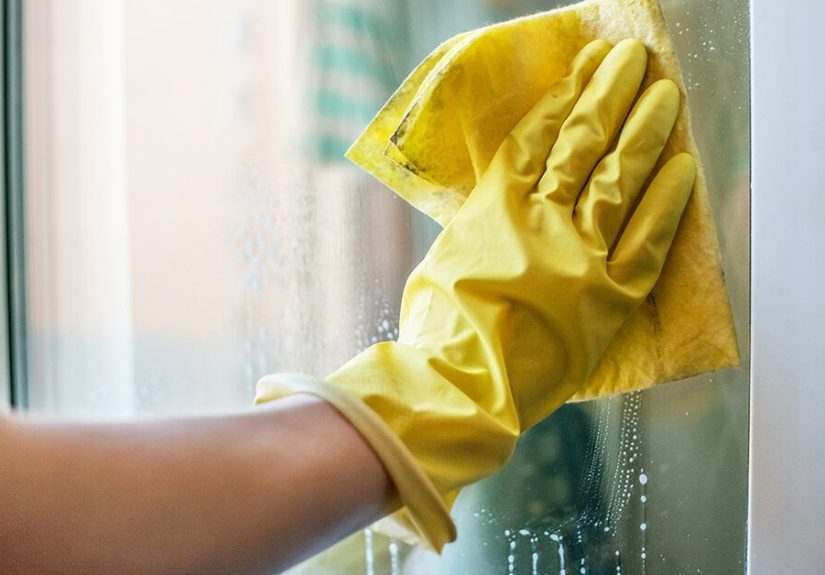
- Ventilate the area. Open windows/doors if possible and use exhaust fans.
- Wear protection. Gloves, goggles, and a mask help reduce exposure.
- Test a hidden spot first. Especially on painted surfaces, grout, or anything delicate.
- Apply vinegar to the moldy area. Many home-cleaning guides suggest using it undiluted for mold spots.
- Let it sit. Give it time to work (commonly 30–60 minutes in practical cleaning routines).
- Scrub and physically remove growth. This step matters. Killing alone is not enough.
- Wash with detergent and water. EPA and CDC guidance emphasize cleaning and removing visible mold, then drying thoroughly.
- Dry completely. Use clean towels, airflow, and dehumidification if needed.
- Monitor the area. If it comes back quickly, the moisture source is still active.
What Works Better Than Vinegar in Some Situations?
Detergent and Water (Yes, Really)
For many routine household mold cleanups, official guidance emphasizes scrubbing hard surfaces with detergent and water, then drying completely. That may sound less exciting than a viral “hack,” but it’s often the right move.
Bleach (Limited Use, Not a Routine Cure-All)
CDC includes bleach as one possible cleaning option in some scenarios (especially after severe water damage or flooding), with dilution and safety precautions. But EPA does not recommend biocides like chlorine bleach as a routine mold cleanup practice in most home situations.
Also, bleach may not work well on porous surfaces and can leave moisture behind if used improperly. If you use bleach, follow safety guidance carefully and never mix it with other cleaners.
Hydrogen Peroxide and Commercial Mold Cleaners
Hydrogen peroxide and labeled mold removers can be useful for some surfaces, especially when staining is the main issue. But always read the product label, check surface compatibility, and spot test first. “Mold remover” on the bottle does not mean “safe for every material in your house.”
When You Should Skip DIY and Call a Pro
- The mold covers more than about 10 square feet
- You suspect mold inside walls, insulation, or HVAC systems
- The home had major flooding or long-term water damage
- You smell strong musty odors but can’t find the source
- Someone in the home has asthma, COPD, severe allergies, or is immunocompromised
- You cleaned it once (or three times) and it keeps returning
Professionals do more than remove visible patches. Good remediation identifies moisture sources, removes damaged materials when needed, and helps prevent repeat growth.
How to Prevent Mold and Mildew from Coming Back
1) Control Humidity
Keep indoor humidity lowgenerally no higher than about 50%and use a dehumidifier or air conditioner if needed. A cheap hygrometer can save you a lot of expensive regret.
2) Fix Leaks Fast
Leaky pipes, roofs, windows, and appliances are mold’s favorite subscription service. Cancel it immediately.
3) Dry Wet Areas Quickly
After spills or water intrusion, dry the area as fast as possibleideally within 24 to 48 hours.
4) Improve Ventilation
Use bathroom and kitchen exhaust fans that vent outside. Let air move. Mold loves stale, damp, trapped air.
5) Don’t Paint Over Mold
Painting or caulking over mold does not solve the problem. It just creates a prettier problem.
Bottom Line: Should You Use Vinegar for Mold and Mildew?
Use vinegar as a limited tool, not a universal solution. It can help with small mildew and mold spots on appropriate surfaces, especially as part of a clean-scrub-dry routine. But it won’t fix hidden mold, deep contamination in porous materials, or the moisture problem causing the growth.
If you remember only three things, make it these:
- Remove the mold physically (don’t just “kill” it).
- Dry everything completely and fix the moisture source.
- Never mix vinegar with bleach (or other cleaners).
Vinegar is handy. Mold is stubborn. Moisture control is the real boss.
Experience-Based Examples: What Homeowners Learn the Hard Way (and the Smart Way)
Here are practical, real-life-style experiences that reflect what commonly happens when people try to use vinegar for mold and mildew cleanup. These examples are useful because mold advice sounds simple on paper, but homes are messy, materials vary, and what works in one bathroom may fail in one basement.
Experience 1: The Shower Success Story
A renter notices gray-black mildew spots on the grout line near the shower floor. The area is small, the tile is ceramic, and the problem is clearly surface-level. They ventilate the bathroom, wear gloves, spray vinegar, wait, scrub, wash with detergent and water, and dry the area thoroughly. The mildew improves a lot. What actually made the biggest difference long-term was not the vinegar aloneit was running the exhaust fan after showers and wiping down the walls. In this case, vinegar worked as a helpful cleaner, but ventilation prevented the repeat performance.
Experience 2: The “It Came Back in a Week” Basement Wall
A homeowner finds moldy patches on a painted basement wall and treats them with vinegar several times. Each time, the surface looks better for a few days, then the spots return. The real issue turns out to be moisture intrusion from the exterior foundation and high indoor humidity. Once a dehumidifier is added and the drainage issue is repaired, the mold stops returning. The lesson: vinegar can temporarily improve appearance, but it can’t compete with a wet wall.
Experience 3: The Stone Countertop Oops
Someone uses vinegar to clean mildew around a bathroom vanity and accidentally sprays a marble countertop edge. The mildew may fade, but the stone loses shine in the splashed areas. This is a classic “cleaning one problem, damaging another” moment. Acidic cleaners and natural stone often do not mix. A surface-safe, non-acidic cleaner would have been the better choice.
Experience 4: The Flood Cleanup Reality Check
After a minor flood, a family tries to save everything with vinegarboxes, rugs, drywall edges, and upholstered furniture. The smell lingers, and mold reappears in places they thought were “clean.” They later learn that some porous materials can’t be fully cleaned once mold and water damage get deep. The turning point is removing unsalvageable items, drying aggressively with fans and dehumidifiers, and focusing on moisture control. Vinegar helped on some hard surfaces, but disposal and drying did the heavy lifting.
Experience 5: The Safer-Cleaning Upgrade
A homeowner with asthma starts wearing gloves, goggles, and an N95 mask for even small mold cleanups after noticing symptoms flare during scrubbing. The cleanup process becomes slowerbut much safer and more comfortable. This is a great reminder that the “best cleaner” is only part of the equation. Personal protection, ventilation, and knowing when to stop and call a professional matter just as much as what is in the spray bottle.
The common theme in all of these experiences is simple: vinegar may be useful, but results depend on the surface, the size of the problem, and whether the moisture source is fixed. The smartest homeowners do not ask only, “What should I spray?” They ask, “Why is this growing here in the first place?” That question saves more time, money, and drywall than any viral cleaning tip ever will.







 Close
Close