
Table of Contents >> Show >> Hide
- First, a quick “eye anatomy” translation
- Is there really a link between episcleritis and ankylosing spondylitis?
- Episcleritis symptoms: what it usually feels (and looks) like
- How to tell if it might be something more serious
- Why AS can set off eye inflammation
- Diagnosis: what to expect at an eye appointment
- Treatment for episcleritis (and how AS changes the plan)
- Can episcleritis go away and come back?
- When to seek urgent care
- FAQ
- Conclusion
- Experiences: What This Can Feel Like in Real Life (and What People Commonly Do)
If you have ankylosing spondylitis (AS), you already know your immune system can be… enthusiastic. It can turn a normal morning into a “Why does my spine feel like a rusty hinge?” situation. And sometimes it doesn’t stop at your back. It sends a little drama to your eyes, too.
One eye problem that can pop up is episcleritisa common cause of a red eye that looks alarming but is often more bark than bite. The tricky part? Eye inflammation in AS can also be something more serious, like uveitis (especially anterior uveitis/iritis), which needs prompt treatment to protect your vision. Let’s sort out what’s what, why AS can be involved, and what usually helps.
First, a quick “eye anatomy” translation
Your eye has layers, like a fancy cake (except you really don’t want this cake to be inflamed). Here are the players that matter for red-eye confusion:
- Episclera: a thin, vascular layer on top of the white of your eye. Episcleritis = inflammation here.
- Sclera: the tough “white wall” of the eye. Scleritis = deeper inflammation, often much more painful and more urgent.
- Uvea: includes the iris (colored part), ciliary body, and choroid. Uveitis = inflammation here, and in AS it’s commonly acute anterior uveitis (iritis).
Is there really a link between episcleritis and ankylosing spondylitis?
Yesthere can be a link, but it helps to keep it in perspective. AS is part of the spondyloarthritis family, and these inflammatory conditions can have “extra-articular” (outside the joints) effects, including in the eyes.
Uveitis is the headline act in AS
The most well-known eye issue tied to AS is acute anterior uveitis. Depending on the population studied, estimates vary, but many sources place uveitis in the “common extra” category for AS over a lifetime. It’s also strongly associated with the HLA-B27 genetic marker, which is common in AS.
Where episcleritis fits in
Episcleritis is often idiopathic (meaning: no clear cause is found), but a meaningful chunk of cases are linked to systemic inflammatory or autoimmune conditions. AS is on the list of inflammatory diseases that can be associated with episcleritisthough it’s not the most classic pairing compared with uveitis.
In other words: if you have AS and you get a red eye, episcleritis is possible. But because AS is also connected to uveitis (a bigger deal), it’s smart to know the differences.
Episcleritis symptoms: what it usually feels (and looks) like
Episcleritis often arrives with the subtlety of a fire truck visuallybright red eyebut the sensation can be mild. Many people describe discomfort or a mild ache, not intense pain.
Common signs and symptoms
- Redness in one eye (sometimes both), either diffuse or in a sector
- Mild tenderness or irritation (often described as “awareness” of the eye)
- Watery tearing may happen
- Little to no discharge (goopy discharge points more toward conjunctivitis)
- Vision is typically normal
Two types you might hear about
- Simple episcleritis: generalized redness without a raised bump.
- Nodular episcleritis: a localized, slightly raised tender area that can look like a small bump. It can be more persistent than the simple type.
Episodes often improve on their own within days to a couple of weeks. Recurrences can happenespecially if there’s an underlying inflammatory condition in the background.
How to tell if it might be something more serious
Here’s the practical truth: lots of eye problems start with “red.” The goal is to spot red flags that suggest you shouldn’t just wait it out.
Red flags that need same-day evaluation
- Moderate to severe eye pain (especially deep, “boring” pain)
- Light sensitivity (photophobia) that makes you want to live in a cave
- Blurred vision, new floaters, or a noticeable change in vision
- Headache with nausea or halos around lights (possible acute glaucomaurgent)
- Injury or chemical exposure
- Contact lens wear with pain/redness (risk of corneal infection)
Episcleritis vs. uveitis vs. scleritis: the “vibe check”
- Episcleritis: looks dramatic, feels mild to moderate, usually no vision changes.
- Anterior uveitis (iritis): often painful with marked light sensitivity; vision can blur; redness may be more pronounced near the colored part of the eye.
- Scleritis: typically significant pain (sometimes radiating to the face/head), can threaten vision, and is treated as urgent.
Clinicians sometimes use exam findings (and in-office testing) to differentiate conditions. For example, superficial vessels in episcleritis may blanch with certain drops, while deeper inflammation does notone reason it’s worth having an eye professional confirm the diagnosis, especially if you have AS.
Why AS can set off eye inflammation
AS is an immune-mediated inflammatory disease. The short version: your immune system can mistake your own tissues for an unwanted guest and start a brawl. In AS, inflammation targets spinal joints and entheses (where tendons/ligaments attach to bone), but inflammatory pathways can also affect other tissues, including the eyes.
HLA-B27: the frequent flyer in AS eye issues
HLA-B27 is a genetic marker associated with AS and strongly associated with episodes of acute anterior uveitis. Not everyone with AS is HLA-B27 positive, and not everyone with HLA-B27 develops ASbut in eye inflammation, it’s a meaningful clue.
The practical takeaway: if you have AS and new eye symptoms, clinicians often have a higher suspicion for inflammatory eye disease (especially uveitis), even if the first impression looks like a “simple red eye.”
Diagnosis: what to expect at an eye appointment
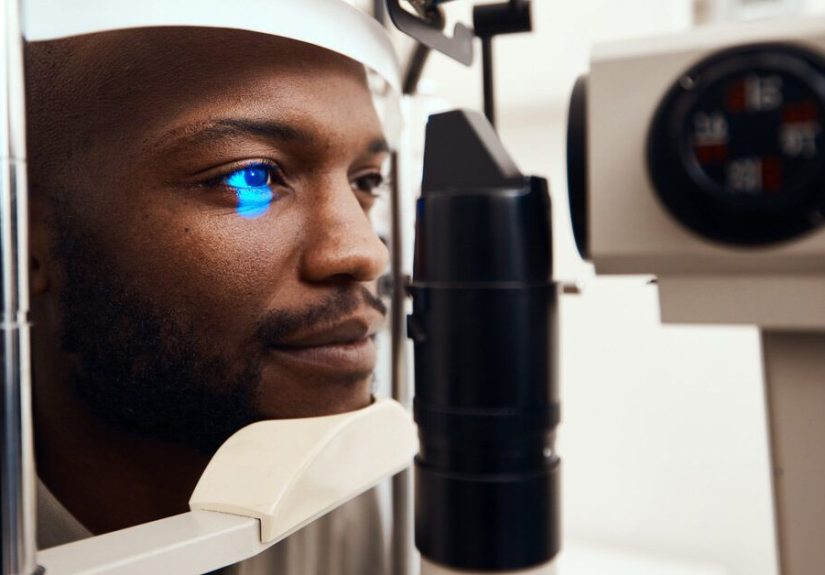
Episcleritis is usually diagnosed clinicallybased on your symptoms and an eye exam. An ophthalmologist (or optometrist) may use a slit lamp to examine which layer is inflamed.
You may be asked about:
- Whether you have AS or other inflammatory conditions (IBD, psoriasis, rheumatoid arthritis, etc.)
- Recurrent episodes of red eye
- Light sensitivity, pain severity, or vision changes
- Joint symptoms, skin rashes, mouth ulcers, bowel symptoms, or recent infections
- Contact lens use
Do you need blood tests?
Not always. Many episcleritis cases are isolated and self-limited. But if episodes are recurrent, severe, nodular, or accompanied by other systemic symptoms, clinicians may consider evaluation for an underlying inflammatory conditionor coordinate with your rheumatologist. If you already have a confirmed AS diagnosis, the “why” may already be known, and the focus becomes management.
Treatment for episcleritis (and how AS changes the plan)
The good news: episcleritis is often benign and self-limited. Treatment is mainly about symptom relief and preventing recurrence when possible.
At-home comfort measures (often enough for mild cases)
- Artificial tears (preservative-free if using often)
- Cold compresses for soothing and redness
- Avoid eye irritants (smoke, dusty environments) when possible
- Take a break from contact lenses until symptoms resolve (and get checked if pain is significant)
Medications an eye clinician might use
- Topical anti-inflammatory drops (sometimes topical NSAIDs) for discomfort/inflammation
- Oral NSAIDs in more symptomatic or persistent cases
- Topical corticosteroid drops for more significant inflammation (these are usually short-term and monitored because steroids can raise eye pressure in some people)
Important note: don’t self-start leftover steroid eye drops from an old prescription. Steroids can worsen certain infections and can complicate undiagnosed problems. Eye drops are not “one size fits all.”
How treating ankylosing spondylitis can help
Because AS is an inflammatory driver, keeping your systemic inflammation controlled can reduce the likelihood of related inflammatory flarespotentially including in the eyes. Your rheumatologist may treat AS with:
- NSAIDs as first-line therapy for many patients
- Biologic medications (such as TNF inhibitors or IL-17 pathway inhibitors) if disease is active or persistent
- Physical therapy and targeted exercise to maintain mobility and posture
If you also experience uveitis (not just episcleritis), medication choice can matter. Some evidence suggests that certain TNF inhibitor monoclonal antibodies may reduce uveitis recurrence more effectively than etanercept, and data on IL-17 inhibition and uveitis risk/prevention are mixed. This is exactly the kind of nuance that benefits from coordinated care between ophthalmology and rheumatology.
Can episcleritis go away and come back?
Yes. Episcleritis can recurespecially nodular episcleritis or when an underlying systemic inflammatory condition exists. Recurrence doesn’t automatically mean “your AS is out of control,” but it can be a clue that overall inflammation needs a closer look.
Ways to reduce the odds of repeat flare-ups
- Keep regular follow-ups with your rheumatologist if your AS is active
- Don’t ignore repeated red-eye episodesget them documented and diagnosed
- Use eye meds exactly as prescribed (especially steroid tapers)
- Protect your eyes from irritants (windy/dusty environments, smoke)
- Know your red flags and act fast when symptoms look like uveitis
When to seek urgent care
If you have AS, it’s tempting to file every new symptom under “my immune system is being weird again.” But with eyes, speed matters. Seek urgent evaluation if you have:
- Eye pain that’s moderate to severe
- Light sensitivity
- Blurred vision or decreased vision
- New floaters or flashing lights
- A red eye that keeps worsening over 24–48 hours
Anterior uveitis is often treatable, but delaying care raises the risk of complications. When in doubt, it’s better to be told “good news, it’s episcleritis” than to miss a uveitis episode.
FAQ
Is episcleritis contagious like pink eye?
Usually, no. Episcleritis is inflammatory, not an infection. If you have significant discharge, crusting, or multiple sick contacts, your clinician may consider conjunctivitis instead.
Can episcleritis affect vision?
Episcleritis typically does not cause vision loss. If your vision is blurry or changing, treat that as a red flag for uveitis, keratitis, or other conditions that need prompt evaluation.
Should I stop my AS medications if I get episcleritis?
Don’t stop systemic medications without talking to your prescribing clinician. Eye inflammation may be a sign that disease control needs adjustmentnot a reason to abruptly discontinue therapy.
Can I wear contacts with episcleritis?
It’s often best to pause contact lens wear until the eye is comfortable and the redness resolves. If you wear contacts and have pain or light sensitivity, get checked promptly to rule out corneal issues.
Conclusion
Episcleritis can be an unwelcome (but often manageable) guest in the AS experience: a red, irritated eye that usually resolves and rarely threatens vision. The bigger reason AS matters, though, is that it raises the odds of more serious inflammatory eye problemsespecially acute anterior uveitis.
The best strategy is simple: learn the symptom differences, respect red flags, and make sure your eye inflammation is correctly diagnosed. With the right carecomfort measures for episcleritis, prompt treatment for uveitis, and good systemic control of ASmost people get back to seeing clearly without letting their immune system write the schedule.
Experiences: What This Can Feel Like in Real Life (and What People Commonly Do)
Note: The stories below are composite “real-world” scenarios drawn from common patient experiences, not descriptions of any one individual.
1) “I thought it was pink eye, but it didn’t act like pink eye.”
A lot of people with AS describe the first episcleritis episode as a jump-scare: you glance in the mirror and one eye looks like you pulled an all-nighter at a smoke-filled concert. The weird part is that it doesn’t always hurt much. Maybe it’s mildly sore, like you slept in your makeup (even if you didn’t), and it waters a bit. No crusting. No thick discharge. Friends confidently diagnose “pink eye” from six feet away, like they’re certified ophthalmologists. In this scenario, people often try artificial tears and a cold compress first. If the redness fades over a few days and the eye feels mostly normal, they’re relieved. Later, when it happens again, they often mention it to their rheumatologist, who suggests an eye exam to confirm the diagnosis and rule out uveitis.
2) “This time it hurt, and light was the enemy.”
Another common story: someone has had episcleritis before, so when their eye turns red again, they assume it’s the same thing. But this time the pain is sharper, and bright light feels offensive. They might notice blur, like the world has been mildly smudged with a thumbprint. That combinationpain + photophobia + blurred visionoften triggers a same-day eye visit, where they learn it’s actually anterior uveitis. People frequently describe feeling grateful they didn’t “wait it out,” because uveitis treatment works best when started early. The experience also changes their future instincts: next time a red eye appears, they don’t just judge by rednessthey judge by pain level, light sensitivity, and any shift in vision.
3) “I didn’t realize my AS meds could affect my eyes.”
It’s also common for people to connect the dots between systemic inflammation and eye flares only after a few episodes. Some notice patterns: eye problems pop up during stressful periods, after stopping NSAIDs, or when their AS symptoms flare. Others learn that medication choice can influence inflammatory eye issues, especially if uveitis is part of the picture. The practical “experience lesson” here is teamwork: when ophthalmology and rheumatology share notes, people feel less like they’re playing medical ping-pong and more like they have a coordinated plan.
4) “The anxiety is realbecause it’s your vision.”
Even when episcleritis is mild, the emotional side can feel bigger than the physical symptoms. People describe the mental spiral: “What if this is the serious one? What if I’m going to lose vision?” Over time, many develop a simple checklist that reduces stress: (1) Is there significant pain? (2) Is light sensitivity intense? (3) Is vision changing? If “yes,” they seek urgent care. If “no,” they still monitor and schedule an eye visit if redness persists. Having a plan tends to replace panic with actionplus it prevents the classic mistake of trying random leftover drops from an old prescription (a move that feels efficient, but can backfire).
If you’ve dealt with AS for a while, you already have resilience skills you didn’t ask for. The eye version is the same: pay attention, act quickly when symptoms suggest uveitis, and don’t let a “probably fine” red eye become a “wish I’d gone in sooner” story.







 Close
Close