
Table of Contents >> Show >> Hide
- What It Is (and Why People Keep Falling for It)
- Key Specs (Real Numbers, Not Vibes)
- Materials and Craftsmanship: Why It Looks “Better” Than a Lookalike
- Where the Factory Modern No. 6 Sconce Works Best
- Hardwired vs Plug-In: The “Commitment Level” Question
- How High Should You Mount It?
- Bulb Choice: Make It Look Expensive (Even If Your Day Was Not)
- Styling the Factory Modern No. 6 Sconce in Real Rooms
- Outdoor Use: Location Ratings Without the Headache
- Care and Maintenance
- Is It Worth It? A Practical Buying Checklist
- Conclusion
- Real-World Experiences (Extra Notes From How People Actually Use It)
Some light fixtures whisper. Others walk into the room like they own the place, clear their throat,
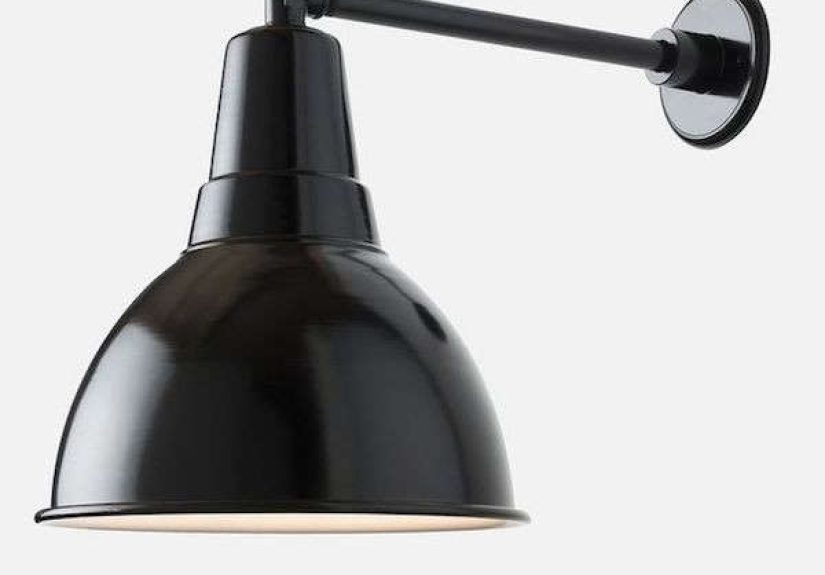
and politely ask your cluttered countertop to step aside. The Factory Modern No. 6 Sconce
is firmly in that second campan industrial wall sconce with a big shade, clean lines, and the kind of
“I’m functional, but I also look expensive” energy that makes a kitchen sink, hallway, or covered porch
feel instantly more intentional.
Designed with classic barn-light practicality in mind, this sconce takes a utilitarian silhouette and
sharpens it into something modern: a large steel shade, a straightforward arm, and a glossy white interior
that’s basically a tiny light-reflecting cheerleader. It’s the lighting equivalent of a crisp white shirt:
simple, confident, and suspiciously good at making everything around it look more put together.
What It Is (and Why People Keep Falling for It)
The Factory Modern No. 6 Sconce is a wall-mounted fixture built around a generous, minimalist shade. The
design cues come from traditional barn and factory lightingfixtures meant to illuminate real work,
not just look pretty in a catalog. Then it gets “Schoolhouse-ified” into something sleek enough for a
renovated bungalow, modern farmhouse, or an industrial loft that owns more plants than furniture.
What makes it click is the balance: the shade is large and visually bold, but the arm is clean and restrained.
The result is a modern industrial sconce that reads as both classic and current. It can play “statement piece”
without turning into the kind of statement that needs to be explained at dinner parties.
Key Specs (Real Numbers, Not Vibes)
If you’re choosing lighting, you deserve measurements that don’t require interpretive dance. Here are the
practical details buyers typically care about:
- Projection: about 19.5 inches from the wall (it reaches outon purpose).
- Shade diameter: about 12 inches (big shade = big presence).
- Canopy diameter: about 4 5/8 inches (compact and tidy on the wall).
- Max wattage: up to 150W (plenty of headroom for modern bulbs).
- Listing: UL listed (important for safety and code-minded projects).
- Use case: commonly described as suitable for sheltered outdoor areas as well as interiors.
- Finish/Color options: often seen in black and white, plus brighter statement colors (depending on the lineup).
- Extras: an optional wire cage is sometimes offered for extra industrial flavor.
Translation: it’s a big, hardworking wall sconce that sits close enough to feel architectural,
but extends far enough to properly light a zonesink, bedside reading spot, workbench, gallery wall,
you name it.
Materials and Craftsmanship: Why It Looks “Better” Than a Lookalike
There are plenty of barn-style sconces out there, but not all barn-style sconces are created equal.
What tends to set this one apart is the emphasis on handcrafted materials and
careful finishing. The shade is steel, and the interior is typically a glossy whitean old
(and smart) trick for maximizing useful light output. The arm and canopy are designed to match the finish,
keeping the fixture visually clean.
In practical terms, “good craftsmanship” shows up as:
- Smoother seams and cleaner lines (especially noticeable on curved metal shades).
- More consistent paint and sheen (no weird blotches, no “why is that corner a different black?” surprises).
- Better hardware feel (mounting parts that don’t look like they came from the “miscellaneous screws” jar).
- More stable stance (important when you’ve got a big shade extending nearly 20 inches off the wall).
That’s why, even if you’ve seen cheaper “similar” wall sconces online, this one tends to read more
polished once it’s actually on the wallwhere the light hits it, where you notice shadows and sheen,
and where your eye compares it to every other finish in your room.
Where the Factory Modern No. 6 Sconce Works Best
This is not a shy sconce. Because it has a wide shade and meaningful projection, it shines (pun absolutely intended)
in locations where you want focused light with a strong visual anchor.
1) Over a Kitchen Sink (The Fan-Favorite)
Over-sink lighting is a classic use case because the sconce can throw light downward while staying out of the way
of upper cabinets. The large shade helps control glare (nobody wants to feel interrogated by their own dish soap).
If you’ve got a sink centered under a window, the silhouette also looks great from outsidelike your house has its
life together.
2) Bedside Reading Light (When Nightstands Are Tiny)
Wall sconces are a cheat code for small bedrooms: you get task lighting without sacrificing surface space.
A sconce with reach is particularly helpful because you can position it to actually light the book, not just
create a moody glow three feet away. And if you choose a warm, high-quality bulb, the effect is cozy rather than clinical.
3) Hallway or Entryway (Architectural “Rhythm”)
In hallways, sconces create a repeating pattern that makes the space feel longer and more deliberate.
General guidance often puts sconces around eye level (and spaced evenly), but the real win is consistency:
same height, same spacing, clean alignment. Your hallway instantly looks like it was designed instead of
“assembled over time.”
4) Covered Porch or Sheltered Exterior
If you’re using it outside, the key phrase is sheltered. Outdoors is not a single condition
it’s a spectrum from “protected from rain” to “getting blasted by sideways storms.” Look for fixtures intended for
the right location rating (dry vs damp vs wet) and match the rating to the actual exposure your wall gets.
A covered porch or protected entry is where this style typically thrives: you get the industrial look without asking
the fixture to survive a monsoon.
Hardwired vs Plug-In: The “Commitment Level” Question
Wall sconces can be either hardwired (permanently connected inside the wall) or plug-in (mounted to the wall and plugged
into an outlet). If you’re renovating or doing new construction, hardwired sconces are clean and integrated. If you’re renting,
testing placement, or simply not in the mood to open up drywall, plug-in sconces are a wildly practical alternative.
The big advantage of plug-in sconces is flexibility: mount, plug in, enjoy. The big advantage of hardwired sconces is
cleanliness: no visible cord. If your space is high-visibility (entryway, dining wall, gallery wall), hardwired may be worth
it. If your space is low-stakes (bedside, reading nook, home office corner), plug-in can be the smarter pathespecially if
you’re still figuring out how you actually use the room day-to-day.
How High Should You Mount It?
The most common guideline is to install wall sconces so the light source sits roughly at eye level for most adults.
In many homes, that lands around 60–72 inches from the finished floor, depending on the room and purpose.
For hallways, some designers also use the “rhythm rule”repeat fixtures at consistent heights and spacing so the corridor
feels intentional.
Practical tips that keep you from re-drilling holes later:
- Mock it up first. Use painter’s tape to outline the canopy and shade on the wall. Step back. Sit down. Walk past it.
- Check clearance. With a ~19.5″ projection, confirm it won’t bonk heads in tight walkways or collide with cabinet doors.
- Match your use case. Task lighting (reading, sink, work surface) can sit a bit more purposefully; ambient hallway sconces can sit more “eye-level classic.”
- Plan switching. If you’re hardwiring, think about switch height and location so you’re not doing awkward wall-patting in the dark.
Bulb Choice: Make It Look Expensive (Even If Your Day Was Not)
The fixture is only half the story. The bulb is the other halfand it’s the half that can accidentally make your kitchen
look like a convenience store at 2 a.m.
Color Temperature: 2700K vs 3000K
For most homes, 2700K reads as softer and warmer (more “relax”), while 3000K reads as a touch
crisper (more “functional but still friendly”). If you’re using the sconce in a kitchen, entry, or anywhere you want clarity,
3000K is often a sweet spot. For bedrooms and cozy nooks, 2700K can feel more inviting.
Brightness: Don’t Under-Light the Big Shade
A larger shade can visually “handle” a brighter bulb without looking harshespecially with a glossy white interior helping
distribute light. If you want the fixture to act as real task lighting (sink, reading, work surface), choose a bulb with enough
lumens to do the job, then add a dimmer so you can dial it down when you’re not performing open-heart surgery on a tomato.
CRI: The Secret Ingredient
If you care about how food, skin tones, paint colors, and wood finishes look, consider a bulb with a strong color rendering
reputation (often labeled with CRI information). High-quality light makes everything else look betterwhich is a very unfair
advantage, but we’ll take it.
Styling the Factory Modern No. 6 Sconce in Real Rooms
This sconce is surprisingly adaptable because the shape is simple. It can go industrial, modern farmhouse, Scandinavian,
mid-century-adjacent, or “I bought this because it looked good and I refuse to label my taste.” Here’s how to help it land well:
Modern Farmhouse
Pair a black or white finish with natural wood, warm metals, and simple tile. Over a sink with a clean backsplash, it reads
crisp and classic. Add a dimmer so it can shift from task lighting to evening glow.
Industrial Minimal
Lean into matte metals, concrete, darker paint, and exposed textures. If you opt for an accessory like a wire cage, it’ll feel
more overtly industriallike the fixture just came off a beautifully curated factory floor where everyone drinks oat milk.
Coastal or Casual
A white finish with a glossy interior can look fresh in airy spaces. Use warm bulbs to keep it from feeling too stark, and let the
silhouette act as the “structure” against softer materials.
Outdoor Use: Location Ratings Without the Headache
The outdoor lighting conversation gets confusing fast because people use “outdoor” to mean three different things:
outside but covered, outside but exposed, and outside and basically living in a waterfall.
The practical safety system often boils down to location ratings like dry, damp, and wet.
- Dry: for interiors where moisture isn’t expected.
- Damp: for humid areas or protected exteriors (covered porches, certain bathrooms).
- Wet: for direct water exposure (open rain, spray).
If you’re placing a sconce on an exterior wall, be honest about the exposure. A deeply covered porch is very different from a wall
that gets sideways rain. Match the fixture rating to the reality of your weather. Your future self will thank you, preferably from
a dry doorway.
Care and Maintenance
Metal shades are straightforward: dust regularly, wipe with a soft damp cloth when needed, and avoid harsh abrasives that can dull
the finish. Outdoors (even sheltered), expect more frequent cleaningpollen, dust, and city grime love a nice shade.
If you’re in a coastal area, be extra attentive: salty air is basically a slow-motion test of everyone’s patience and every finish.
Is It Worth It? A Practical Buying Checklist
If you’re considering the Factory Modern No. 6 Sconce, ask yourself:
- Do I want a statement-scale sconce? (12″ shade means it will be seen.)
- Do I have clearance? (19.5″ projection is generous.)
- Is this task lighting or ambiance? (Choose bulb brightness and dimming accordingly.)
- Will it live outdoors? (Confirm sheltered exposure and correct rating.)
- Am I hardwiring or plugging in? (Decide based on commitment level and wall access.)
- What finish ties into my room? (Match hardware, faucet metals, or cabinetry accents.)
The bottom line: this fixture is for people who want that classic barn-light usefulness, but prefer it editedcleaner lines, better
finishing, and a silhouette that looks equally at home above a farmhouse sink or in a modern hallway.
Conclusion
The Factory Modern No. 6 Sconce is a masterclass in why “simple” is often harder (and better) than “busy.”
With its large steel shade, straightforward arm, and thoughtfully reflective interior, it delivers real, usable light while adding
architectural presence. It’s the kind of modern wall sconce that works in kitchens, bedrooms, hallways, and sheltered exteriorsand
looks like it belongs there, not like it’s filling space.
If you want a fixture that feels both practical and polishedindustrial, but not loudthis is a strong contender. Add the right bulb,
plan the mounting height carefully, and you’ll get a sconce that does what lighting should do: make life easier and your room prettier,
without demanding applause every time you flip the switch.
Real-World Experiences (Extra Notes From How People Actually Use It)
A funny thing happens when a sconce gets big enough to be both lighting and “wall architecture”: people stop treating it like an accessory
and start treating it like a decision. And in the case of the Factory Modern No. 6 Sconce, the decision usually starts with a very specific
problem: “My sink area is gloomy,” “My hallway feels like a tunnel,” or “My nightstand is the size of a paperback and a prayer.”
In kitchens, one of the most common real-life placements is above the sinkespecially when there’s a window involved. Homeowners gravitate
toward this solution because a sconce can live in the vertical space between window trim and cabinets (or stand in for cabinets entirely).
The big shade reads like a purposeful focal point, not a last-minute add-on. The practical upside is just as important: the shade helps aim
light downward, so you’re not washing the whole room in brightness when you really just want to see what you’re scrubbing. People who cook a lot
tend to appreciate that the light lands where the work iscutting boards, sink basin, countertop edgeswithout turning every reflective surface
into a glare festival.
In bedrooms, the “experience” conversation is usually about reclaiming space. Wall sconces free up nightstands for the essentials: water,
book, phone charger, and whatever mysterious object you swear you’ll put away tomorrow. The No. 6’s deeper projection can be a plus here because
it can reach toward the bed and behave like real task lighting instead of a decorative glow. The main tip people mention (sometimes after learning
it the hard way): plan your mounting height with your pillow position in mind. If the sconce is too high, you’ll get light in your eyes; too low,
and it can feel visually heavy. Painter’s tape mockups are not “extra”they’re sanity.
In hallways and entryways, the experience tends to be emotional as much as functional. A well-placed pair of sconces can make a narrow corridor
feel wider and warmer. People often describe the result as “hotel-like” (in a good way), because the light becomes layered rather than solely
overhead. If you’ve ever turned on a single ceiling light in a hallway and felt like you were summoning a spaceship, you understand why layered
lighting is beloved. The trick is consistency: align fixture centers, keep spacing intentional, and choose bulbs that don’t clash with nearby lighting
temperatures. Nothing ruins a vibe like one sconce glowing warm while the ceiling light screams blue-white.
For sheltered exterior use, the stories are usually about curb appeal. A barn-inspired sconce with a clean modern profile looks right at home near
doors, garages, and covered patiosespecially on siding, brick, or painted stucco. People like that it looks “substantial” from the street; it doesn’t
disappear the way smaller fixtures can. The practical advice from real installs: think about water exposure honestly. “Covered” can still mean wind-driven
rain, and even sheltered fixtures pick up dust, pollen, and spider webs like it’s their part-time job. A quick wipe-down schedule (especially in spring)
keeps it looking intentional rather than “abandoned but stylish.”
Across all these spaces, one shared experience pops up again and again: the bulb and the dimmer matter more than anyone expects. When people choose a
good-quality warm bulb and add dimming control, they talk about the sconce as a “favorite feature.” When they skip those steps, they talk about it as a
“nice fixture” that somehow never feels quite right. The lesson is simple: the fixture is the form, but the bulb is the mood. Choose accordingly, and the
Factory Modern No. 6 Sconce becomes less of a purchase and more of a permanent upgrade to how your home feels at night.







 Close
Close