
Table of Contents >> Show >> Hide
The internet loves a good mystery, but the Mandela Effect is a special kind of chaos. It does not just make people wonder whether they forgot a detail. It makes them sit upright, narrow their eyes at the screen, and whisper, “Nope. Absolutely not. That is not how I remember it.” One minute you are confidently spelling a snack brand, quoting a movie, or picturing a cartoon character. The next minute, reality strolls in wearing sunglasses and says, “Cute memory. Wrong universe.”
That is exactly why Mandela Effect examples keep going viral. They hit the sweet spot between nostalgia, pop culture, and pure confusion. Across forums, memes, comment sections, and late-night group chats, people keep sharing the same collective false memories again and again. Some are tiny spelling mistakes. Others feel like your brain personally signed a contract with chaos. Here are 30 of the most confusing examples folks online keep bringing up, plus why they continue to mess with people’s minds.
What Is the Mandela Effect, Exactly?
The Mandela Effect is a type of collective false memory. In plain English, that means a large group of people remember the same thing incorrectly. The term took off after many people insisted they remembered Nelson Mandela dying in prison in the 1980s, even though he was released in 1990 and died decades later in 2013.
Psychologists usually point to the same handful of culprits: memory gaps, suggestion, repetition, pattern-matching, and the brain’s deeply annoying habit of polishing rough details until they feel smoother and more familiar. The human mind likes neat stories. So if “Berenstein” sounds more common than “Berenstain,” or “Mirror, mirror” sounds more fairy-tale-ish than the real line, your brain may quietly swap in the version that feels right. The internet then pours gasoline on the confusion by helping millions of people compare notes in real time.
30 Mandela Effect Examples That Still Confuse the Internet
Brand Names and Logos That People Swear Used to Look Different
- Fruit of the Loom and the “missing” cornucopia. This may be the heavyweight champion of logo confusion. A huge number of people remember the Fruit of the Loom logo featuring a cornucopia behind the fruit. The problem? The official logo has become famous for not having one. If your brain still sees that basket-shaped horn, you are in crowded company.
- Febreze, not Febreeze. The extra “e” feels so natural that many people keep insisting the air freshener must have been spelled Febreeze at some point. But the official brand name is Febreze. Apparently our brains looked at “breeze,” nodded approvingly, and made an executive decision.
- Jif, not Jiffy. Peanut butter debates should be about crunchy versus creamy, not whether the jar ever said Jiffy. Plenty of people remember that version, probably because Jif and Skippy got mentally blended into one supersized sandwich memory.
- Oscar Mayer, not Oscar Meyer. The jingle lives rent-free in American brains, yet many people still spell the bologna brand as Meyer. Nope. It is Mayer. That one vowel has caused an unreasonable amount of emotional damage.
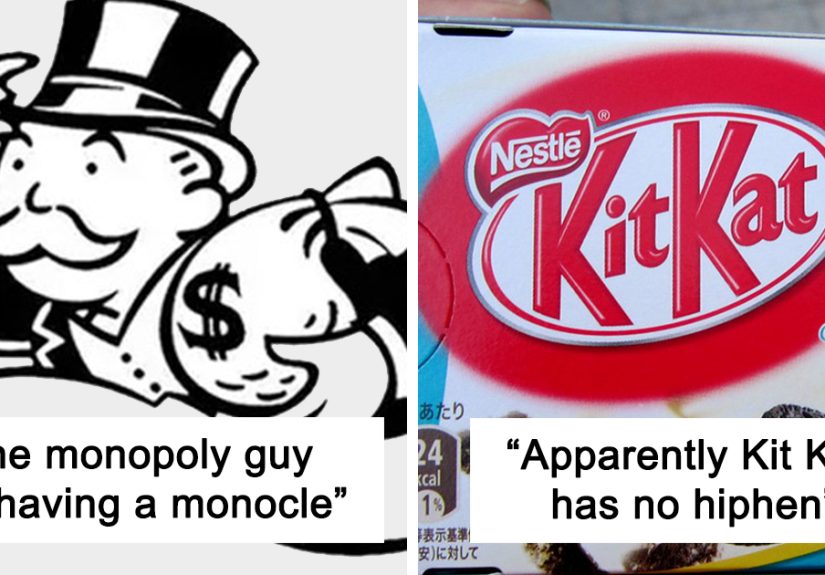
- KIT KAT without the hyphen. Lots of people are certain it used to be Kit-Kat. That tiny dash feels right, looks right, and somehow still is not right. The modern official brand styling leaves the hyphen out, which continues to offend people with very confident snack memories.
- Skechers, not Sketchers. This one trips people because the extra “t” makes the word look more English-like. But the shoe brand is Skechers. The “t” is a ghost. A stylish ghost, but a ghost.
- Froot Loops, not Fruit Loops. You would think the cereal named after colorful fruit-flavored rings would spell the word normally. You would think wrong. It is Froot Loops, which sounds like a prank the alphabet played on breakfast.
- Chick-fil-A, not Chic-fil-A or Chik-fil-A. This one breaks people because they can picture several wrong versions at once. The correct spelling is Chick-fil-A, complete with the “ck” and the hyphens. Brand spelling has never felt so personal.
- Cheez-It, not Cheez-Itz. Many people remember an extra “z” at the end, probably because it sounds more snack-ad-like and slightly louder. But the brand is Cheez-It. Singular. Calm. Unbothered.
- Reddi-wip, not Reddi-Whip. The whipped topping brand drops the “h,” which makes many brains revolt on sight. Reddi-Whip looks more logical, but the official name is Reddi-wip. Sometimes branding simply wakes up and chooses mischief.
Titles, Names, and Characters People Keep Misremembering
- The Berenstain Bears, not The Berenstein Bears. If this revelation made your eyebrows jump, congratulations, you are having the classic experience. For years, readers have insisted the children’s series ended in “-stein.” Officially, it has long been Berenstain, and people remain emotionally unwilling to accept that.
- Sex and the City, not Sex in the City. The mistaken version sounds so natural that people quote it with total confidence. But the HBO title is Sex and the City. One preposition. Endless confusion.
- Interview with the Vampire, not Interview with a Vampire. This is one of those title mix-ups that feels tiny until you realize how sure you were. The famous Anne Rice adaptation is Interview with the Vampire. That little word swap is enough to short-circuit memory.
- Looney Tunes, not Looney Toons. Since Bugs Bunny and friends are cartoons, Toons feels like it should be right. But the franchise is Looney Tunes, a name tied to musical shorts. Logic tried; history won.
- Shazaam with Sinbad was not a real movie. This is one of the strangest and most famous examples online. Many people vividly remember a 1990s genie movie starring comedian Sinbad called Shazaam. The movie most likely got mentally mashed together from other pop culture memories, especially Kazaam starring Shaquille O’Neal. Memory said remix.
- JCPenney, not JC Penny. Department store names should not be this dramatic, yet here we are. People often remember a simple, phonetic spelling. The official name is JCPenney, which makes perfect corporate sense and terrible intuitive sense.
- Nelson Mandela did not die in prison in the 1980s. The phenomenon got its name from this exact false memory. It is not just that people got the date wrong. Some claim they remember news footage and funeral coverage. That is what makes the Mandela Effect so eerie: the confidence can feel stronger than the facts.
- Curious George does not have a tail. This one feels rude. He is a monkey. Monkeys are supposed to come with tails in children’s-book memory logic. But Curious George is famously tail-free, and plenty of people still feel personally betrayed by that detail.
- Richard Simmons and the missing headband. Many people picture fitness icon Richard Simmons bouncing around in a sparkly tank top, short shorts, and a white headband. The energetic vibe is real. The headband, according to the commonly cited evidence, is not.
- Pikachu’s tail does not have a black tip. Lots of fans remember Pikachu with black coloring at the end of the tail. In reality, the tail is mostly yellow with brown at the base. Somehow, thousands of brains added a graphic detail that never officially belonged there.
Quotes, Scenes, and Visual Details That Feel Wrong Even When They’re Right
- Darth Vader never says, “Luke, I am your father.” The actual line is “No, I am your father.” The misquote is so famous that the wrong version practically became its own cultural artifact. At this point, the fake line is almost more famous than the real one.
- The Evil Queen says “Magic Mirror,” not “Mirror, mirror.” Generations of people could recite the fairy-tale version from memory and still get it wrong. The famous line in Snow White and the Seven Dwarfs begins with “Magic Mirror on the wall.” Sorry to every childhood impression ever performed dramatically in a hallway.
- Captain Kirk never says “Beam me up, Scotty” exactly that way. The phrase exists in cultural memory, just not in that exact form in the original series. Variations appear, but the neat, polished version everyone knows is basically a pop culture fan edit created by repetition.
- Hannibal Lecter does not greet Clarice with the exact “Hello, Clarice” line people remember. That phrase became iconic anyway, helped along by trailers, impressions, and endless references. Sometimes the internet does not need the original movie to preserve a quote. It just needs one chilling imitation and a million people repeating it.
- Nobody says “Play it again, Sam” in Casablanca. This line is one of the most famous fake quotes in movie history. It sounds cinematic. It sounds classy. It sounds like something Casablanca would absolutely say. It just… does not.
- Sherlock Holmes never says “Elementary, my dear Watson” in Arthur Conan Doyle’s original stories. The phrase became attached to Holmes so firmly that people treat it like sacred canon. But in the original stories, the exact line never appears. Literature fans love this fact because it ruins everyone’s certainty at once.
- Tom Cruise did not wear Ray-Bans in the famous Risky Business dance scene. People remember the shirt, the socks, the sliding, the attitude, and the shades. But in that iconic scene, the sunglasses are missing. The poster and other scenes likely did the memory blending here.
- The Monopoly Man does not wear a monocle. This one keeps upsetting people because the monocle just feels right for a rich cartoon mascot with a top hat and mustache. But the classic Monopoly character is monocle-free. Your brain may be combining him with Mr. Peanut or just freelancing.
- Forrest Gump says “Life was like a box of chocolates,” not “Life is like a box of chocolates.” The misremembered version is smoother and more quote-ready, which is probably why it spread so easily. The actual line uses the past tense. Memory prefers better merch copy.
- C-3PO was not entirely gold. Many fans picture the Star Wars droid as fully gold from head to toe. In reality, one lower leg appears silver in the original films. It is a small visual detail, but once you notice it, your brain does a double take worthy of a malfunctioning protocol droid.
Why These Mandela Effect Examples Hit So Hard Online
The reason these confusing Mandela Effect examples spread so fast is not just that they are weird. It is that they feel personal. Nobody gets emotionally attached to remembering a random tax form correctly. But people absolutely get attached to cereal boxes from childhood, movies they quoted with friends, cartoon characters they watched before school, and logos they saw hundreds of times while standing in grocery store aisles asking for sugar in a colorful box. These are not abstract facts. They are memory furniture.
That is why internet conversations about the Mandela Effect are so entertaining. Someone posts, “Wait… Curious George never had a tail?” and suddenly the comments become a digital support group. One person says they would bet their entire paycheck he had one. Another says their sibling had the books and they know what they saw. A third person arrives with screenshots, official pages, and the energy of a courtroom attorney. Ten minutes later, nobody has solved the mystery of memory, but everyone has become weirdly invested in monkey anatomy.
There is also a strong social component. Memory is not as solitary as we like to believe. We borrow wording from friends, absorb jokes from TV, repeat misquotes from comedians, and store polished versions of messy details because they are easier to retrieve. Once the wrong version becomes popular enough, it starts to feel more real than the original. The brain loves fluency. If a line sounds smoother or a spelling looks more familiar, it gets promoted to “obviously true” status with shocking speed.
Nostalgia makes the effect even stronger. Childhood memories are often fuzzy around the edges but emotionally vivid in the middle. You may not remember every exact detail of a book cover, but you remember how it felt to read it. That feeling tricks the brain into overconfidence. So when someone points out that it was Berenstain, not Berenstein, the reaction is not mild surprise. It is closer to spiritual offense.
And then, of course, there is the internet’s favorite seasoning: drama. The Mandela Effect gives people a chance to be nostalgic, confused, funny, and slightly conspiratorial all at once. Even when the explanation is simply false memory, it still feels delightfully spooky. It lets ordinary details become conversation starters. A peanut butter label becomes an identity crisis. A movie quote becomes a trust fall. A cartoon tail becomes a full-scale social event.
That is the real reason folks keep sharing these examples online. They are not just asking what is correct. They are asking a bigger question in a much funnier way: How can so many of us feel so certain and still be wrong? The answer is not that our brains are broken. It is that our brains are storytellers, and storytellers sometimes clean up the script before checking the archive.
Final Thoughts
If there is one thing the Mandela Effect teaches us, it is that confidence and accuracy are not the same thing. Human memory is clever, creative, and occasionally a little too eager to improvise. That is why these viral false memory stories never really go out of style. They are funny, unsettling, nostalgic, and just scientific enough to make you rethink every quote, logo, and cartoon character you have ever trusted.
So the next time someone in your group chat insists the Monopoly Man had a monocle or that Darth Vader definitely said the other line, do not panic. You are not glitching. You are just human. Very human. Extremely human. Almost suspiciously human.




 Close
Close