
Table of Contents >> Show >> Hide
- The Myth of the “Perfect Words”
- What Suicidal Teens Are Often Really Saying
- The Reality Check: What the Data Tells Us (and Why It Matters)
- From Helpless to Helpful: My Practical Framework
- 1) Start With the Most Human Thing: Ask Directly
- 2) Do a Brief, Structured Safety Assessment (Not a Vibe Check)
- 3) Map the “Chain”: What Happens Right Before the Crisis Spikes
- 4) Build a Safety Plan That’s Actually Usable at 2:00 a.m.
- 5) Bring the Family InWithout Turning It Into Court
- 6) Use Treatments With Evidence, Not Just Good Intentions
- 7) Follow-Up Is Where Hope Becomes Real
- What Helps (and What Backfires): A Quick Reality Guide
- Hope Isn’t a Pep TalkIt’s a Pattern
- Conclusion: The Quiet Moment When the Room Changes
- Additional : Field Notes From the Hopeful Side
Content note: This article discusses teen suicidal thoughts and crisis care in a non-graphic, prevention-focused way. If you or someone you know in the U.S. needs immediate help, call or text 988 (24/7) or call 911 in an emergency.
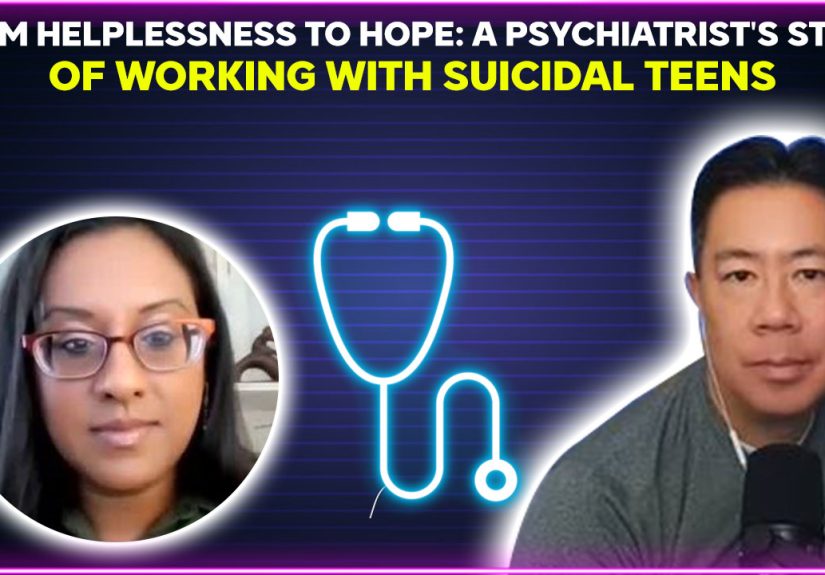
The first time a teenager looked me dead in the eye and said, “I don’t think I can do this anymore,” my brain did what brains do when they’re scared: it sprinted. What do I ask? What do I say? What if I say the wrong thing? What if my “help” becomes another adult speech they’ve learned to nod through while quietly unraveling?
I had spent years studying mental health. I knew diagnoses. I knew meds. I knew the tidy boxes we like to put human pain into because boxes feel safer than chaos. But in that moment, the textbooks didn’t walk into the room with me. Only the teen did. Only their exhaustion did. Only my own helplessness did.
And yetthis is the part I want you to hold ontohelplessness is not the ending. It’s often the beginning. Over time, working with teens in suicidal crisis taught me a different truth: hope isn’t a mood. Hope is a skill. Hope is a plan. Hope is a team sport. And sometimes, hope is as small (and as powerful) as one teen agreeing to one next step.
The Myth of the “Perfect Words”
People imagine suicide prevention as a dramatic movie scene: one heroic sentence delivered at exactly the right time, swelling music, instant turnaround. Real life is less cinematic and more… group project. With scheduling conflicts.
Most of the time, what helps isn’t a magical line. It’s a steady process: asking directly, listening without flinching, building safety and support, treating the underlying problems, and staying connected long enough for the storm to pass. That’s not a single moment. That’s a relationship plus a system that doesn’t quit.
When I first started, I felt pressure to be the “solution.” Now I try to be something better: a calm container. A translator. A coach. Sometimes a referee between a teen’s pain and the adult panic swirling around it. Because when a teen is in crisis, the room can fill up fastwith fear, guilt, anger, confusion, and the desperate adult urge to fix everything immediately.
But teens don’t need us to be perfect. They need us to be present, honest, and consistent.
What Suicidal Teens Are Often Really Saying
Teens rarely arrive with neat language like, “Hello, I am experiencing suicidal ideation due to a mismatch between my coping resources and my stress load.” (If they did, I’d be impressed and slightly worried they’d been reading my notes.)
More often, they say things like:
- “I can’t shut my brain off.”
- “I’m tired.”
- “Everyone would be better without me.”
- “I don’t want to die, I just don’t want to feel like this.”
That last one matters. A lot of teens in suicidal crisis aren’t craving death; they’re craving relief. The goal of treatment is to widen the gap between the feeling and the actionto help them ride out the surge, name what’s happening, and access support before the moment gets dangerous.
One of the most important shifts in my work was learning to treat suicidal thoughts as a signal, not a character flaw. A signal that something is overwhelming: depression, anxiety, trauma, bullying, identity stress, family conflict, substance use, sleep deprivation, a break-up that feels like the end of the universe (because when you’re 15, it kind of is).
The Reality Check: What the Data Tells Us (and Why It Matters)
Suicide is a leading cause of death among young people in the United States. In 2023, it was the second leading cause of death for ages 10–14 and 15–24. That’s not a statistic to memorize; it’s a reason to build better systems.
It’s also why major pediatric and mental health organizations emphasize earlier identification and consistent follow-up. The American Academy of Pediatrics (AAP) has guidance and tools encouraging suicide risk screening in clinical settings, including universal screening for youth age 12 and older and screening when clinically indicated for younger children. The point isn’t to label kids. It’s to catch risk before it quietly escalates.
And because crises don’t schedule themselves for business hours, the U.S. has a nationwide, 24/7 crisis option: 988, the Suicide & Crisis Lifeline, which offers call, text, and chat support. In my practice, I treat 988 as part of the care ecosystemlike a fire extinguisher: not the whole house, but essential when the smoke alarm goes off.
From Helpless to Helpful: My Practical Framework
Over time, I stopped trying to “win” against suicidal thoughts (spoiler: you can’t argue a teenager out of pain). Instead, I built a repeatable approach that centers safety, connection, and evidence-based care.
1) Start With the Most Human Thing: Ask Directly
There’s a stubborn myth that asking about suicidal thoughts “puts the idea in someone’s head.” In clinical practice and public health guidance, the opposite approach is recommended: ask directly and make it safe to answer.
I’ll say something like: “When people feel as overwhelmed as you do, they sometimes think about not being here anymore. Has that been happening for you?”
No drama. No judgment. No shocked face. Just a door opening.
If the teen says yes, I don’t punish honesty with panic. I thank them. I slow down. I let them know we can talk about it and that we’re going to build a plan to get them through the worst moments.
2) Do a Brief, Structured Safety Assessment (Not a Vibe Check)
When a screen is positive, clinicians often use a brief safety assessment to sort what level of support is needed next. The AAP Blueprint describes this as a middle step that helps determine whether it’s safe to go home with supports, whether urgent evaluation is needed, and what the next actions should be.
In plain English, I’m looking for:
- Intensity and frequency of suicidal thoughts
- Recent escalation and how fast the crisis is moving
- Protective factors (relationships, reasons for living, future goalseven small ones)
- Access to immediate support (a safe adult, a reachable clinician, crisis options)
- Co-occurring risks like severe depression, substance use, agitation, trauma reactions, or impulsivity
This isn’t about interrogation. It’s about clarityso we can match the level of care to the level of risk.
3) Map the “Chain”: What Happens Right Before the Crisis Spikes
One of the most useful tools I borrowed from suicide-focused cognitive behavioral approaches is the idea of a “chain analysis”a step-by-step look at what leads up to a crisis. Not to blame anyone, but to find leverage points.
We’ll explore questions like:
- What happened earlier that day?
- What did you start telling yourself?
- What feelings showed up firstshame, panic, loneliness, anger?
- What made it worse? What made it even 1% better?
Teens are often brilliant detectives of their own patterns once they feel safe enough to look.
4) Build a Safety Plan That’s Actually Usable at 2:00 a.m.
A safety plan is not a lecture. It’s not “promise me you won’t.” It’s a practical, personalized set of steps for getting through a surge of suicidal thoughts.
Evidence-based safety planning approaches (often associated with the Stanley-Brown model) typically include:
- Recognizing warning signs (thoughts, feelings, situations)
- Internal coping strategies (what the teen can do without contacting anyone)
- People and places for distraction (safe social contact)
- Who to contact for help (trusted adults, clinicians, crisis supports like 988)
- Making the environment safer (caregivers reducing access to highly lethal means during high-risk periods)
- Reasons for living (the teen’s own wordsshort, real, not cheesy)
The teen helps write it. The caregiver (when appropriate) helps implement it. And we keep it simple enough that it works when the brain is flooded.
5) Bring the Family InWithout Turning It Into Court
Family involvement can be protective, but only if it’s done thoughtfully. Some caregivers arrive blaming themselves. Others arrive blaming the teen. Most arrive terrified and sleep-deprived.
My job is to reframe the situation: “This is not a trial. This is a rescue.”
We focus on:
- How to respond calmly to disclosures (“Thank you for telling me” beats “Why are you doing this to us?”)
- How to make home safer during crisis windows
- How to create predictable check-ins (not surveillance, not ignoring)
- How to reduce shame and increase connection
And yes, we talk about parent emotionsbecause unprocessed adult panic can accidentally push a teen into silence.
6) Use Treatments With Evidence, Not Just Good Intentions
Suicidal crises are rarely “one-issue” problems. Treatment usually includes psychotherapy, family work, and sometimes medication for underlying conditions (like major depression or anxiety) when clinically appropriate.
Two therapy approaches often discussed in the research for high-risk adolescents are:
- Dialectical Behavior Therapy for Adolescents (DBT-A): Skills-focused treatment that targets emotion regulation, distress tolerance, and relationship conflict. A large randomized trial found DBT outperformed supportive therapy in reducing repeat suicide attempts and self-harm behaviors in high-risk youth.
- CBT-SP (Cognitive Behavioral Therapy for Suicide Prevention): A manualized CBT approach designed for adolescents after a recent suicide attempt, emphasizing safety planning, skill-building, family involvement, and relapse prevention.
No single therapy is “the” answer. But teens do better when care is structured, consistent, and designed for suicide riskrather than hoping standard therapy will magically cover it.
7) Follow-Up Is Where Hope Becomes Real
After the crisis peak, the goal is not to declare victory and disappear. It’s to stay connected while the teen rebuilds coping, sleep, social support, and a sense of future.
That might include:
- Early follow-up appointments after emergency or urgent visits
- Coordinated care with primary care and therapists
- School collaboration for accommodations (reduced workload, counseling supports)
- Practicing the safety plan when the teen is calm, not only when they’re overwhelmed
Hope grows when a teen sees a pattern: “When I reach out, someone responds.”
What Helps (and What Backfires): A Quick Reality Guide
Helpful
- Calm, direct questions: “Are you thinking about hurting yourself?” asked gently and clearly.
- Validation without drama: “That sounds unbearable. I’m really glad you told me.”
- Team language: “We’re going to get through this together.”
- Small next steps: Eat something, sleep, text a trusted adult, come to the appointment, use the plan.
Backfires
- Shame and blame: “How could you do this?”
- Minimizing: “You have a good lifebe grateful.”
- Forcing secrecy: “Don’t tell anyone; it will look bad.”
- All-or-nothing ultimatums: “If you ever feel this way again, you’re grounded forever.” (Teens become quieter, not safer.)
Hope Isn’t a Pep TalkIt’s a Pattern
Here’s what surprised me most: teens don’t usually need convincing that life is wonderful. That’s a tall order, especially on a bad day. What they need is evidence that pain changesand that they can survive the worst moments without being alone in them.
So I stopped trying to sell “happiness.” I started helping teens build stability:
- Sleep that isn’t wrecked by 2:00 a.m. doom-scrolling
- Skills for panic, shame, and anger
- Adults who respond instead of react
- Friends who are safe, not just popular
- A future that’s specific (a class, a sport, a job, a dog) instead of abstract (“someday you’ll be happy!”)
And slowly, helplessness shifts. Not because the world becomes easy, but because the teen becomes less alone, less trapped, and more equipped.
Conclusion: The Quiet Moment When the Room Changes
There’s a moment I’ve witnessed more times than I can count. It’s not dramatic. It’s not even loud. The teen is still tired. The problems still exist. But something shiftsusually after we’ve named the pain without judgment and built a plan that feels doable.
They’ll say, “Okay… I can try that.”
That sentence is not a finish line. It’s a door. And on the other side of that door is the work that turns helplessness into hope: consistent support, evidence-based care, family collaboration, and the stubborn belief that a teen’s worst moment should never get the final word.
Additional : Field Notes From the Hopeful Side
People sometimes ask me, “How do you not take this home with you?” The honest answer is: I do, sometimes. Not in the sense of crossing professional boundaries, but in the way any human carries the weight of another human’s suffering. The trick isn’t to become numb. The trick is to build containerssupervision, consultation, teamwork, and routines that keep the work sustainable.
Here are a few experiences (composite stories with details changed) that taught me what hope looks like in real life:
1) The teen who couldn’t name a reason to liveuntil we stopped pressuring them. When I asked, “What keeps you here?” they went blank. So we tried a different question: “What kept you here today?” The answer was small: “My little brother needed help with homework.” Small is fine. Small is real. Small is a starting point.
2) The caregiver who thought love was the same as control. They wanted to monitor every message, every step, every breath. We reframed: safety requires structure, yesbut recovery requires trust. We built check-ins that were consistent but not suffocating, and the teen started talking more, not less.
3) The safety plan that faileduntil we made it simpler. The first version was three pages. Beautiful. Comprehensive. Useless at midnight. We cut it down to a handful of steps, put it on the teen’s phone, and practiced it when they felt okay. Suddenly it worked.
4) The teen whose “attitude problem” was actually untreated anxiety. Once we treated the anxiety (therapy skills, family coaching, and appropriate clinical care), the irritability softened. Their suicidal thoughts didn’t vanish overnightbut they became less intense and less frequent.
5) The school meeting that turned everything around. The teen was drowning in missed work and shame. We set up a short-term academic plan: reduced load, clear deadlines, one trusted staff member for check-ins. The teen felt less trapped. Risk dropped because the future stopped looking like an impossible wall.
6) The power of one non-judgmental adult. Sometimes the “protective factor” isn’t a program. It’s a coach who says, “You matter here,” and means it. A grandparent who keeps showing up. A counselor who answers the email. A pediatrician who screens, asks, and follows up instead of hoping someone else will handle it.
7) My own shift from rescuer to collaborator. Early on, I thought my job was to pull teens out of the water. Now I think it’s to teach swimming while building lifeguards around them. Therapy skills, family skills, school supports, crisis resources, follow-up carelayers that catch a teen before they hit the bottom.
Hope, in my office, doesn’t look like constant smiles. It looks like a teen learning to say, “I’m not okay,” and an adult responding, “Thank you for telling me. Let’s use the plan.” Over and over. Until the teen starts to believe: feelings are real, but they are not foreverand I don’t have to face them alone.





 Close
Close