
Table of Contents >> Show >> Hide
- What Is the Global Combat Air Programme?
- Why GCAP Matters to Japan, Italy, and the U.K.
- What Kind of Fighter Is GCAP Trying to Build?
- How the Program Is Structured
- The Big Challenges Nobody Can Ignore
- How GCAP Compares with Rival Efforts
- What Happens Next?
- Experience on the Ground: What GCAP Really Feels Like Beyond the Headlines
- Final Thoughts
- SEO Tags
Building a new fighter jet used to be hard enough when one country tried it alone. Now imagine three countries, three defense cultures, three industrial bases, three parliaments, and roughly one million meetings. That, in a nutshell, is the Global Combat Air Programme, or GCAP. It is the joint effort by Japan, Italy, and the United Kingdom to build a next-generation combat aircraft for service around 2035. And no, this is not just another shiny concept drawing designed to make defense expo attendees spill espresso on their lanyards. GCAP is already becoming one of the most important military aerospace programs of the 2030s.
For Japan, the project is a major strategic shift: a country that long relied heavily on U.S. systems is now helping shape a new multinational fighter at the design level. For Italy, GCAP is both a defense commitment and an industrial bet, giving its aerospace sector a seat at the head table instead of a folding chair near the snacks. For the U.K., it is the centerpiece of its post-Typhoon combat air future and a test of whether “Global Britain” can still build something truly global and truly serious.
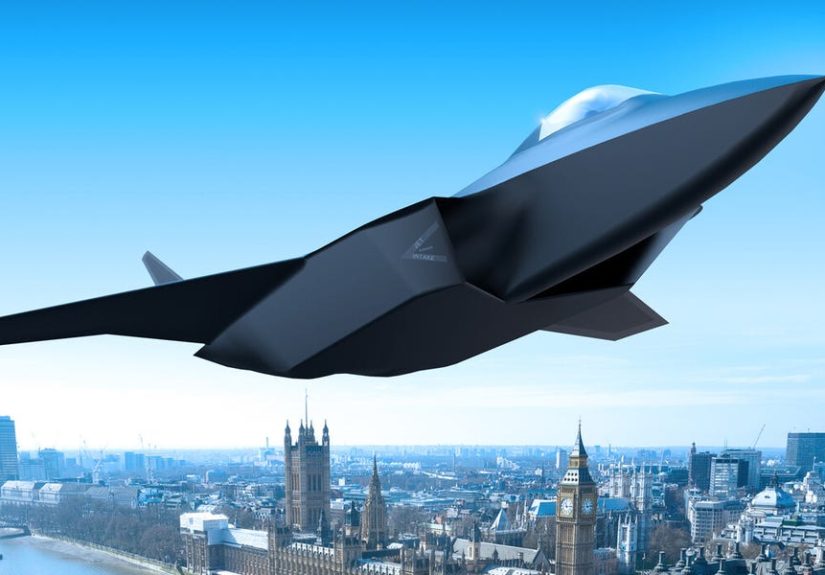
The result is not simply a new jet. GCAP is better understood as a broader combat air ecosystem built around a crewed aircraft, advanced sensors, powerful networking, new weapons, and cooperation with uncrewed systems. In plain English: this fighter is supposed to think faster, see farther, share more data, and hit harder than today’s platforms. In less plain English: it aims to be a sixth-generation aircraft without becoming a sixth-generation budget headache. That second part may prove trickier.
What Is the Global Combat Air Programme?
From separate ambitions to one shared project
GCAP officially emerged in late 2022, when Japan, Italy, and the U.K. agreed to combine their efforts on a next-generation fighter. The move effectively brought together the U.K.-led Tempest effort and Japan’s next-fighter ambitions into a single trilateral program, with Italy as a full partner. That mattered because modern fighters are no longer just airplanes with attitude. They are software-heavy, sensor-rich, weapons-connected, supply-chain-devouring national projects. Sharing cost, talent, and risk is not a luxury anymore. It is almost the admission fee.
A year later, in 2023, the three governments signed a treaty that gave the project firmer legal and organizational footing. In 2024 and 2025, the structure matured further with the GCAP International Government Organisation, known as GIGO, and then the industry joint venture Edgewing. In other words, GCAP has moved beyond “Wouldn’t this be cool?” and into the less glamorous but more meaningful phase of contracts, governance, management, and engineering.
Why these three countries joined forces
The partnership makes strategic sense. Japan faces a demanding regional security environment and needs a future successor to its F-2 fleet. The U.K. needs to preserve sovereign combat air design skills after Typhoon and alongside F-35 service. Italy wants both operational capability and long-term industrial relevance in Europe’s military aerospace market. Put them together and each nation gets something it could struggle to secure alone: scale, expertise, and geopolitical weight.
There is also a political message here. GCAP links Europe and the Indo-Pacific in a way that few defense programs do. It ties allied industrial policy to shared deterrence goals. That may sound like a sentence written by a committee, but the meaning is real: this aircraft is designed to symbolize that security in Europe and Asia is increasingly connected.
Why GCAP Matters to Japan, Italy, and the U.K.
Japan: from customer mindset to co-designer mindset
Japan’s role in GCAP may be the most historically significant. For decades, Tokyo’s defense procurement culture was constrained by strict export rules, tight industrial arrangements, and a strategic dependence on the United States. GCAP does not erase that relationship, but it does broaden Japan’s options and experience. Japan is no longer just buying or modifying. It is shaping.
That matters for more than prestige. Designing a fighter means building expertise in mission systems, sensors, propulsion, software integration, advanced manufacturing, and long-term sustainment. It also means giving Japanese industry an opportunity to remain competitive in one of the hardest engineering sectors on Earth. In 2024, Japan also eased rules to allow future exports of the jointly developed fighter under specific conditions, which signaled that GCAP is expected to be more than a domestic-use science project wearing a tie.
Italy: industrial leverage with strategic range
Italy has a talent for staying central in multinational aerospace efforts, and GCAP keeps that tradition alive. Leonardo plays a leading role, and Italian industry gains access to long-cycle work that supports engineering, electronics, integration, and manufacturing. For Rome, GCAP is about military capability, yes, but it is also about jobs, technology sovereignty, and influence. A country that helps design the system gets more say over the future system. That is not cynicism. That is procurement physics.
Italy has also shown unusual political energy behind the project, backing it as a national priority and making clear that this is not a side hobby to be funded with sofa-cushion change. The program gives Italy a path to remain central in advanced air combat even as Europe juggles multiple next-generation fighter initiatives.
The United Kingdom: Tempest grows up and gets international
For the U.K., GCAP is the evolution of Tempest from national vision to multinational reality. Britain wants to preserve the ability to design combat aircraft at the top tier rather than becoming merely a buyer, assembler, or loyal customer with good manners. GCAP supports that ambition.
It also helps the U.K. connect defense strategy, industry, exports, and diplomacy in a single program. The British government has consistently framed GCAP as both a security project and an economic one. That makes sense. Combat air programs stretch across decades, sustain skilled workforces, and anchor wider supply chains. Lose that ecosystem, and rebuilding it later is like trying to reassemble a stealth jet from memory and leftover PowerPoint slides.
What Kind of Fighter Is GCAP Trying to Build?
Not just stealth, but range, data, and adaptability
The easy headline is that GCAP is building a stealth fighter. That is true, but it is not enough. Every serious next-generation program now talks about low observability, sensor fusion, and connectivity. The real question is how well a platform turns those ideas into useful combat advantage. GCAP’s promise is a long-range, highly networked aircraft able to process enormous amounts of information, fuse that data rapidly, and work as part of a larger team of systems.
Public concept updates have pointed toward an evolved design with a larger wingspan than earlier concepts, suggesting a strong emphasis on aerodynamics, range, and payload flexibility. That makes sense for partner nations that may need to operate across wide distances and contested airspace. A future fighter that is stealthy but constantly thirsty and short-legged would be like buying a racehorse that faints near the mailbox.
A crewed aircraft at the center of a wider combat family
One of the most important features of GCAP is that the fighter is not meant to fight alone. The program is increasingly associated with a broader family of systems, including uncrewed or autonomous collaborative platforms. That means the jet could act less like a lone duelist and more like a battlefield quarterback, managing weapons, sensors, and supporting drones while staying connected to wider networks.
This is where the phrase “next-generation fighter” can be a little misleading. The airplane is the star, but the software, communications, and system architecture may be just as important. The winning platform will not necessarily be the one with the prettiest silhouette at an airshow. It will be the one that makes the best decisions, distributes the most useful information, and survives the longest under pressure.
The industrial stack behind the aircraft
The lead system integrators are BAE Systems for the U.K., Leonardo for Italy, and Mitsubishi Heavy Industries for Japan. Beyond them is a deeper industrial bench that includes propulsion, weapons, avionics, sensing, and communications specialists. This matters because advanced fighters are not built by one heroic prime contractor dramatically tightening a bolt at sunset. They are built by sprawling, highly specialized industrial networks that have to behave like an orchestra instead of a garage band.
That industrial depth is one of GCAP’s strongest selling points. The partner countries are not starting from scratch. They bring real experience from Typhoon, F-35 participation, advanced electronics, propulsion work, and systems integration. The challenge is not whether they know how to build advanced aerospace technology. The challenge is whether they can align priorities, protect sensitive technology, and move fast enough.
How the Program Is Structured
Governments: GIGO
GCAP needed a government structure that would prevent the classic multinational-program disease: endless delay caused by everyone waiting for everyone else to define what everyone already agreed to define last quarter. The answer was GIGO, the trilateral government organization created to manage the program on behalf of the three nations. Its headquarters are in the U.K., with leadership arrangements designed to reflect the program’s equal-partnership language.
The existence of a dedicated international government body is a big deal. It suggests the partners understand that governance can make or break a program as surely as propulsion or radar performance. Aircraft do not slip only because engineers fail. They slip because decision-making structures fail, budgets wobble, or partners start guarding national interests like dragons guarding treasure.
Industry: Edgewing
On the industry side, Edgewing now serves as the joint venture responsible for leading design and development. It is the program’s industrial nerve center, even though manufacturing and final assembly will still rely heavily on national champions and the broader supply chain in each country. This setup tries to balance unity and sovereignty: one multinational industrial structure, but meaningful work distributed across all three partners.
That is smart in theory. In practice, it means constant negotiation over workshare, intellectual property, national priorities, and timing. Which is to say, GCAP has adopted the adult version of a group project. The difference is that this one costs billions and has national strategy attached to it.
The Big Challenges Nobody Can Ignore
The 2035 deadline is ambitious
GCAP aims to field the aircraft by 2035. That is ambitious in any era and especially ambitious in one where software integration, supply-chain resilience, cyber protection, and electronic warfare demands are all getting tougher. The timeline is possible, but it leaves limited room for ceremonial dithering. Every delay compounds.
Money still decides everything
However exciting the concept art may be, fighter programs live or die on stable funding. Recent developments have shown progress, including major contract activity and fresh commitments from partner governments, but they have also reminded observers that the financial side of GCAP is not a decorative footnote. It is the runway. If one nation slows, the others feel it. If cost growth continues, domestic political debates will become sharper, not softer.
Technology sharing can be awkward
Another challenge is technology transfer. Multinational programs always promise trust and cooperation. Then someone remembers export controls, security classification, national industrial policy, and the phrase “sensitive capability.” Reports of tension over sharing some technologies are not surprising. They are almost part of the genre. Still, these disputes matter because GCAP’s success depends on genuine integration. You cannot build a truly common fighter if every country behaves like it is lending out its lawn mower under armed supervision.
How GCAP Compares with Rival Efforts
GCAP is not alone in the next-generation race. Europe also has the Future Combat Air System effort led by France, Germany, and Spain. The United States is pursuing its own future air-combat concepts, including collaborative aircraft ideas and advanced fighter development paths. Against that backdrop, GCAP’s advantage may be its relative clarity of purpose. The three partners know they need a replacement capability, they have formalized governance, and industry has increasingly taken shape around a concrete development structure.
That does not guarantee victory, but it gives GCAP momentum. And momentum matters in defense aerospace because programs attract suppliers, talent, and political commitment when they appear real, funded, and moving. Nobody wants to join the world’s most elegant dead end.
What Happens Next?
The next few years will reveal whether GCAP can translate concept, treaty, and industrial architecture into steady delivery. Watch for demonstrator progress, subsystem contracts, software architecture milestones, and signs that the three nations are staying aligned on requirements. Watch funding decisions closely too. In defense, optimism is nice, but appropriations are nicer.
As of now, GCAP looks less like a fantasy and more like a serious strategic wager. If it works, Japan, Italy, and the U.K. will not just field a new fighter. They will prove that a cross-regional coalition can build a world-class combat air system together. If it stumbles, the reasons will likely be familiar: cost, schedule, politics, and the timeless human belief that complex international programs somehow become easier if everyone simply says “synergy” often enough.
Experience on the Ground: What GCAP Really Feels Like Beyond the Headlines
One of the most interesting parts of the GCAP story is that the experience of the program changes depending on where you stand. From the outside, it looks like a sleek strategic project with a clean logo and very confident press releases. From the inside, it probably feels more like a marathon being run on a moving sidewalk while three coaches argue about pacing. That does not mean the program is broken. It means the program is real.
For engineers, GCAP is likely the experience of living in permanent translation mode. Not just language translation, although that matters too, but technical translation. Requirements have to become code. National preferences have to become common standards. Air force doctrine has to become software logic, sensor architecture, propulsion decisions, and cockpit design. The work is deeply exciting because it sits at the frontier of aerospace, but it is also demanding in the most unglamorous ways. Precision, patience, and documentation are probably doing as much heavy lifting here as inspiration.
For pilots and planners, the experience is different. They are not just waiting for a prettier aircraft. They are thinking about survivability, decision speed, sensor overload, electronic warfare, logistics, and how a future jet fits into a wider force. A next-generation fighter must be more than fast and stealthy. It has to reduce workload in the cockpit while increasing combat awareness. It has to help a pilot make better decisions in less time. That sounds wonderful until you remember how brutally hard it is to make complex systems feel intuitive under stress.
For policymakers, GCAP feels like a strategic balancing act. Every announcement has at least three audiences: domestic voters, allied capitals, and industry. Political leaders have to sell the project as security, jobs, innovation, and alliance-building all at once. Miss one of those arguments and support gets shakier. Miss two and the budget committees start sharpening pencils with visible enthusiasm.
For suppliers and smaller firms, GCAP can feel like a once-in-a-generation door opening. Major programs create opportunities far beyond the famous prime contractors. Electronics, materials, software, cybersecurity, simulation, testing, manufacturing tools, and maintenance planning all matter. For many companies, just getting onto the edge of a program like this can shape hiring, investment, and research for years. That is why national governments talk so much about industrial ecosystems. It is not just slogan material. It is how capability survives between generations of aircraft.
And for ordinary observers, including taxpayers, defense analysts, and aviation fans, the experience of following GCAP is oddly emotional. It is part excitement, part skepticism, part spreadsheet anxiety. There is the thrill of seeing a rare multinational fighter effort actually take shape, but there is also the memory of how hard big defense programs can be. People want the jet to be revolutionary, affordable, sovereign, exportable, digitally brilliant, and ready on time. That is a very human wish list. It is also the kind of wish list that causes project managers to stare silently at walls.
Still, that human dimension is exactly why GCAP matters. This is not merely a machine under development. It is a long-term test of trust between nations, trust between governments and industry, and trust that democratic allies can still build difficult things together. If GCAP succeeds, the experience of the program will be remembered as the uncomfortable but necessary work of building the next era of combat air power. If it fails, people will say it was too ambitious. Frankly, that is what people say about nearly every meaningful aerospace program right up until the moment it flies.
Final Thoughts
GCAP is one of the most consequential military aviation projects now underway. It gives Japan, Italy, and the U.K. a chance to shape the future of air combat rather than waiting for someone else to do it for them. The fighter at the center of the program matters enormously, but so do the institutions, industrial partnerships, export rules, budgets, and political trust surrounding it.
In the best-case scenario, GCAP delivers a powerful new combat aircraft and a durable model for allied high-end defense cooperation. In the worst-case scenario, it becomes a cautionary tale told in conference rooms with very expensive coffee. Right now, though, the balance of evidence says the program is moving, maturing, and worth watching closely. For Japan, Italy, and the U.K., this is not just a new fighter. It is a statement about what kind of defense future they believe they can build together.





 Close
Close