
Table of Contents >> Show >> Hide
- What Exactly Is Snickers Salad?
- Why Is It Called a Salad When It Is Clearly Not a Salad?
- Why Thanksgiving, of All Places?
- The Midwest’s Dessert Salad Tradition
- Where Did Snickers Salad Come From?
- Why Outsiders Are So Confused by It
- How Families Personalize It
- What Snickers Salad Says About Midwestern Food Culture
- Does Snickers Salad Actually Belong on the Thanksgiving Table?
- A 500-Word Experience of Snickers Salad at a Midwestern Thanksgiving
- Conclusion
- SEO Tags
Every Thanksgiving table has that one dish capable of stopping conversation mid-bite. In some homes, it is oyster stuffing. In others, it is the aunt who insists cranberry sauce must retain the perfect can-shaped ridges or civilization will fall. But across parts of the Midwest, the true conversation-starter is a bowl of Snickers salad: a fluffy, sweet, creamy, crunchy creation made with chopped apples, candy bars, whipped topping, and pudding, all masquerading under the suspiciously wholesome name of “salad.”
If you did not grow up with it, Snickers salad sounds like a prank pulled by a mischievous church cookbook. If you did grow up with it, the dish barely needs explanation. It belongs at potlucks, family reunions, holiday spreads, and yes, Thanksgiving. It sits comfortably beside turkey, stuffing, green bean casserole, and rolls as if candy bars in a side dish are the most natural thing in the world. In the Midwest, that logic checks out. Here, the word salad has always been a little more flexible than outsiders expect.
That is what makes Snickers salad such a perfect Thanksgiving mystery. It is funny, nostalgic, slightly chaotic, and more culturally revealing than it first appears. Underneath the whipped topping and chopped candy is a story about regional taste, thrift, church-basement hospitality, and the Midwestern talent for turning a humble bowl into an edible family legend.
What Exactly Is Snickers Salad?
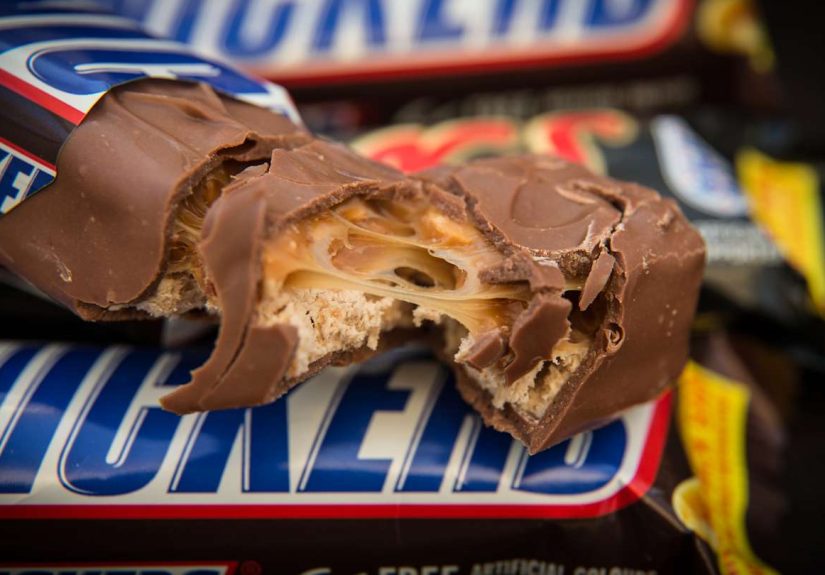
At its core, Snickers salad is a dessert salad built from a few familiar ingredients: tart apples, chopped Snickers bars, whipped topping, and some form of pudding mixture, usually vanilla or butterscotch. Some families add caramel sauce, cream cheese, marshmallows, or extra peanuts. Others keep it simple and let the candy bars do the heavy lifting. Either way, the result lands somewhere between fruit salad, fluff dessert, and the world’s most socially acceptable Halloween-candy remix.
The flavor works better than skeptics expect. Tart apples cut through the sweetness. The chocolate, caramel, and peanuts from the candy bar add texture and richness. The pudding and whipped topping bind everything into a soft, airy cloud that tastes like a caramel apple wandered into a holiday dessert buffet and got very comfortable.
That contrast is the whole magic trick. Snickers salad is not elegant, but it is oddly balanced. It is creamy without being heavy, sweet without being one-note, crunchy without trying too hard. It is the kind of dish that inspires suspicion in theory and second helpings in practice.
Why Is It Called a Salad When It Is Clearly Not a Salad?
Now we arrive at the great Midwestern plot twist: in much of the region, “salad” does not always mean lettuce. It can also mean a chilled bowl of ingredients mixed with something creamy, spooned into a serving dish, and proudly parked on the dinner table beside the savory items. If that sounds vague, welcome to the club.
Midwestern salad culture has long included fruit salads, Jell-O salads, cookie salads, pretzel salads, fluff salads, and other culinary categories that would make a strict botanist lie down for a while. These dishes are not mistakes. They are traditions. Many came from eras when convenience foods, canned fruit, gelatin, whipped topping, and church community cookbooks shaped home cooking. A dish did not need romaine to earn the title of salad. It simply needed to be mixed in a bowl, chilled, and shareable.
Snickers salad fits beautifully into that lineage. It has the sweetness of dessert, the scoopability of a side dish, and the potluck energy of something that disappears faster than anyone wants to admit. In the Midwest, whether it is a side or a dessert often depends on one practical question: which end of the table is it sitting on?
Why Thanksgiving, of All Places?
Thanksgiving is the ideal habitat for Snickers salad because the holiday already celebrates abundance, nostalgia, and dishes that no one eats any other Thursday in November. It is the one meal where a table can hold roasted turkey, sweet potatoes with marshmallows, cranberry sauce, buttery rolls, pickles, pie, and a suspiciously cheerful bowl of candy-bar fluff without anyone calling the authorities.
Snickers salad also solves several Thanksgiving problems at once. It is easy to make ahead. It requires little to no cooking. It feeds a crowd. It offers a cold, creamy contrast to all the hot, beige, and casserole-adjacent foods on the table. And perhaps most important, it feels festive without demanding the effort of a layer cake or the precision of a pie crust.
For many families, Thanksgiving menus are built less on strict culinary rules than on emotional inheritance. If Grandma made it, it belongs. If everyone expects it, it stays. If an uncle once made a joke about it in 1998 and the family still repeats that joke every year, its place is basically federally protected. Snickers salad thrives in that environment. It is not there because food scholars declared it essential. It is there because family memory did.
The Midwest’s Dessert Salad Tradition
Snickers salad makes more sense when seen as part of a broader Midwestern ecosystem of sweet salads. Think Watergate salad, strawberry pretzel salad, frog eye salad, ambrosia, cookie salad, and other retro favorites that combine sweet ingredients with the organizational confidence of side dishes. These recipes are especially tied to potlucks, holidays, funerals, reunions, and church gatherings, where practicality and familiarity matter as much as culinary prestige.
Why did these dishes flourish? Partly because they are crowd-pleasers. Partly because they are affordable. Partly because Midwestern hospitality has always valued generous, low-fuss foods that can be doubled, chilled, transported, and spooned onto paper plates under fluorescent lights. These recipes are not trying to impress a panel of celebrity judges. They are trying to feed twenty people before the coffee gets cold.
There is also a strong nostalgia factor. Dessert salads belong to a category of American food that is deeply emotional. People may laugh at them, but they also defend them fiercely because the dishes are attached to grandmothers, school banquets, holiday buffets, and family stories. A bowl of Snickers salad is never just a bowl of Snickers salad. It is also memory, regional identity, and a declaration that not every tradition needs to be sleek, seasonal, or approved by Instagram.
Where Did Snickers Salad Come From?
Like many beloved potluck dishes, Snickers salad has a fuzzy origin story. No single inventor stands at the center of its legend, wearing a heroic apron and claiming responsibility. That uncertainty is part of the mystery. The dish seems to have emerged from the same Midwestern home-cooking culture that produced countless church-basement classics: recipes shared by neighbors, printed in community cookbooks, adapted by memory, and tweaked according to what was on sale.
It is especially associated with the Upper Midwest, including states such as Iowa, Minnesota, Wisconsin, North Dakota, and South Dakota, while also showing up farther east in places like Indiana. Some food writers have linked its popularity to communities with strong Lutheran and Scandinavian heritage, where potluck culture runs deep and chilled salads of all kinds have long held a secure place on communal tables.
The candy bar itself has older roots. Snickers was first made in 1930 in Chicago and famously named after a horse. Somewhere along the line, some deeply practical genius looked at apples, pudding, and chopped candy bars and decided that yes, this belonged in a serving bowl for polite company. History may not record the exact moment, but Thanksgiving guests across the Midwest have been living with the consequences ever since.
Why Outsiders Are So Confused by It
To non-Midwesterners, Snickers salad often sounds like a dare. The name alone creates expectations that the bowl cannot possibly meet. People hear salad and imagine greens. They hear Snickers and imagine a candy aisle. Their brains do not immediately build a bridge between those two neighborhoods.
Then the bowl arrives, and confusion turns theatrical. Is it a side? Is it dessert? Is it legal? Why is there whipped topping next to the stuffing? Why is Uncle Dave calling this “light”? Why is everyone else acting like the weird one is you?
But that confusion usually fades after a spoonful. The dish tastes familiar even when the name does not. Apples and caramel are a classic pair. Chocolate and peanuts are welcome guests at nearly any feast. Pudding and whipped topping are hardly strangers to American dessert culture. Snickers salad is unusual mostly in branding. Underneath the title, it is a friendly collection of flavors that already know how to get along.
How Families Personalize It
No two families make Snickers salad exactly the same way, which is another reason it feels so rooted in home tradition. Some use Granny Smith apples for maximum tartness. Others choose Honeycrisp or another firm, sweet-tart variety. Some prefer vanilla pudding. Others swear butterscotch gives the dish a deeper caramel note. Some fold in cream cheese for extra richness. Others say that is unnecessary drama for a dish that is supposed to be easy.
There are also garnish debates, because of course there are. Caramel drizzle makes the bowl look more dessert-like, which some people love and others consider a dangerous step toward honesty. Chopped peanuts add crunch. Mini marshmallows push it further into fluff territory. A few modern versions even go full maximalist with toffee bits or pretzel pieces, as though the original recipe looked at moderation and politely declined.
This flexibility helps explain the dish’s staying power. Snickers salad is not a rigid formula. It is a family conversation. It adapts to taste, budget, mood, and whatever ingredients are hanging around the kitchen on the morning of Thanksgiving.
What Snickers Salad Says About Midwestern Food Culture
The dish may be funny, but it also reveals something important about Midwestern cooking: practicality and warmth often matter more than culinary purity. Midwestern holiday food is full of dishes designed to travel well, stretch far, comfort quickly, and bring people together. Snickers salad checks every box.
It also reflects the region’s gift for turning ordinary ingredients into something communal. You do not need imported truffles or a culinary degree. You need a bowl, a spoon, a few grocery-store staples, and the confidence to put candy bars next to turkey. That confidence, frankly, is admirable.
There is also humor embedded in the whole tradition. Midwestern food culture can be deeply sincere, but it is rarely humorless. Families know Snickers salad is a little ridiculous. That is part of the fun. The dish gets passed around with a smile, a shrug, and often a line like, “It has apples, so it counts.” This is not nutritional science. This is holiday diplomacy.
Does Snickers Salad Actually Belong on the Thanksgiving Table?
Honestly? Yes, if your family wants it there. Thanksgiving is not a museum exhibit. It is a living meal shaped by memory, place, migration, convenience, and preference. A New England table may have oysters. A Southern table may have cornbread dressing and pecan pie. A Midwestern table may absolutely include Snickers salad beside the rolls and relish tray like it pays property taxes.
In fact, Snickers salad makes emotional sense at Thanksgiving because the holiday is about more than tradition with a capital T. It is also about your tradition: the odd, specific, beloved foods that announce your family before anyone says grace. Some dishes are elegant. Some are historic. Some are wildly specific to one zip code and one grandmother. All of them can belong.
And that may be the real solution to the mystery. Snickers salad survives not because everyone understands it, but because the people who love it never needed permission in the first place.
A 500-Word Experience of Snickers Salad at a Midwestern Thanksgiving
Imagine walking into a Midwestern home on Thanksgiving around late morning, when the windows are fogging slightly from the kitchen heat and every horizontal surface has become a staging area for food. Someone is mashing potatoes. Someone else is arguing about whether the rolls should go in now or in ten minutes. A football game hums in the background. On the dining table, among ceramic turkeys and folded napkins, sits a bowl that looks strangely cheerful compared with the beige seriousness of the rest of the meal. That is the Snickers salad.
No one introduces it like a novelty. That is the first clue. It is not treated as weird. It is treated as expected. The bowl has probably been in the family for years, maybe one of those glass ones with a little scalloped edge that appears only on holidays and somehow survives every move. An aunt arrives carrying it with the confidence of a person transporting a crown jewel. She places it on the table, removes the plastic wrap, and there it is: pale, fluffy, studded with apples and candy bar pieces, maybe with a caramel drizzle looping across the top like someone got festive for exactly seven seconds.
The out-of-town guest notices it immediately. There is always one. They lean in, squint, and ask the question everybody has asked at least once: “Wait… what is that?” The room perks up. A cousin grins. An uncle says, “Salad,” with the smug satisfaction of a man delivering devastating comedy. The guest laughs because surely that must be the joke. Then they realize it is not a joke. Forks pause. Someone explains the ingredients with the tone of a person describing a casserole they have made since birth. Apples. Snickers. Pudding. Whipped topping. Maybe caramel. The guest looks delighted, horrified, or both.
Then dinner starts, and the funny thing happens: the bowl stops being a punchline. People scoop some onto their plates almost absentmindedly, the same way they take stuffing or green beans. Kids go for it first because, well, candy. Adults go for it next because they know something outsiders do not: between the salty turkey, buttery potatoes, tangy cranberries, and rich gravy, that cold, sweet bite lands exactly right. It resets the palate. It cools everything down. It sneaks in a little crunch. It is playful in a meal that can otherwise get very brown and very serious.
By dessert, nobody is talking about whether Snickers salad should have been on the table. It already did its job. It sparked conversation, made people laugh, and then quietly became part of the rhythm of the meal. Later, while pie is being sliced and leftovers are packed into mismatched containers, somebody scrapes the last spoonful from the bowl. No one says, “What a strange regional artifact.” They say, “Was there any more?” And that, more than any definition, is how a Midwestern Thanksgiving tradition earns its place.
Conclusion
Snickers salad is more than a quirky recipe with a confusing name. It is a window into Midwestern Thanksgiving culture, where practicality, nostalgia, generosity, and a very relaxed definition of the word salad come together in one bowl. Its origin may be murky, but its appeal is easy to understand once you see it in context. This is a dish built for potlucks, holidays, and family tables where the food does more than feed people. It tells them who they are.
So the next time someone raises an eyebrow at the thought of candy bars in a salad bowl, just remember: Thanksgiving has always made room for the deeply traditional, the wildly sentimental, and the slightly absurd. Snickers salad simply happens to be all three at once.






 Close
Close