
Table of Contents >> Show >> Hide
- The Oscars Moment That Caught Everyone Off Guard
- Why Oliver Hudson’s Reaction Hit So Well
- The Secret Ingredient Was Goldie Hawn Herself
- Andrew Garfield Helped Turn a Presenter Slot Into a Story
- Why the Internet Fell for the Moment
- Oliver Hudson’s Comment Was Funny, but It Was Also Revealing
- Goldie Hawn’s Legacy Keeps Expanding
- What This “Unexpected” Oscars Moment Really Meant
- Related Experiences: Why Moments Like This Stay With Viewers
- Conclusion
Some Oscars moments are polished, rehearsed, and wrapped up with the kind of precision that would make a Swiss watch blush. And then there are the moments that sneak in sideways, steal the room, and leave viewers blinking back tears while clutching a bowl of popcorn they suddenly forgot to eat. Goldie Hawn’s 2025 Oscars appearance delivered exactly that kind of surprise. What began as a standard presenter segment turned into one of the ceremony’s most talked-about emotional highlights, and then, because the universe clearly loves a sequel, Goldie’s son Oliver Hudson jumped in afterward with a response that was equal parts heartfelt, hilarious, and very online.
That combination is precisely why the story kept spreading. It had warmth, family humor, movie-star nostalgia, and just enough live-TV unpredictability to feel wonderfully human. In an awards season often powered by campaign speeches, carefully curated red carpets, and acceptance speeches that sprint between sincerity and orchestra panic, this moment stood out because it felt unguarded. It was about appreciation. It was about grief. It was about comedy saving everyone from drowning in emotion. And it was about a son watching his mother get honored on one of Hollywood’s biggest stages and reacting the only way some sons can: with pride, jokes, and a tiny dash of “Hey, excuse me, am I still your favorite?”
The Oscars Moment That Caught Everyone Off Guard
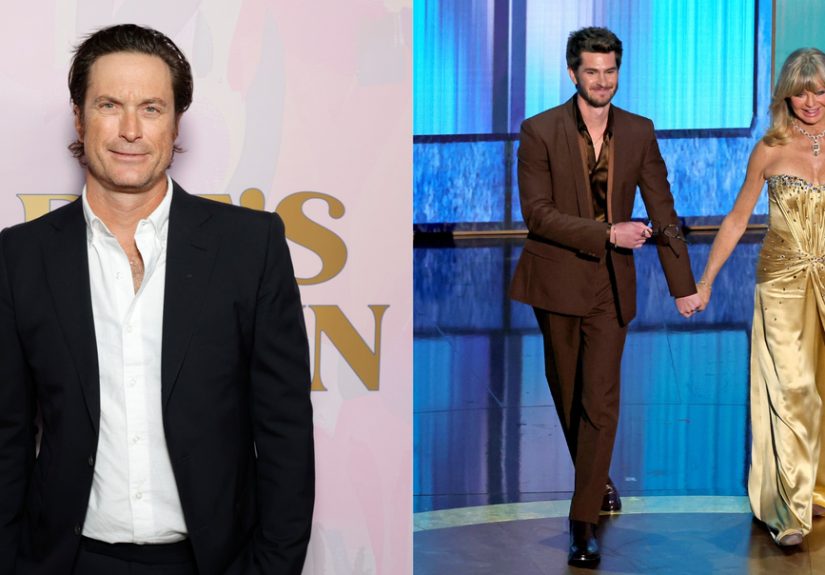
When Goldie Hawn appeared onstage with Andrew Garfield at the 97th Academy Awards, the plan was simple enough: present the animated film awards, smile for the cameras, and keep the show moving. But Garfield paused before the business part of the segment and used the moment to thank Hawn for something much bigger than movie stardom. He shared that Hawn’s work had brought his late mother deep joy and comfort, and he said it in a way that did not sound like an actor reading a line. It sounded like a son speaking from the softest, most vulnerable corner of memory.
That is what changed the temperature in the room. Suddenly, this was no longer just about announcing nominees. It became about what performers can mean to people they may never meet. Hawn, whose screen image has long blended sparkle, mischief, and emotional openness, was visibly moved. Garfield was emotional too. Viewers at home could feel the shift. The Dolby Theatre, for a brief and powerful minute, stopped acting like a venue and started feeling like a shared living room.
Then came another twist. In a bit that added unexpected levity, Hawn joked that she was having trouble reading the teleprompter, and Garfield stepped in to help. The exchange kept the segment from becoming too solemn. It turned a moving tribute into a complete Oscars package: grace, humor, chemistry, and just enough chaos to remind everyone that live television is always one raised eyebrow away from becoming a classic clip.
Why Oliver Hudson’s Reaction Hit So Well
After the ceremony, Oliver Hudson responded in the way only a child of Goldie Hawn could. He did not treat the moment like a formal press release from the Department of Celebrity Emotions. He treated it like family. Hudson praised the segment as touching and unexpected, admitted that he felt proud, and then tossed in the joke that made the whole thing land even harder: he was now slightly concerned that his mother might love Andrew Garfield more than him.
That line worked because it did two jobs at once. First, it honored the emotional weight of the moment. Second, it popped the balloon before the internet could turn the entire thing into a museum exhibit labeled Feelings, Very Serious. Hudson’s comment felt warm instead of performative because it contained real affection. You could hear the son in it, not just the celebrity. He was proud of his mother, touched by Garfield’s tribute, and still perfectly willing to turn the family dynamic into a punchline.
Goldie Hawn’s response only made the exchange better. Rather than ignoring the joke, she played along and gave it the kind of breezy comeback that has fueled her charm for decades. That back-and-forth transformed a touching Oscars moment into a full little family comedy. Suddenly the story had a second layer: not just an emotional tribute onstage, but a playful mother-son exchange afterward that made the entire thing feel even more genuine.
The Secret Ingredient Was Goldie Hawn Herself
None of this works without Goldie Hawn’s particular kind of Hollywood legacy. She is not simply famous. She belongs to that smaller category of stars whose names carry an emotional tone. Mention Hawn, and people do not just think of roles or red carpets. They think of energy. They think of warmth, comic timing, irreverence, glamour without iciness, and a screen presence that suggests she knows the joke, loves the joke, and might improve the joke before lunch.
That is why Garfield’s tribute resonated. He was not talking about fame in an abstract way. He was talking about what Hawn’s films meant inside a home, to a family, to a mother who found joy in them. That is a much more powerful kind of praise than the usual industry compliments. It is not “You are respected.” It is “You mattered in my real life.” Hollywood can hand out trophies. Audiences hand out memory. The second award lasts longer.
Oliver Hudson clearly understands that. In his later comments, he spoke not just as a son but as someone who sees his mother’s broader place in entertainment history. He has described her as a pioneer and an icon, and that framing matters. It reminds readers that the Oscars exchange was not some random sentimental detour. It was a younger generation of actors and audiences recognizing what Goldie Hawn has represented for years: joy without cynicism, comedy without cruelty, and stardom that still feels approachable.
Andrew Garfield Helped Turn a Presenter Slot Into a Story
Andrew Garfield deserves plenty of credit here too. Awards shows are often built around efficiency. Hit your mark. Read the line. Open the envelope. Smile like the lighting owes you money. Garfield, instead, created a pause. A real one. He used his time onstage not to make himself the center of attention, but to thank someone who had made his late mother happy. That kind of generosity is rare enough in everyday life, let alone under stage lights in front of millions.
It also fit Garfield’s public persona. Over the past several years, he has spoken movingly about grief and about the way loss changes the shape of love without erasing it. So his tribute to Hawn did not feel random. It felt consistent with the emotional honesty people already associate with him. He was not manufacturing sentiment for applause. He was extending gratitude in a place where gratitude can sometimes seem alarmingly endangered.
And because Hawn received it with such openness, the segment avoided the danger of becoming awkward or overly grand. Instead, it felt intimate. Not private, exactly, but intimate in the way the best public moments sometimes do: a large audience witnessing a small truth.
Why the Internet Fell for the Moment
The internet, despite its reputation as a carnival run by caffeinated raccoons, still knows how to recognize sincerity when it sees it. That is one reason the moment spread so quickly. Another is that it had layers. There was the emotional tribute. There was Goldie’s reaction. There was the teleprompter bit. There was Oliver Hudson’s joke afterward. There was Goldie’s playful reply. It was not one viral beat; it was a mini narrative arc with a setup, payoff, and encore.
It also tapped into something viewers crave from awards shows in 2025: authenticity that does not feel workshop-tested. Audiences are savvy. They can smell forced sentiment from several ZIP codes away. But this exchange felt spontaneous in spirit, even when parts of the presentation itself were obviously structured. The emotional center of it rang true, and that made the humor around it feel sweeter rather than dismissive.
In other words, it went viral because it gave people a little bit of everything. It had movie-star glamour, family banter, emotional depth, and enough tenderness to make even the most cynical viewer put down the sarcasm for a minute and say, “Okay, fine, that was lovely.”
Oliver Hudson’s Comment Was Funny, but It Was Also Revealing
Hudson’s joke about potentially losing favorite-son status was funny on the surface, but it carried a deeper emotional rhythm underneath. Anyone who has ever watched a parent get publicly celebrated can recognize the mix. There is pride, of course. There is awe. There is that strange moment when someone you know in ordinary family terms is suddenly reflected back at you through the eyes of the world. Your mom is your mom. Then, all at once, she is also a cultural touchstone being thanked on the Oscars stage for brightening someone’s life.
That emotional double vision can be overwhelming. Hudson captured it beautifully without becoming overly sentimental. He let the joke carry the feeling. That is often how families work when love is secure enough. They tease. They exaggerate. They lightly compete for affection they are not actually afraid of losing. The humor does not cancel the tenderness; it proves it.
And that may be the smartest part of his response. He did not try to outdo the moment. He did not over-explain it. He simply joined it. He added a family voice to a public story, and that made the whole thing feel complete.
Goldie Hawn’s Legacy Keeps Expanding
There is another reason this story had staying power: it fed a conversation that had already been bubbling for a while about Goldie Hawn’s place in modern pop culture. She is one of those rare performers whose legacy travels well across generations. Older audiences remember the films that made her a beloved star. Younger viewers know her through family connections, later appearances, clips, quotes, and the cultural halo around her name. She is not trapped in one era. She moves between them.
That is partly why Oliver Hudson’s later remarks about wanting to see his mother back on the big screen drew attention too. His point was simple: she still belongs there. He did not speak about her like a retired legend living on a shelf next to old trophies and tasteful floral arrangements. He spoke about her like a living creative force. That distinction matters. It turns the Oscars story from a nostalgia piece into something more active. Goldie Hawn is not just a symbol of what Hollywood used to be. She is still a reminder of what Hollywood can be when charm, talent, and humanity show up in the same gown.
What This “Unexpected” Oscars Moment Really Meant
At first glance, the whole story looks delightfully small. One presenter thanks another. A son makes a joke. A mother replies. Everyone smiles. Roll credits. But what made it memorable is that it quietly carried several bigger truths inside it.
It reminded audiences that movies do more than entertain. They accompany people through illness, grief, loneliness, and ordinary evenings that later become precious in memory. It showed that a family response can sometimes say more than a formal statement ever could. And it proved, once again, that Goldie Hawn’s appeal is not just about fame. It is about emotional effect. She has spent decades making people laugh, relax, and feel a little lighter. Garfield’s tribute gave that influence a name. Oliver Hudson’s response gave it a family frame.
And maybe that is why this moment lingered. It was not flashy enough to dominate the entire telecast, but it was human enough to outlast it. In a ceremony built around winners and categories, this became the kind of unscripted-feeling exchange people remember after they forget who sat in which row. That is the magic of an unexpected Oscars moment. It does not ask for attention. It earns a permanent room in the emotional scrapbook.
Related Experiences: Why Moments Like This Stay With Viewers
Part of the reason audiences connected so strongly with this Goldie Hawn and Oliver Hudson story is that it mirrors experiences people have in everyday life, just with fewer diamonds and significantly better lighting. Many viewers know what it feels like to watch a parent receive appreciation they rarely stop to claim for themselves. Maybe it happens at a retirement dinner, a school event, a birthday speech, or a random family gathering where someone suddenly tells the truth out loud. The child in the room, no matter how grown up, often has the same reaction Hudson seemed to have: pride arrives first, then emotion sneaks in through a side door, and humor rushes over to keep everyone from completely falling apart.
That is why his comment felt so relatable. It sounded like a famous son, yes, but it also sounded like every adult child who has ever watched the world rediscover something they have known all along. There is a special kind of satisfaction in seeing other people understand why your parent matters. It can be almost disorienting. You spend years knowing them as the person who called to remind you about dinner, worried whether you were sleeping enough, or sent a text with exactly one too many exclamation points. Then suddenly the world says, “No, really, this person changed something for me.” It is moving because it widens your own memory of them.
Moments like that often become family lore. They get replayed at holidays. They get quoted in group chats. Somebody brings them up ten years later and everyone still knows the line. In this case, Oliver Hudson instantly understood the role he needed to play in the family folklore machine. He honored the sincerity, but he also added the joke that makes a memory sticky. Families tend to preserve emotion best when it is wrapped in laughter. Pure sentiment can feel too heavy to carry around all the time. A good joke gives everyone handles.
There is also something especially powerful about seeing grief and gratitude exist in the same exchange. Garfield’s tribute was rooted in love for his late mother. Hawn’s response was grounded in humility and warmth. Hudson’s post added a familial wink. Together, those elements created a full emotional picture instead of a single note. That complexity is what real life feels like. People cry, then laugh, then feel guilty for laughing, then laugh harder because the crying was getting out of hand. The best public moments reflect that messiness instead of sanding it down.
For viewers, then, this was never just a celebrity story. It was a reminder that art lives inside relationships. A film star can become part of a family’s private history. A speech can revive memory. A joke can make tenderness easier to hold. And a son’s playful comment can reveal just how proud he really is. Goldie Hawn’s “unexpected” Oscars moment worked not because it was huge, but because it was familiar in all the right ways. Underneath the glamour, it felt like something people recognized from their own lives: love expressed awkwardly, beautifully, and with impeccable timing.
Conclusion
Goldie Hawn’s Oscars moment did not need pyrotechnics, scandal, or a shocking envelope mix-up to become memorable. It had something better: feeling. Andrew Garfield gave the moment its emotional spark. Goldie Hawn gave it grace. Oliver Hudson gave it the family punchline that made the whole thing breathe. Together, they turned a brief presenter segment into one of the ceremony’s most warmly discussed stories.
In the end, Hudson’s reaction was more than a clever comment. It was a public little love note disguised as a joke. And honestly, that may be the most Goldie Hawn family thing imaginable.





 Close
Close