
Table of Contents >> Show >> Hide
- What Are Dinosaur Eggs in Grow a Garden?
- How to Get Dinosaur Eggs in Grow a Garden
- All Dinosaur Egg Pets and Hatch Chances
- Best Dinosaur Pets Ranked by Usefulness
- How to Hatch Dinosaur Eggs Efficiently
- Best Strategy to Get All Dinosaur Pets
- Common Mistakes Players Make With Dinosaur Eggs
- Which Dinosaur Pet Should You Use First?
- Player Experience Notes: What the Dinosaur Egg Grind Feels Like
- Conclusion
In Grow a Garden, most players start with simple dreams: plant crops, harvest fruit, sell everything, and pretend they are not checking the shop every few minutes like a tiny farming detective. Then the game adds pets, mutations, events, and suddenly your peaceful garden has a dinosaur walking around like it owns the sprinkler system. That is where Dinosaur Eggs come in.
The Grow a Garden Dinosaur Egg is one of the most exciting limited-event eggs because it can hatch prehistoric pets with useful abilities. These pets are not just decorative little lizards with attitude. They can speed up plant growth, duplicate harvested fruit, help spread valuable mutations, improve your movement, and even support future egg hatching. In other words, they can turn your garden from “cute backyard hobby” into “prehistoric profit machine.”
This guide explains how to get Dinosaur Eggs in Grow a Garden, how the hatching system works, every Dinosaur Egg pet, the odds of getting each one, and which pets are worth chasing first. We will also cover practical strategy, common mistakes, and real player-style experience notes so you do not sacrifice your best pets by accident and then stare into the Roblox sky like a tragic farmer in a dinosaur movie.
Important note: Dinosaur Eggs are tied to limited-time Prehistoric/Dino content. If the event is not active when you play, the exact obtain methods may be unavailable unless the developers bring them back, add a rerun, or allow related trading paths. Always check the current in-game event board before spending rare pets.
What Are Dinosaur Eggs in Grow a Garden?
Dinosaur Eggs are special pet eggs introduced through the Prehistoric-themed update in Grow a Garden. Unlike regular pet eggs from the standard Pet Egg Shop, Dinosaur Eggs are event-based and contain only dinosaur pets. That makes them more focused than normal eggs, where you might hatch a wide mix of animals depending on the egg type.
The Dinosaur Egg has a hatch time of about 4 hours and 10 minutes. Once placed in your garden, it must finish incubating before you can claim the pet inside. Like other eggs, the waiting period is part of the grind. The game is basically saying, “Congratulations, you may now practice patience while a digital dinosaur thinks about being born.”
What makes the Dinosaur Egg special is its pet pool. It can hatch six prehistoric pets:
- Raptor
- Triceratops
- Stegosaurus
- Pterodactyl
- Brontosaurus
- T-Rex
Each one has a different hatch chance and ability. Some are easier to get and useful for everyday farming. Others are extremely rare and can become the centerpiece of your entire garden strategy.
How to Get Dinosaur Eggs in Grow a Garden
During the Prehistoric Event, players could obtain Dinosaur Eggs mainly through event progression and pet exchange mechanics. The two most commonly reported paths were Dino Track quests and the Graham pet exchange system.
1. Complete Dino Track Quests
Dino Track quests were one of the main ways to earn Dinosaur Eggs. These quests were connected to the Prehistoric Event and rewarded players for completing event tasks. If you enjoy structured goals, this was the cleaner route because you were not simply gambling away pets. You worked through objectives, claimed rewards, and slowly built your dinosaur collection.
Quest-based methods are usually best for players who do not have many spare pets. If you are newer, trading away useful pets can hurt your progress. Completing quests lets you earn rewards while still keeping your garden team intact.
2. Exchange Pets With Graham
Another method was giving Graham a non-dinosaur pet for a chance to receive 1–3 Dinosaur Eggs. This made duplicate pets more valuable because extras could be converted into a shot at prehistoric rewards. However, this method required judgment. Do not throw your most useful pet into the exchange just because you are excited. A good rule is simple: if you would be sad losing it, do not trade it casually.
The best pets to exchange are duplicates, low-impact pets, or pets you have already replaced with stronger options. Treat the exchange like cleaning your inventory, not emptying your toolbox.
3. Use Event Conversion or DNA-Style Systems When Available
Some versions of the event information described a Pet Mutator or DNA-style conversion process connected to dinosaur rewards. In practice, the idea was similar: provide a pet, wait for the conversion, and receive Dinosaur Eggs or, in some cases, a dinosaur pet directly. Since event systems can be renamed, adjusted, or removed after updates, always verify what the current in-game NPC or machine says before using it.
All Dinosaur Egg Pets and Hatch Chances
The Dinosaur Egg contains six pets. The hatch chances are very uneven, which means getting a Raptor or Triceratops is realistic, while getting a T-Rex is the kind of moment that makes players take screenshots before breathing again.
| Pet | Rarity | Hatch Chance | Main Ability | Best Use |
|---|---|---|---|---|
| Raptor | Legendary | 35% | Small chance to apply Amber mutation after collecting fruit; increases movement speed. | Mutation farming and faster garden movement. |
| Triceratops | Legendary | 32.5% | Rams into random plants and advances their growth. | Speeding up slow-growing crops. |
| Stegosaurus | Legendary | 28% | Small chance to duplicate harvested fruit, with extra value for Prehistoric plants. | Harvest profit and crop duplication. |
| Pterodactyl | Legendary | 3% | Applies Windstruck mutation to fruits with a chance for Twisted; increases jump height. | Mutation support and mobility. |
| Brontosaurus | Mythical | 1% | Improves the base size and weight of pets hatched from eggs. | Long-term egg hatching strategy. |
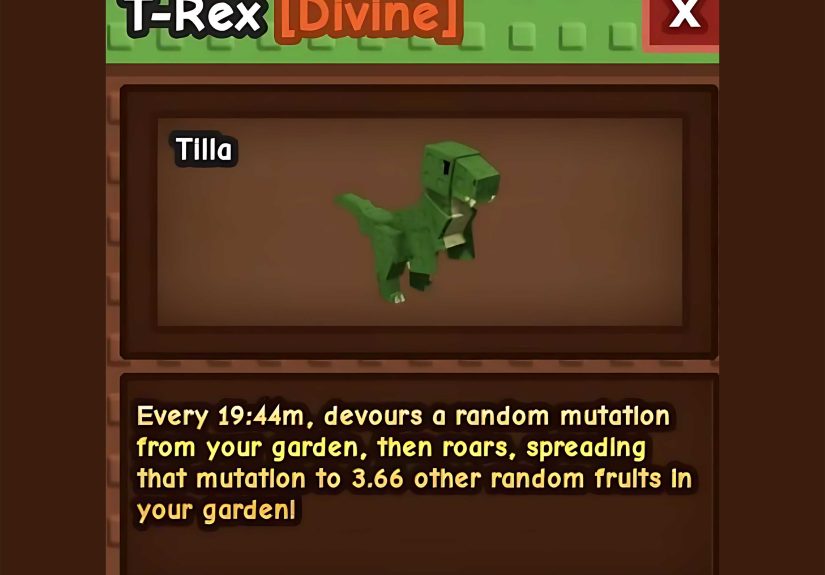
| T-Rex | Divine | 0.5% | Takes a mutation from one fruit and spreads it to other fruits in the garden. | High-value mutation spreading. |
Best Dinosaur Pets Ranked by Usefulness
1. T-Rex: The Dream Hatch
The T-Rex is the rarest Dinosaur Egg pet, and for good reason. Its Apex Predator ability can take a mutation from one fruit and spread it to others. In a game where mutations can dramatically improve crop value, this is huge. A good mutation on one fruit is nice. A good mutation spread across multiple fruits is the kind of farming math that makes your Sheckles balance smile.
The downside is obvious: the T-Rex has only a 0.5% hatch chance. You should not build your entire strategy around getting one quickly. Think of it as the jackpot, not the plan.
2. Brontosaurus: The Long-Term Planner
The Brontosaurus is not flashy in the same way as the T-Rex, but it is powerful for players who hatch many eggs. Its Giant Incubator ability improves the base size and weight of pets hatched from eggs. That means it is best used before a serious hatching session.
Because the Brontosaurus has a 1% hatch chance, it is still very rare. If you get one, do not treat it like a random collection piece. Use it as a support pet when opening important eggs.
3. Pterodactyl: Mutation Utility With Style
The Pterodactyl is a rare hatch at 3%, and it brings a strong combination of fruit mutation support and movement utility. Its Sky Reptile trait can apply Windstruck to multiple nearby fruits, with a chance of Twisted appearing as well. It also improves jump height, which is not always about profit but makes moving around the garden feel smoother.
If your playstyle focuses on stacking valuable crop effects, Pterodactyl is worth celebrating. It may not roar like a T-Rex, but it quietly helps your garden become more profitable.
4. Raptor: The Practical Winner
The Raptor is the most common Dinosaur Egg pet at 35%, but common does not mean bad. Its Clever Claws trait gives harvested fruit a small chance to receive the Amber mutation. It also increases movement speed, which makes harvesting, planting, and checking your garden less sluggish.
For most players, Raptor is one of the best early dinosaur pets because it is easier to hatch and immediately useful. It is the pet equivalent of sneakers with claws.
5. Triceratops: Great for Growth Speed
The Triceratops has a 32.5% hatch chance and helps advance plant growth. This makes it useful when you are working with crops that take longer to mature. Instead of waiting around like a garden statue, you get a pet that actively pushes your plants forward.
It is especially useful for players who harvest in cycles. Plant, wait, let Triceratops do its thing, and come back to better progress.
6. Stegosaurus: A Solid Profit Helper
The Stegosaurus has a 28% hatch chance and focuses on duplicating harvested fruit. Its ability becomes even more attractive when working with Prehistoric-type plants. Duplication effects are valuable because they create more output without requiring more planting space.
Stegosaurus is not as rare as Pterodactyl, Brontosaurus, or T-Rex, but it can still be excellent for steady profit. It is not the loudest dinosaur in the garden, but it understands business.
How to Hatch Dinosaur Eggs Efficiently
Getting Dinosaur Eggs is only step one. Hatching them efficiently is where smart players separate themselves from “I placed one egg and forgot where I put it” players.
Use All Available Egg Slots
If you have multiple egg slots, use them. Dinosaur Eggs take several hours to hatch, so placing only one egg at a time slows your progress. Fill your available slots whenever you have enough eggs and plan your hatching around when you can return to claim them.
Stack Hatch-Time Helpers
Some non-dinosaur pets in Grow a Garden can reduce egg hatch time. If you have hatch-time support pets, equip them before starting a major hatching session. This is especially useful if you are trying to open many Dinosaur Eggs during an active event window.
Do Not Waste Rare Pets in Exchanges
The Graham exchange system can be tempting, but be careful. Trading weak duplicates is smart. Trading your best pet because you want “just one more egg” is how regret gets planted. If a pet helps your crops, your mutations, or your hatching strategy, think twice before exchanging it.
Best Strategy to Get All Dinosaur Pets
If your goal is to collect all Dinosaur Egg pets, you need a plan. Because the rarest pets have extremely low hatch chances, you should expect repeats. Lots of repeats. So many repeats that your garden may briefly look like a dinosaur daycare with a staffing problem.
Step 1: Farm Event Quests First
Start with Dino Track quests or whatever active event task gives Dinosaur Eggs. This protects your pet inventory and gives you a reliable starting supply.
Step 2: Exchange Only Duplicates
Once you have extra pets, use the exchange system carefully. Low-value duplicates are ideal. Save rare utility pets unless you are absolutely sure you do not need them.
Step 3: Hatch in Batches
Batch hatching makes the grind feel better. Instead of placing one egg, waiting, and getting disappointed by another duplicate, hatch several at once. You still might get duplicates, but at least the process is more efficient.
Step 4: Keep One of Each Useful Duplicate
Before trading duplicates away, consider whether having more than one of the same pet helps. For example, depending on current game rules and equipped pet limits, multiple utility pets may or may not provide value. Keep your best versions and trade the rest.
Step 5: Accept That T-Rex Is a Long Grind
With a 0.5% hatch chance, T-Rex is not something most players should expect quickly. You might get lucky early, or you might hatch dozens of eggs and still not see one. That is normal. Painful, yes. Personal? Probably not.
Common Mistakes Players Make With Dinosaur Eggs
Trading Away Important Pets Too Early
The biggest mistake is exchanging pets without thinking. Some pets provide long-term value that is greater than one extra Dinosaur Egg. Before trading, ask: “Does this pet help me earn more, hatch faster, or manage mutations?” If yes, keep it.
Ignoring Hatch Timers
Dinosaur Eggs take hours, so timing matters. If you place eggs and then forget them, you slow down your collection progress. Try to place eggs when you know you can return later and immediately start the next batch.
Only Chasing the T-Rex
T-Rex is amazing, but the other pets are not useless. Raptor, Triceratops, and Stegosaurus can all improve everyday farming. Pterodactyl and Brontosaurus are rare support pets with strong utility. If you only care about T-Rex, you may overlook pets that can actually help you earn more while you grind.
Which Dinosaur Pet Should You Use First?
For most players, the best first dinosaur pet to use is Raptor or Stegosaurus. Raptor helps with Amber mutation chances and movement speed, while Stegosaurus can duplicate harvested fruit. These two are easier to hatch and useful right away.
If you hatch a Triceratops, use it when growing slower crops. If you hatch Pterodactyl, use it in mutation-focused gardens. If you somehow hatch Brontosaurus, equip it before major egg sessions. If you hatch T-Rex, congratulations. Your garden has officially entered its blockbuster era.
Player Experience Notes: What the Dinosaur Egg Grind Feels Like
The Dinosaur Egg grind in Grow a Garden feels exciting because every hatch has a clear dream attached to it. You are not opening a random egg and hoping for something vaguely useful. You know the prize pool. You know the odds. You know that somewhere inside that egg could be a T-Rex, and that tiny possibility is enough to make even a 4-hour hatch timer feel dramatic.
A smart player usually starts by clearing event quests first. This feels more satisfying than immediately throwing pets into an exchange because quests give structure. You complete a task, claim progress, and slowly build toward more eggs. It gives the grind rhythm. Without that rhythm, the event can become a loop of “trade pet, wait, hatch, sigh, repeat,” which is not exactly peak farming joy.
The first few hatches are usually fun no matter what you get. A Raptor feels good because it is fast and useful. A Triceratops feels helpful because growth acceleration is always welcome. A Stegosaurus feels like a tiny accountant who occasionally says, “Good news, I duplicated your fruit.” These common dinosaur pets make the early grind rewarding, even if you do not hit the rare pets right away.
The emotional shift happens when duplicates start piling up. Your first Raptor is exciting. Your fifth Raptor is still useful, but the sparkle fades a little. This is where players need discipline. Do not let duplicate frustration push you into bad trades. Keep your best pets, use extras wisely, and remember that the rare pets are rare for a reason.
The Pterodactyl is often the first hatch that feels truly special because its low chance makes it stand out. It also has a fun identity: part mutation helper, part movement upgrade, part flying garden chaos. Getting one can change how you think about your layout because mutation support becomes more central to your strategy.
Brontosaurus is a different kind of excitement. It is not the pet you equip because you want instant crop fireworks. It is the pet you use when planning future hatches. That makes it feel more strategic. Players who enjoy optimizing systems may appreciate Brontosaurus more than casual players because its value grows when you hatch a lot of eggs.
Then there is T-Rex. The T-Rex is the pet everyone talks about because it is rare, powerful, and thematically perfect. A dinosaur update without a chase T-Rex would feel like a pizza without cheese: technically possible, emotionally confusing. If you hatch one, it becomes a garden centerpiece. Its mutation-spreading ability can create major value, especially when paired with high-quality crops and strong existing mutations.
The best experience comes from treating the Dinosaur Egg system as a long-term event grind instead of a one-day mission. Open batches, manage your pets carefully, and enjoy the useful hatches along the way. The players who have the most fun are usually the ones who celebrate progress, not only jackpots.
Conclusion
Grow a Garden Dinosaur Eggs are among the most exciting pet rewards because they combine collection goals with practical farming power. Whether you want the common but useful Raptor, the growth-focused Triceratops, the fruit-duplicating Stegosaurus, the mutation-friendly Pterodactyl, the hatch-supporting Brontosaurus, or the legendary dream hatch T-Rex, every dinosaur has a role.
To get the best results, focus on event quests first, exchange only safe duplicate pets, hatch eggs in batches, use hatch-time helpers when possible, and do not build your entire plan around the rarest outcome. T-Rex may be the headline, but the full dinosaur lineup can make your garden stronger, faster, and more profitable.
In short: grind smart, hatch patiently, protect your best pets, and may your next Dinosaur Egg contain something with teeth, wings, or at least a useful passive.





 Close
Close