
Table of Contents >> Show >> Hide
- 1. Mission Control Never Really Closes
- 2. The Front Room Is Only the Visible Tip of the Iceberg
- 3. Controllers Train for Bad Days on Purpose
- 4. The Flight Director Is Not Just “The Boss”
- 5. CAPCOM Is the Only Voice Astronauts Hear, but Never the Only Mind Behind It
- 6. Flight Rules Are Written Before the Drama Starts
- 7. Those Console Names Are Faster Than Full Job Titles
- 8. Mission Controllers Do Much More Than “Fly the Vehicle”
- 9. Tone of Voice Can Be as Important as the Words
- 10. Humor Is Not a Distraction. It Is Part of Survival.
- 11. Spacewalks and Visiting Vehicles Are Planned Far Earlier Than Most People Realize
- 12. Shift Handover Is a Discipline, Not a Casual Conversation
- 13. Mission Control Is Old-School in Values, Modern in Tools
- Why These Secrets Matter
- The Human Experience Behind the Consoles
- Conclusion
- SEO Tags
Note: Body-only HTML for web publishing. Source links and citation artifacts have been intentionally omitted.
When most people picture NASA Mission Control, they imagine a room full of serious faces, glowing screens, and one legendary line: “Flight, we’re go.” That image is not wrong. It is just hilariously incomplete. Behind every calm voice and every perfectly timed update is a hidden world of rehearsals, support rooms, handwritten culture, digital tools, and people who somehow manage to be equal parts engineer, air-traffic controller, crisis manager, and team psychologist.
NASA mission controllers do far more than stare dramatically at telemetry. They plan astronaut schedules, monitor life support, manage visiting spacecraft traffic, coordinate with international partners, prepare for failures before they happen, and keep missions running around the clock. The visible room is only the tip of the iceberg; the real machine is the system behind the system.
Here are 13 behind-the-scenes secrets of NASA mission controllers that reveal why the job is one of the most demanding and fascinating on Earth. Or, more accurately, on Earth while everybody else is off Earth.
1. Mission Control Never Really Closes
One of the biggest public misconceptions is that NASA Mission Control only becomes active during launches, dockings, or dramatic emergencies. In reality, the Mission Control Center in Houston is staffed continuously. Controllers monitor the International Space Station 24 hours a day, 365 days a year, because orbit does not care about weekends, federal holidays, or whether someone just reheated fish in the office microwave.
For station operations, the day is covered by multiple controller shifts, with formal handovers between teams. That means a mission is never “left alone.” Even when things look quiet from the outside, controllers are watching crew activities, system performance, communications, power, thermal regulation, inventory, and future tasks. Space may be silent, but Mission Control absolutely is not.
2. The Front Room Is Only the Visible Tip of the Iceberg
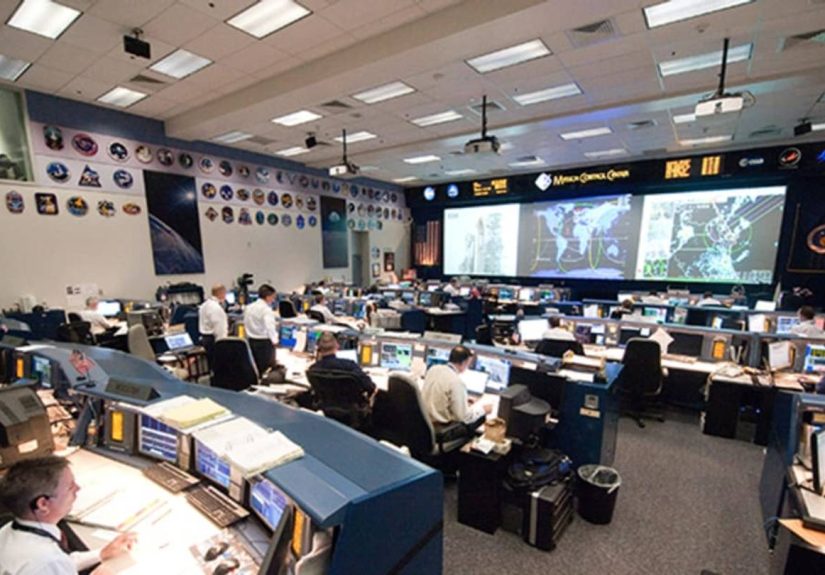
The people you see on NASA broadcasts sit in the front room, but that is not the whole operation. Behind those consoles are back rooms and support teams packed with subject-matter experts who focus on specific subsystems, deeper analysis, long-range planning, and anomaly response. The front room integrates the information. The back room feeds the brain.
This structure is one of the smartest secrets of mission operations. The person on the public-facing console has to maintain situational awareness, track the conversation, and brief the flight director clearly. That only works because other experts are drilling into details in parallel. NASA has long used this layered setup because one human can be brilliant, but no single human can safely fly a complex spacecraft alone. Mission Control is a team sport wearing headsets.
3. Controllers Train for Bad Days on Purpose
NASA does not prepare flight controllers by giving them easy rehearsals and hoping confidence magically appears. The opposite is closer to the truth. Controllers train through simulations that are intentionally packed with failures, conflicting signals, and messy situations designed to test judgment under stress.
Mission-specific simulations help teams rehearse planned phases of flight, but generic training simulations can be even meaner. Those are often loaded with multiple malfunctions so trainees learn how to prioritize, communicate, and keep moving when the data turns ugly. Certification scenarios may include more failures than most real missions ever see. That is deliberate. NASA would rather break your confidence in training than your spacecraft in real time.
4. The Flight Director Is Not Just “The Boss”
Popular culture tends to portray the flight director as a cinematic commander who barks orders while everyone else nods. In practice, the role is more nuanced and more impressive. The flight director leads the orchestra, gathers expert recommendations, weighs mission priorities, manages risk, and makes real-time decisions that affect crew safety and mission success.
The job is not about knowing every valve, sensor, and software pathway personally. It is about understanding how to pull the right expertise together at the right moment, ask the right questions, and decide without freezing when time matters. Mission Control can become a swirl of overlapping conversations during critical operations. The flight director’s gift is turning that chaos into action.
5. CAPCOM Is the Only Voice Astronauts Hear, but Never the Only Mind Behind It
CAPCOM, short for Capsule Communicator, is the person who speaks directly to astronauts. That voice sounds singular, but it represents the work of an entire team. CAPCOM is translating a room full of engineering, operations, medical, and planning input into clean, precise communication for the crew.
That filtering matters. Astronauts do not need fifteen people talking at once, and NASA figured that out decades ago. The crew hears one calm voice because Mission Control has already done the hard work of organizing the message. It is one of NASA’s simplest and most elegant operating ideas: one channel to space, many brains behind the channel.
6. Flight Rules Are Written Before the Drama Starts
Another secret hiding in plain sight is that many “real-time” decisions are heavily prepared in advance. NASA has long relied on flight rules to define responsibility, authority, and preplanned actions for a wide range of off-nominal scenarios. In plain English, Mission Control tries to solve tomorrow’s problems yesterday.
That does not mean controllers have a script for every possible surprise. Space loves novelty. But flight rules give teams a tested framework for acting quickly and consistently when functions are lost, performance degrades, or priorities collide. The point is to reduce hesitation when seconds matter. Calm in Mission Control is rarely improvised; it is engineered.
7. Those Console Names Are Faster Than Full Job Titles
Mission Control is full of console names that sound like science-fiction callsigns because, frankly, short names are useful when time is tight. CAPCOM, ETHOS, VVO, ADCO, TOPO, SPARTAN, BME, EVA, ROBO, CRONUS, and others all represent specialized positions with distinct responsibilities.
And these are not decorative acronyms. ETHOS handles environmental and thermal systems, including major life support responsibilities. VVO tracks arriving and departing spacecraft. ADCO helps manage the station’s attitude. TOPO handles trajectory and orbit-related operations. SPARTAN deals with electrical power considerations. BME supports biomedical systems. EVA focuses on spacewalk operations. The names make communication faster, cleaner, and less clunky than yelling, “Guidance-and-trajectory-person-who-is-definitely-busy-right-now, please advise.”
8. Mission Controllers Do Much More Than “Fly the Vehicle”
If you think NASA mission controllers only steer spacecraft, welcome to the most underrated part of the job. Mission Control also helps build astronaut timelines, tracks equipment and inventory, monitors crew health, manages communications paths, supports science operations, and oversees specialized activities like robotics, spacewalks, and visiting vehicle arrivals.
That means a controller’s world includes both grand strategy and glorified logistics. One team may be working orbital dynamics while another is making sure critical hardware is where it needs to be when a crew member opens the right rack at the right time. Human spaceflight is not only about rockets and rendezvous. It is also about schedules, procedures, checklists, health support, and whether the right tool is exactly where someone thinks it is. Space exploration is majestic, but it still runs on operations.
9. Tone of Voice Can Be as Important as the Words
Inside Mission Control, communication is not just about what is said. It is also about how it is said. Experienced controllers learn to hear urgency in the cadence, volume, and tone of a colleague’s voice. In a safety-critical environment, those small signals matter.
That kind of listening is not movie drama. It is operational awareness. Controllers working communications have described how understanding the room includes understanding voice behavior itself. When a controller’s tone shifts, the room notices. During serious operations, teams are not only decoding technical content; they are reading the emotional temperature of the console loop without letting it become emotional chaos. That is a subtle, very human skill, and one of the least visible talents in the room.
10. Humor Is Not a Distraction. It Is Part of Survival.
You might imagine Mission Control as a place where levity is banned and every desk looks like a tax audit in space. Not quite. Many consoles have unofficial mascots, figurines, or traditions. One medical console has displayed a “Bones” figurine from Star Trek. Other stations have used baseball bats, Spartan helmets, miniature spacecraft, or funny tokens passed around when a console has had a rough run of problems.
This does not mean the work is casual. It means the people are human. In high-reliability organizations, humor can release tension, reinforce identity, and remind teams that they are allowed to breathe between difficult moments. The trick is that the humor never overrides discipline. NASA’s controllers can joke about gremlins at one moment and handle a live anomaly the next. That blend of seriousness and humanity is part of the culture, not a contradiction.
11. Spacewalks and Visiting Vehicles Are Planned Far Earlier Than Most People Realize
Some of Mission Control’s most intense moments look sudden on TV: a cargo vehicle arrival, a spacecraft docking, a spacewalk, a robotic capture. Behind the scenes, these operations are often prepared months in advance, and in the case of many spacewalk activities, planning may begin roughly a year ahead.
Controllers refine procedures, rehearse contingencies, coordinate interfaces between teams, sync with crew training, and confirm vehicle safety conditions long before the public sees a countdown clock. So when an EVA officer or robotics controller sounds calm during a live event, that calm has usually been purchased with months of preparation. The dramatic part is live. The difficult part started ages ago.
12. Shift Handover Is a Discipline, Not a Casual Conversation
When one controller replaces another, the process is more than “Nothing weird happened, good luck.” NASA’s operational culture treats shift handover as a structured transfer of mission awareness. Console logs, handover reports, anomaly notes, and searchable records are used to help the incoming controller understand what happened, what is unresolved, and what could matter next.
This is a huge deal in continuous operations. A mission can stretch across days, months, or years, and a missed detail in a handover can become tomorrow’s surprise. That is why NASA has invested not just in people, but also in tools for logging events, tracking anomalies, and supporting continuity across shifts. In a place where memory matters, documentation is a form of safety equipment.
13. Mission Control Is Old-School in Values, Modern in Tools
There is a glorious public image of Mission Control built on Apollo-era consoles, glowing status boards, and rows of men in ties making history in Houston. That legacy still matters. NASA preserved the historic Apollo-era room because it represents one of the most important working spaces in American science and engineering.
But today’s Mission Control is not frozen in 1969. Modern control rooms use newer computing architectures, digital tools, searchable logs, contemporary communications systems, and training environments that reflect current missions. The values remain familiar: preparation, precision, teamwork, accountability. The tools keep evolving as NASA moves from the space station era into Artemis and beyond. In other words, the philosophy is classic Mission Control; the hardware got the upgrade memo.
Why These Secrets Matter
The deeper you look at NASA mission controllers, the clearer it becomes that the job is not built on heroics alone. It is built on process, layered expertise, constant rehearsal, and a culture that respects both procedure and people. The public often sees the flashbulb moments: launch, docking, splashdown, crisis. But the real secret is that mission success is usually decided long before the cameras roll.
That is what makes Mission Control so compelling. It is one of the clearest examples anywhere of how elite teams actually work. They do not rely on genius in isolation. They rely on preparation, shared language, disciplined communication, and an environment where every specialist knows when to speak and how to support the whole. That is not just a NASA lesson. That is a lesson for any organization that wants to handle complexity without panic.
The Human Experience Behind the Consoles
Before the Shift: Quiet Preparation, Loud Responsibility
One of the most revealing experiences tied to NASA mission controllers is how much of the job happens before anyone sits down at a console. Controllers do not simply swipe a badge, grab coffee, and “wing it” with a spacecraft in orbit. They arrive with context. They review logs. They study unresolved issues. They absorb the previous shift’s handover notes. They walk into the room carrying not just technical knowledge, but a mental model of the mission’s current state.
That creates a strange mix of routine and consequence. The room may look calm. The voices may be measured. But every person knows that a seemingly ordinary day can turn into a complicated one with very little warning. That tension is part of the lived experience of the role. Mission controllers spend a lot of time being ready for something that may never happen, and that readiness is the job, not a side effect of it.
During the Shift: Long Stretches of Calm, Then a Burst of Precision
Another defining experience is the rhythm of the work itself. Mission Control is not constant chaos. In fact, it often involves long periods of highly focused monitoring, quiet coordination, and steady maintenance of situational awareness. Controllers track data trends, compare expected behavior to actual performance, coordinate with support rooms, and think a step or two ahead of the timeline.
Then, when a dynamic event arrives, the tempo changes. A vehicle approaches. A communications issue appears. A system drifts out of its expected range. A crew activity takes longer than planned. Suddenly every ounce of training matters. The controllers who sound calm in public broadcasts are not calm because they are detached. They are calm because the job requires disciplined clarity under pressure. In those moments, the experience is intensely collaborative. One console provides data, another offers system implications, another checks constraints, another looks ahead, and the flight director turns that stream into a decision.
There is also a uniquely human side to this environment. Controllers build trust with one another over time. They learn each other’s habits, voices, strengths, and styles of communication. That is why tone matters so much. In many workplaces, a voice is just a voice. In Mission Control, a slight change in tone may tell experienced teammates that something important is unfolding before the formal words even finish arriving.
After the Shift: Relief, Reflection, and the Next Round of Training
Perhaps the most overlooked experience is what happens after the excitement fades. Mission controllers do not simply celebrate surviving a stressful operation and call it done. They document. They debrief. They refine procedures. They feed lessons back into training. That means the emotional arc of the work includes relief, yes, but also reflection and continuous improvement.
There is pride in that cycle. Controllers are part of a tradition that stretches from Gemini and Apollo through shuttle, station, and Artemis. They inherit methods from earlier generations, modernize them, and then pass them forward. At the same time, they carry the ordinary realities of shift work, fatigue management, technical study, certification pressure, and the knowledge that the next difficult day may be right around the corner.
So the real experience of being around NASA mission controllers is not one giant dramatic scene. It is a layered life of preparation, concentration, teamwork, humor, accountability, and occasional adrenaline spikes. It is deeply technical, but also deeply human. And that may be the biggest behind-the-scenes secret of all: Mission Control works so well not because it removes humanity from spaceflight, but because it organizes human skill so well that astronauts can trust it from hundreds of miles away.
Conclusion
NASA mission controllers are not just the people behind the screens. They are the architects of calm in one of the least forgiving operating environments imaginable. They train for failure, communicate with ruthless clarity, hand off responsibility with precision, and support astronauts through a web of expertise that the public only partially sees.
From CAPCOM’s carefully filtered voice to the back rooms full of specialists, from flight rules to mascots, from yearlong EVA prep to midnight shift handovers, the hidden world of Mission Control is a masterclass in how serious work actually gets done. The next time you watch a NASA broadcast and hear a controller say everything is nominal, remember: that single word is usually sitting on top of thousands of hours of planning, training, teamwork, and probably one very committed cup of coffee.





 Close
Close