
Table of Contents >> Show >> Hide
- The 30-year backdrop: our food world changed (fast)
- What got “worse”: bigger portions, more calories, and menu creep
- The nutritional “usual suspects” and how they show up in fast food
- What got “better”: reformulation, transparency, and a few genuine improvements
- So… has fast food become worse for our health? A fair verdict
- Specific examples of how “small changes” became big deals
- How to eat fast food without turning it into a health hobby (practical tips)
- Conclusion: fast food didn’t just changeour relationship with it did
- Experiences: What fast food “worse for health” looks like in real life (about )
If you time-traveled from 1996 to today and ordered “the usual” at a fast-food counter, two things would happen: (1) you’d be impressed by the menu’s sheer chaos, and (2) your soda would arrive in a cup big enough to rent out as a studio apartment. That’s the vibe of the past 30 years: more options, more convenience, more “value,” and in many casesmore calories, more sodium, and more opportunities to eat like it’s a competitive sport.
But is fast food actually worse for our health than it used to be? The honest answer is: it depends on what you mean by “fast food,” and it depends on how you order. Some ingredients got objectively less harmful (goodbye, industrial trans fat). Some policies nudged chains to behave (hello, calorie labeling). Yet, at the same time, portions and menu variety balloonedand our modern lives made it easier to eat fast food more often, in bigger amounts, with fewer “wait, do I really want this?” speed bumps.
Let’s break it downno moralizing, no “never eat fries again,” and absolutely no pretending that a salad automatically makes a meal holy.
The 30-year backdrop: our food world changed (fast)
Over the last few decades, the U.S. didn’t just change what it eatsit changed how it eats. More meals happen away from home, and a sizable share of our calories comes from food prepared outside the kitchen. Public health agencies and researchers have tracked how these shifts overlap with rising obesity rates and diet-related chronic disease risk.
That doesn’t mean fast food is the lone villain twirling a mustache behind the drive-thru speaker. Weight and health outcomes are shaped by lots of factorssleep, stress, activity, income, time, neighborhood food access, and overall diet quality. Still, fast food matters because it’s designed to be cheap, quick, tasty, and easy to over-consume. And those design goals sometimes collide with your blood pressure.
What got “worse”: bigger portions, more calories, and menu creep
1) Portion sizes expandedand your body didn’t get the memo
Research on “marketplace portions” has shown that common foods sold in restaurants and stores grew dramatically over time, often exceeding standard serving references. Bigger portions mean more energy intake, almost by defaultbecause most of us eat what’s in front of us, especially when it’s engineered to taste great.
The late 1990s and early 2000s were basically the “bigger is better” era in edible form: value meals, larger sides, larger drinks, and upsizes that felt like harmless upgrades (“Only 39 cents more!”the most expensive sentence in nutrition history). Even when specific “supersize” branding faded, the overall normalization of large portions stuck around in many places.
2) Calories and sodium often increased across decades (even as choices multiplied)
One major analysis of popular U.S. fast-food chains comparing items from the mid-1980s/early 1990s to 2016 found large increases in menu variety, portion size, calories, and sodium in certain categories over time. Translation: you didn’t just get more optionsyou got more high-energy options, and often in larger sizes.
The menu itself became a “choose-your-own-adventure” book where many endings involve a side of fries. New product launches, limited-time offers, specialty desserts, loaded beverages, and extra add-ons expanded what you can buy and expanded the odds that your “quick lunch” turns into a 1,200-calorie event plus a cookie you didn’t even remember ordering.
3) Convenience got turbocharged
Thirty years ago, fast food required at least some friction: go there, wait, carry it home. Now friction is optional. Mobile ordering, delivery apps, late-night drive-thru culture, and constant promotions mean fast food can show up at your door like a delicious gremlin you accidentally summoned with a coupon code.
More opportunities to eat fast food doesn’t automatically mean you willbut when life is chaotic, convenience tends to win. And when convenience wins often enough, “sometimes food” can quietly become “Tuesday food.”
The nutritional “usual suspects” and how they show up in fast food
Sodium: the stealth ingredient that makes food taste amazing (and your doctor sigh)
Sodium is a big reason fast food tastes consistent and craveable. The problem: Americans already consume well above recommended sodium limits on average, and restaurant and prepared foods are major contributors. Many health organizations recommend keeping sodium under 2,300 mg/day, with an ideal target of about 1,500 mg/day for many adults.
The tricky part is that sodium doesn’t always “feel” like salt. It’s hiding in buns, sauces, breading, cheese, cured meats, and condiments meaning you can rack up a day’s worth before your taste buds even notice.
There have been efforts to reduce sodium in the food supply, including FDA voluntary sodium reduction goals for packaged and prepared foods. But even with progress in some categories, sodium remains one of the biggest nutritional pain points in fast-food eating.
Added sugars: drinks are often the main event
If you want a “fast-food health hack” that actually matters, it’s this: beverage calories are the easiest calories to overdo. Sweetened sodas, flavored coffees, shakes, and “it’s basically dessert in a cup” teas can add hundreds of calories with little satiety. That’s not a “never have it” statementjust a “know what you’re buying” reality.
Over the past few decades, drink sizes and sweet drink availability exploded. When the default cup is huge, it turns sugar into a background character that steals the whole movie.
Saturated fat and refined carbs: the comfort combo
Many classic fast-food items lean on saturated fat (cheese, fatty meats, fried components) plus refined carbohydrates (buns, breading, fries, crusts). Health organizations have long recommended limiting saturated fat because of its relationship with LDL cholesterol and heart disease risk. Again: not a “fear food” messagejust a “this adds up quickly” message.
Add in the fact that many meals are lower in fiber (fiber helps fullness and metabolic health), and it becomes easier to eat a lot… and then be hungry again at 4 p.m. like your lunch never existed.
What got “better”: reformulation, transparency, and a few genuine improvements
1) The big win: industrial trans fat largely disappeared
Here’s the part where we clap. Artificial trans fats from partially hydrogenated oils were a major health concern for cardiovascular disease risk. The FDA determined that partially hydrogenated oils are not generally recognized as safe, driving removal of artificial trans fat from many foods over time. This is a meaningful improvement compared with the 1990s.
Bottom line: some older fast-food formulations were worse in a very specific way (trans fat exposure), and policy helped fix that.
2) Calorie labeling: less mystery math at the menu board
Chain restaurants in the U.S. are required to provide calorie information on menus/menu boards (with additional nutrition details available on request) if they meet certain criteria. The compliance date for the federal menu labeling rule was in 2018.
Does calorie labeling magically turn a bacon double cheeseburger into broccoli? No. But it does something important: it makes the “hidden cost” visible. For some people, that’s enough to change an order. For others, it’s simply useful information so they can decide intentionally.
3) “Better options” existthough they’re not always the default
Compared with 30 years ago, many chains offer grilled items, smaller portions, fruit sides, and more customizable orders. There’s evidence that some chains reduced calories in newly introduced items in certain periodssuggesting at least some response to public pressure and labeling expectations.
The catch: the presence of healthier options doesn’t erase the rest of the menu. It just means the best possible order may be better than it used to bewhile the average “I’m starving and I’m ordering with my feelings” order may not be.
So… has fast food become worse for our health? A fair verdict
If we’re grading fast food over the past 30 years, it earns a confusing report card:
- Worse in practice: Larger portions, expanded menus, and modern convenience make it easier to consume more calories and sodium more oftenwithout intending to.
- Better in specific formulation: Industrial trans fats largely disappeared from many foods, which is a major public health win.
- More transparent: Calorie labeling and readily available nutrition info make it easier to make informed choices.
- More polarized: The “healthiest thing on the menu” can be healthier than before, but the “most tempting combo” can be more extreme.
Here’s a simple way to think about it: Fast food isn’t automatically worse in every ingredient, but it’s often worse as a system. The system is built around bigger portions, constant access, and hyper-palatable foods. If you participate in that system frequently, it can nudge your health in the wrong directionespecially through excess calories and sodium.
Specific examples of how “small changes” became big deals
The combo meal effect
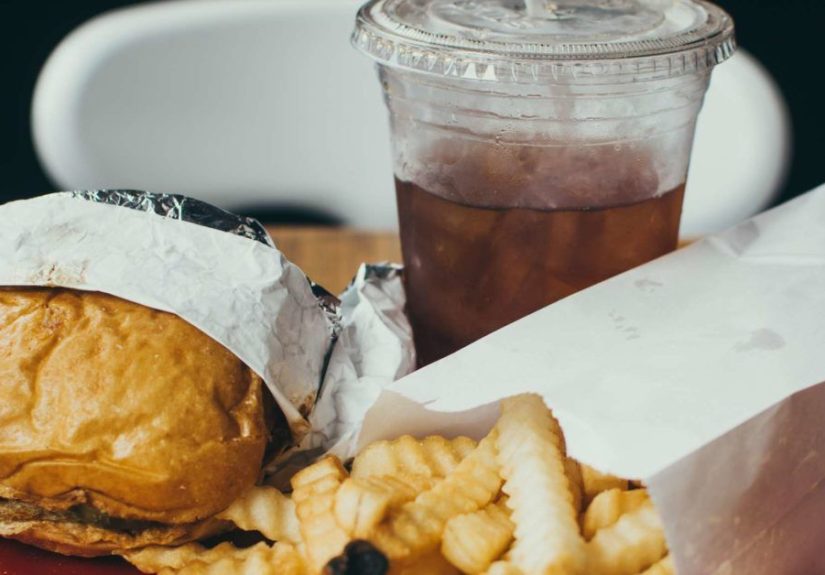
A sandwich alone might fit into a reasonable calorie range. The combo turns it into a package deal: fries + sugary drink, often upsized. In the 1990s, this was already common; over time, portion norms and drink sizes often grew, and “value” pricing made bigger combos feel like a bargain. Health-wise, it’s a bargain in the same way a “buy one, get one free” mattress is a bargain when you live in a studio.
The dessert arms race
Soft-serve cones existed decades ago. But modern dessert menus often include larger, richer, more varied optionscookies, shakes, loaded sundaes, and limited-time sweets designed for maximum craving and social-media appeal. Research tracking fast-food items across decades found desserts especially increased in energy over time.
The sodium sneak attack
Even when calories aren’t outrageous, sodium can be. A “not that big” meal can still push you close to daily sodium targets, especially if it includes processed meats, cheese, breaded items, and sauces. Public health guidance continues to emphasize sodium reduction because average intake remains high.
How to eat fast food without turning it into a health hobby (practical tips)
You don’t need a spreadsheet. You need a few habits that work when you’re busy:
1) Pick your “splurge category”
Decide what matters most today: fries or dessert or a sweet drink. Not all three. This one rule quietly cuts hundreds of calories for many peoplewithout feeling like punishment.
2) Default to water or unsweetened drinks most of the time
If you love soda, cooljust consider making it a deliberate choice rather than the automatic sidekick. Beverage calories are famously easy to overdo, and they don’t fill you up the way food does.
3) Use the “one hand” portion check
A rough, real-life hack: if your fries require two hands and a prayer, you’re probably in “share size” territory. Order small, split, or skip the automatic upsize.
4) Watch the sodium multipliers
Breaded + cheese + sauce + processed meat is a sodium (and saturated fat) pile-up. If you’re trying to keep blood pressure in check, choose fewer “layers” of salty add-ons.
5) Add fiber on purpose
If there’s an option to add beans, extra veggies, a side salad, or fruittake it. Fiber helps fullness and improves overall diet quality, which many fast-food meals lack.
Conclusion: fast food didn’t just changeour relationship with it did
Over the past 30 years, fast food became more varied, more available, and often more calorie- and sodium-dense in the ways that matter for everyday health. At the same time, it improved in meaningful areas like trans fat removal and nutrition transparency. So yesfast food can be “worse” for our health now if we measure the average modern experience: big portions, easy access, and frequent consumption.
The good news: you don’t have to quit fast food to protect your health. You just need to order like you’re the boss of your mealnot like the meal is the boss of you.
Experiences: What fast food “worse for health” looks like in real life (about )
The biggest shift isn’t always the ingredient listit’s the pattern. Over the past few decades, many people describe fast food moving from an occasional convenience to a routine solution. Here are a few common, realistic experiences (based on patterns dietitians and public health messaging often discuss), and why they matter.
1) “It’s just lunch… until it’s 1,300 calories.”
A busy office worker runs out between meetings. The plan is simple: sandwich, fries, drinkdone. But the menu board nudges upgrades: “Make it a large for a little more,” “Add a cookie,” “Try the new specialty drink.” None of it feels dramatic in the moment. The meal tastes great, and it’s fast. Two hours later, there’s a sluggish crash and the hunt for something sweet. The experience isn’t about willpower; it’s about how modern combo structures and portion norms make it easy to overshoot energy needs without feeling like you ate “a lot.” It’s also about how low-fiber, highly processed meals can leave you hungry again sooner.
2) “Delivery turned ‘sometimes’ into ‘often.’”
A parent finishes a long day and realizes the fridge contains… vibes. Thirty years ago, that might have meant a quick trip out. Now it means tapping an app and having dinner appear like magic. The food arrives hot, salty, and comforting. Over time, the pattern becomes: delivery on Monday, drive-thru Wednesday, “treat night” Friday. Nothing is extreme, but the weekly frequency quietly climbs. This is where fast food becomes “worse” as a system: reduced friction means more occasions, and more occasions mean more total calories and sodium across the weekeven if each individual meal feels normal.
3) “The ‘healthy option’ trap.”
Someone orders a salad and feels virtuousuntil the salad comes topped with crispy chicken, cheese, and a dressing cup large enough to bathe in. The meal can still be high in calories and sodium, just with lettuce as a supporting actor. The experience is a lesson in modern menu complexity: healthier items exist, but they don’t automatically equal a healthier total meal. The person isn’t “wrong” for choosing it; they just needed clearer signals about portions and add-onssomething menu labeling and better defaults can help with.
4) “Sodium shows up as ‘why am I so thirsty?’”
After a fast-food dinner, someone notices intense thirst, puffiness, or a “heavy” feeling the next day. They assume it’s the fries, but it might also be the sandwich bread, sauce, and processed meat stacking sodium behind the scenes. Over time, people who monitor blood pressure learn that certain meals are the usual suspects, and they start making small swaps: skipping the extra sauce, choosing a smaller side, swapping the drink for water, or splitting an entrée. The experience becomes empowering: fast food doesn’t have to be banned; it has to be managed.






 Close
Close