
Table of Contents >> Show >> Hide
Few modern mysteries have pulled off a career comeback quite like UFOs. For decades, the topic lived somewhere between late-night radio, diner conspiracy boards, and that one uncle who insists every weather balloon is “doing something suspicious.” Then the Pentagon, Congress, NASA, and the intelligence community all started talking about unidentified anomalous phenomenaUAP, if you prefer your weirdness with official stationery.
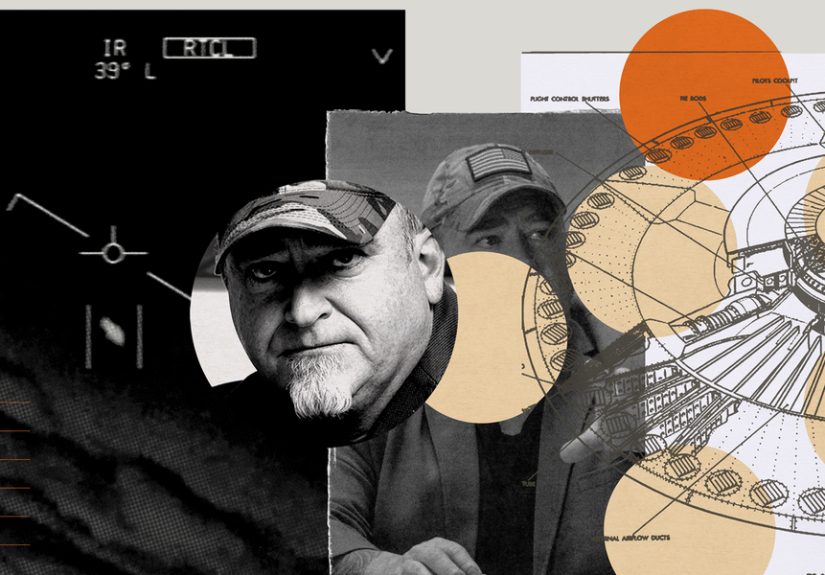
At the center of that revival is Luis “Lue” Elizondo, the former intelligence official who became the most recognizable face of the government’s modern UFO conversation. Elizondo says he helped run the Pentagon effort that looked into unexplained aerial encounters, and he has spent years arguing that the U.S. government is still withholding major truths from the public. In his telling, this is not a hobbyist debate about little green men and silver dinner plates. It is a national security story, a secrecy story, and maybedepending on how far you follow him down the runwaya civilization-shifting story.
That is exactly why the subject refuses to go away. Elizondo’s claims are dramatic. The government’s denials are equally strong. Congress keeps holding hearings. New reports keep arriving. A few cases remain unresolved. And the public is left staring at the sky, then at Washington, then back at the sky again like someone watching a tennis match sponsored by ambiguity.
Who Is Luis Elizondo, Exactly?
Elizondo is widely described in major U.S. media coverage as the former Pentagon insider tied to the Advanced Aerospace Threat Identification Program, or AATIP. He has built his public reputation on a simple but explosive message: UAP are real, some are extraordinary, and the American people have not been told the full story. That message has made him a star in disclosure circles and a lightning rod everywhere else.
But here is where things get messy in the most Washington way possible: even the title of “the man who ran the Pentagon’s UFO unit” is part of the argument. Elizondo and many journalists, lawmakers, and supporters have long presented him as a central figure in the Pentagon’s UFO effort. Yet the Pentagon’s 2024 historical review added a bureaucratic plot twist worthy of its own miniseries. According to AARO, the official Defense Intelligence Agency program was AAWSAP, while the AATIP label later became associated with a more informal and unofficial UAP effort inside the Department of Defense, with no dedicated budget or formally recognized program status.
In other words, even before anyone debates aliens, crash retrievals, or hidden technology, there is already a dispute over the paperwork. And if there is one thing America has learned, it is that no mystery becomes simpler after someone opens a filing cabinet.
Why His Claims Hit So Hard
Elizondo’s core argument lands because it taps into three fears at once. First, something unusual may be operating around sensitive military areas. Second, the government may know more than it says. Third, the people in charge may not even agree internally on what is real, what is classified, and what can be disclosed. That combination is catnip for journalists, lawmakers, skeptics, believers, and anyone who has ever muttered, “That story does not add up.”
His public case usually rests on several pillars. He points to military sightings, especially incidents captured by trained pilots and multiple sensors. He argues that some UAP appear to display performance characteristics beyond known conventional aircraft. He says secrecy has prevented proper oversight and blocked the public from understanding what the government has really collected. And he has gone further than many officials are willing to go, suggesting that the U.S. possesses or has studied technologies that are not made by any known human adversary.
That last claim is the one that launches the conversation straight out of cautious airspace and into full-throttle controversy. It is also the one for which the public still lacks the kind of open, testable evidence that would settle the matter once and for all.
What the Government Admits
To understand why this topic feels so slippery, start with what the U.S. government has openly acknowledged. Official reports have confirmed that there are genuine unidentified cases in military data. That does not mean extraterrestrial. It does mean unexplained. And that distinction matters more than a thousand grainy social media videos narrated by someone whispering, “Bro, no way.”
The 2021 preliminary assessment from the Office of the Director of National Intelligence reviewed 144 reports from U.S. government sources. Of those, 80 involved multiple sensors. Only one was confidently identified at the time as a large deflating balloon. In 18 incidents, described across 21 reports, observers noted unusual movement or flight characteristics, while the report also emphasized limited data, inconsistent reporting, stigma, and sensor limitations.
That report was important because it did two things at once. It gave serious institutional validation to the idea that some cases deserved deeper study, and it refused to leap from “unexplained” to “alien.” That sober middle ground is not as exciting as a mothership hovering over the Capitol dome, but it is a lot more useful.
Since then, the government has built more formal machinery around the subject. The Pentagon established AARO, the All-domain Anomaly Resolution Office, to collect, analyze, and resolve cases across air, sea, space, and related domains. NASA also launched its own UAP study effort and concluded that the topic deserves a rigorous, evidence-based scientific approach, especially better data collection. That is a key point. NASA did not say, “Pack your bags, folks, the neighbors are here.” It said the current evidence is messy and the science needs to improve.
What the Government Rejects
Now for the part Elizondo’s critics cite most often. In March 2024, AARO’s historical report said it found no empirical evidence that any U.S. government investigation or official review had confirmed a UAP sighting as extraterrestrial. It also said it found no empirical evidence that the government or private companies had been reverse-engineering extraterrestrial technology. Pentagon officials were even blunter in public, stating they had found no verifiable evidence of extraterrestrial activity, no access to extraterrestrial technology, and no indication that information had been illegally or improperly withheld from Congress.
That is not a soft maybe. That is a hard institutional no.
And yet the story still refuses to die, partly because “no evidence found” is not the same as “every case solved,” and partly because the government itself continues to report unresolved incidents. In the fiscal year 2024 UAP report, AARO received 757 reports for the covered period. As of that review, the office said 21 cases had enough data to merit continued analysis. AARO leadership also acknowledged that some cases remain interesting even to specialists with physics and engineering backgrounds.
So the official message is basically this: yes, unusual reports exist; yes, some remain unresolved; no, we have not verified aliens or hidden off-world hardware. That is a lot less cinematic than the headline version of disclosure culture, but it is still plenty strange.
Why the Public Still Suspects a Cover-Up
If the government keeps denying the most dramatic claims, why do so many people still believe the truth is being withheld? Because secrecy has a bad habit of making even ordinary things look suspicious. Add classified programs, fragmented reporting systems, inconsistent bureaucratic language, and decades of ridicule around UFO reporting, and you get an environment where mistrust grows like weeds through sidewalk cracks.
There is also a bipartisan political thread here that keeps the issue alive. Congress has held major hearings on UAP, and lawmakers from both parties have pushed for greater transparency. The proposed UAP Disclosure Act of 2023 aimed to create a records collection and apply a presumption of disclosure to government UAP files. That alone tells you something important: even in Washington, where people can argue over the weather while standing in the same rainstorm, transparency on UAP has drawn serious support.
Elizondo’s message thrives in that environment. He does not need every listener to believe every extraordinary detail. He only needs them to notice that official institutions admit there are unresolved cases, lawmakers keep demanding more access, and different parts of the government sometimes sound like they are reading from very different scripts.
The Real Tension: Disclosure vs. Proof
The deepest issue in this debate is not whether the public wants answers. Of course it does. The real issue is what counts as an answer. Elizondo argues that disclosure is an ongoing process and that the public is slowly being brought toward a truth long hidden behind classification walls. Skeptics counter that a process without publicly testable evidence can turn into a permanent state of almost-there theater.
That tension is why this story remains so powerful. Elizondo talks like someone who has seen behind the curtain and is frustrated that the audience is still being sold tickets instead of getting a straight look backstage. The Pentagon talks like an institution trying to sort real anomalies from misidentifications, rumors, and mythmaking without detonating public trust. NASA talks like scientists asking for better instruments before anyone starts writing a cosmic family reunion speech.
Everybody, in other words, is standing in the same room but describing very different furniture.
So, Is the Government Withholding the Truth?
The most honest answer is also the least satisfying one: probably some truth, but not necessarily the truth Elizondo’s most enthusiastic supporters imagine. Governments classify information all the time for legitimate reasons involving sensors, collection methods, military capabilities, and intelligence sources. That much is normal. The open question is whether the classified material hides merely national security details or something far more extraordinary.
Elizondo says the secrecy goes much deeper. The Pentagon says it does not. Congress suspects the system is still too opaque. Scientists keep asking for cleaner data. And the public, naturally, is left doing what it always does when institutions answer a mystery with a stack of PDFs: assuming the real answer must be in the pages that were blacked out.
For now, the clearest conclusion is this: the government has acknowledged a real UAP problem, but it has not publicly proved an extraterrestrial one. Elizondo has helped drag the issue into the open, but his most dramatic claims remain claims. The Pentagon’s denials are official, but they have not erased public suspicion. That means the truthwhatever it isstill lives in a frustrating middle zone between confirmed mystery and unconfirmed revelation.
And that, perhaps, is why this story works so well in modern America. It contains all our favorite ingredients: secret programs, rival narratives, irritated experts, suspicious lawmakers, nervous military officials, and just enough unexplained video to keep the internet from ever going to bed on time.
The Human Experience Behind the UAP Story
Strip away the acronyms, hearings, and dramatic book subtitles, and this story is also about human experiencespecifically, what it feels like to encounter something you cannot explain and then hand that confusion to a giant bureaucracy. That is where the UAP debate gets especially interesting.
For military pilots, these encounters are not campfire entertainment. They are aviation safety issues. When trained aviators report strange objects near restricted airspace or military training areas, the experience is usually not “Wow, maybe it’s aliens.” It is more like, “What in the world is that, and can it hit me?” That difference matters. The emotional tone is not wonder first. It is risk first. Curiosity arrives right after the adrenaline.
Then comes the second experience: stigma. For years, pilots and analysts described a professional culture in which talking about UFO-like events could feel career-limiting, unserious, or quietly embarrassing. Imagine seeing something genuinely odd, knowing your job depends on observation, and still hesitating to report it because you do not want to become “that UFO person” in the briefing room. That kind of pressure can distort what gets documented, what gets ignored, and what gets laughed off before anyone asks the right technical questions.
For intelligence officials and defense insiders, the experience is different but just as strange. Their world is built on compartments. Need-to-know rules are normal. Classified material is normal. Contradictory streams of information are normal. But UAP appears to create a special kind of frustration because it sits at the intersection of national security, scientific uncertainty, and public obsession. If an official thinks the issue is being overshared, they worry about exposing capabilities. If they think it is being buried, they worry that vital information is trapped in silos. Either way, somebody leaves the room annoyed.
For lawmakers, the experience often seems to be one of partial access and constant suspicion. Members of Congress hear testimony, receive briefings, read reports, and still wonder whether they are getting the full picture. That is one reason hearings on UAP generate so much attention. They are not only about objects in the sky. They are also about power on the groundwho knows what, who can say what, and whether elected officials are truly overseeing the system or merely touring it with a flashlight.
For the public, the emotional experience is even more mixed. Some people approach the subject with outright belief. Others arrive armed with skepticism, eye-rolls, and a healthy allergy to dramatic claims without hard evidence. But many fall somewhere in the middle. They see enough official acknowledgment to think the topic is real, yet not enough transparent proof to feel settled. That creates a uniquely modern mood: informed uncertainty. People do not want bedtime stories. They want clarity. Unfortunately, clarity is in shorter supply than grainy infrared footage.
And then there is the Elizondo effect. Whether you see him as a truth-teller, an overreaching narrator, or some complicated mix of both, he has changed the experience of the conversation. He made it harder to dismiss UAP as pure fringe nonsense. He also made it harder for institutions to say, “Nothing to see here,” when even their own reports admit that sometimes there is, in fact, something to see there. That may be his biggest contribution. Not proof. Pressure.
So the lasting experience around this story is not certainty. It is tension. Pilots feel it in the cockpit. Analysts feel it in the data gaps. Congress feels it in closed-door briefings. The public feels it every time official language says “unresolved” while social media screams “disclosure.” In that sense, the UAP debate is less about one final answer arriving dramatically from the clouds and more about what happens when a modern government, a skeptical public, and a stubborn mystery all collide at once.
Conclusion
Luis Elizondo has become the face of one of the most fascinating and frustrating stories in American public life. He says the government is withholding the truth. The government says it is not hiding extraterrestrial tech and has found no evidence to support those claims. Both sides point to real reports, real institutions, and real stakes. That is why the debate persists.
At this point, the smartest position is neither blind belief nor reflexive mockery. It is disciplined curiosity. Something unusual has been reported. Some cases remain unexplained. Transparency is still incomplete. Evidence still falls short of the biggest claims. Until that changes, the UAP story remains exactly what makes it irresistible: a mystery serious enough for Congress, technical enough for scientists, political enough for Washington, and weird enough to make everyone glance upward just a little longer than usual.






 Close
Close