
Table of Contents >> Show >> Hide
- Why This Postpartum Trip Story Hit a Nerve
- Why the Husband’s Comment Made Everything Worse
- What Grandparents Often Get Wrong About the Newborn Period
- The Toddler Factor Makes This Story Even More Complicated
- How Families Can Avoid This Kind of Blowup
- The Bigger Lesson Behind the Viral Outrage
- Experiences Related to This Topic: Why So Many Parents Recognize Themselves in This Story
- Conclusion
Some family stories make you laugh. Some make you wince. And some make you stare at the ceiling for a full minute and whisper, “Oh, absolutely not.” This viral postpartum drama lands squarely in the third category.
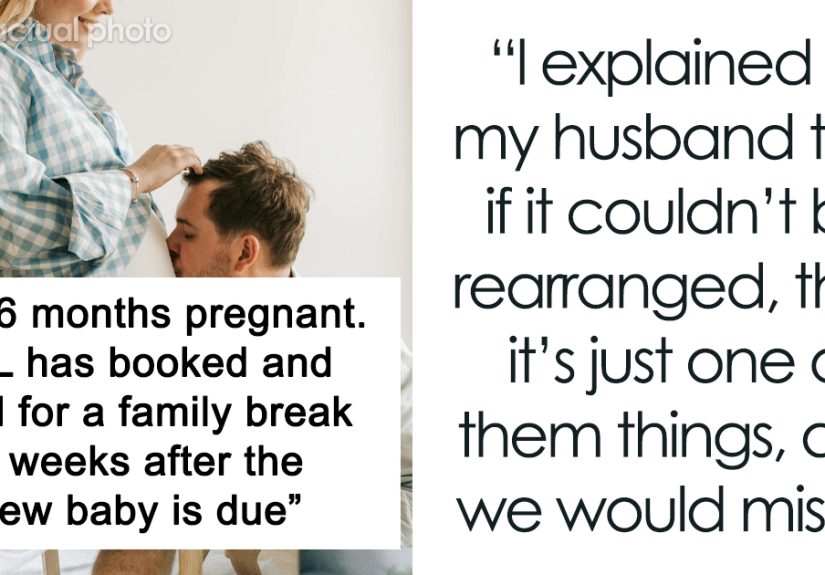
In the now widely discussed story, a pregnant woman is stunned to learn that her mother-in-law has booked a trip that overlaps with the postpartum period. The real jaw-dropper is not just the trip itself, but the attitude around it: when the woman pushes back, her husband reportedly suggests he could simply go away with their 2-year-old. That single detail is what turned an awkward family misunderstanding into a full-blown internet alarm bell.
Because here is the thing many people still fail to understand: postpartum is not a vacation slot, not a social season, and definitely not the ideal moment for somebody else to center their travel dreams. It is a physically intense, emotionally delicate, sleep-deprived transition that can feel beautiful, chaotic, tender, and brutal all at once. Add a toddler to the equation, and the entire situation becomes less “family getaway” and more “please hand me the coffee and a realistic plan.”
This story struck a nerve because it reflects a real issue many growing families face: the collision between postpartum recovery and other people’s expectations. Below is why the reaction was so strong, what the husband and mother-in-law seemed to miss, and what families can learn before they accidentally turn “help” into a stress multiplier.
Why This Postpartum Trip Story Hit a Nerve
The reason readers reacted so strongly is simple: the postpartum period is not just about the baby. It is also about the recovery of the birthing parent, the stability of the older child, and the ability of the immediate family to settle into a brand-new routine.
That sounds obvious, but somehow it still gets lost whenever extended family starts operating like the baby is the headline act and the parents are just the venue staff. In reality, postpartum recovery can involve pain, bleeding, feeding struggles, mood changes, sleep deprivation, and the overwhelming work of adjusting to life with a newborn. If a family already has a toddler, there is another huge job happening at the same time: helping that child feel secure while their world changes overnight.
So when a mother-in-law books a postpartum trip and the husband treats the issue like a scheduling disagreement rather than a recovery-and-support issue, readers recognize the deeper problem. It is not really about the plane ticket. It is about who gets centered during one of the most vulnerable stretches of family life.
Postpartum Is Recovery, Not an Open House
One of the most important takeaways from this story is that postpartum should be treated like a recovery period, because that is exactly what it is. New parents are not being dramatic when they say they need quiet, space, and control over visitors. They are usually being practical.
That practical reality gets lost when relatives frame access to the baby as a right instead of a privilege. A lot of grandparents mean well, but good intentions can still create bad timing. A visit that requires hosting, performing, cleaning, explaining, or defending boundaries is not help. It is labor wearing a cardigan.
And that is why so many readers supported the woman in this story. She was not rejecting family. She was trying to protect the immediate family unit during a time when rest, healing, and adjustment matter most.
“Help” and “Access” Are Not the Same Thing
Families get into trouble when they confuse support with entitlement. Real postpartum help looks like dropping off meals, running errands, folding laundry, helping with the toddler, respecting nap schedules, and leaving before anyone starts fantasizing about changing the locks.
What does not count as help? Showing up with expectations, needing to be entertained, assuming overnight access, insisting on baby time while the parent who just gave birth is running on fumes, or creating pressure around bonding. The baby is not a VIP meet-and-greet. The household is trying to survive Tuesday.
In the viral story, the mother-in-law’s trip appears to symbolize exactly that problem. It suggests that her plan came first, and the postpartum family was expected to adapt around it. Unsurprisingly, the internet was not charmed.
Why the Husband’s Comment Made Everything Worse
The line about “just going away with the 2-year-old” is what transformed this story from annoying to outrageous. Why? Because it reveals a misunderstanding of what a partner’s role is after birth.
During postpartum recovery, a partner is not a neutral observer or a travel-flexible side character. A supportive partner is part of the care infrastructure. That means helping with the newborn, helping with the older child, protecting the recovering parent from unnecessary stress, and acting like the family’s emotional bouncer when outside expectations get too loud.
Instead, the reported response suggested something closer to: “Well, if this doesn’t work for my mom, I can remove myself and our toddler.” That is not problem-solving. That is emotional outsourcing with a diaper bag.
The Immediate Family Needs to Move as a Team
When a new baby arrives, the immediate family has to become more coordinated, not less. If one parent disappears with the toddler while the other parent remains home with a newborn, the message is hard to miss: your recovery and overwhelm are your problem, not ours.
That is especially troubling because toddlers often need more reassurance, not less, after a new baby enters the home. Big life changes can trigger clinginess, sleep disruption, potty training regression, or emotional acting out. In other words, the older child may need predictable routines and extra connection, not a dramatic family split that leaves one parent overloaded.
A much healthier response would have been for the husband to say: “We’ll decide together what postpartum support actually helps us. My priority is you, the baby, and our toddler.” That sentence may not be glamorous, but it is far sexier than conflict with carry-on luggage.
What Grandparents Often Get Wrong About the Newborn Period
Grandparents can be wonderful during the newborn stage. They can also, sometimes, be walking bundles of excitement, nostalgia, overconfidence, and boundary confusion. That combination does not always produce the peaceful support they imagine.
One common mistake is assuming that because they have raised children before, they automatically know what this particular family needs. Another is treating the postpartum period as a personal grandparent milestone rather than a medical and emotional transition for the parents. A third is taking boundaries personally and turning a practical request into a symbolic insult.
That is why this story resonates. It reflects a familiar pattern: the grandparent says, “I just want to help,” while the parent hears, “I have already made plans that you now need to accommodate.” Those are not the same sentence.
The Best Grandparent Support Is Low-Ego Support
The most helpful grandparents usually do a few things extremely well. They ask what is needed instead of announcing what they will do. They respect timing. They do not compete with the parents. They understand that the baby is not the only person who needs care. And they recognize that supporting the parents often means doing boring, practical things instead of chasing magical newborn moments.
That might mean bringing groceries, walking the dog, taking the toddler to the park, tidying the kitchen, or staying in a hotel instead of expecting to move into the home during the most exhausting week of everybody’s life. It may not be the cinematic grandmother fantasy, but it is the kind of help families remember gratefully.
The Toddler Factor Makes This Story Even More Complicated
The detail about the 2-year-old matters more than some readers may realize. Families with a newborn and toddler are not simply repeating the first-baby experience with more confidence. In many ways, they are managing a harder transition.
A toddler does not care that there is a beautiful new chapter unfolding. A toddler cares that the grown-ups seem busier, more tired, and weirdly unavailable right when life used to run on snack breaks and immediate emotional service. That is why so many child development experts emphasize routine, reassurance, and one-on-one time for the older child after a baby arrives.
Taking the toddler away during postpartum is not automatically wrong in every imaginable situation. But in a conflict like this one, it reads less like a thoughtful transition plan and more like punishment-by-logistics. It removes support from the recovering parent while sending the message that the older child is now part of a side arrangement rather than the family adjustment process.
A Better Plan for Two Kids, Not Two Camps
A stronger approach would be to keep the family close, protect the postpartum parent’s recovery, and build in small moments of special attention for the toddler. That could mean one parent spending 20 minutes of dedicated playtime with the older child each day, involving them in gentle baby-related tasks, preserving bedtime rituals, and validating their big feelings without making them feel replaced.
The goal is not to create Team Baby and Team Toddler. The goal is to help everyone become one tired, loving, slightly sticky family unit.
How Families Can Avoid This Kind of Blowup
Stories like this go viral because they are messy, but the lesson is surprisingly practical. Most postpartum family conflicts can be reduced when expectations are clear early. That means talking before the due date, not in the middle of hormonal chaos and four-hour sleep totals.
Parents should decide together what they want regarding visitors, overnights, meals, toddler help, hospital visits, and grandparent access. Then the partner whose family is involved should communicate those boundaries clearly. Not vaguely. Not apologetically. Clearly.
Examples of healthy boundary-setting include:
- “We are not hosting overnight guests right after the birth.”
- “We’ll let you know when we’re ready for visits.”
- “If you want to help, meals and errands would be amazing.”
- “We need the first stretch to focus on recovery, bonding, and our toddler’s adjustment.”
Notice what these statements do not include: a 900-word defense brief. Boundaries work better when they are calm, short, and not treated like a jury trial.
The Bigger Lesson Behind the Viral Outrage
At its core, this story is about prioritization. When a baby is born, who gets centered? The recovering parent? The toddler adjusting to a huge change? The couple trying to find their footing? Or the extended family member with big feelings and a suitcase?
The internet answered that question pretty fast. Readers were not just upset about the trip. They were reacting to the emotional logic beneath it: that the woman who would be recovering from birth was expected to bend around someone else’s plans, and that her husband seemed willing to make that even harder.
That is why the story feels bigger than one mother-in-law. It captures a dynamic families know all too well. Sometimes the real problem is not the relative making demands. It is the partner who fails to say, “Not now. My family needs me here.”
And honestly, if there is one moment in adult life when that sentence should come naturally, it is right after childbirth.
Experiences Related to This Topic: Why So Many Parents Recognize Themselves in This Story
What makes this kind of postpartum conflict so memorable is how ordinary it can feel while it is happening. Many parents have a version of this story, even if the details are different. Maybe it is not a booked trip. Maybe it is an in-law who announces a weeklong stay, a relative who expects daily visits, or a partner who keeps acting as if “keeping the peace” with family is more urgent than protecting the peace at home.
A lot of second-time parents say the hardest part is not the newborn itself. It is splitting your attention while recovering. You are feeding a baby, trying to remember whether you drank water, and hearing your toddler melt down because you peeled the banana “too banana-like.” That is exactly why support matters so much. Real help lowers the temperature in the house. Bad help raises it.
Some parents describe feeling ambushed by family members who call themselves helpful but create more work. They arrive expecting meals, conversation, baby cuddles, and a front-row seat to the newborn phase, while the parents are quietly drowning in laundry, hormones, and sleep deprivation. The result is resentment, even when everyone technically “means well.” Good intentions do not unload the dishwasher.
There is also the emotional piece. Postpartum can make people feel tender, territorial, grateful, overwhelmed, and strangely furious all before lunch. That is not a character flaw. It is a sign that this period is intense. When someone barges in with their own agenda, it can feel less like support and more like being erased inside your own home.
Another experience many families mention is the toddler’s reaction. Older siblings often need more reassurance than adults expect. They may act clingy, reject the baby, demand more attention, or suddenly regress in habits that seemed settled. Parents who have been through this often say the best support was not someone insisting on holding the newborn. It was someone who read books to the toddler, kept bedtime normal, or took them outside to burn off energy without making them feel banished.
And then there is the partner issue, which may be the most painful part. Plenty of parents can handle a difficult mother-in-law. What really hurts is when their spouse does not step up. The conflict stops being “your family is overbearing” and becomes “why am I explaining basic compassion to the person who is supposed to be on my side?” That is why stories like this spread so quickly. Readers are not only reacting to the mother-in-law. They are reacting to the loneliness of not being backed up.
The encouraging truth is that families can recover from these moments when they are honest enough to change course. A partner can learn to protect postpartum boundaries. A grandparent can become genuinely helpful. A household can stop performing for relatives and start building routines that actually work. But that usually begins with one simple shift: understanding that postpartum is not a spectator event. It is a season when support should feel lighter, quieter, and more respectful than anyone first imagined.
Conclusion
The viral postpartum trip story feels outrageous on the surface, but its deeper lesson is painfully familiar. When families fail to prioritize recovery, rest, boundaries, and teamwork after a birth, conflict rushes in to fill the gap. A mother-in-law booking a trip may have started the drama, but the internet’s strongest reaction focused on something else: the partner who seemed prepared to leave rather than protect.
That is why the story stuck. It is not just about an overexcited relative. It is about the difference between support and stress, between family love and family entitlement, and between a partner who stands beside you and one who treats postpartum like a scheduling inconvenience. New parents do not need perfect relatives. They need people who understand that the first job is not getting access. It is making life easier.







 Close
Close