
Table of Contents >> Show >> Hide
- What counts as a “hearing doctor,” anyway?
- Types of hearing professionals (and what they do)
- When to see a hearing doctor (and how urgent it is)
- Which one should you see first: Audiologist or ENT?
- What happens at a hearing appointment?
- Common problems a “hearing doctor” may diagnose
- How to prepare for your visit (and get better answers)
- What about OTC hearing aids and “DIY” amplification?
- Bottom line: The right hearing professional depends on your symptoms
- Experiences: What it’s really like to realize you might need a hearing doctor
If you’ve started saying, “Huh?” a little more than you’d likeor you’ve become the unofficial
caption-reader of your friend groupwelcome. Hearing changes are incredibly common, and the good
news is that you don’t have to guess your way through them. The trick is knowing which
“hearing doctor” you actually need, because ear and hearing care is a team sport.
This guide breaks down the main types of hearing professionals in the U.S., what each one does, and
exactly when you should make an appointment (or skip the appointment and get urgent care). Along the
way, you’ll see practical examples, what to expect from a hearing test, and how to pick the right
provider without needing a secret decoder ring.
What counts as a “hearing doctor,” anyway?
People use “hearing doctor” to mean anyone who helps with hearingsometimes a medical doctor, sometimes
a doctoral-level hearing specialist, and sometimes a licensed hearing aid professional. Here’s the key:
- Medical doctors (MD/DO) diagnose and treat medical causes of hearing problems and can prescribe medicine and perform surgery.
- Audiologists (AuD/PhD) are hearing and balance experts who evaluate hearing, interpret results, and provide treatment like hearing aids and rehab.
- Hearing instrument specialists are licensed professionals focused on hearing aidstesting for the purpose of fitting and maintaining devices.
Many people will see more than one of these professionalsespecially if symptoms are sudden, one-sided,
painful, or tied to dizziness/balance issues.
Types of hearing professionals (and what they do)
1) Primary care doctor (family medicine/internal medicine)
Your primary care provider is often the best first stop if you’re not sure what’s going on. They can:
- Check for common issues like earwax buildup, fluid behind the eardrum, or signs of infection
- Review medications and health conditions that can affect hearing
- Refer you to audiology or an ENT (ear, nose, and throat) specialist when needed
Example: You’ve had muffled hearing since a cold and feel ear pressure. Your primary care doctor can check for fluid and decide if you need an audiology test or ENT evaluation.
2) Audiologist (AuD)
Audiologists are the hearing-and-balance specialists who measure what you can hear, how clearly you
understand speech, and how the ear system is functioning. They can:
- Perform diagnostic hearing testing (audiograms, speech testing, and more)
- Evaluate tinnitus (ringing/buzzing) and provide management strategies
- Assess some balance concerns and coordinate care
- Fit, program, and adjust hearing aids and assistive listening devices
- Provide hearing rehabilitation (communication strategies, listening training)
Think of an audiologist as the person who answers: “What’s happening with my hearing, exactlyand what
can we do about it?”
Example: You can hear people talking, but in restaurants it sounds like everyone is speaking through a blender. An audiologist can test speech-in-noise and explain what’s going on.
3) ENT doctor / Otolaryngologist (MD/DO)
An ENT is a medical doctor who treats ear, nose, and throat conditions. For hearing-related problems,
they can:
- Diagnose and treat ear infections, eardrum problems, and medical causes of hearing loss
- Prescribe medications when appropriate
- Evaluate sudden hearing loss and other urgent symptoms
- Manage chronic ear disease and perform surgery when needed
If there’s pain, drainage, sudden change, or something one-sided that needs medical investigation,
ENT is often the right move.
Example: You have hearing loss in one ear plus new dizziness. You’ll often be evaluated by an ENT and tested by an audiologistsame team, different roles.
4) Otologist / Neurotologist (subspecialized ENT)
Otologists and neurotologists are ENTs with extra training focused on complex ear and skull-base
conditions. They often handle:
- Chronic ear disease and complex ear surgeries
- Severe dizziness/imbalance disorders
- Unusual or one-sided hearing loss that needs deeper evaluation
- Implantable devices (like cochlear implants) in appropriate candidates
Example: Your hearing test shows significant asymmetry (one ear much worse than the other). Your ENT may involve an otologist/neurotologist to rule out less common causes.
5) Hearing instrument specialist (hearing aid specialist)
Hearing instrument specialists are state-licensed professionals who focus on hearing aids. Their scope
is generally centered on evaluating hearing for the purpose of fitting devices and providing ongoing
care, like cleaning, repairs, programming, and counseling on device use.
They can be a great resource for hearing aid service and supportespecially for straightforward,
gradual hearing changeswhile also referring you out if something looks medically complicated.
Example: You already had a hearing test and medical clearance (or you’ve been advised it’s not necessary for your situation), and you want help choosing and maintaining hearing aids.
6) Pediatric specialists (when kids are involved)
Children aren’t just tiny adults with smaller headphones. If a baby, toddler, or child might have hearing
issues, you’ll typically want a pediatric audiologist and sometimes a pediatric ENT.
They use age-appropriate testing and can coordinate early intervention services when needed.
When to see a hearing doctor (and how urgent it is)
Go urgently (same day) for these “don’t wait” symptoms
- Sudden hearing loss in one or both ears (hours to a few days)
- Sudden hearing loss with dizziness/vertigo, new severe imbalance, or neurological symptoms
- Ear drainage (especially pus/blood) or severe ear pain with fever
- Hearing loss after head/ear trauma or a loud blast
- Facial weakness or numbness along with ear symptoms
Sudden hearing loss is treated like an emergency because timing can matter. If you wake up and one ear
feels “offline,” don’t spend the day doing wishful thinking and nasal spray experimentsget medical care.
Book soon (within days to a couple of weeks) if you notice
- One-sided or noticeably uneven hearing (one ear consistently worse)
- Tinnitus that’s new, getting louder, or paired with dizziness or hearing changes
- Persistent ear fullness/pressure that doesn’t resolve
- Frequent ear infections or recurring fluid behind the eardrum
- Gradually worsening hearing that affects work, school, or relationships
Make an appointment when hearing changes affect daily life
You don’t need to wait until you can’t hear the microwave beep (tragic) or you’ve mastered the art of
smiling and nodding through entire conversations (dangerous). Consider a hearing evaluation if:
- You struggle to follow conversation in restaurants or group settings
- People say you turn up the TV too loud
- You rely heavily on captions or keep mishearing words
- You feel tired after listening (listening fatigue is real)
- You avoid social situations because it’s frustrating to keep up
Which one should you see first: Audiologist or ENT?
Here’s a simple rule that works for most situations:
- Start with an ENT if you have sudden loss, pain, drainage, injury, or strong dizziness/vertigoor if symptoms are one-sided and new.
- Start with an audiologist if hearing loss is gradual, you mainly struggle with clarity (especially in noise), or you want a baseline hearing evaluation.
- Start with primary care if you suspect wax, a cold-related issue, medication side effects, or you’re unsure where to begin.
In many clinics, the process is coordinated: the audiologist tests your hearing and the ENT interprets
the results in a medical context if needed. It’s less “either/or” and more “who’s on first.”
What happens at a hearing appointment?
The visit is usually straightforward, noninvasive, and not nearly as dramatic as your brain makes it at 2 a.m.
Typical steps include:
1) History and symptom timeline
You’ll be asked about when the issue started, whether it’s in one ear or both, noise exposure (work, concerts,
earbuds), ear infections, dizziness, tinnitus, family history, and medications.
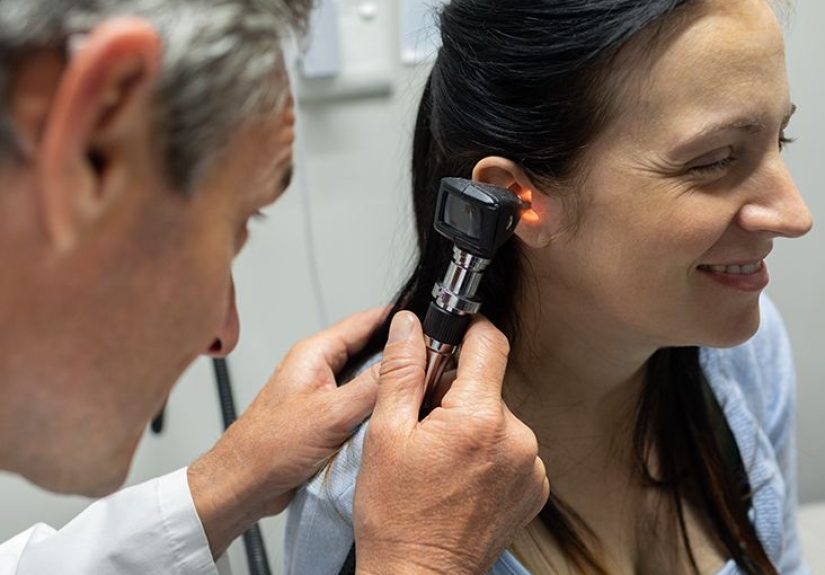
2) Ear exam (otoscopy)
A clinician looks into the ear canal to check for wax, inflammation, or eardrum issues. Sometimes the “mystery”
is literally a wax plug doing its best cork impression.
3) Hearing tests (the audiology part)
- Pure-tone audiometry: You press a button when you hear tones at different pitches and volumes.
- Speech testing: Measures how well you understand words, not just whether you can hear beeps.
- Tympanometry: Checks middle-ear function (eardrum movement and pressure) and can help detect fluid or blockage.
- Otoacoustic emissions (OAEs): Looks at inner-ear (cochlear) function; often used in screening and differential diagnosis.
The result is usually an audiogram (a chart of hearing thresholds) plus clarity measures. A good provider will
translate the chart into real-life meaning: what you’ll notice at home, at work, in noise, and on calls.
4) Next steps: treatment, referrals, or both
Depending on results, you might be advised to monitor, treat a medical cause, try hearing aids, use assistive
listening devices, do tinnitus management, protect your hearing from noise, or get further evaluation (like imaging)
if there are red flags such as significant asymmetry.
Common problems a “hearing doctor” may diagnose
Earwax buildup
Wax is normal. Wax can also be… ambitious. A blockage can cause sudden muffling, fullness, or even ringing.
Removal should be done safelyno deep DIY excavation missions with cotton swabs.
Ear infections and fluid behind the eardrum
Infections can cause pain, fever, drainage, and temporary hearing loss. Persistent fluid can muffle sound and
affect kids’ language development if it keeps recurring.
Age-related or noise-induced hearing loss
These often develop gradually and commonly affect higher-pitched sounds firstmeaning speech may be audible but
unclear, especially in noise. This is where an audiologist’s testing and counseling shines.
Tinnitus (ringing/buzzing)
Tinnitus can be linked with hearing loss, stress, jaw issues, and some medical conditions. It’s not “all in your head,”
but it is processed by the brainso management often includes hearing treatment, sound strategies, and coping tools.
Vertigo and balance disorders
The inner ear is part of your balance system. If you have vertigo (spinning), especially with hearing changes, you may
need both ENT and audiology involvement to sort out the cause.
Sudden sensorineural hearing loss
This is the classic “I woke up and one ear is muffled or gone” scenario. It needs urgent medical evaluation because
early treatment can improve the chance of recovery in some cases.
How to prepare for your visit (and get better answers)
- Write a timeline: When did it start? Was it sudden or gradual? One ear or both?
- List your meds and supplements: Include recent changes.
- Note triggers: Does it worsen with colds, flights, stress, caffeine, or noise?
- Bring real-life examples: “I can’t understand my boss on Zoom” is more useful than “hearing bad.”
- Ask for your results: Request a copy of the audiogram and an explanation in plain English.
What about OTC hearing aids and “DIY” amplification?
Over-the-counter (OTC) hearing aids can help some adults with perceived mild-to-moderate hearing loss. They may be a
reasonable entry point if your symptoms are gradual and you don’t have red-flag issues. But “OTC” doesn’t mean “ignore
warning signs.” If you have sudden loss, pain, drainage, significant dizziness, or one-sided new hearing changes, you
should see a medical professional first.
Even when OTC devices are appropriate, many people still benefit from an audiology evaluation to confirm what type of
hearing loss is present and to avoid buying the wrong solution for the wrong problem. (Because nothing says “I tried”
like spending money to make background noise louder.)
Bottom line: The right hearing professional depends on your symptoms
If your hearing changes are gradual and you mainly struggle with clarity, an audiologist is often the best first stop.
If symptoms are sudden, painful, one-sided, or paired with vertigo, start with an ENT (or urgent care).
And if your main goal is hearing aid selection and support, a hearing instrument specialist may be helpfulespecially when you
already have test results and no red flags.
Most importantly: don’t wait until hearing loss starts shrinking your world. Hearing care is less about “perfect ears” and
more about staying connected to people, work, safety sounds, and the parts of life you actually enjoy.
Experiences: What it’s really like to realize you might need a hearing doctor
People rarely wake up and announce, “Today I shall responsibly schedule a hearing evaluation.” It’s usually sneakier than that.
Hearing changes tend to show up as small annoyances that look like “everyone else’s problem”until you notice the pattern.
Here are a few real-world style experiences that mirror what many patients describe, and what often happens next.
The “Everyone is mumbling” phase
It often starts with consonantsthose crisp sounds like s, f, t, and k. Vowels are loud and proud, so you still hear
speech, but clarity drops. You may catch yourself asking people to repeat, but only in restaurants or group settings. At home,
one-on-one conversation seems fineuntil the TV volume becomes your “personal preference” and everyone else calls it “a problem.”
Many people feel a weird mix of annoyance and embarrassment here, because the hearing loss is subtle enough to doubt yourself.
A hearing test can be a relief: it turns vague frustration into measurable information and practical options.
The “Phone calls are harder than they should be” moment
Some people notice it first on the phone or video calls: voices sound thin, certain coworkers are impossible to understand,
and you’re mentally exhausted after meetings. You might blame bad microphones, the app, the Wi-Fi, the universeanything but your ears.
An audiologist will often ask about speech-in-noise difficulty and can test how you process speech, not just tones. When patients learn
that hearing loss can be about clarity as much as volume, it explains why “turn it up” didn’t solve the problem.
The “One ear feels weird” wake-up call
This experience is differentmore sudden, more alarming. People describe waking up with one ear muffled, like there’s cotton stuck inside,
or noticing that headphones sound lopsided. Sometimes there’s ringing, pressure, or dizziness. The common mistake is waiting a few days to
see if it clears, assuming allergies or wax. Clinicians take sudden or rapid hearing changes seriously, and many patients later say they wish
they’d sought care soonernot because they did something “wrong,” but because certain conditions have a window where early evaluation matters.
This is the scenario where an ENT visit (often paired with an urgent audiogram) is especially important.
The “I didn’t realize how much I was missing” after treatment
When people try hearing aids or assistive devices for the first time, the reaction is often surprising. It’s not usually cinematic tears
and orchestral music (though we support the drama). It’s more like: “Wait… the turn signal makes a sound?” or “So that’s what birds have been
doing this whole time.” Another common experience is realizing how much listening effort you were spendingworkdays feel less draining, and social
gatherings become less stressful because you aren’t constantly filling in missing words. That said, there’s also an adjustment period. People may
need a few follow-ups for fine-tuning, and it’s normal to feel overwhelmed at first by “new” sounds. The best outcomes often come from teamwork:
a clinician who programs devices thoughtfully, plus a patient who returns for tweaks and learns communication strategies.
The “I wish I hadn’t waited” reflection (without the guilt)
Many patients delay care for totally understandable reasons: cost worries, fear of being judged, not wanting to feel “old,” or simply not realizing
hearing loss can be gradual. But a frequent theme after evaluation is reliefbecause having a plan feels better than guessing. Even when hearing aids
aren’t the answer (or not yet), people appreciate knowing what’s happening and how to protect their hearing going forward. If you’re on the fence,
consider this: a hearing evaluation is information. It doesn’t force you into a device, a procedure, or a lifestyle change. It just gives you clarity
the kind that helps you make decisions with confidence instead of volume buttons.
If any of these experiences sound familiar, you’re not aloneand you’re not “overreacting.” Hearing is tied to connection, safety, and quality of life.
Getting the right professional involved is a practical step, not a dramatic one. (Even if your family is dramatic. We can’t fix that.)





 Close
Close