
Table of Contents >> Show >> Hide
- Quick Answer: Hematoma vs. Bruise
- What Is a Bruise?
- What Is a Hematoma?
- Key Differences Between a Hematoma and a Bruise
- What Causes Hematomas and Bruises?
- How to Tell Which One You May Have
- Treatment: What Helps and What Does Not
- When to See a Doctor
- Which One Is More Serious?
- Common Experiences People Have With Hematomas and Bruises
- Final Takeaway
If you have ever smacked your shin on a coffee table, stared at the swelling, and thought, “Well, that’s going to be ugly tomorrow,” welcome to the club. Injuries that leave a mark are common, but the words people use for them are often all over the place. One person says bruise. Another says hematoma. Someone else says, “It’s probably nothing,” which is comforting right up until the lump gets bigger and starts auditioning for its own zip code.
So, what is the real difference between a hematoma and a bruise? In everyday conversation, a bruise is the flat, discolored mark you can see on the skin after a bump or blow. A hematoma usually means blood has collected outside a blood vessel in a more noticeable way, often causing swelling, pressure, or a raised lump. Here is the twist: medically, a bruise can be considered a small, superficial type of hematoma. Still, in plain English, people usually use hematoma when the injury seems deeper, larger, more painful, or more dramatic.
This guide breaks down hematoma vs. bruise in plain American English, without turning into a medical-school lecture. We will cover symptoms, causes, healing time, treatment, warning signs, and the real-life situations that help you tell the difference.
Quick Answer: Hematoma vs. Bruise
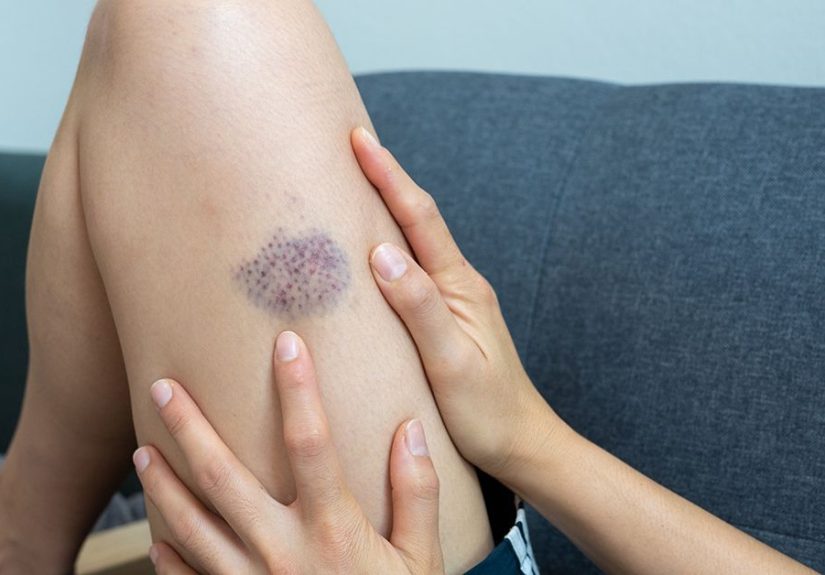
A bruise happens when small blood vessels break under the skin and leak a modest amount of blood into nearby tissue. The result is discoloration that changes color as it heals: red, purple, blue, green, yellow, and eventually gone. It is usually flat or only mildly swollen.
A hematoma happens when blood collects and pools outside a damaged blood vessel, often in a more concentrated pocket. That trapped blood may create a lump, firmer swelling, more tenderness, or pressure. Hematomas can form under the skin, inside muscle, under a nail, in the ear, or even deep inside the body where you cannot see them.
Think of it this way: every hematoma involves bleeding into tissue, but not every mark people call a bruise is the kind of hematoma that demands attention. A bruise is usually more “annoying badge of clumsiness.” A hematoma can be that too, but it can also be a sign of a deeper injury.
What Is a Bruise?
A bruise, also called a contusion or ecchymosis, appears when tiny blood vessels near the surface of the skin break after an injury. The skin stays intact, but blood leaks underneath it. Because the blood is trapped below the surface, you see a patch of discoloration.
Common features of a bruise
Bruises are usually:
Flat or only slightly swollen, tender to the touch, and easy to spot on the skin. They often start out red or purplish, then shift into blue, green, yellow, and light brown tones as the body gradually reabsorbs the blood. Most simple bruises improve on their own over a couple of weeks, though larger ones can take longer.
Bruises can happen after everyday mishaps like bumping into furniture, dropping something on your foot, getting tackled in sports, or having blood drawn. They can also show up more easily in older adults, in people taking blood thinners, or in people with bleeding or clotting problems.
What Is a Hematoma?
A hematoma is a localized collection of blood outside a blood vessel. Instead of spreading out in a thin layer under the skin, the blood may pool more heavily in one area. That is why a hematoma is more likely to feel firm, raised, swollen, or unusually painful.
Common features of a hematoma
A hematoma may look like a deep bruise, but it often comes with more swelling, a lump, a sense of pressure, or pain that seems out of proportion to a simple bruise. Some hematomas stay close to the surface. Others occur in deeper tissues, muscles, or internal spaces where they are not visible at all.
For example, a “goose egg” on the forehead after bumping your head is often a superficial hematoma. A painful dark area under a fingernail after slamming it in a door is a subungual hematoma. A hematoma can also form after surgery, injections, blood draws, or more serious trauma.
Some hematomas are minor and heal with rest and time. Others need medical care, imaging, drainage, or emergency treatment, especially when they occur in the skull, around the brain, or in deeper body structures.
Key Differences Between a Hematoma and a Bruise
1. Depth of injury
A bruise usually involves small blood vessels close to the skin’s surface. A hematoma often involves more bleeding, deeper tissue, or a more concentrated pocket of blood. That is the main reason a hematoma tends to look or feel more dramatic.
2. Appearance
A bruise is usually flat and discolored. A hematoma may also be discolored, but it is more likely to look swollen, raised, or lumpy. If the area feels like it has its own topography now, hematoma moves higher on the list.
3. Pain and pressure
Bruises can hurt, especially right after an injury, but the discomfort often fades gradually. Hematomas may cause stronger pain, tightness, throbbing, or pressure because collected blood can push on surrounding tissue.
4. Location
Bruises usually show up on the skin where you can see them. Hematomas can form there too, but they can also occur in muscles, under nails, in the ear, inside the abdomen, or in the skull. That is why the word hematoma carries a wider range of seriousness.
5. Healing time
Most simple bruises improve within about two weeks, though bigger bruises can linger longer. Hematomas may take longer to resolve, especially when they are large, deep, or repeatedly irritated. Some improve with conservative care, while others need medical treatment.
6. Risk level
A standard bruise is usually a minor soft-tissue injury. A hematoma can also be minor, but it deserves more respect. If it gets larger, causes numbness, limits movement, follows a head injury, or appears without a clear reason, it should not be shrugged off.
What Causes Hematomas and Bruises?
The most common cause of both is trauma. A fall, sports collision, car accident, blunt impact, or even an aggressive encounter with the corner of your bed frame can damage blood vessels and let blood leak into tissue.
Other common causes include:
Medical procedures: blood draws, injections, surgery, IV placements, and dental work can sometimes leave a bruise or small hematoma.
Medications: blood thinners, aspirin, some anti-inflammatory drugs, and steroids can make bleeding under the skin more likely or more noticeable.
Aging: older adults bruise more easily because skin becomes thinner and blood vessels become more fragile.
Bleeding or clotting disorders: conditions that affect platelets, clotting factors, or blood vessels can lead to frequent or unexplained bruising.
Nutritional issues or underlying illness: vitamin deficiencies, liver disease, and certain endocrine or connective tissue conditions can contribute to easy bruising.
If bruises keep appearing and you cannot connect them to real injuries, that is not your body being “dramatic.” That is a reason to talk with a clinician.
How to Tell Which One You May Have
You may be dealing with a bruise if the area is discolored, mildly tender, mostly flat, and gradually improving day by day.
You may be dealing with a hematoma if the area is more swollen, forms a firm lump, feels unusually tight or painful, seems to be getting bigger, or sits in a place where pressure matters, such as under a nail, on the ear, or after a head injury.
One practical rule helps: a bruise usually changes color and slowly fades. A hematoma often demands more attention because of swelling, size, depth, or pressure. If you look at it and think, “This seems like more than a bruise,” trust that instinct.
Treatment: What Helps and What Does Not
Home care for a simple bruise or small superficial hematoma
For minor injuries, the classic first-aid steps still do the heavy lifting:
Rest: avoid re-injuring the area.
Ice: apply a cold pack wrapped in a towel for short periods during the first day or two.
Compression: a snug elastic wrap may help if swelling is present, but not so tight that it causes numbness or worsens pain.
Elevation: raise the injured area above heart level when possible to reduce swelling.
For pain, many people use acetaminophen. If you take blood thinners, have bleeding issues, or are considering anti-inflammatory medicines, it is smart to check with a clinician or pharmacist first.
What about heat?
Cold is usually more useful right after injury because it helps reduce bleeding and swelling. Later, once the early swelling settles, some people find gentle warmth helpful for comfort. The key word is gentle, not “let me roast this thing into submission.”
When a hematoma may need medical treatment
A clinician may evaluate a hematoma if it is large, growing, intensely painful, restricting movement, or located somewhere sensitive. In some situations, a hematoma may need drainage or surgical care. This is especially true for certain nail hematomas, ear hematomas, and deep or internal hematomas.
When to See a Doctor
Seek medical care if:
You develop a painful lump after an injury, the swelling gets worse instead of better, or the area becomes numb, weak, or hard to move.
You bruise easily, bruise for no clear reason, or have bruises that keep appearing in the same place.
You notice bleeding elsewhere too, such as nosebleeds, bleeding gums, or tiny pinpoint spots on the skin.
You are on anticoagulants or antiplatelet medicines and an injury causes significant swelling or discoloration.
You have signs of infection around a bruise or hematoma, including warmth, redness, pus, or fever.
Go urgently or get emergency help if:
You may have a hematoma after a head injury, especially if there is headache, vomiting, confusion, drowsiness, seizures, vision changes, trouble speaking, or weakness. A bruise on the scalp may be harmless, but bleeding inside the skull is a medical emergency.
You also need urgent assessment if you suspect a broken bone, have severe abdominal pain after trauma, or have swelling that rapidly expands.
Which One Is More Serious?
In a typical day-to-day injury, a hematoma is usually more concerning than a plain bruise because it suggests more bleeding, deeper tissue involvement, or blood trapped in a confined space. That does not mean every hematoma is dangerous. Many are minor and heal well. It simply means the word should make you pause and check the details: size, pain, location, and progression.
A small bruise on your thigh after walking into a desk is common. A growing, painful lump after trauma, a bruise that appears out of nowhere, or swelling after a head injury is a different story.
Common Experiences People Have With Hematomas and Bruises
One reason people confuse hematoma vs. bruise is that real-life injuries do not arrive with labels. They arrive with panic, swelling, and a sudden need to Google your own leg.
A classic experience is the shin bruise. You bump into something hard, mutter a few words not suitable for a wellness blog, and within hours a flat purple mark appears. It is tender, annoying, and dramatic-looking, but it slowly fades through the usual rainbow. That is the everyday bruise experience: ugly, memorable, but usually straightforward.
Then there is the blood-draw surprise. You leave the lab thinking all is well, only to notice a dark, sore patch near the needle site later that day. Sometimes it stays as a small bruise. Other times, blood collects more noticeably under the skin and creates a puffy, tender bump. That is one of the most common ways people discover what a small hematoma feels like. It can look worse than it is, but it is also more than a simple flat bruise.
Athletes often describe a different pattern: a deep muscle hit. A knee to the thigh in soccer, a collision in football, or a heavy impact in the gym may not leave much color on day one. Instead, the area feels tight, swollen, and sore to move. A day later, the discoloration may appear. That delayed “Oh, wow, there it is” effect is common with deeper soft-tissue bleeding. People frequently call it a bruise, but the depth and swelling may make it closer to a muscle hematoma.
Older adults often share another experience: bruises that seem to appear from almost nothing. A gentle bump against a countertop, carrying grocery bags against the forearm, or brushing past a doorframe can leave impressive discoloration. This happens because aging skin and blood vessels are more fragile. The bruise can look dramatic even when the injury was not. That said, frequent unexplained bruising still deserves medical attention, especially when medications are involved.
Head bumps are the experience that makes people most nervous, and for good reason. Many people get a superficial “goose egg” that looks awful but improves. The problem is that no one can tell from appearance alone whether every head injury is minor. If a swelling on the scalp comes with confusion, vomiting, worsening headache, or unusual sleepiness, it has moved way beyond “watch and wait.”
The bottom line from lived experience is simple: bruises are common, hematomas are also common, and the difference often comes down to depth, swelling, pain, and location. If the injury is flat and fading, it is usually acting like a bruise. If it is raised, expanding, unusually painful, or in a sensitive area, it may be a hematoma and deserves closer attention.
Final Takeaway
The difference between a hematoma and a bruise is not just semantics. A bruise is usually a mild, visible mark from broken small blood vessels near the skin. A hematoma is a more significant collection of blood outside a blood vessel, often deeper, more swollen, and sometimes more serious. In plain terms, bruises are common and usually harmless. Hematomas can be harmless too, but they demand more respect.
If the area is flat, changing color, and gradually improving, you are probably dealing with a routine bruise. If it is raised, very painful, getting bigger, or linked to a head injury or unexplained bleeding, do not just wait it out and hope for the best. That is the moment to get medical advice.







 Close
Close