
Table of Contents >> Show >> Hide
- What Is the Heritage Victoria High Level WC and Cistern With Flush Pack?
- Why People Love the High-Level Look
- Before You Buy in the U.S., Check These Things First
- Installation Planning for a Heritage High-Level WC
- Pros and Cons of the Heritage Victoria High Level WC and Cistern With Flush Pack
- Who Should Buy This Toilet?
- Real-World Experiences With the Heritage Victoria High Level WC and Cistern With Flush Pack
- Final Thoughts
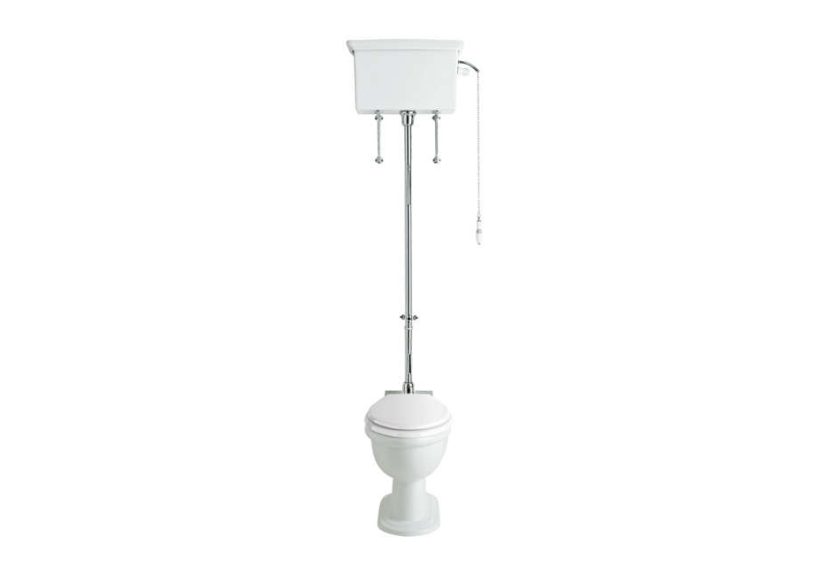
If you’ve ever looked at a standard toilet and thought, “Nice, but what if it had more drama?” then the Heritage Victoria High Level WC and Cistern with Flush Pack is probably your kind of fixture. This is not the quiet background actor of a bathroom. It’s the lead role, complete with a high-mounted cistern, pull chain, and that unmistakable Victorian-style silhouette that instantly makes a room feel intentional.
But style is only half the story. A high-level WC setup also changes how you plan the room, how you measure your rough-in, how you think about installation, and even how you compare water usage against modern U.S. efficiency standards. In this guide, we’ll break down what this Heritage Victoria setup is, where it shines, what to check before buying, and what real-life ownership and installation experiences usually look likeso you don’t end up with a gorgeous toilet and a plumbing headache.
What Is the Heritage Victoria High Level WC and Cistern With Flush Pack?
The Heritage Victoria high-level WC is a traditional-style toilet suite designed around a wall-mounted cistern positioned well above the toilet pan, connected by a long flush pipe and activated with a pull chain. It’s a classic look borrowed from Victorian-era bathrooms, but still sold today for homeowners who want period character without giving up reliability.
Based on Heritage’s product data and retailer listings, the Victoria range is built in vitrified/vitreous china for the pan and cistern, while the flush pack hardware is typically chrome-plated brass (with finish options depending on the package). The flush pack includes the decorative high-level pipework, pull chain components, and related fittings that give the setup its signature look.
There’s a small but important detail here: Heritage’s official site lists the High Level Flush Pack separately (code CC01 on the current product page), while older technical sheets and retailer listings may show earlier flush-pack codes or bundled kit references. Translation: always confirm the exact package contents and part numbers with the seller before ordering, especially if you’re mixing pan, cistern, coupling kit, and flush pack across different stockists.
Typical Dimensions and Specifications
For the Victoria high-level WC and cistern setup, the dimensions are tallintentionally so. Heritage technical documentation and retailer listings show the overall height landing around 2400 mm (about 94.5 inches), with width around 545 mm (about 21.5 inches). Depth figures can vary depending on the pan and pipe layout, but expect a full-depth traditional footprint, not a tiny powder-room sneaker of a toilet.
The older Heritage technical sheet also lists a 6-liter flush volume, which is roughly 1.59 gallons per flush. That number matters for U.S. buyers because it sits near the long-standing 1.6 gpf benchmark, but it is not the same thing as being EPA WaterSense certified. If water efficiency is a top priority in your remodel, keep readingwe’ll cover how to compare it intelligently.
Why People Love the High-Level Look
Let’s be honest: most people do not choose a high-level toilet because it is the cheapest or easiest option. They choose it because it looks fantastic.
The Heritage Victoria high-level style works especially well in:
- Period-inspired bathrooms (Victorian, Edwardian, farmhouse, cottage, classic traditional)
- Statement powder rooms where the toilet is part of the design, not just a necessity
- Renovations mixing old and new, like marble tile + brass lighting + a traditional pull-chain WC
The high cistern creates vertical interest, which is a fancy design way of saying your walls suddenly look taller and more deliberate. In a room with beadboard, tile wainscoting, or a bold paint color, that extra height can make the space feel finished instead of flat.
There’s also a practical side: high-tank toilets use gravity in a more pronounced way due to the elevated tank position. In everyday language, that means the flush can feel strong and satisfying. It’s not magic. It’s physics wearing a vintage hat.
Before You Buy in the U.S., Check These Things First
If you’re shopping for a Heritage Victoria high-level WC in the U.S. (or importing one), do not start with the finish. Start with measurements and compatibility. Chrome can wait. Plumbing cannot.
1) Measure the Rough-In Correctly
The rough-in is the distance from the finished wall to the center of the toilet drain (or the closet bolts). This is the first measurement you should verify before you fall in love with any toiletespecially a traditional one that may not be as forgiving as a modern big-box model.
Most U.S. toilets are built around a 12-inch rough-in, but 10-inch and 14-inch rough-ins also exist, especially in older homes. The good news: nearly every major U.S. toilet buying guide repeats the same advicemeasure from the finished wall, not the baseboard. That one mistake has cost many people a return fee and a very grumpy weekend.
Because the Heritage Victoria is a traditional high-level setup, you also want to think beyond the base rough-in and consider the flush pipe alignment and wall mounting position for the cistern. A toilet can technically “fit” the floor drain and still become a complicated install if the wall framing or pipe run isn’t planned in advance.
2) Plan for Bowl Shape and Room Clearance
Traditional toilets can still be roomy or compact depending on the pan design. In general:
- Round bowls save space.
- Elongated bowls add comfort and typically extend farther into the room.
Many U.S. buying guides note that elongated bowls are usually around 2 inches longer than round bowls. That sounds small until your bathroom door clips the front edge on day one. Measure your room, door swing, vanity clearance, and pathway around the toilet before committing.
For high-level WCs, this matters even more because the visual drama of the upper cistern may tempt you to make the toilet the centerpiece. Make sure the room can support the look without making the bathroom feel like an obstacle course.
3) Think About Height and Everyday Comfort
Seat height is one of those details people ignore until they use the toilet every day. Then suddenly it becomes a whole topic.
Standard toilet heights are lower; comfort/chair-height options sit higher and are often preferred by taller adults, older users, or anyone with knee or mobility concerns. U.S. guides from Kohler, American Standard, and others commonly place chair-height toilets in the 17-inch-and-up range (seat height varies by model and seat).
For the Heritage Victoria setup, retailer listings show a pan height around 460 mm (roughly 18.1 inches) before seat differences are considered. That can feel closer to a comfort-height experience, which many buyers love. If you’re designing for aging in place or shared family use, that’s a real advantage.
4) Water Efficiency and U.S. Standards
Toilets account for a big chunk of indoor household water use in the United States. EPA WaterSense guidance notes that toilets make up nearly 30% of average indoor home water consumption, and older models can use as much as 6 gallons per flush. Modern, efficient designs have changed the game.
EPA also notes that many current water-saving toilets use 1.28 gallons per flush or less, and WaterSense-labeled models are independently certified for both performance and efficiency. This matters because “low water use” and “officially certified” are not always the same thing.
Why that matters for the Heritage Victoria: if you’re working from Heritage technical data showing a 6-liter flush volume (~1.59 gpf), the fixture may align more closely with traditional flush volumes than current WaterSense targets. That does not automatically make it a bad choice. It just means you should make a clear decision:
- If period aesthetics are the top priority, this model is a strong candidate.
- If maximum water efficiency and U.S. rebate eligibility are the top priority, compare it against WaterSense-labeled alternatives before buying.
Also check local plumbing code and certification requirements in your state or municipality, especially if you’re importing a fixture or using a specialty product line.
Installation Planning for a Heritage High-Level WC
A high-level toilet installation is not impossible, but it is different from replacing a basic two-piece toilet from a warehouse store. Go in with a plan, and it’s a stylish upgrade. Go in “winging it,” and it becomes a long conversation with your plumber.
Wall Support and Cistern Placement
The cistern sits high on the wall and is usually supported by decorative brackets. That means the wall structure matters. If you’re working with plaster, old masonry, tile over unknown framing, or historic walls, have your installer verify anchoring points before ordering. Decorative brackets look elegant, but they still need real support behind them.
You’ll also want to decide the exact cistern height and chain-drop length early. The standard visual is a comfortable pull-chain reach without the chain dangling so low it becomes a cat toy. (If you have cats, you know this is not a joke.)
What’s Included and What’s Not
One of the most common buying mistakes is assuming “flush pack” means “everything.” It usually means the flush pipe assembly and related decorative hardwarebut not always the pan, seat, or every fitting needed for your specific install scenario.
Retailer listings for this Heritage Victoria setup often note the following:
- WC pan and high-level cistern
- Flush pack (chrome in many listings)
- Pull chain and fittings
- Coupling kit (in some bundled versions)
- Toilet seat sold separately in many cases
Always confirm whether your order includes the seat, coupling kit, wall brackets, and all connection fittings. “Includes fittings” can mean different things depending on the seller and region.
Professional Install vs. DIY
If you’re highly experienced with plumbing and bathroom fixture installs, this can be a satisfying DIY project. But for many homeowners, a pro install is worth itespecially when the project involves wall anchoring, tile drilling, imported fittings, or adapting to an older home’s rough-in.
Even U.S. toilet buying guides aimed at DIYers often remind shoppers that labor can add to the cost. In a high-level WC project, labor isn’t just “extra”it can be the difference between a toilet that looks amazing and one that looks slightly crooked forever.
Pros and Cons of the Heritage Victoria High Level WC and Cistern With Flush Pack
Pros
- Timeless design appeal with real period character
- Strong visual focal point for traditional or eclectic bathrooms
- Pull-chain flush adds charm and a premium heritage feel
- Quality materials like vitreous china and metal flush hardware
- Great for statement renovations where standard toilets look too plain
Cons
- More planning required than standard two-piece toilets
- May not match WaterSense-level efficiency depending on exact configuration
- Parts/package confusion is possible if ordering from mixed retailers
- Seat often sold separately
- Higher installation complexity, especially in older homes
Who Should Buy This Toilet?
The Heritage Victoria high-level WC and cistern with flush pack is a great fit if you:
- Love traditional bathroom design and want a true heritage look
- Are renovating a period home and want the toilet to match the architecture
- Want a bathroom feature that feels custom, not cookie-cutter
- Are okay spending more time on planning, measuring, and installation
It may not be the best fit if your priority is ultra-simple installation, lowest upfront cost, or getting the most water-efficient, rebate-friendly toilet possible with the least research.
Real-World Experiences With the Heritage Victoria High Level WC and Cistern With Flush Pack
(This section adds extended, practical experience-based insights to help you plan the project more confidently.)
One common experience people report with a high-level WC like the Heritage Victoria is that it completely changes the mood of the bathroom. Homeowners often start the remodel thinking the vanity tile or lighting will be the “wow” feature, then the toilet goes in and suddenly everything else becomes the supporting cast. The high cistern and pull chain naturally draw the eye upward, which makes the room feel more designed and less builder-basic. In smaller powder rooms, this can be a huge win because you’re adding character without needing more floor space.
Another very real experience: the measuring phase takes longer than expected. People who have replaced a standard toilet before sometimes assume this is the same project with a prettier flush handle. It isn’t. With the Heritage Victoria setup, you’re dealing with a pan location, a wall-mounted cistern location, a vertical flush pipe run, and visual alignment. Installers often dry-fit the toilet pan, mark the wall, and then recheck chain height before drilling anything. That extra hour of planning saves a lot of frustration later. The most common surprise is not the floor drainit’s the wall. Old walls are rarely perfectly plumb, and a high-level cistern makes crooked walls very obvious.
There’s also the “parts audit” experience. Buyers regularly assume the phrase “with flush pack” means the entire package is ready to install straight out of the box. Then the boxes arrive and someone asks, “Where’s the seat?” or “Do we have the right coupling kit?” The Heritage Victoria line is sold through different retailers and product bundles, so package contents can vary. Experienced renovators now build a checklist before ordering: pan, cistern, flush pack finish, coupling kit, seat, inlet position, and installation hardware. It sounds fussy, but it prevents that classic remodel moment where your bathroom is 95% finished and unusable because one small fitting is missing.
In day-to-day use, owners tend to love the pull-chain feature more than they expected. It feels mechanical in the best waysimple, tactile, and a little theatrical. Guests notice it immediately. Kids think it’s fun. Adults act like they’re not impressed, then pull it twice “just to test it.” That said, chain height matters. If the chain hangs too high, shorter users may struggle. Too low, and it can feel awkward or get in the way visually. Installers who have done a few of these often recommend mocking up the chain drop with string before finalizing hardware placement.
Cleaning and maintenance experiences are mixedbut predictable. The china surfaces are easy to keep clean, but the exposed pipework and decorative brackets add more surfaces than a typical compact toilet. If you like a spotless bathroom, you’ll spend a little more time dusting and wiping around the flush pipe and fittings. The upside is that many homeowners are happy to make that trade because the toilet looks like a design feature, not just plumbing.
Finally, there’s the “worth it?” experience. People who buy this toilet for the right reasonstyle, period authenticity, and characterusually feel very happy with the choice. People who buy it expecting the same install speed and simplicity as a standard off-the-shelf two-piece model can feel stressed during the project. So the biggest lesson from real-world installs is simple: if you plan carefully, verify parts, and respect the installation details, the Heritage Victoria high-level WC can become one of the most memorable upgrades in the entire home.
Final Thoughts
The Heritage Victoria High Level WC and Cistern with Flush Pack is one of those rare bathroom products that feels both practical and expressive. It gives you the everyday function of a toilet, yesbut also the visual payoff of a true design statement. If you love traditional style, the pull-chain experience, and that unmistakable high-cistern silhouette, it’s a standout option.
Just be smart on the front end: measure the rough-in, verify the package contents, plan the wall support, and compare water-use expectations against modern U.S. standards. Do that, and you’ll avoid the common mistakes while getting a bathroom centerpiece that looks custom, charming, and genuinely memorable.






 Close
Close