
Table of Contents >> Show >> Hide
- Why the 1970s Still Matter
- Politics: When Trust Got a Full-Body Workout
- Foreign Policy: Détente, Vietnam, and a Hostage Drama
- The Economy: Stagflation, Gas Lines, and the “Energy Crisis” Era
- Environment: The Decade America Put Air and Water on the National Agenda
- Technology: The Microprocessor Arrives (Quietly) and Changes Everything (Loudly)
- Space: From Moon Afterglow to a Handshake in Orbit
- Culture: Disco Balls, Punk Chords, and a Galaxy Far, Far Away
- Everyday Life in the 1970s: The Stuff People Actually Remember
- What the 1970s Taught the Future
- Conclusion
- Extended Experiences: A 1970s Time-Travel Field Guide (About )
The 1970s were the decade that took America’s confidence, shook it like a Polaroid picture, and handed it back with a few new wrinklesplus a disco soundtrack. If the 1960s were a loud argument in the living room, the 1970s were the aftermath: someone’s making coffee, someone’s reading the newspaper, and everyone is pretending they didn’t just throw a lamp. This era delivered political scandal, economic whiplash, major shifts in rights and culture, and the early building blocks of the digital world you’re using right now. In other words: the ’70s were busy.
Below are the most important historical facts about the 1970snot as a dry timeline, but as a story about why the “Seventies decade” still echoes in modern politics, pop culture, and everyday life. Expect big events, surprising context, and the occasional wink, because history was never meant to be read with the emotional range of a toaster.
Why the 1970s Still Matter
When people search for 1970s history, they’re usually trying to understand how the United States pivoted from postwar optimism to a more skeptical, complicated mood. The decade saw Americans question institutions, recalibrate foreign policy, wrestle with inflation and energy shocks, and re-negotiate what equality should look like in schools, workplaces, and homes. Many “normal” things todayenvironmental regulation as a national priority, women’s sports as a major public force, and microchips powering everythingeither started or accelerated fast in this period.
Politics: When Trust Got a Full-Body Workout
Watergate: The Scandal That Made “-gate” a Suffix for Everything
If the 1970s had a signature political plotline, it was Watergate. The story began with a break-in at the Democratic National Committee offices in Washington, D.C. on June 17, 1972. What followed wasn’t just a scandalit became a constitutional stress test involving investigators, the press, Congress, federal agencies, and the courts. After years of revelations and mounting pressure, President Richard Nixon resigned on August 9, 1974, under threat of impeachment. It was the first (and still only) U.S. presidential resignation, and it permanently changed how Americans viewed executive power, secrecy, and accountability.
The broader impact was cultural, too: “trust but verify” energy became a national personality trait. Journalism gained a mythic glow, public cynicism spiked, and politics started to feel like something you watched with the same vigilance you reserved for a raccoon near your trash cans.
The Courts and the Culture Wars (Yes, They Were Already Here)
The 1970s also featured landmark legal decisions that shaped the country’s social debate. In 1973, the Supreme Court decided Roe v. Wade, ruling that the Constitution protected a woman’s right to an abortion prior to fetal viability. The decision didn’t end disagreementit amplified it, setting up decades of political conflict over privacy, bodily autonomy, and the role of government in personal decisions. Whether people cheered, protested, or did both in the same weekend, the country’s legal and political landscape shifted.
Foreign Policy: Détente, Vietnam, and a Hostage Drama
Vietnam: The Long Goodbye
One of the defining events of the 1970s was the United States trying to end its involvement in Vietnam while salvaging credibility and containing broader Cold War risks. The Paris Peace Accordsformally the Agreement on Ending the War and Restoring Peace in Vietnamwere signed on January 27, 1973. They aimed to establish peace and set terms for U.S. withdrawal. But the end of American combat involvement did not mean stability.
In April 1975, the war’s dramatic conclusion arrived with the fall of Saigon on April 30, when North Vietnamese forces took the South Vietnamese capital (now Ho Chi Minh City). Images from the evacuation became enduring symbols: urgency, confusion, heartbreak, and the complicated reality that “ending a war” is not the same thing as “ending consequences.”
Détente and SALT: When Rivals Tried Talking (Without Yelling)
The 1970s included a notable thaw in the Cold War called détentea period of eased tensions and more active diplomacy between the United States and the Soviet Union. A key milestone was the signing of the Anti-Ballistic Missile (ABM) Treaty and the interim agreement known as SALT I (Strategic Arms Limitation Talks) on May 26, 1972. The goal wasn’t friendship; it was risk managementreducing the chance that competition spiraled into catastrophe. Think of it as two rivals agreeing to stop storing gasoline next to the bonfire.
The Iranian Hostage Crisis: America Watches, Night After Night
Late in the decade, the Iranian Hostage Crisis shook U.S. foreign policy and public confidence. On November 4, 1979, Iranian students seized the U.S. Embassy in Tehran and detained more than 50 Americans. The hostages were held for 444 days, and the crisis dominated headlines and television coverage, shaping how many Americans understood vulnerability, diplomacy, and global instability.
The Economy: Stagflation, Gas Lines, and the “Energy Crisis” Era
The Oil Embargo and the First Energy Crisis
The 1970s economy didn’t just hit potholesit found the whole road missing. A major cause was the oil shock tied to Middle East conflict and the global oil market. In October 1973, the Yom Kippur War broke out; soon after, on October 17, 1973, Arab members of OAPEC declared an oil embargo that sparked the first major U.S. energy crisis. Americans encountered shortages and gas lines, and the country learned that modern life ran on oil the way a teenager runs on snacks: remove it, and everything gets dramatic.
The Great Inflation: When Prices Kept Climbing and Nobody Felt Like a Genius
The decade is famous for “stagflation”the miserable combo of high inflation and weak economic growth. The Federal Reserve’s historical accounts describe repeated energy shocks as particularly disruptive, with the 1973–74 embargo and later turmoil contributing to a painful cycle of rising costs and slower growth. Then came a second major oil shock in 1978–79 associated with events in Iran and strong global demand, intensifying inflation pressures.
By 1979, the economic mood was grim enough to make even optimists start labeling their grocery receipts as “historical documents.” That year, Fed Chair Paul Volcker supported a sharp shift toward tightening monetary policy to rein in inflationmoves that would reshape the economy into the early 1980s. The 1970s, in other words, didn’t just end; they echoed.
Environment: The Decade America Put Air and Water on the National Agenda
The 1970s weren’t only about crises; they were also about building institutions. The U.S. Environmental Protection Agency (EPA) was created on December 2, 1970, as the federal government consolidated responsibility for environmental protection and enforcement. That same year, major expansions to the Clean Air Act were signed on December 31, 1970foundational steps that shaped modern air quality regulation.
The decade also saw continued policy development, including amendments to the Clean Air Act in 1977 that aimed to address areas failing to meet air quality standards and to prevent significant deterioration of cleaner air in other regions. The deeper “historical fact” here isn’t only legislative: the ’70s normalized the idea that environmental health was a national responsibility, not just a local complaint.
Technology: The Microprocessor Arrives (Quietly) and Changes Everything (Loudly)
While politicians argued on TV, engineers were doing something even more consequential: shrinking computing power onto a chip. In 1971, Intel introduced the MCS-4 Micro Computer Set, including the Intel 4004an early commercial microprocessor that helped launch the modern electronics revolution. A first advertisement for the Intel 4004 appeared on November 15, 1971, and the chip became a landmark in integrating CPU functions onto a single device.
This is one of the most underrated 1970s historical facts: the decade wasn’t only about disco and distrust. It was also the era when computing began shifting from room-sized machines and specialized institutions toward the miniaturization that eventually made personal computersand later smartphonespossible. If the ’70s had a quiet superpower, it was silicon.
Space: From Moon Afterglow to a Handshake in Orbit
The space race didn’t vanish in the 1970s; it matured. One of the decade’s most symbolic moments was the Apollo-Soyuz Test Projectan international partnership between the United States and the Soviet Union. On July 15, 1975, an Apollo spacecraft launched, and on July 17 it docked with a Soyuz spacecraft. Beyond the engineering, the mission mattered because it represented cooperation in a time when rivalry was the default setting.
In cultural terms, Apollo-Soyuz was a reminder that even during tense geopolitical eras, countries can still coordinate on shared human goalslike not getting stranded in space, which is generally considered “bad for morale.”
Culture: Disco Balls, Punk Chords, and a Galaxy Far, Far Away
Disco: Not Just a GenreA Social Technology
Disco rose from underground club scenes into mainstream pop culture in the mid-1970s, offering joy, rhythm, and community in a moment when the national mood could be… complicated. It wasn’t merely music; it was a social spaceespecially for communities who needed refuge and self-expression. When people talk about the 1970s as “the decade of disco,” the deeper point is that dance floors became places where identity and belonging could feel louder than politics.
Punk: “Here’s Three ChordsNow Form a Band”
By the late 1970s, punk was pushing back against polish and spectacle. A famous punk sentimentpopularized around 1977captured the DIY spirit: you don’t need permission, you don’t need expensive gear, you just need nerve. Punk didn’t replace disco; it existed alongside it, like two siblings with opposite personalities forced to share a bathroom. Together, they show how the ’70s were culturally diverse, not monolithic.
1977 and “Star Wars”: Pop Culture Gets a New Myth
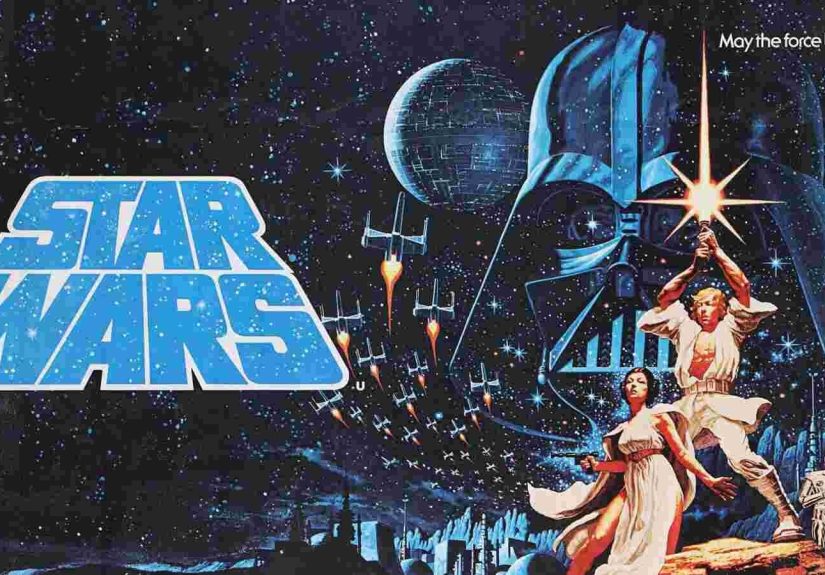
In 1977, Star Wars arrived and expanded what mainstream science fiction could be in filmblending special effects with storytelling on a scale audiences hadn’t experienced in quite the same way. It didn’t just entertain; it helped reshape the business of movies, merchandising, and fan culture. If you want a simple cultural fact from the 1970s with a long tail, this is it: the blockbuster era found a rocket engine.
Everyday Life in the 1970s: The Stuff People Actually Remember
Big history is made of small days. For many Americans, daily life in the 1970s meant inflation that made budgets feel like science fiction, gas shortages that turned errands into strategy sessions, and a fashion scene that treated “more fabric” as a personal challenge. Photographs of 1970s America capture the contrasts: disco dancing and protests, bell-bottoms and suburban sprawl, and a country trying to decide whether it was exhausted or reinventedor both before lunch.
The decade also normalized a certain kind of media presence in everyday life. Televised hearings, nightly crisis updates, and shared national moments made politics and global events feel closer to home. The 1970s weren’t the first media decade, but they were a decade when many Americans felt like the news moved into the living room and started charging rent.
What the 1970s Taught the Future
If you zoom out, the 1970s delivered a few durable lessons:
- Institutions must earn trust. Watergate permanently changed expectations of transparency and oversight.
- Energy is national security. The oil shocks showed how global events can disrupt daily life at home.
- Rights debates don’t “finish.” Landmark rulings and laws can intensify arguments as much as they resolve them.
- Innovation often looks boring at first. A tiny chip in 1971 helped pave the way to the digital world.
- Culture is a pressure valve. Disco, punk, and blockbuster films were not distractionsthey were social responses.
Conclusion
The 1970s were not a simple decade, and that’s exactly why they’re so useful to study. The era combined political reckoning, economic turbulence, environmental institution-building, foreign policy recalibration, and cultural creativity that still shapes what Americans watch, argue about, and invent. If you came here for historical facts about the 1970s, the biggest fact might be this: the decade taught the country how to live with uncertaintyand how to keep dancing anyway.
Extended Experiences: A 1970s Time-Travel Field Guide (About )
Imagine you’re dropped into the 1970s with no warning. Your first clue is visual: the color palette looks like somebody spilled mustard, avocado, and burnt orange across everything from kitchens to station wagons. You walk into a living room and see a television with a bulky frame, rabbit-ear antennas, and the kind of picture quality that makes everyone look like they’re being beamed in from another dimension. Somehow, people still gather around it like it’s a fireplacebecause in the ’70s, the TV is where the nation’s shared story plays out.
On a weekday evening, you might catch your neighbors talking politics with a tone that swings between outrage and fatigue. Watergate has trained the public ear to listen for evasions, to squint at official statements, to ask “What aren’t they telling us?” Even if someone avoids political talk, it’s in the airlike cigarette smoke, which, to be fair, is also in the air, because the 1970s are not yet on speaking terms with modern ventilation standards.
Then there’s the economyexperienced not as charts, but as a creeping, everyday annoyance. Prices feel like they’re doing cardio: always rising, always sweating. If you’re sent to buy groceries, you might return with fewer bags and a bigger sense of betrayal. And if you’re sent to buy gas, you learn the sacred ritual of the line: drivers inch forward, engines idle, and the whole queue becomes a temporary community. People trade rumors about which station still has fuel, and the mood ranges from gallows humor to quiet frustration. Energy isn’t an abstract concept; it’s the reason your plans may or may not happen.
But the 1970s are not only heavy. They’re also loud in the best way. One night, you’re in a club where disco turns strangers into synchronized optimism. The beat is a kind of agreement: for four minutes, everyone belongs. Another night, you stumble into a punk show where the sound is raw, fast, and defiantly imperfectlike someone turned frustration into an electrical current. You realize the decade is emotionally bilingual: it speaks both celebration and protest fluently.
And somewhere in the background, the future is quietly assembling itself. You might not notice the microprocessor on day one, because revolutions rarely show up wearing a sash that says “REVOLUTION.” But it’s therein the labs, in the early chips, in the notion that computing power can shrink and spread. By the time you leave the 1970s, you’d understand why the decade feels like a hinge: it swings between old assumptions and new realities, between the analog past and the digital future, between disillusionment and invention. The strangest part of time travel is realizing that people in the 1970s didn’t know they were “the 1970s.” They were just living itone news cycle, one tank of gas, and one song at a time.






 Close
Close