
Table of Contents >> Show >> Hide
- What is a Baker’s cyst (and why does it show up behind the knee)?
- Before you start: 6 “don’t-make-it-angrier” rules
- 5 Baker’s cyst exercises to help manage symptoms
- How to put it together: a simple weekly plan
- Other smart ways to calm a Baker’s cyst (and the knee that made it)
- When to call a clinician urgently
- FAQ: the questions people google at 2:00 a.m.
- Real-World Experiences: What Doing Baker’s Cyst Exercises Feels Like (and why that matters)
If you’ve ever felt a tight, squishy “speed bump” behind your knee and thought, “Cool, my leg is growing its own water balloon,” welcome to the Baker’s cyst club. (Membership is free. The knee drama is not.) A Baker’s cystalso called a popliteal cystis usually a sign your knee is producing extra joint fluid, and that fluid is sneaking into a pouch at the back of the knee.
The good news: many Baker’s cysts improve with conservative careespecially when you calm the knee irritation that caused the fluid party in the first place. And yes, smart, gentle exercise can help. The goal isn’t to “pop the cyst” (please don’t audition for a DIY medical show). The goal is to improve knee motion, support the muscles that stabilize the joint, and reduce the stress that keeps fluid building up.
Quick note: This article is educational and not a substitute for medical care. If you’re unsure what’s causing your swelling, or you have scary symptoms (we’ll cover those), get evaluated by a clinician.
What is a Baker’s cyst (and why does it show up behind the knee)?
A Baker’s cyst is a fluid-filled swelling that forms at the back of the knee. It often feels like fullness, pressure, or tightnessespecially when you straighten your knee fully or bend it deeply. Some people feel only mild discomfort; others notice pain, stiffness, or limited range of motion.
Here’s the important part: a Baker’s cyst typically isn’t “random.” It often happens because something inside the knee is irritating the joint lining and increasing synovial fluid production. Common culprits include:
- Osteoarthritis (wear-and-tear joint changes)
- Meniscus tears (cartilage injuries)
- Inflammatory arthritis (like rheumatoid arthritis)
- Other causes of knee inflammation (including gout in some cases)
That’s why managing a Baker’s cyst is usually a two-part strategy: reduce knee irritation + keep the knee moving and supported. Exercises won’t cure the underlying arthritis or repair a meniscus tear by themselvesbut they can reduce symptoms and help you function better.
Before you start: 6 “don’t-make-it-angrier” rules
- Use the 24-hour rule: mild soreness is okay; pain or swelling that noticeably worsens and lasts into the next day means you did too much.
- Stay in the “comfortable stretch” zone: exercises should feel gentle, not like you’re negotiating with your knee in court.
- Avoid deep knee bends at first: deep squats and kneeling can increase joint compression and irritation for some people.
- Move slow and smooth: fast, jerky motions can spike symptoms.
- Warm up for 3–5 minutes: a short walk around the room or easy marching in place helps.
- Stop and seek help if you get red-flag symptoms: see the “When to call a clinician” section.
5 Baker’s cyst exercises to help manage symptoms
These five moves are commonly used in conservative knee rehab because they’re joint-friendly, focus on range of motion and muscle support, and are easy to scale up or down. Do them on a flat, stable surface. If you have balance issues, keep a sturdy chair or counter nearby.
1) Heel Slides (gentle knee bending)
Why it helps: Baker’s cyst symptoms often come with stiffness. Heel slides improve knee flexion range of motion without loading the joint heavily.
How to do it:
- Lie on your back with both legs straight (or sit with your leg out in front if lying down isn’t comfortable).
- Slowly slide the heel of the affected leg toward your butt, bending your knee.
- Stop when you feel a gentle stretch or mild tightness behind the knee.
- Hold 1–2 seconds, then slide the heel back to the starting position.
Dosage: 10–15 reps, 1–2 sets, once daily (or twice daily if you’re stiff and it feels good).
Common mistakes: forcing the bend, letting the knee fall inward/outward, or moving too fast.
Make it easier: put a towel under your heel to help it glide.
2) Quad Sets (wake up the knee stabilizers)
Why it helps: Your quadriceps help control knee alignment and reduce “wobble stress.” Quad sets strengthen without bending the knee muchgreat when swelling makes motion cranky.
How to do it:
- Sit or lie with your affected leg straight.
- Tighten the front thigh muscle by pressing the back of your knee gently toward the floor/bed.
- You should see or feel your kneecap glide slightly upward as the quad engages.
- Hold 5–10 seconds, then relax.
Dosage: 10 reps, holding 5–10 seconds each, 1–3 sets daily.
Common mistakes: holding your breath (exhale!), or cramping by over-squeezing.
Pro tip: If you can’t feel the quad engaging, place a rolled towel under the knee and press down into it.
3) Straight Leg Raises (strength without knee drama)
Why it helps: This builds quadriceps and hip flexor strength while keeping the knee relatively straightoften better tolerated than exercises that involve repeated bending under load.
How to do it:
- Lie on your back. Bend the “good” knee with foot flat on the floor. Keep the affected leg straight.
- Tighten the quad on the affected leg (like a quad set).
- Lift the straight leg about 12 inches off the floor (roughly the height of your opposite knee).
- Hold 1–2 seconds, then lower slowly.
Dosage: 8–12 reps, 1–3 sets, 3–4 days per week.
Common mistakes: lifting too high, arching your low back, or letting the knee bend during the lift.
Make it harder: add a light ankle weight only if you can do 12 reps with perfect control and no symptom flare the next day.
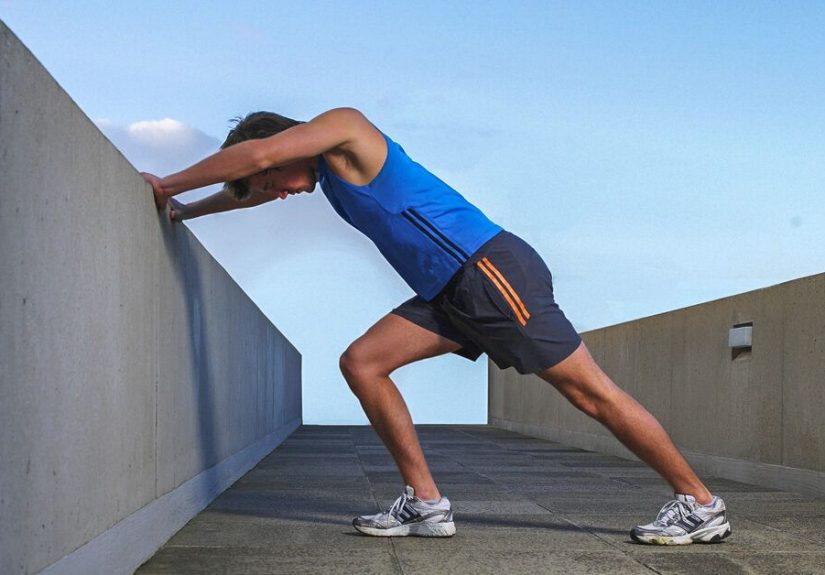
4) Calf Stretch (because the back of the leg is a team sport)
Why it helps: Tight calves can alter your walking mechanics, increase strain around the knee, and make the whole “back-of-knee tightness” feeling worse.
How to do it (wall stretch):
- Stand facing a wall with hands on the wall for support.
- Step the affected leg back, keeping the heel down and toes pointed forward.
- Bend the front knee slightly while keeping the back knee straight until you feel a stretch in the calf.
- Hold, then relax.
Dosage: Hold 20–30 seconds, repeat 2–3 times, once daily.
Variation (soleus focus): repeat with the back knee slightly bent to target the deeper calf muscle.
Common mistakes: letting the back heel lift, or turning the back foot outward (which shifts the stretch away from where you want it).
5) Hamstring Stretch (gentle length for the “behind-the-knee” crew)
Why it helps: Hamstring tightness can increase tension behind the knee and limit comfortable knee extension (straightening). A controlled stretch can reduce that constant tug-of-war sensation.
How to do it (strap stretch):
- Lie on your back. Loop a towel/strap around the arch of the affected foot.
- Keeping a slight bend in the knee if needed, lift the leg up until you feel a gentle stretch along the back of the thigh.
- Keep hips level (don’t let the leg drift across your body).
- Hold, then slowly lower.
Dosage: Hold 20–30 seconds, repeat 2–3 times, once daily.
Common mistakes: locking the knee aggressively, yanking the strap, or rounding your low back.
How to put it together: a simple weekly plan
If you like structure (and your knee likes predictability), try this:
- Daily: Heel slides + calf stretch + hamstring stretch
- 3–4 days/week: Quad sets + straight leg raises
- Optional easy cardio: 5–15 minutes of flat walking or a gentle stationary bike if it doesn’t increase swelling
Example schedule: Monday/Wednesday/Friday/Saturday = strengthening days; other days = mobility only. If your knee is irritated after a busy day, do the mobility work and skip the strengthening.
Other smart ways to calm a Baker’s cyst (and the knee that made it)
Exercises help, but they’re even more effective when paired with symptom-calming basics:
- Activity modification: temporarily reduce movements that trigger pain (often deep bending, prolonged kneeling, high-impact jumping).
- Ice: 10–15 minutes after activity if swelling flares (wrap ice pack in a clothno frozen-pea skin burns, please).
- Compression: a knee sleeve can provide comfort and help manage swelling for some people.
- Anti-inflammatory meds: some people use OTC options (only if safe for youcheck with a clinician/pharmacist if you have conditions or take other meds).
- Treat the underlying issue: arthritis management, meniscus care, and inflammatory disease treatment often reduce recurrence.
If symptoms are persistent or severe, clinicians may consider imaging (like ultrasound or MRI) and treatments such as medication adjustments, joint injections, or fluid drainage in select cases. Surgery is usually reserved for specific situations and typically focuses on the underlying knee problem rather than just the cyst.
When to call a clinician urgently
Most Baker’s cyst issues are not emergencies. But a few situations deserve prompt medical evaluation because they can look like other serious problems.
- Sudden calf swelling, redness, warmth, or significant painespecially if it’s rapidly worsening.
- Shortness of breath, chest pain, or coughing blood (call emergency services).
- Fever, severe night pain, or a lump that grows quickly.
- New numbness, weakness, or a cold/pale foot.
Why the caution? A Baker’s cyst can sometimes leak or rupture and cause calf symptoms that can mimic a blood clot. Blood clots (DVT) require urgent evaluation and treatment. When in doubt, get checked.
FAQ: the questions people google at 2:00 a.m.
Can I “massage it out”?
Gentle massage around the surrounding muscles may feel good, but aggressively pressing on the cyst itself is a bad plan. If the area is tender, swollen, or hot, skip direct pressure and focus on gentle movement and swelling management.
Should I avoid walking?
Not necessarily. Many people do well with flat, easy walking in short bouts. If walking increases tightness behind the knee or swelling afterward, reduce duration, slow down, and prioritize the mobility exercises until symptoms settle.
How long until exercises help?
Some people notice improved comfort and motion within 1–2 weeks. Others take longer, especially if arthritis or an ongoing injury keeps the knee irritated. Consistency beats intensity here.
Will the cyst go away completely?
Sometimes it does. Sometimes it shrinks but comes back if the underlying knee issue flares again. Think of it like a smoke alarm: you can silence it, but you also want to reduce the smoke.
Real-World Experiences: What Doing Baker’s Cyst Exercises Feels Like (and why that matters)
When people start Baker’s cyst exercises, the first surprise is often how “not dramatic” the rehab is. No heroic sweat. No montage music. Just gentle, consistent movement that feels almost too simple to matteruntil it does.
Week 1 often feels like negotiating peace. Many people describe a constant sensation of tightness behind the knee, like the joint is wearing a too-small sweater. Heel slides can feel relieving because they restore a sense of smooth motionespecially if bending the knee has started to feel restricted. The biggest lesson early on is learning the difference between a useful stretch and a warning sting. A useful stretch feels mild and eases quickly. A warning sting tends to sharpen, linger, or make the knee feel puffy later.
Week 2 is where confidence shows up. Quad sets and straight leg raises don’t look impressive, but people often notice their knee feels “steadier” when standing up from a chair or walking up a step. That stability can reduce the micro-irritations that keep the knee producing extra fluid. A common experience here is realizing that the cyst wasn’t just a random bumpit was part of a bigger pattern of knee mechanics, swelling, and muscle support.
Setbacks are normal, and they’re usually about load. Many people have a day where they do “one extra thing”a long grocery run, deeper squatting while cleaning, a sudden burst of weekend enthusiasmand the back of the knee gets tight again. The helpful mindset is treating flare-ups as feedback, not failure. People who do best tend to respond by scaling back for 24–48 hours, returning to mobility work, and reintroducing strengthening gradually.
Small habit changes can feel like cheat codes. Folks often report that breaking activity into shorter chunks (instead of one long session) reduces swelling. Others feel better when they warm up before they have to sit for a long time, or when they take brief movement breaks during desk work. It’s also common to find that a light compression sleeve makes the knee feel more “contained,” even if it doesn’t magically erase the cyst.
The most consistent “win” is getting motion back. People frequently say the biggest quality-of-life improvement isn’t the cyst disappearing overnightit’s being able to straighten the knee more comfortably, walk with less guarding, and stop thinking about their knee every time they change direction. Over time, these exercises can become less like “rehab” and more like basic joint maintenancesimilar to brushing your teeth, but for your knees. (Less minty. More hamstrings.)
If you’re doing the exercises and nothing changes after a few weeksor symptoms worsenmany people find it reassuring to work with a physical therapist. A PT can check whether your knee is lacking extension, whether your hip strength is contributing to knee stress, or whether you’re loading the joint in a way that keeps the irritation cycle going. The point isn’t to do more exercises. The point is to do the right ones, at the right dose, for your knee.






 Close
Close