
Table of Contents >> Show >> Hide
- The Night Titanic Met the Iceberg
- Why the Iceberg Damage Was So Deadly
- The Ship’s Design: Brilliant, But Not Invincible
- What Happened After the Collision?
- Did Titanic Break in Half?
- Amazing New Details From the 3D Titanic Scan
- Was the Titanic Going Too Fast?
- Could the Titanic Disaster Have Been Prevented?
- Why the Titanic Still Captivates Us
- Experiences That Make the Titanic Story Feel Real Today
- Conclusion: So, How Did the Titanic Sink?
The Titanic did not sink because one giant movie-style crack split the ship open like a zipper. The real story is more fascinating, more tragic, and, frankly, more frustrating. The world’s most famous ocean liner went down because of a deadly chain reaction: speed, ice, design limits, human judgment, small openings in the hull, flooding across too many compartments, and an evacuation system that was not ready for the scale of the disaster.
For more than a century, people have asked the same question: How did the Titanic sink? The simple answer is that it struck an iceberg in the North Atlantic and flooded. But the deeper answer is where the mystery gets interesting. New 3D scans of the wreck, created from hundreds of thousands of images and deep-sea mapping data, are helping experts study the ship in extraordinary detail. These digital reconstructions do not turn history into a neat little bow, but they do sharpen the picture. They suggest that the damage may have been smaller in size than many people imagined, yet placed in exactly the wrong areas.
In other words, Titanic was not defeated by one enormous wound. It was doomed by a series of smaller failures working together with terrible timing. That is usually how disasters happen. One bad decision brings a friend. Then another. Then someone says, “This is fine,” while the Atlantic Ocean starts rearranging the furniture.
The Night Titanic Met the Iceberg
RMS Titanic was on its maiden voyage from Southampton, England, to New York City in April 1912. It was the pride of the White Star Line, a floating city built for luxury, speed, and prestige. On board were wealthy travelers in first class, immigrants hoping for new lives in America, crew members, engineers, musicians, stewards, cooks, and families who had no idea they were about to become part of history.
Late on April 14, Titanic was steaming through the North Atlantic. Ice warnings had been received from other ships, but the liner continued at a high speed. Around 11:40 p.m., lookouts spotted an iceberg ahead. The bridge ordered the ship to turn and the engines to reverse, but Titanic was too large and moving too quickly to dodge cleanly. The starboard side scraped the iceberg.
The collision did not look as dramatic as many people might expect. Passengers felt a shudder, a grinding, or a strange vibration. Some thought a propeller blade had broken. Others barely noticed. A few curious passengers even picked up chunks of ice that had fallen onto the deck. If there had been a group chat, the first message might have been, “Lol, iceberg snowballs.” The second would have been much less cheerful.
Why the Iceberg Damage Was So Deadly
Titanic had 16 major watertight compartments, which were meant to keep the ship afloat if sections of the hull were damaged. This design helped create the famous belief that the ship was “practically unsinkable.” The problem was not that the compartments were useless. The problem was that they were not tall enough to stop water from spilling over their tops once the bow dropped low enough.
The ship could survive a limited number of flooded compartments. But the iceberg damage affected too many forward sections. Traditional explanations often described a long gash in the hull. Newer analysis, including high-resolution digital scanning and computer modeling, points toward a more subtle but equally deadly pattern: several narrow openings or tears spread across multiple compartments. The openings may have been small compared with the size of the ship, but their location allowed seawater to pour into too many areas at once.
Think of it like a phone with five tiny holes in exactly the wrong spots. One scratch on the case is annoying. Multiple punctures through the waterproof seal are a very expensive swim lesson.
Small Openings, Massive Consequences
The Titanic’s hull damage mattered because it stretched across a long section of the ship. Water entered several forward compartments, pulling the bow down. As the front of the ship sank lower, seawater moved from one compartment to the next. This process is called progressive flooding, and it turned the ship’s own internal layout into a slow-moving trap.
Once enough water entered the bow, Titanic’s fate was sealed. The forward weight increased. The angle of the deck steepened. More water found more pathways. The ship was not merely leaking; it was losing the balance that kept it alive.
The Ship’s Design: Brilliant, But Not Invincible
It is easy to mock Titanic’s builders with hindsight, but the ship was a marvel of its era. It had advanced safety features, powerful engines, wireless communication, and a luxurious interior that made first-class passengers feel as if they were sailing inside a grand hotel. The trouble was that “advanced” does not mean “magic.”
The watertight bulkheads did not extend high enough through the ship. Once the bow dipped, water could spill over the tops of the bulkheads like water sloshing over partitions in an ice tray. The ship also carried too few lifeboats for everyone on board. This was legal under the regulations of the time, but legality is not the same as wisdom. History is full of things that were technically allowed and spectacularly foolish.
Titanic carried 20 lifeboats, enough for only a fraction of the passengers and crew. The belief that lifeboats would mainly ferry people to rescue vessels, rather than hold everyone during a full evacuation, proved tragically wrong. When the ship began sinking, the shortage became one of the disaster’s most painful failures.
What Happened After the Collision?
After the iceberg impact, crew members inspected the damage. Ship designer Thomas Andrews reportedly understood the danger quickly. Water was entering multiple compartments, and the ship could not remain afloat indefinitely. The first distress calls went out. Nearby vessels received messages, but help would not arrive in time.
The evacuation started slowly. Many passengers did not believe the ship was really sinking. That reaction is painfully human. When you are standing on a bright, warm, enormous liner with music playing and polite crew members nearby, “Please step into this small boat over the freezing ocean” does not sound like a winning invitation.
Some early lifeboats left without being full. Confusion, class barriers, communication problems, and disbelief all played roles. The famous “women and children first” order was interpreted differently in different areas of the ship. Some officers allowed men aboard when no women or children were waiting. Others treated the rule more strictly.
Did Titanic Break in Half?
Yes. For decades after the sinking, there was debate over whether Titanic went down intact or broke apart at the surface. Survivor accounts suggested the ship split, but the exact mechanics were not fully understood until the wreck was discovered in 1985. The bow and stern were found separated on the ocean floor, confirming that the ship had broken apart.
The break was not a clean Hollywood snap. New digital scans show a wreck that was violently torn, twisted, and battered. The bow remains more recognizable, while the stern is a chaotic field of collapsed metal. This difference makes sense. The bow flooded first and descended with more stability. The stern rose, broke away, and suffered a more destructive fall to the seabed.
Why the Breakup Matters
The breakup reveals how extreme the forces became during the final minutes. As the bow filled with water, it dragged the front of the ship downward. The stern lifted higher into the air, placing enormous stress on the middle section. Steel is strong, but Titanic was not built to hang in the ocean like a seesaw with one end full of water and the other end full of panic.
Eventually, the structure failed. The ship split. The bow dropped toward the seabed, and the stern followed after a more violent collapse. The wreck site tells that story in metal, debris, and silence.
Amazing New Details From the 3D Titanic Scan
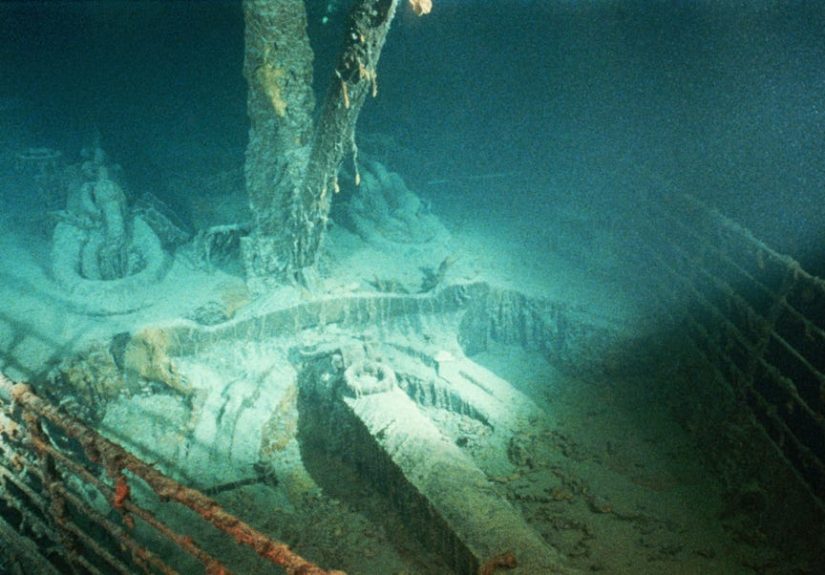
The most exciting modern development in Titanic research is the creation of a detailed digital twin of the wreck. Using deep-sea mapping, robotic vehicles, hundreds of thousands of images, and laser-scan data, researchers produced a high-resolution 3D model of the wreck site. This allows experts to examine the ship without physically disturbing it.
That matters because Titanic is deteriorating. The wreck lies about 12,500 feet below the surface, where pressure, corrosion, bacteria, and time are slowly consuming it. A digital model preserves details that may eventually disappear from the physical wreck.
The Open Steam Valve
One of the most moving details from recent scan analysis is evidence connected to the ship’s engineering crew. An open steam valve and signs that some machinery remained active suggest that engineers worked deep inside the ship to keep power running as long as possible. Keeping lights on mattered. It helped passengers move, helped crew lower lifeboats, and allowed wireless operators to continue sending distress messages.
This detail adds weight to survivor accounts that the lights stayed on late into the sinking. It also highlights the courage of the engineering crew, many of whom died at their posts. Their story is not as glamorous as the grand staircase, but it is far more heroic. No tuxedo required. Just nerve, duty, and a very grim workplace.
Evidence Around Lifeboat Stations
Scan evidence has also helped researchers revisit stories about the officers working the lifeboats. Details around davits and boat stations suggest that some crew members continued trying to launch lifeboats until the final moments. This matters because myths and dramatic retellings have sometimes painted individuals unfairly. The physical evidence increasingly supports a picture of officers and crew struggling under impossible pressure rather than simply abandoning duty.
Was the Titanic Going Too Fast?
Speed was one of the major contributing factors. Titanic was not trying to set an official speed record, but it was traveling fast through an area where ice had been reported. In calm seas, icebergs could be harder to spot because there were fewer waves breaking at their base. The night was cold, dark, and moonless. The lookout had only seconds to react.
Had Titanic been moving more slowly, it might have turned more effectively. Had it struck the iceberg head-on, the bow would likely have been crushed, and many people in the forward section might have died instantly, but the ship may have remained afloat longer or even survived. That is a terrible “what if,” not a comforting one.
The actual glancing blow was deceptively fatal. It spread damage along the side, opening multiple compartments. Titanic did not lose because it hit the iceberg hardest. It lost because it hit in a way that defeated its safety system.
Could the Titanic Disaster Have Been Prevented?
Several choices might have changed the outcome. Slower speed in an ice field would have helped. More lifeboats would have saved more lives. Better binocular access for lookouts may have improved early detection, though experts debate how much difference that would have made. Stronger emergency procedures and clearer evacuation orders could also have improved survival numbers.
But the most important lesson is that disasters rarely come from one cause. Titanic sank because engineering confidence, regulatory weakness, environmental danger, human delay, and bad luck all arrived in the same cold stretch of ocean.
Why the Titanic Still Captivates Us
The Titanic story continues to fascinate people because it combines grandeur and vulnerability. It was a ship of chandeliers, polished wood, elegant dining rooms, roaring engines, immigrant dreams, and industrial confidence. Then nature made one icy little correction to mankind’s ego.
There is also a moral dimension. The disaster exposed class inequality, flawed safety laws, and the danger of believing technology can erase risk. First-class passengers had easier access to boat decks. Third-class passengers faced more confusing routes and barriers. Crew members had to manage panic with limited tools. The musicians reportedly played as the ship went down, turning their final performance into one of the most haunting images in maritime history.
The sinking led to major safety reforms, including stronger lifeboat requirements and the creation of the International Ice Patrol. The Titanic disaster became more than a tragedy; it became a turning point in maritime safety.
Experiences That Make the Titanic Story Feel Real Today
Reading about Titanic is one thing. Experiencing its story through museums, survivor letters, documentaries, and digital reconstructions is something else entirely. The facts become sharper when you see the size of a lifeboat, the layout of the decks, or the route a third-class passenger might have taken while trying to reach safety. Suddenly, the disaster is not just “a ship sank.” It becomes a maze of decisions made under pressure.
A powerful Titanic-related experience is walking through an exhibition that recreates parts of the ship. Seeing a first-class cabin beside a third-class space makes the class divide impossible to ignore. The first-class world looks like a luxury hotel with better ocean views. The third-class areas, while decent for the time, remind visitors that not everyone had the same access, comfort, or chance during the evacuation. You do not need a historian whispering in your ear to understand the unfairness. The rooms speak for themselves.
Another memorable experience is studying the timeline minute by minute. At 11:40 p.m., the iceberg strikes. Around midnight, the seriousness becomes clearer. Lifeboats begin leaving after 12:40 a.m. By 2:20 a.m., Titanic is gone. When you compress the event into a timeline, the sinking feels both slow and terrifyingly fast. Two hours and forty minutes sounds like plenty of time when you are making coffee. It sounds like almost nothing when more than 2,000 people must evacuate a dying ship in freezing darkness.
Modern digital scans add a new kind of experience. Instead of sending more people down to a fragile grave site, researchers and viewers can examine the wreck virtually. The digital twin allows people to see the bow, stern, debris field, and structural damage in a way earlier generations could only imagine. It is respectful, educational, and much safer than deep-sea tourism. After the Titan submersible tragedy in 2023, that safety point feels especially important.
Watching survivor interviews or reading testimony also changes the emotional weight of the story. Survivors described sounds: escaping steam, shouting, music, cracking metal, and then the awful quiet after the ship disappeared. These accounts help us understand that Titanic was not a legend to the people aboard. It was a lived nightmare full of cold air, wet decks, separated families, and impossible choices.
For writers, travelers, students, and history lovers, the best way to experience the Titanic story is to combine the human and technical sides. Learn how the ship flooded, but also learn who helped others. Study the watertight compartments, but also remember the engineers keeping the lights alive. Look at the wreck, but do not forget the shoes on the seabed. The Titanic remains powerful because it is both machine and memory, both engineering case study and human tragedy.
Conclusion: So, How Did the Titanic Sink?
Titanic sank because an iceberg opened multiple areas of the hull, allowing seawater to flood too many forward compartments. The bow dropped, water spilled through the ship, the stern lifted, the structure failed, and the vessel broke apart before disappearing beneath the Atlantic. New 3D scans do not replace the original story; they refine it. They show that the damage may have been smaller, more scattered, and more precise than old legends suggested.
The amazing new details reveal a disaster that was not caused by one dramatic flaw but by many connected failures. Titanic was strong, beautiful, and advanced, but it was not invincible. Its sinking remains one of history’s clearest reminders that confidence is not the same as safety.
Note: This article is an original, publication-ready synthesis based on verified historical records, maritime research, and recent reporting on Titanic wreck-scan analysis. It contains no copied passages or source-code citation markers.







 Close
Close