
Table of Contents >> Show >> Hide
- What Is SaaStr’s Workshop Wednesday?
- Why Workshop Wednesday Works So Well for SaaS Teams
- The Best Themes From SaaStr’s Workshop Wednesday
- What Founders Can Learn From the Best Sessions
- How SaaS Teams Can Get the Most From Workshop Wednesday
- Specific Examples of Workshop Wednesday Lessons in Action
- Why “The Best of SaaStr’s Workshop Wednesday” Matters Now
- Experience Notes: What It Feels Like to Learn From SaaStr’s Workshop Wednesday
- Conclusion
In the noisy universe of B2B software, advice is everywhere. Your inbox has it. LinkedIn has it. Your cousin who once “almost launched an app” has it. But useful, field-tested, operator-level advice? That is rarer. That is why SaaStr’s Workshop Wednesday has become a favorite learning format for SaaS founders, revenue leaders, marketers, customer success teams, and anyone trying to scale without accidentally setting their go-to-market engine on fire.
SaaStr’s Workshop Wednesday is built around a simple promise: live, practical, interactive training from people who have actually built, sold, funded, marketed, and scaled B2B software companies. The format is intentionally different from a polished keynote. It is more focused, more tactical, and usually more useful on Monday morning when your team asks, “So what are we changing?”
The best of SaaStr’s Workshop Wednesday is not just the speaker lineup. It is the rhythm: weekly learning, direct Q&A, specific topics, and real operator patterns from SaaS, Cloud, and AI leaders. In a market where buyers are cautious, AI is rewriting workflows, and growth efficiency matters more than “growth at all costs,” that kind of practical learning is not a nice-to-have. It is survival gearwith better slides.
What Is SaaStr’s Workshop Wednesday?
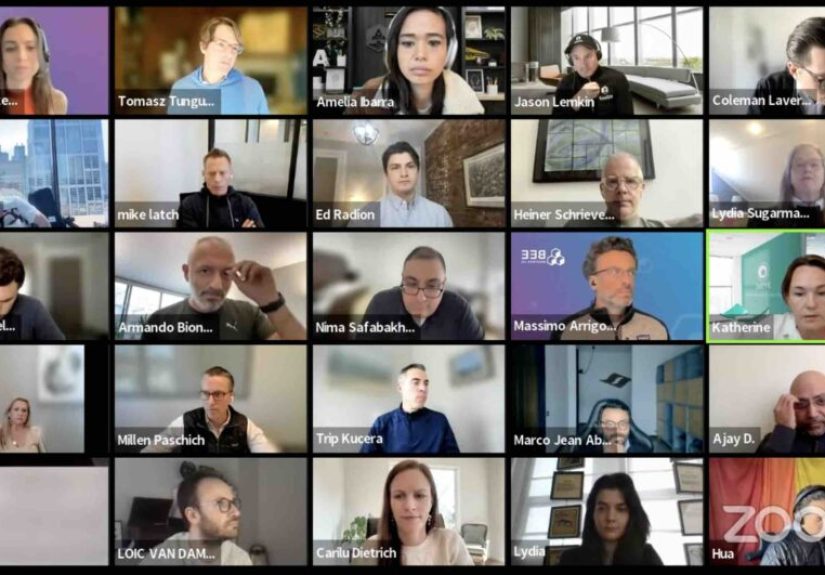
SaaStr’s Workshop Wednesday is a free, live digital workshop series designed for the B2B software community. It typically happens on Wednesdays at 10 AM Pacific and brings in CEOs, CROs, CMOs, founders, investors, operators, and SaaS experts to teach focused sessions on scaling software companies.
Unlike a giant conference keynote, Workshop Wednesday is designed to feel closer to a working session. The topics are narrower, the guidance is more actionable, and the format includes audience participation and Q&A. That matters because SaaS leaders rarely need another vague reminder to “align sales and marketing.” They need to know what pipeline inspection should look like, how to rethink pricing, when to hire a VP of Sales, how to reduce churn, and what AI actually changes in go-to-market.
Why Workshop Wednesday Works So Well for SaaS Teams
1. It Turns Big SaaS Ideas Into Practical Moves
The SaaS world loves big frameworks: product-led growth, net revenue retention, sales efficiency, customer success, AI-native workflows, category creation, and enterprise go-to-market. These are important ideas, but they can become boardroom wallpaper if nobody explains how to execute them.
Workshop Wednesday shines because the sessions often translate strategy into practical operating behavior. A founder can leave with a better way to inspect pipeline. A marketing leader can rethink campaign quality. A customer success leader can identify churn signals earlier. A revenue leader can ask whether the team is hiring sales reps before the sales process is truly repeatable. In other words, the workshops help turn “we should be more efficient” into actual decisions.
2. The Format Rewards Specificity
General SaaS advice has a shelf life of about eight minutes. “Listen to customers,” “hire great people,” and “build a strong brand” are true, but they are not enough. The best Workshop Wednesday sessions focus on specific questions: Which SaaS metrics really matter? What mistakes do founders make in go-to-market? How should AI change demand generation? What changes when a company moves upmarket? How do you build a sales team that can actually scale?
This specificity is especially useful for companies between early traction and real scale. At that stage, everything feels urgent. The product needs polish, the pipeline needs quality, the team needs leadership, the board wants metrics, and customers want faster answers. A practical workshop can help a team pick the next best lever instead of trying to fix the whole company before lunch.
3. It Keeps Pace With a Changing SaaS Market
SaaS is no longer operating under the same assumptions that dominated the 2020 and 2021 boom years. Growth still matters, but efficient growth matters more. Retention is no longer a customer success side quest; it is central to valuation, fundraising, and survival. AI is changing product expectations, pricing models, support workflows, sales development, and customer engagement.
That is where Workshop Wednesday feels especially timely. SaaStr’s recent programming has leaned into AI, B2B software, go-to-market efficiency, product-led growth, pricing, customer success, and founder operating lessons. These are not abstract trends. They are the questions SaaS teams are wrestling with right now: How much should AI automate? What still needs human judgment? How do you price AI features when usage costs are real? How do you build durable advantage when competitors can ship faster than ever?
The Best Themes From SaaStr’s Workshop Wednesday
SaaS Metrics That Actually Matter
One of the strongest Workshop Wednesday themes is metrics discipline. SaaS companies can drown in dashboards, but the best operators keep returning to the core numbers: ARR, MRR, churn, net revenue retention, gross retention, CAC payback, pipeline conversion, sales efficiency, and customer expansion.
The best SaaS metrics sessions are valuable because they separate vanity numbers from operating numbers. Website traffic is nice, but qualified pipeline is better. New logo count is exciting, but retention tells you whether customers are staying for the sequel. Expansion revenue is powerful because it shows that customers are not merely tolerating the productthey are growing with it.
For example, net revenue retention has become one of the clearest signals of SaaS health. When existing customers renew, expand, and offset contraction or churn, the business gains a compounding engine. When churn eats expansion, the company has to keep pouring more money into acquisition just to stay in place. That is not a growth model. That is a treadmill with a finance department.
Go-to-Market Efficiency
Another recurring Workshop Wednesday theme is go-to-market efficiency. The old playbook was often simple: raise capital, hire salespeople, buy tools, increase spend, and hope the chart goes up. In today’s market, that approach can turn into a very expensive way to learn basic math.
Efficient go-to-market starts with focus. Who is the ideal customer? Which segment converts fastest? Which accounts retain best? Which sales motion fits the product? Which channels create pipeline that actually closes? The best SaaS teams do not simply ask, “How do we get more leads?” They ask, “How do we get more of the right customers at a cost we can defend?”
Workshop Wednesday sessions on sales, GTM, and pipeline are useful because they often come from operators who have seen the messy middle. They understand that a spreadsheet can look beautiful while the forecast quietly falls apart. They know that hiring more reps does not solve a weak message, unclear ICP, poor onboarding, or a product that customers do not fully adopt.
Marketing That Still Works
SaaS marketing changes constantly, but some fundamentals continue to work. Strong positioning, helpful content, customer proof, clear differentiation, focused campaigns, product education, events, communities, and consistent follow-up still matter. The tools change; the human buyer remains stubbornly human.
One popular Workshop Wednesday topic has focused on marketing tactics that continue to produce results. That is valuable because many teams chase every shiny new channel while neglecting the basics. A company does not need to be on every platform. It needs a message that buyers understand, a reason to believe, and a system that turns interest into qualified conversations.
AI now makes this both easier and more dangerous. Teams can generate more content, images, summaries, campaigns, and research than ever before. But volume without taste is just digital confetti. The smarter approach is to use AI to speed research, improve creative testing, personalize outreach, analyze performance, and remove repetitive workwhile keeping human strategy, quality control, and judgment in the loop.
Customer Success and Retention
Customer success has moved from “helpful department” to “growth engine.” In a subscription business, the sale is not the finish line. It is the opening scene. Customers need onboarding, adoption, measurable value, support, education, and a reason to expand.
Workshop Wednesday conversations around customer success matter because churn is brutally honest. It does not care how good the sales deck looked. It does not care how many awards the company won. If customers do not receive value, they leave, downgrade, or quietly stop expanding.
The best SaaS teams watch for churn signals early: falling product usage, fewer active users, support complaints, stalled onboarding, weak executive sponsorship, unpaid invoices, or a champion leaving the company. Great customer success teams do not simply respond to renewal risk. They build systems to detect risk before the renewal call becomes a dramatic courtroom scene.
AI, Agents, and the New SaaS Operating Model
AI has become one of the biggest themes in SaaS and in SaaStr’s broader content universe. The conversation has moved beyond “Should we use AI?” to “Where does AI create measurable leverage?” That is a healthier question.
AI can help with customer support, sales research, marketing production, code generation, data analysis, onboarding, documentation, lead scoring, and workflow automation. It can also create new pricing questions, margin pressure, accuracy risks, and product expectations. In other words, AI is not magic dust. It is a power tool. Used well, it builds faster. Used carelessly, it removes a finger from your operating model.
The best Workshop Wednesday sessions related to AI are useful because they tend to be tactical. They explore how AI changes go-to-market, how teams can use AI agents, how AI affects customer success, and how founders should think about pricing and packaging AI products. That is exactly the level where SaaS leaders need help: not hype, but implementation.
What Founders Can Learn From the Best Sessions
Focus Beats Motion
Many startups look busy before they look effective. They launch campaigns, hire roles, test channels, redesign pricing, rewrite the website, and schedule meetings about the meetings. Workshop Wednesday’s best lessons often point back to focus. Choose the customer segment. Define the problem. Tighten the message. Prove repeatability. Then scale.
Metrics Should Change Behavior
A metric is only useful if it changes decisions. If churn rises, onboarding must improve. If CAC payback stretches, acquisition strategy needs review. If pipeline coverage looks healthy but win rates are falling, the team may have a quality problem. If expansion is weak, customer value may not be deep enough.
The point is not to worship dashboards. The point is to use metrics as operating signals. Good metrics should make a team slightly uncomfortable in a productive waylike a coach who knows you skipped leg day.
Do Not Hire Your Way Out of a Broken Process
One of the most practical lessons in SaaS is that people amplify systems. They do not magically fix broken ones. If the sales process is unclear, hiring more reps creates more inconsistent selling. If positioning is weak, hiring more marketers creates more campaigns with the same fuzzy message. If onboarding is confusing, hiring more customer success managers creates more heroic manual work.
Workshop Wednesday is valuable because it frequently highlights the importance of process before scale. Before adding headcount, founders should ask whether the motion is repeatable. Can a new rep ramp? Can marketing explain the product simply? Can customer success onboard customers without custom chaos? Can finance understand the unit economics? If not, the company may not need “more.” It may need “clearer.”
How SaaS Teams Can Get the Most From Workshop Wednesday
Attend With One Business Question
The fastest way to turn a workshop into value is to attend with a specific question. For example: “How should we reduce churn in our mid-market segment?” or “Are we ready to hire outbound SDRs?” or “How should we price AI features?” A focused question helps you listen actively instead of treating the session like background noise while answering Slack messages.
Turn Notes Into a Team Discussion
After a session, share the three most useful takeaways with your team. Then ask: What applies to us now? What should we ignore for now? What one experiment should we run in the next two weeks? That last question is where learning becomes operating leverage.
Build a Workshop Wednesday Playbook
Over time, teams can turn SaaStr sessions into an internal playbook. Create sections for metrics, sales, marketing, customer success, AI, pricing, hiring, and fundraising. Add key lessons, examples, and decisions. The goal is not to collect notes forever. The goal is to build a living operating manual that helps the company make better choices faster.
Specific Examples of Workshop Wednesday Lessons in Action
Imagine a $3 million ARR SaaS company struggling with pipeline quality. The team has plenty of demos, but close rates are weak. A Workshop Wednesday session on GTM mistakes might push the team to reexamine ICP, lead scoring, qualification criteria, and sales messaging. Instead of chasing more leads, the company narrows its target segment, rewrites discovery questions, and builds a better demo flow around measurable pain.
Or consider a company with strong acquisition but rising churn. A customer success-focused workshop might lead the team to build an onboarding health score, monitor feature adoption, and create executive business reviews for larger accounts. The result is not just fewer cancellations. It is better expansion because customers understand the value they are getting.
A third example: an AI SaaS startup is unsure whether to charge per seat, per usage, per outcome, or through a hybrid model. A pricing and packaging workshop can help the founders think through gross margin, customer value, adoption risk, and buyer expectations. Instead of copying yesterday’s SaaS pricing model, the team designs pricing around the way customers actually consume AI-powered value.
Why “The Best of SaaStr’s Workshop Wednesday” Matters Now
The best SaaS companies are not built by collecting random advice. They are built by learning faster, choosing better, and executing consistently. SaaStr’s Workshop Wednesday matters because it compresses operator experience into a format that busy teams can actually use.
In a market shaped by AI, tighter budgets, changing valuation expectations, and more demanding customers, SaaS leaders need sharper judgment. They need to know when to grow, when to pause, when to automate, when to hire, when to simplify, and when to admit that the “quick experiment” has somehow become a six-month side quest.
Workshop Wednesday is not a magic solution. No webinar can fix bad strategy, poor product-market fit, or a sales process held together by hope and a spreadsheet named “FINAL-final-v7.” But the right workshop can help a team see the next move more clearly. And in SaaS, the next clear move is often worth a lot.
Experience Notes: What It Feels Like to Learn From SaaStr’s Workshop Wednesday
The most useful way to experience SaaStr’s Workshop Wednesday is not as a passive viewer, but as an operator with a notebook and a problem. The difference is huge. If you watch casually, you may leave thinking, “That was interesting.” If you watch with a real business challenge in mind, you may leave thinking, “We need to change our onboarding sequence, tighten our ICP, and stop pretending every free trial is a sales-qualified lead.” That is when the workshop starts paying rent.
One experience many SaaS teams can relate to is the gap between knowing a best practice and actually using it. Everyone knows churn is bad. Everyone knows pipeline quality matters. Everyone knows AI can improve productivity. But in daily company life, urgent tasks crowd out important improvements. Workshop Wednesday creates a useful pause. It gives teams permission to step back, compare their current habits with proven operator patterns, and ask whether the business is running on strategy or just caffeine and calendar invites.
For founders, the sessions can feel like a friendly reality check. You may hear an experienced CRO explain why hiring ten reps before proving repeatability is risky, and suddenly your “aggressive expansion plan” looks suspiciously like “expensive chaos with branded hoodies.” You may hear a marketing leader explain why more content is not the same as better positioning, and suddenly the team’s 47-page editorial calendar needs a sharper point of view. That is not discouraging. It is clarifying.
For revenue teams, the workshops are especially useful because they often connect strategy to inspection. A sales leader can use the lessons to review pipeline stages, forecast accuracy, demo quality, rep ramp time, and conversion rates. A marketing leader can evaluate whether campaigns are producing real buying intent or just polite clicks. A customer success leader can compare renewal risk signals with actual account behavior. These are practical conversations that improve execution.
The Q&A format also matters. SaaS advice becomes more valuable when it collides with real-world constraints. A founder may ask, “What if we sell to both SMB and enterprise?” A marketer may ask, “What if our best channel is getting more expensive?” A customer success leader may ask, “What if usage is high but executive sponsorship is weak?” Those questions turn a session from content into coaching.
The best personal takeaway from Workshop Wednesday is this: SaaS growth rarely improves because of one giant revelation. It improves because a team makes a series of better decisions. Better ICP. Better qualification. Better onboarding. Better pricing. Better retention signals. Better use of AI. Better hiring timing. Better operating cadence. Each improvement may look small, but together they compound. That is the quiet magic of learning from operators who have already made the mistakes, paid the tuition, and are kind enough to share the notes.
Conclusion
The Best of SaaStr’s Workshop Wednesday is really the best of modern SaaS learning: practical, live, focused, and grounded in operator experience. It helps founders and teams understand what is changing in SaaS while staying anchored to what still matters: customers, retention, efficient growth, strong positioning, clear metrics, and disciplined execution.
For B2B SaaS companies navigating AI disruption, tighter budgets, and higher expectations, Workshop Wednesday offers a smart way to keep learning without disappearing into theory. Bring a question, take useful notes, and turn one insight into one action. That is how workshops become growthnot just content.
Note: This article is written in original standard American English for web publishing and synthesizes public SaaStr Workshop Wednesday themes with current SaaS growth, AI, GTM, metrics, and customer success best practices.






 Close
Close