
Table of Contents >> Show >> Hide
- How rare are hazel eyes, really?
- What exactly are hazel eyes?
- What causes hazel eyes?
- Are hazel eyes dominant or recessive?
- Hazel eyes vs. green, amber, and central heterochromia
- Can hazel eyes change color over time?
- Do hazel eyes affect health?
- Can you safely get hazel-looking eyes with contact lenses?
- Why people are so fascinated by hazel eyes
- Hazel Eyes in Everyday Life: Real-World Experiences and Observations
- Final takeaway
- SEO Tags
Hazel eyes are the overachievers of eye color. They do not simply show up, smile politely, and go home. They shimmer. They shift. They make people argue over whether they are green, brown, gold, or some secret fourth option invented by dramatic lighting. If eye colors were party guests, brown would be reliable, blue would be obvious, and hazel would walk in wearing three outfits at once and somehow pull it off.
So, how rare are hazel eyes really? Rare enough to stand out, but not so rare that you need a museum display case. The short answer is that hazel eyes are uncommon on a global level, though they are more common in the United States than many people think. And once you dig into the science, the story gets even more interesting. Hazel eye color sits right at the crossroads of genetics, melanin, light scattering, ancestry, and a whole lot of myths that deserve to be retired with honors.
This guide breaks down what hazel eyes are, why they look different from person to person, how they compare with green and amber eyes, whether they can really “change” color, and why this eye color keeps people staring just a little longer than socially necessary.
How rare are hazel eyes, really?
Hazel eyes are unusual, but the answer depends on where you are asking the question. In the United States, hazel eyes are often estimated at around 18% of the population, which makes them distinctive but not exceptionally rare. Worldwide, the number is commonly cited much lower, around 5%, meaning hazel eyes are far less common on the global stage than they appear in some American classrooms, offices, and family photos.
That difference matters. When people hear that hazel eyes are “rare,” they often assume the number is tiny everywhere. Not quite. Eye color varies by ancestry and geography, so hazel eyes may seem fairly familiar in some communities and much more unusual in others. In general, hazel eyes appear more often among people with European ancestry than in many populations across Asia or Africa, where brown eyes are overwhelmingly more common.
In other words, hazel eyes are not unicorn-level rare. They are more like spotting a classic convertible on the road: not impossible, not everyday, and definitely enough to make you look twice.
What exactly are hazel eyes?
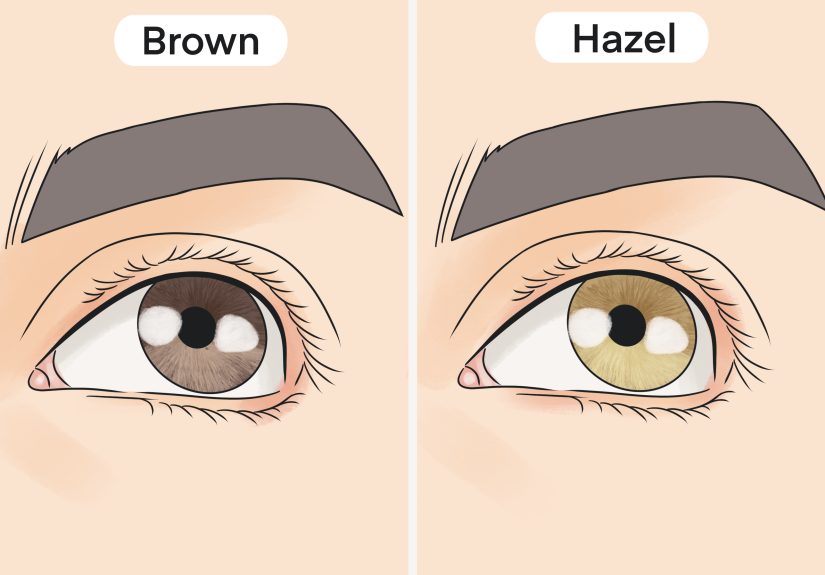
Hazel is not a single flat color. It is a mix, and that mix is where all the fun begins. Most hazel eyes include some blend of brown, green, and gold. Some lean earthy and warm, with copper or honey tones. Others look greener from a distance and only reveal the brown near the pupil when you get closer. A few seem to change their mind every time the sun comes out.
Hazel eyes are a blend, not a paint swatch
If you have ever tried to describe hazel eyes and ended up sounding like you were naming a fancy tea blend, that is completely understandable. Hazel eyes are not an equal mix of colors, and they are not identical from person to person. One person’s hazel eyes may look olive green with amber flecks. Another person’s may appear mostly brown with a green outer ring. The label stays the same, but the details can vary wildly.
This is why hazel eyes often seem hard to classify. They live in that in-between zone where the human eye, a bathroom mirror, and three opinionated relatives can all arrive at different conclusions.
Why hazel eyes seem to “change” color
Hazel eyes have a reputation for shape-shifting, and to be fair, they do encourage the rumor. But in most cases, the eye itself is not actually changing color on command like a mood ring with a medical degree. What changes is the way light hits the iris and the way surrounding colors influence what you see.
Sunlight, indoor lighting, makeup, clothing, and even photo filters can make hazel eyes pull more green, more gold, or more brown. That is why hazel eyes often look dramatically different in different pictures. The eyes are not being sneaky. Light is just doing what light does best: making everything more complicated.
What causes hazel eyes?
Hazel eyes happen because of a combination of pigmentation and genetics. The star of the show is melanin, the pigment that gives color to your skin, hair, and eyes. In general, more melanin in the iris leads to darker eyes, while less melanin leads to lighter eyes.
Melanin sets the foundation
Hazel eyes typically have less melanin than brown eyes, but more than blue or many green eyes. That middle-ground level of pigment helps create the rich, mixed appearance that makes hazel eyes look layered rather than uniform. Brown pigments may cluster more heavily near the center of the iris, while lighter tones show up farther out. The result is that signature hazel complexity people keep trying to describe with words like moss, whiskey, olive, caramel, or “uh… kind of green-brown?”
Genetics are involved, but they are not simple
For years, people were taught a tidy little classroom story: brown eyes are dominant, blue eyes are recessive, and that is basically the whole deal. Cute story. Not true enough.
Modern genetics shows that eye color is influenced by multiple genes, not just one. Two major players are OCA2 and HERC2, but they are not alone. Other genes also help determine how much melanin is produced, stored, and distributed in the iris. That is why eye color can be difficult to predict perfectly, and why families sometimes end up surprised by a child’s final eye shade.
So if someone confidently tells you, “That baby can’t possibly have hazel eyes because the parents don’t,” the polite response is to smile. The scientifically accurate response is to smile harder.
Are hazel eyes dominant or recessive?
This question sounds simple, but eye color laughs at simple questions. Hazel eyes are not neatly “dominant” or “recessive” in the old high school worksheet sense. Because multiple genes influence eye color, inheritance is more complicated than a two-box Punnett square.
That means hazel eyes can appear in families with a mix of brown, blue, green, or hazel eyes. They may seem to skip generations. They may show up in siblings differently. And they may surprise parents who thought they had already cracked the family eye-color code.
The better way to think about hazel eyes is not as a one-gene trick, but as the result of a genetic committee meeting. Several members get a vote. Some are louder than others. The final decision may still be unexpectedly stylish.
Hazel eyes vs. green, amber, and central heterochromia
Hazel eyes are often confused with other eye colors and patterns, especially green eyes, amber eyes, and central heterochromia. The differences are real, even if Instagram comments insist otherwise.
Hazel eyes vs. green eyes
Green eyes usually appear more consistently green across the iris, even if they include subtle golden undertones. Hazel eyes tend to show a more obvious mix of colors, especially brown and gold alongside green. If the iris looks like it cannot decide between woodland fairy and toasted almond, hazel is a strong candidate.
Hazel eyes vs. amber eyes
Amber eyes are usually more uniform and more golden, coppery, or honey-colored overall. Hazel eyes, by contrast, tend to look more multicolored. Amber often gives a striking, almost glowing warmth. Hazel gives more variation and more contrast within the iris itself.
Hazel eyes vs. central heterochromia
This is a big one. Central heterochromia is a distinct color pattern, not just a vague “my eyes are complicated” situation. It means there is a noticeably different color around the pupil compared with the outer part of the iris. Hazel eyes can look mixed and blended, while central heterochromia often appears more like a defined inner ring.
People confuse the two all the time because both can involve more than one visible color. But they are not identical. Hazel is an eye color category. Central heterochromia is a color pattern within the iris.
Can hazel eyes change color over time?
Hazel eyes can seem to change, but true change is a different story.
In babies, yes, eye color may still be settling
Many babies are born with eyes that look bluish or grayish, and their final eye color may not settle for months. Eye color often starts shifting between about 3 and 9 months of age, and it can take up to around 3 years for the final shade to become clear. So yes, a child may begin life looking one way and end up with hazel eyes later on.
In adults, sudden change is not something to shrug off
Adults usually do not experience true eye-color changes without a reason. If hazel eyes suddenly look noticeably different, especially in one eye, it is worth getting checked by an eye care professional. Some changes are harmless or simply visual effects from lighting, but others can be linked to injury, medication effects, or eye conditions.
Translation: if your eyes look greener because you wore a forest-green sweater, enjoy the main-character moment. If one iris suddenly changes for no obvious reason, book the exam.
Do hazel eyes affect health?
Hazel eyes do not automatically mean better vision, worse vision, magical intuition, or a secret membership in an elite eye-color club. Eye color alone does not determine how healthy your eyes are. Still, eye color can sometimes offer clues rather than conclusions.
Lighter eyes in general may be more sensitive to bright light because they tend to have less pigment than darker eyes. That does not mean everyone with hazel eyes will squint heroically at noon, but some people do feel more comfortable with sunglasses in bright conditions.
The bigger point is practical: whatever your eye color, protect your eyes from ultraviolet exposure, get regular eye exams, and do not ignore unusual changes in color, vision, or comfort. Hazel eyes are pretty. They are not invincible.
Can you safely get hazel-looking eyes with contact lenses?
Yes, colored contact lenses can create a hazel appearance, but only if you do it the safe way. Decorative lenses are still medical devices, which means they should be prescribed and fitted properly. Buying random colored contacts from sketchy online shops, novelty stores, or costume racks is a terrible bargain. Saving twenty dollars is not worth negotiating with a corneal abrasion.
If someone wants a hazel-eye look for fashion, photos, or curiosity, the safest move is to go through a licensed eye care professional. You get the look without accidentally starring in your own cautionary tale.
Why people are so fascinated by hazel eyes
Part of the fascination is rarity. Humans notice what is less common. But hazel eyes get extra attention because they are visually dynamic. Brown eyes are beautiful, blue eyes are striking, and green eyes are dramatic, but hazel eyes often look like they are doing all three jobs at once.
They also resist easy labeling. That mystery gives them social staying power. People remember the friend whose eyes looked green outdoors and amber indoors. They notice the person whose eyes looked almost brown until the sun hit them. Hazel eyes have range, and range is memorable.
Hazel Eyes in Everyday Life: Real-World Experiences and Observations
Living with hazel eyes, or simply knowing someone who has them, often turns eye color into an oddly frequent conversation topic. People with hazel eyes get used to hearing the same opening line: “Wait, what color are your eyes exactly?” It sounds simple, but the answer depends on the lighting, the room, the weather, the shirt, and whether the person asking is standing two feet away or looking at an old photo with terrible flash. Hazel-eyed people often end up giving answers that sound less like biology and more like menu descriptions: “kind of green with brown,” “brownish gold,” or “it depends.”
Photos are where the confusion really earns a trophy. In one picture, hazel eyes may look warm and brown. In another, they seem olive green. In a sunny outdoor shot, the gold flecks suddenly become the headliners. This can be amusing, but it also explains why so many people think hazel eyes “change color.” The lived experience is that they appear different in real life all the time, even if the actual iris is not pulling a costume change backstage.
There is also a social side to hazel eyes that people rarely mention in scientific discussions. Because hazel is less common than brown in the United States and much less common globally, people tend to comment on it more. That can feel flattering, awkward, funny, or repetitive depending on the day. Some people love the attention. Others would prefer to order coffee without being told their eyes look like a forest after rain. Both reactions are valid.
For parents, hazel eyes can become a long-running mystery during childhood. A baby may begin with gray-blue eyes, shift toward greenish tones, and then slowly settle into hazel over the next months or years. Family members often debate every step of the process with the intensity of sports commentators. “They are definitely green.” “No, they are turning brown.” “Look near the pupil, there is gold in there.” Eye color becomes less a fact and more a developing plotline.
People with hazel eyes also tend to notice that certain colors make their eyes seem more vivid. Greens, golds, bronzes, and warm neutrals often pull out the mixed tones. Cool grays can make hazel eyes look greener, while warmer lighting can deepen the brown and amber notes. Makeup artists and photographers know this well, but regular people discover it too, usually by accident. One shirt suddenly makes the eyes pop, and then it becomes the “I guess this is my color now” shirt forever.
Perhaps the most relatable experience is simply being misidentified. A person with hazel eyes may be told they have green eyes by one friend, brown eyes by another, and central heterochromia by someone who recently learned a new term online and is very excited to use it. That ambiguity is part of the charm. Hazel eyes are not boring because they are not static. They invite a second look, and then often a third. In daily life, that means hazel eyes are not just a color. They are an ongoing visual argument, and honestly, that is part of what makes them fun.
Final takeaway
Hazel eyes are uncommon, memorable, and scientifically more interesting than their reputation suggests. In the United States, they are unusual enough to stand out without being extremely rare. Worldwide, they are much less common. Their look comes from an in-between level of melanin, a multigene inheritance pattern, and the visual tricks of light that make them seem almost alive with movement.
So if you have hazel eyes, congratulations: your irises are basically natural special effects. And if you are just eye-color curious, now you know the truth. Hazel eyes are not a myth, not a magic trick, and not one neat little shade in a crayon box. They are a beautifully complicated middle ground, which may be exactly why people find them so hard to forget.







 Close
Close