
Table of Contents >> Show >> Hide
- Start Here: The Mindset That Makes You Attractive (and Not Creepy)
- Step 1: Read the Room Before You Say Anything
- Step 2: Make the Opening Easy, Simple, and Context-Based
- Step 3: Transition From Small Talk to Flirting (Without a Hard Left Turn)
- Step 4: How to Compliment Without Making It Awkward
- Step 5: Keep the Conversation Flowing Like a Normal Person
- Step 6: Learn the SignalsThen Don’t Overthink Them
- Step 7: How to Ask for Her Number (or a Date) Without Making It Weird
- Step 8: The Golden Rules of Respectful Flirting
- Common Mistakes That Kill the Vibe (and How to Fix Them)
- Mini FAQ: Real Questions People Google at 1:00 AM
- Conclusion: Flirting That Actually Works in Real Life
- Experiences and Real-Life Scenarios (About )
Approaching a woman you’ve never met can feel like trying to parallel park in front of a patio full of people: you can do it, but suddenly you forget how steering wheels work.
The good news? “Breaking the ice” isn’t about having perfect lines. It’s about being respectful, reading the room, and starting a normal human conversation that could turn flirtyif she’s into it.
This guide is for polite, real-world flirting with an adult woman you don’t know: the kind that makes her feel comfortable and you feel confident (instead of both of you wishing you could
teleport). You’ll get practical openers, simple “how to know if it’s welcome” cues, and specific examples for common placesplus a big section of real-life-style experiences at the end.
Start Here: The Mindset That Makes You Attractive (and Not Creepy)
Flirting works best when it’s light, optional, and pressure-free. Your goal isn’t to “win” someoneit’s to see if there’s mutual interest. Think: invitation, not
audition.
Adopt the “Two Outcomes” Rule
- Outcome A: She’s interested and enjoys talking. Greatcontinue.
- Outcome B: She’s not interested or not available (busy, tired, taken, not in the mood). Also greatyou gracefully exit like a classy magician.
When you’re genuinely okay with either outcome, your body language relaxes, your tone becomes warmer, and you stop sounding like a sales rep for “Please Like Me™.”
Ironically, that calm confidence is what makes people more receptive.
Step 1: Read the Room Before You Say Anything
The easiest way to flirt successfully is to flirt where flirting is socially plausible. A bar, party, coffee shop line, friend-of-friend hang, trivia night, bookstore event?
Usually fair game. A woman speed-walking with headphones, clearly working, or looking stressed? Not your moment.
Quick “Green Light / Yellow Light / Red Light” Check
- Green lights: She’s unhurried, not wearing headphones, occasionally making eye contact, smiling at something around her, or open to casual conversation in that setting.
- Yellow lights: She’s on her phone, busy, with a friend mid-conversation, or focused on a task. You can try a very short opener and back off fast if it doesn’t land.
- Red lights: Headphones in, reading intensely, working out hard, clearly upset, trapped (elevator with no exit), or she’s indicated “no” in any way. Respect it and move on.
One rule that solves 80% of awkwardness
Don’t corner people. Approach from the front/side, keep a comfortable distance, and leave her an easy path to end the interaction. If she can’t leave, it won’t feel like flirting
it will feel like a hostage negotiation with better lighting.
Step 2: Make the Opening Easy, Simple, and Context-Based
The best conversation starters are about the shared environment, not her body. They feel normal, low-pressure, and they don’t demand a big response.
Your opener should be something she can answer with one sentenceor even just a smile and “yeah.”
Reliable openers that don’t sound scripted
- Observation + question: “That pastry looks dangerously goodhave you tried it before?”
- Ask for an opinion: “Quick voteare these headphones a yes or a no? I can’t decide.”
- Situational humor: “I swear this line moves in dog years.”
- Genuine curiosity: “Is this place always this packed, or did everyone get the same group text?”
- Light compliment on a choice: “Cool jacketwhere’d you find it?”
Examples by setting
Coffee shop
- “What’s your go-to order here? I’m trying not to panic-pick.”
- “Is that drink as good as it looks, or is it Instagram propaganda?”
Bookstore
- “I’m hunting for something goodwhat’s the last book you couldn’t put down?”
- “Are you team fiction escape, or team nonfiction ‘teach me something’?”
Grocery store
- “Serious question: is this salsa actually spicy, or ‘marketing spicy’?”
- “I’m building a snack lineupwhat’s your ‘I deserve a treat’ pick?”
Social event / party
- “How do you know (host’s name)?”
- “What’s been the highlight of your week so far?”
Step 3: Transition From Small Talk to Flirting (Without a Hard Left Turn)
Flirting is basically friendly conversation plus a little extra warmth: a playful tone, a tiny bit of teasing, and a compliment that signals interestwithout making it intense.
If your vibe goes from “normal person” to “romance novel narrator” in two sentences, it gets weird fast.
Use the “Warmth Ladder”
- Neutral: Observation about the situation.
- Friendly: Ask a simple question. Respond like you’re actually listening.
- Personal: Share a small detail about yourself (“I’m a cold brew loyalist.”).
- Playful: Light humor or gentle teasing (“So you’re telling me you trust the mystery pastry. Bold.”).
- Flirty: A sincere compliment or direct interest (“You’ve got a fun vibe. I’m glad I said hi.”).
Flirty lines that don’t feel like lines
- “Okay, you seem genuinely fun. I’m glad I came over.”
- “You’ve got great energyvery ‘makes this line less painful’ energy.”
- “I like your style. It’s confident.”
- “I’m enjoying talking to you. Want to keep this going?”
Notice what’s missing: over-the-top compliments, comments about her body, or anything that implies you “deserve” her time. Keep it human.
Step 4: How to Compliment Without Making It Awkward
Compliments work best when they’re specific, appropriate, and about something she chose (style, taste, vibe) rather than something that can feel objectifying.
Good compliment categories
- Style choice: “That color looks great on you.”
- Taste: “Your playlist taste is elite.”
- Energy: “You’re easy to talk to.”
- Humor: “You’re funny. I like that.”
Compliments to avoid early on
- Anything sexual.
- Anything that sounds like a rating (“You’re a 10”).
- Anything intense too soon (“I’ve never felt this way before”). Save that for… never.
Step 5: Keep the Conversation Flowing Like a Normal Person
The secret to great flirting is not talking moreit’s making the other person feel seen. That means asking follow-up questions, noticing details, and responding naturally.
If you treat the conversation like a checklist, she’ll feel it.
A simple conversation formula
Ask → react → share → ask again.
Example:
You: “What got you into that?”
Her: “I started hiking last year.”
You: “Nicewhat’s your favorite trail so far?” (ask)
“I tried one recently and learned I’m not built for uphill anything.” (share + humor)
Go-to questions that feel natural
- “What’s something you’re looking forward to?”
- “How do you usually spend your weekends?”
- “What’s your comfort show / comfort food?”
- “What’s the best part of your week so far?”
Step 6: Learn the SignalsThen Don’t Overthink Them
No single cue is a guaranteed “she likes you.” Look for clusters:
Often positive signals
- She asks you questions back (not just polite answers).
- She smiles easily and keeps eye contact comfortably.
- She stays engaged instead of angling away.
- She laughs, teases you back, or adds playful comments.
- She extends the conversation (“So, what do you do?”) rather than closing it.
Often “not interested / not now” signals
- Short answers with no questions back.
- Looking away repeatedly, turning her body away, stepping back.
- Checking her phone often, scanning for exits, or giving “I’m busy” cues.
- Explicitly saying she needs to go or isn’t interested (believe her the first time).
The most attractive response to a “not interested” vibe is a respectful exit. Not sarcasm, not bargaining, not a dramatic monologue. Just class.
Step 7: How to Ask for Her Number (or a Date) Without Making It Weird
When the conversation is going well, don’t drag it out until the sun burns out. Make a simple, direct suggestion with an easy out.
Clarity feels confident. Pressure feels creepy.
Low-pressure ways to ask
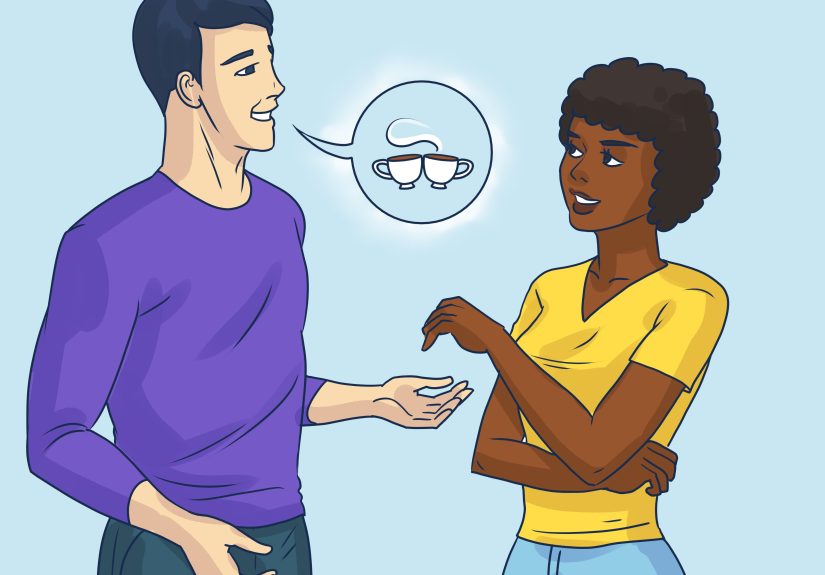
- “I’ve enjoyed talking with you. Want to grab coffee sometime?”
- “You seem coolcan I get your number and we can continue this another day?”
- “If you’re open to it, I’d like to take you out. No worries if not.”
- “Would you rather swap Instagram? Totally up to you.”
If she says yes
Keep it simple: exchange info, suggest a specific plan (“Saturday afternoon?”), and end on a positive note. You’re building comfort, not trying to speedrun intimacy.
If she says no
Say: “No worriesnice meeting you.” Smile. Leave. You’ve just proven you’re safe, respectful, and emotionally mature. That’s not a loss; that’s a flex.
Step 8: The Golden Rules of Respectful Flirting
- Consent is ongoing: If she seems uncomfortable, you back offimmediately.
- Don’t invade space: Keep a comfortable distance. Let her control closeness.
- Don’t follow: If she walks away, that’s the end.
- Don’t interrupt “trapped” moments: Elevator rides, parking garages, isolated areasskip it.
- Take “no” as final: No debating, no “just one more question.”
Common Mistakes That Kill the Vibe (and How to Fix Them)
Mistake: Trying to impress instead of connect
Fix: Ask better questions. Listen. React honestly. A real conversation beats a performance every time.
Mistake: Starting with her appearance
Fix: Start with the environment, then compliment her style/vibe once you’ve established comfort.
Mistake: Over-teasing or “negging”
Fix: Keep teasing gentle and mutual. If it could be interpreted as an insult, it’s not flirtingit’s just being rude with extra steps.
Mistake: Ignoring signs she’s not interested
Fix: If the energy isn’t coming back to you, exit politely. Confidence includes knowing when to leave.
Mini FAQ: Real Questions People Google at 1:00 AM
Is it okay to flirt with a woman at the gym?
Sometimes, but tread carefully. Many people treat the gym like a “please do not perceive me” zone. If you try, do it briefly in a neutral moment (not mid-set),
keep it respectful, and back off fast if she’s focused or wearing headphones.
What if I’m shy or anxious?
Make the goal tiny: say hi, ask one easy question, then leave if it doesn’t flow. Repetition builds confidence. You’re training a skill, not proving your worth.
What if I don’t know what to say after “hello”?
Use context. Ask an opinion. Make a small observation. If your brain blanks, honesty works: “I was going to say something clever, but all I’ve got is: hi.”
Delivered with a smile, it’s charming.
Conclusion: Flirting That Actually Works in Real Life
Breaking the ice isn’t about perfect pickup linesit’s about making a respectful, low-pressure connection. Approach in the right setting, open with context,
build comfort with good questions, and let flirting grow naturally. If she’s interested, you’ll feel the conversation energize. If she’s not, a graceful exit is the
most confident move you can make.
And remember: the point isn’t to get a “yes” from everyone. The point is to show up as someone kind, socially aware, and fun to talk to. That’s attractive in any room.
Experiences and Real-Life Scenarios (About )
If you want flirting advice that survives outside the internet, it helps to look at what people commonly report actually happening in everyday life.
Here are a few realistic scenarios (based on patterns people share) that show what works, what backfires, and why.
Scenario 1: The Coffee Shop Line That Turned Into a Date
One of the most common “wins” starts with a boring shared moment: waiting in line. The opener isn’t fireworksit’s something like,
“Is this place always this crowded?” She answers, you react, and you keep it light. The difference-maker is usually the follow-up:
“What do you usually get?” or “Any menu recommendations?”
The conversation feels normal, not forced. If she responds with curiosityasking questions back or jokingyou can add a small flirty note:
“You’re fun. I’m glad I said hi.” When it goes well, the ask is simple and specific: “Want to grab coffee again when we’re not trapped in line?”
People often say the success wasn’t the openerit was the relaxed vibe and the easy exit option.
Scenario 2: The Compliment That Was Too Much, Too Soon
Another common experience: someone leads with heavy appearance-based compliments (“You’re so gorgeous, I had to talk to you”).
Even if the intent is good, it can put pressure on a stranger. Many women describe this as feeling like they’re being evaluated rather than approached.
Compare that to a compliment about a choice: “Your shoes are coolwhere did you get them?” That invites conversation and gives her room to engage or disengage.
When people switch from “appearance-first” to “context-first,” they often notice less awkwardness and more genuine responses.
Scenario 3: The Gym Approach That Went Sideways
Gyms are tricky. People frequently say the approaches that land best happen outside the workout flow: at the water fountain, the front desk,
or while leaving. The approaches that fail usually interrupt someone mid-set, mid-headphones, or mid-focus. A short, respectful opener can work:
“Hey, quick questiondo you know if this machine is taken?” If she seems open, you might chat briefly. If she’s clipped or distracted, the best move is to
keep it moving. The “successful gym flirt” is usually more about reading signals and respecting space than being witty.
Scenario 4: The Graceful Exit That Built Unexpected Respect
Here’s the underrated one: someone tries to start a conversation and realizes it’s not landingshort replies, no questions back, distracted body language.
Instead of pushing, they smile and say, “All goodhave a nice day.” People often report that this kind of exit feels surprisingly powerful.
It protects both people’s comfort and shows emotional maturity. And yes, sometimes that respectful exit leads to a different outcome later:
not because “persistence won,” but because the person felt safe and unpressured.
Scenario 5: The “Friend-of-a-Friend” Shortcut
Many real-life stories start in social circles: parties, group events, mutual friends. The ice breaks more easily because the setting signals “talking is normal.”
The most common pattern is simple: ask how she knows the host, share a small story, and listen well. Flirting comes later, often through playful banter.
The key lesson people share: your job isn’t to dominate the conversationit’s to create a comfortable moment where both people can choose to keep talking.
Across these scenarios, the pattern is consistent: context-based openers, real listening, light humor,
and respect for boundaries. That combination isn’t flashybut it works in the real world, where the best flirting feels like a good conversation
with a little spark.






 Close
Close