
Table of Contents >> Show >> Hide
- First, the Big Myth: Does Knuckle Cracking Cause Arthritis?
- Can You Crack Your Knuckles Safely?
- When Knuckle Cracking Is Probably Not a Good Idea
- What Painful Knuckles Might Actually Mean
- How to Ease the Urge Without Constantly Cracking
- Common Mistakes People Make
- The Bottom Line on Knuckle Cracking
- Real-Life Experiences People Commonly Have With Knuckle Cracking
- Conclusion
If you grew up hearing, “Stop cracking your knuckles or you’ll get arthritis,” welcome to the club. Many of us were raised on that warning, usually delivered with the same confidence as “don’t swallow gum” and “turn off the dome light or we’ll all perish in this car.” The good news is that the knuckle-cracking myth has not held up very well. For most people, occasional knuckle cracking does not appear to cause arthritis. The less-fun news is that “harmless for most people” is not exactly the same thing as “do whatever you want with your finger joints and hope for the best.”
If you crack your knuckles because it feels satisfying, relieves tension, or gives your hands that tiny reset button sensation, the smartest approach is simple: be gentle, know when to stop, and do not ignore pain, swelling, or locking. In other words, your hands are not glow sticks. You do not need to snap them with dramatic flair.
First, the Big Myth: Does Knuckle Cracking Cause Arthritis?
Based on the available research and expert guidance, knuckle cracking itself has not been shown to cause arthritis. That matters because many people assume every pop is a tiny act of self-destruction. It usually is not. In fact, the familiar sound is generally linked to pressure changes inside the joint, not to your bones grinding themselves into retirement.
That said, this does not mean every noisy joint is automatically normal. Painless cracking is one thing. Painful cracking, swelling, reduced motion, or joints that catch or lock are a different story. Those symptoms may point to irritation, injury, inflammation, arthritis, or tendon problems. So the myth is wrong, but the body still reserves the right to send up actual warning flares.
What Is That Pop, Anyway?
Your finger joints contain synovial fluid, which helps lubricate movement. When you stretch or separate a joint in a certain way, the pressure inside changes quickly, and that can create the popping sound people associate with cracking their knuckles. The exact physics have been debated, but the important takeaway is this: the sound is usually related to joint mechanics and pressure changes, not the bones smashing together like cymbals in a marching band.
This also helps explain why you usually cannot crack the same knuckle again right away. The joint needs time to reset. If you keep forcing it just to chase a second pop, that is when you drift away from “harmless habit” and toward “unnecessary irritation.”
Can You Crack Your Knuckles Safely?
For many healthy people, yes, but the safest version is the least dramatic one. The goal is not to make a sound at any cost. The goal is to avoid straining the soft tissues around the joint.
Here Is the Low-Drama, Safer Approach
- Start with relaxed hands. If your fingers are icy, stiff, or tense from typing for three hours straight, warm them up first. Run your hands under warm water for a minute or gently open and close your fists.
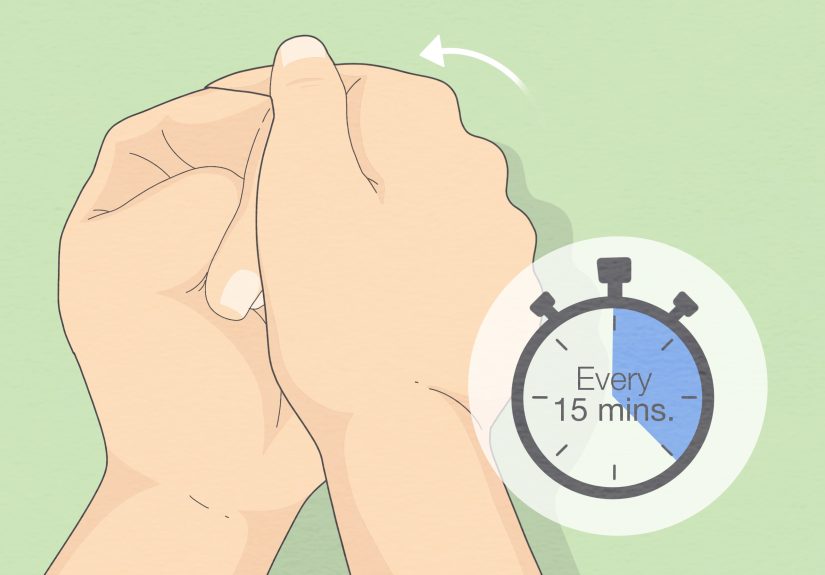
- Use gentle pressure only. Move the finger to the point of mild tension, not pain. A soft stretch is enough. If you need a grand theatrical yank, you are doing too much.
- Never twist hard or jerk suddenly. Quick force may irritate ligaments, joint capsules, or surrounding tissues. “Safer” and “aggressive” are not roommates.
- Do not crack through pain. A painless pop is one thing. Pain is your cue to stop. Sharp pain, aching, tingling, numbness, or weakness are not part of a good technique.
- Do not keep repeating the same joint. If it does not pop, let it go. Your knuckle does not owe you a sound effect.
- Avoid letting other people pull on your fingers. Your enthusiastic friend is not a hand specialist just because they say, “Trust me.”
- Stop if the joint swells, looks crooked, or feels unstable. That is not a “good crack.” That is a reason to leave the joint alone and get it checked.
The best rule is wonderfully boring: if it hurts, stop. If it feels forced, stop. If you have to argue with your hand to make it happen, definitely stop.
When Knuckle Cracking Is Probably Not a Good Idea
There are situations where you should skip the habit or at least be much more cautious. If you already have arthritis, a recent hand injury, joint instability, finger swelling, numbness, or reduced grip strength, repeated cracking may aggravate symptoms even if it is not the root cause. Likewise, if a finger gets stuck, catches, or snaps painfully, you may be dealing with something like a tendon issue rather than a simple urge to pop the joint.
You should also be cautious if your knuckles have suddenly become painful without an obvious reason, especially if there is warmth, redness, or swelling. That can happen with inflammatory conditions, overuse injuries, sprains, infections, or other joint disorders. The body is complicated. It loves a plot twist.
See a Healthcare Professional If You Notice:
- pain during or after cracking
- swelling, redness, or warmth
- joints that lock or catch
- crooked-looking fingers or deformity
- numbness, tingling, or weakness
- a recent injury followed by popping
- stiffness that lingers or keeps getting worse
That is especially true if one knuckle seems persistently swollen or tender. Habitual cracking might get blamed, but the real culprit could be osteoarthritis, rheumatoid arthritis, psoriatic arthritis, a sprain, or a tendon problem.
What Painful Knuckles Might Actually Mean
Here is where many people get tripped up. They assume, “My knuckles crack, therefore the cracking caused the problem.” That is not always how this works. Sometimes the cracking is just the noise. The real issue is something else entirely.
1. Overuse or Irritation
If you type all day, game for hours, grip tools, lift weights, or scroll like it is your side hustle, your hands may simply be overworked. Stiff, cranky joints may feel more tempting to crack, but the better fix is often rest, hand stretches, and changing how you use your hands.
2. Osteoarthritis
Osteoarthritis in the hands can cause pain, stiffness, swelling, and a grinding or crackling sensation. In this case, the noise is a symptom of joint wear and tear, not proof that cracking created the wear and tear.
3. Inflammatory Arthritis
Conditions like rheumatoid arthritis or psoriatic arthritis can affect the small joints of the hands. These conditions often come with swelling, tenderness, morning stiffness, and sometimes changes on both sides of the body. Painful knuckles deserve attention, especially when the symptoms keep returning.
4. Tendon Problems or Trigger Finger
If a finger catches, locks, or snaps when you bend it, that may involve irritated tendons rather than the knuckle joint itself. This kind of popping is not something to “work through.”
How to Ease the Urge Without Constantly Cracking
Some people crack their knuckles because the joints feel stiff. Others do it when they are anxious, bored, or concentrating. If you want to cut back, it helps to know which camp you are in. Are your hands stiff, or is your brain just asking for a tiny fidget fireworks show?
If It Is About Stiffness
- Take regular breaks from typing, gaming, or gripping tools.
- Gently open and close your fists several times.
- Stretch your fingers wide, then relax them.
- Use warm water or a warm compress for a few minutes.
- Check your workspace setup so your hands are not under constant strain.
If It Is More of a Habit
- Keep a stress ball or soft grip tool nearby.
- Link the habit to a cue, such as long meetings or studying, and swap in another movement.
- Practice brief hand stretches instead of chasing the pop.
- Notice whether stress or boredom makes the urge worse.
In many cases, the “relief” from knuckle cracking is short-lived because the underlying issue is tension, repetitive strain, or plain old nervous energy. If you deal with the source, the soundtrack often quiets down on its own.
Common Mistakes People Make
Trying to Crack Every Joint on Command
This turns a casual habit into a daily hand wrestling match. If a joint does not crack naturally with a gentle motion, forcing it is not smarter just because you look determined.
Assuming No Pain Means Unlimited Repetition
Even if you are not hurting, repeatedly tugging at the same joints all day is not a wellness strategy. Moderation still applies.
Ignoring Other Symptoms
A lot of people blame the crack when the real issue is swelling, stiffness, or reduced motion. The sound can distract from the more important clues.
Using Neck-and-Back Logic on Finger Joints
People sometimes treat all cracking as interchangeable. It is not. Finger knuckles are not your neck, and self-manipulating the neck or spine carries a different risk profile. Do not copy-paste joint habits across the body like a software update nobody requested.
The Bottom Line on Knuckle Cracking
If your knuckles crack occasionally, do not hurt, and are not swollen or unstable, the habit is generally considered harmless for most people. The key word is most. “Safe” in this context means gentle, not forceful; occasional, not obsessive; and never through pain. The minute cracking becomes painful, frequent because of stiffness, or paired with swelling or weakness, it stops being a quirky habit and starts becoming a clue.
So yes, you can crack your knuckles more safely by being gentle, backing off when anything feels wrong, and paying attention to the difference between harmless noise and meaningful symptoms. In hand health, boring choices are often the best choices. Warm up. Loosen up. Do not yank. And maybe spare the rest of the room the dramatic pre-meeting snap symphony.
Real-Life Experiences People Commonly Have With Knuckle Cracking
One of the most common experiences people describe is simple relief. An office worker spends hours typing, their fingers feel tight, and a quick knuckle pop seems to make the hands feel “reset.” That sensation can be real, but it is usually brief. The person is not necessarily fixing anything mechanical; they are just changing the feeling in the joint for a moment. In many cases, a short break, hand stretches, or warming up the fingers gives the same relief without turning the habit into a constant reflex.
Another familiar scenario is the anxious knuckle cracker. This person is not cracking because the joints feel stiff. They are cracking during exams, long calls, awkward silences, traffic, or anytime stress walks into the room and makes itself comfortable. The cracking becomes part fidget, part ritual, part soundtrack to overthinking. These people often notice that the urge gets stronger when they are tense and nearly disappears when they are relaxed or busy using their hands in another way.
Then there is the “I only notice it because everyone else notices it” experience. Plenty of people say they never thought much about their habit until roommates, spouses, coworkers, or one horrified cousin acted like each pop was a personal attack. That social reaction can make the habit seem more dramatic than it really is. In reality, the noise is often more annoying than dangerous. Still, annoyance has power. Entire family legends have been built on less.
Some people also report a cycle where one successful pop makes them want another, then another, until they are tugging at fingers that clearly are not interested in participating. That is where harmless can slide into irritated. The hand may feel sore afterward, not because the crack was inherently toxic, but because the person kept forcing motion long after the joint had nothing left to say. This is a good example of how habit, not arthritis, becomes the issue.
There are also people who start cracking because something actually feels wrong. Maybe one finger is swollen in the morning, or a knuckle aches after using tools, lifting weights, gaming, or gardening. They try to pop it for relief, but the relief does not last, or the joint feels worse afterward. That experience matters because it suggests the cracking is not the main event. The real problem could be overuse, inflammation, arthritis, or a tendon issue. When a joint seems to “need” cracking all the time, that is often a clue worth paying attention to.
Finally, many long-time knuckle crackers say the same thing: if the pop is painless and occasional, nothing much happens besides the sound. But when they are tired, stressed, stiff, or too aggressive, their hands let them know quickly. That is probably the most useful real-world lesson of all. Your hands are usually honest. If a motion feels easy and fine, it probably is. If it feels painful, forced, or weird, back off. The safest knuckle-cracking habit is the one that never tries to overpower what your body is clearly telling you.
Conclusion
Cracking your knuckles safely is less about mastering a special trick and more about respecting your joints. For most people, an occasional, painless pop is not linked to arthritis and is not a major concern. But the safest approach is always the gentlest one: do not yank, twist hard, or crack through pain just to get the satisfying sound. Watch for red flags like swelling, stiffness, weakness, locking, numbness, or pain that lingers, because those symptoms may point to a real hand issue that deserves medical attention.
If your goal is healthier hands, focus less on chasing pops and more on reducing stiffness, repetitive strain, and stress. Warm your hands, take movement breaks, stretch your fingers, and listen to what your joints are telling you. A knuckle crack here and there may be harmless, but good hand habits are what truly keep your fingers functioning well for typing, cooking, lifting, gardening, gaming, and all the other things adult life casually demands. In short: crack gently if you must, but treat your hands like useful tools, not bubble wrap with opinions.





 Close
Close