
Table of Contents >> Show >> Hide
- What You’ll Make (And Two Popular Ways To Do It)
- Materials Checklist (Keep It Simple)
- How to Create Beaded Hair Barrettes: 13 Steps
- Step 1: Choose the Right Barrette Base (Comfort First)
- Step 2: Decide Your Design (Tiny Sketch, Big Payoff)
- Step 3: Set Up Your Workspace (A.K.A. Prevent Bead Chaos)
- Step 4: Gather and Prep Your Beading Supplies
- Step 5: Prep the Barrette Surface
- Step 6: Create a Foundation Template
- Step 7: Start with an Outline (It’s Like Fencing In Your Design)
- Step 8: Fill In the Design (Row by Row, No Panic)
- Step 9: Add a Focal Element (Optional, But Delightful)
- Step 10: Finish the Edge Neatly (This Is Where “Handmade” Looks “High-End”)
- Step 11: Add Stiffener and Backing (Comfort Meets Durability)
- Step 12: Attach the Beaded Piece to the Barrette
- Step 13: Let It Cure, Then Stress-Test (Politely)
- Troubleshooting (Because Beads Have Opinions)
- Design Ideas You Can Copy Today
- Real-Life Crafting Experiences (An Extra of What It’s Actually Like)
- Wrap-Up
Beaded hair barrettes are the rare craft that checks every box: practical, giftable, oddly addictive, and capable of making a Tuesday feel like a runway. They’re also a great “gateway project” into bead embroidery and bead weavingbecause once you realize you can turn a plain metal clip into something that looks boutique-level, you’ll start eyeing every boring accessory in your house like, “You could be prettier.”
This guide walks you through 13 clear steps to create a sturdy, comfortable, sparkle-forward beaded barrette using beginner-friendly techniques. You’ll also get design ideas, troubleshooting, and a longer “real-life experience” section at the end (because the first time you spill seed beads, you’ll want emotional support).
What You’ll Make (And Two Popular Ways To Do It)
There are two main routes to a beaded barrette. Both work; choose based on your patience level and how much you enjoy tiny objects:
- Bead embroidery method (most versatile): stitch beads onto a felt-like foundation, back it neatly, then attach the finished piece to a barrette. Great for florals, icons, initials, and “I swear this was easier in my head” abstract art.
- Bead weaving panel method (super tidy): weave a small beaded strip (square stitch or peyote), then sew or glue it to the clip. Great for patterns like checkerboard, stripes, or geometric grids.
Materials Checklist (Keep It Simple)
You don’t need a bead store’s worth of supplies. Start with the basics and upgrade later:
- Barrette base: French barrette, snap clip, alligator clip, or bobby pin (pick a size you’ll actually wear).
- Beads: 11/0 seed beads, Delicas (optional), bugle beads (optional), flat-back rhinestones (optional), small focal beads (optional).
- Needle: size 10–12 beading needle (thin enough for seed beads).
- Thread: strong beading thread (or a durable nylon/poly thread). Match color to your design when possible.
- Foundation: stiff felt or bead embroidery backing; backing fabric like ultrasuede or faux suede for a clean finish.
- Optional stiffener: thin plastic (like flexible template plastic) for structure.
- Adhesive: a strong craft/jewelry adhesive (use safely and with ventilation).
- Tools: sharp scissors, tweezers, ruler, marker/chalk pencil, pliers (if wrapping wire), and a bead mat or towel (beads love to escape).
How to Create Beaded Hair Barrettes: 13 Steps
Step 1: Choose the Right Barrette Base (Comfort First)
Pick the base like you’re choosing shoes: cute matters, but comfort wins. French barrettes hold more hair and feel “grown-up classic.” Snap clips are quick and lightweight. Alligator clips grip well but can feel bulky. Bobby pins work best for small, narrow bead strips.
Tip: If you have thick hair, choose a longer barrette. If your hair is fine, avoid a super-heavy bead design that will slide like it’s late for an appointment.
Step 2: Decide Your Design (Tiny Sketch, Big Payoff)
Before you thread anything, decide:
- Color palette: 2–4 colors is beginner-friendly.
- Pattern style: stripes, checkerboard, floral clusters, a starburst, or a simple ombré.
- Scale: your design should be slightly smaller than the barrette top surface for a neat finish.
Quick example: A classic “daisy chain” look can be made with white seed beads for petals, yellow for centers, and a tiny line of green beads between flowers. A clean geometric option is a two-color checkerboard that reads bold from across the room.
Step 3: Set Up Your Workspace (A.K.A. Prevent Bead Chaos)
Use a bead mat or a soft towel. It keeps beads from rolling away like they’re trying to start a new life under your couch. Strong lighting mattersseed beads are tiny, and your eyes deserve respect.
Safety note: if you’re using strong adhesive, work in a well-ventilated area and follow product safety directions. “Crafting through a headache” is not a fun personality trait.
Step 4: Gather and Prep Your Beading Supplies
Pre-sort your beads into small trays or cups. If you’re mixing sizes (seed beads + bugles + rhinestones), keep them separated so you don’t accidentally stitch a bugle bead where a seed bead should go (it’s like swapping a sneaker for a ski boot).
Cut a comfortable thread lengthabout the distance from your fingertips to your elbow is a good start. Longer thread tangles more, and shorter thread means more stops and starts.
Step 5: Prep the Barrette Surface
If you’re attaching a finished beaded piece later, you still want a clean base. Wipe the barrette with a little rubbing alcohol (if appropriate for the material) and let it dry.
Optional: lightly roughen the surface where glue will go (very gently) to help adhesion. Don’t turn your barrette into a demolition sitejust a subtle scuff.
Step 6: Create a Foundation Template
Place your barrette on your foundation material (stiff felt or bead backing). Trace a shape that matches the top surface, then draw a second line slightly inside the first (about 1–2 mm). Cut on the inner line. This keeps the finished piece from overhanging the barrette and catching on hair.
If you want extra structure, cut a matching piece of thin plastic slightly smaller than your foundation shape.
Step 7: Start with an Outline (It’s Like Fencing In Your Design)
For bead embroidery, outlining helps keep everything neat. Thread your needle, knot the end, and stitch a simple outline using seed beads:
- Bring the needle up from the back.
- String 2–4 seed beads.
- Lay them along the outline and stitch down at the end of that group.
- Come up between the last beads and pass through them again to reinforce.
Keep thread tension firm but not aggressiveyou want snug beads, not warped felt.
Step 8: Fill In the Design (Row by Row, No Panic)
Now build inside the outline. Common fill approaches:
- Rows: stitch beads in parallel lines for a smooth “woven” look.
- Clusters: group beads for floral petals, stars, or small motifs.
- Gradients: transition from dark to light for an ombré effect.
If you’re doing a bead weaving panel instead (square stitch or peyote), make a strip about the length of your barrette top. Keep the width modesttoo wide makes the clip bulky and harder to attach securely.
Step 9: Add a Focal Element (Optional, But Delightful)
Want that “people ask where you bought it” effect? Add one focal:
- Flat-back rhinestones arranged like a tiny constellation
- Filigree piece with a few stones for a vintage vibe
- Cabochon (a smooth domed stone) stitched in, then surrounded by seed beads
Keep focal pieces lightweight if your hair is fine, and place them near the center so the barrette balances.
Step 10: Finish the Edge Neatly (This Is Where “Handmade” Looks “High-End”)
The edge is the difference between “cute DIY” and “did you buy that at a fancy shop?” A simple edging method:
- Stitch around the perimeter with a small, even whip/blanket stitch.
- Add 1–2 seed beads per stitch for a beaded edge, keeping spacing consistent.
If you like drama, you can add short fringe danglesbut keep it short enough that it doesn’t tangle in hair. Your barrette should sparkle, not start arguments with your shampoo.
Step 11: Add Stiffener and Backing (Comfort Meets Durability)
If you cut a thin plastic stiffener, glue it to the back of your beaded foundation (use a small amount). Then cut a backing fabric piece (ultrasuede/faux suede) slightly smaller than the foundation and attach it to cover stitches. This protects hair from thread ends and makes the barrette comfortable to wear.
Press gently under a book (with parchment paper between) while it setsno need to bench-press your project.
Step 12: Attach the Beaded Piece to the Barrette
Choose an attachment method based on your barrette style:
- Sew-on (best for longevity): if your barrette has holes or openings, stitch through them and through the backing. Use multiple passes and tie off securely.
- Glue + stitch combo (great balance): glue the piece in place, then add a few anchoring stitches once set.
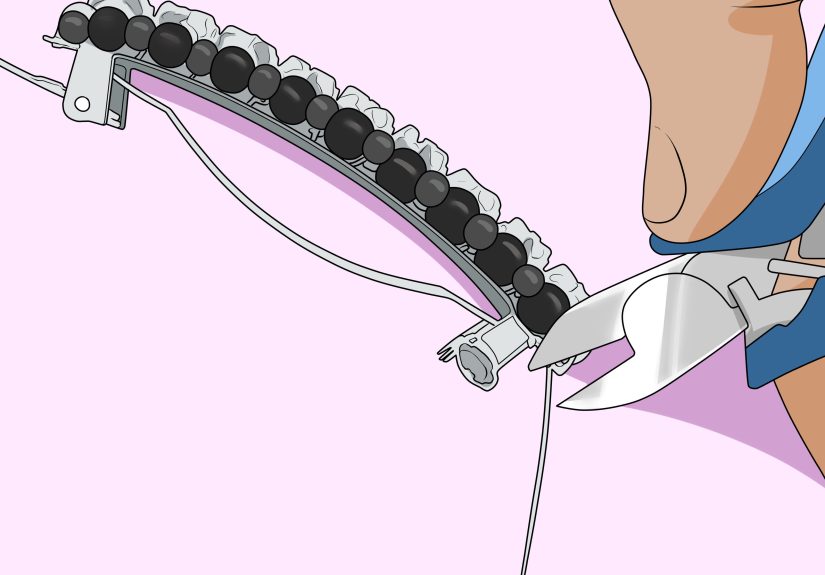
- Wire-wrap (for combs/claws or open frames): wrap thin wire around barrette prongs or frames, adding beads as you go.
If you do glue-only, keep your beadwork light and make sure surfaces are clean and dry first.
Step 13: Let It Cure, Then Stress-Test (Politely)
Let adhesive cure fully according to instructions. Then do a gentle tug test: hold the barrette base and lightly pull the beaded top. If anything shifts, reinforce nowfuture-you will be grateful.
Finally: wear it. Try it at the side of a deep part, above a low ponytail, or to hold back bangs. A beaded barrette can be subtle or statementyour choice, your sparkle.
Troubleshooting (Because Beads Have Opinions)
- Problem: The beadwork looks wavy.
Fix: Loosen your tension slightly and stitch in shorter bead groups (2–3 beads at a time) so the foundation doesn’t pucker. - Problem: Thread keeps tangling.
Fix: Use shorter thread lengths and let the needle dangle occasionally to unwind. Also: slow down. The beads are not going anywhere. - Problem: The barrette feels heavy and slips.
Fix: Reduce focal size, switch to lighter seed beads, and keep the design narrower. Also consider a grippier barrette style. - Problem: Edges snag hair.
Fix: Make sure backing fully covers thread ends. Keep edging beads tight and consistent.
Design Ideas You Can Copy Today
- Minimalist stripe: two rows of metallic seed beads on black backing = instant chic.
- Checkerboard: alternate two colors for a bold graphic look (works great as a woven panel).
- Daisy chain: little flowers in a row for a playful, retro vibe.
- “Galaxy” scatter: dark base + a few crystal points like stars.
- Gem-chip wrap: wire-wrap tiny chips around a frame-style clip for a textured look.
Real-Life Crafting Experiences (An Extra of What It’s Actually Like)
Here’s the part most tutorials skip: the “human experience” of making beaded hair barrettes. The photos make it look like a calm, candlelit hobby. In reality, your first barrette will teach you patience, humility, and the exact bounce pattern of a runaway seed bead.
Most beginners start with enthusiasm and a slightly unrealistic timeline. “This will take 20 minutes,” they sayright before spending 12 minutes trying to thread a needle that is apparently allergic to cooperating. A helpful mindset shift is to treat your first barrette like a test bake: you’re learning the oven, not competing on a cooking show. Once your hands understand the motion of picking up beads, placing them, and pulling thread to the same tension every time, speed comes naturally.
The next experience is discovering how much planning matters. Sketching a tiny design feels optional until you realize you’ve created an accidental optical illusion pattern that looks like it’s vibrating. A simple fix is limiting your palette and repeating a motif. When crafters switch from “random pretty beads” to “intentional color story,” their work instantly looks more polishedeven with the same skill level.
Then there’s the tactile reality: bead embroidery has a rhythm, but it also has “mood swings.” If you pull too tight, the felt buckles. If you pull too loose, beads wobble and the whole surface looks soft in the wrong way. People often describe the sweet spot as “snug enough that beads don’t slide, relaxed enough that the foundation stays flat.” The best practice is to stitch in short segments, check your surface from the side, and adjust early. Think of it like frosting a cake: fix the lumps while it’s still easy, not after it sets.
One surprisingly satisfying moment happens when you add the backing. Up until then, your project can look like a charming messthreads, knots, and the occasional “what is that stitch doing” mystery. Once you attach a smooth backing fabric, everything clicks. It suddenly looks intentional, wearable, and gift-worthy. Many crafters say this is when they go from “I’m experimenting” to “I’m making a collection.” That’s also when you learn the practical truth: comfort matters. A beautifully beaded top is only a win if the underside doesn’t snag hair or feel scratchy against your scalp.
Finally, you experience the “attachment decision,” which is basically a personality test. Some people are Team Sew-It-On-Forever: multiple passes through barrette holes, reinforced knots, the satisfaction of durability. Others are Team Glue-And-Gofast, clean, and perfectly fine for lightweight designs (as long as you follow directions and let it cure properly). Most seasoned makers end up in the middle: a tiny bit of glue for positioning, then stitches for long-term security. It’s not overkillit’s future-proofing.
The funniest part is what happens after you finish: you start noticing barrettes everywhere. You’ll look at a plain clip at a store and think, “I could bead that.” You’ll see a color palette on a coffee cup and think, “That would be cute in seed beads.” It’s a harmless obsessionmostly. Just remember to close your bead containers. Beads are tiny, patient, and fully committed to becoming floor décor.
Wrap-Up
Beaded hair barrettes are a small project with big style payoff. Start simple, focus on neat finishing, and don’t worry if your first one is a little quirkyquirky is how handmade becomes charming. Once you’ve made one, you’ll have the skills to make ten, and then you’ll “accidentally” have gifts for every birthday forever. Convenient.





 Close
Close