
Table of Contents >> Show >> Hide
- What Makes Flank Steak Different?
- The One Rule That Matters Most: Cut Against the Grain
- How to Find the Grain Before You Slice
- When to Cut Flank Steak
- Step-by-Step: How to Cut Flank Steak So It Stays Tender
- Should You Slice on a Bias?
- How Thick Should You Slice Flank Steak?
- Common Mistakes That Make Flank Steak Tough
- The Best Knife for Cutting Flank Steak
- Best Ways to Serve Properly Sliced Flank Steak
- Frequently Asked Questions
- Kitchen Experience: What Actually Happens When You Start Slicing Flank Steak the Right Way
- Final Takeaway
Flank steak is one of those cuts that can make you feel like a kitchen genius or like you accidentally grilled a leather belt. The good news? The difference usually is not the marinade, the pan, or some mystical chef-only ritual involving expensive salt. It is the slicing.
If you know how to cut flank steak the right way, this lean, beefy, flavor-packed cut turns into tender strips perfect for tacos, salads, rice bowls, sandwiches, steak dinners, and those “I totally meant to make this on a Tuesday” meals that look oddly impressive. If you cut it the wrong way, though, every bite fights back.
This guide breaks down exactly how to cut flank steak so it stays tender every single time. We will cover what the grain is, why it matters, when to slice, how thin to go, whether a bias cut helps, and the common mistakes that turn dinner into a jaw workout.
What Makes Flank Steak Different?
Flank steak comes from the abdominal area of the cow, which explains two things immediately: it has excellent beefy flavor, and it has long, visible muscle fibers. Unlike heavily marbled cuts that practically melt if you look at them nicely, flank steak is leaner and more structured. That structure is exactly why it tastes so good and exactly why it can go chewy if handled carelessly.
Think of flank steak as the overachiever of the beef world. It worked hard. It developed personality. It also requires a little respect from your knife.
The cut is usually long, fairly flat, and easy to identify because the grain is obvious. That grain is not some fancy butcher term meant to scare home cooks. It simply refers to the direction the muscle fibers run through the meat. On flank steak, those fibers are long and noticeable, which makes slicing technique especially important.
The One Rule That Matters Most: Cut Against the Grain
What “the grain” actually means
The grain is the set of visible lines running through the steak. If you look closely, you will see those fibers moving in one main direction. Sometimes they run lengthwise from end to end. Sometimes they angle slightly. Either way, they are not hiding. Flank steak is generous like that.
Why cutting against the grain makes steak tender
When you slice with the grain, you leave those muscle fibers long. Long fibers mean a chewier bite because your teeth have to do more work. When you slice against the grain, you shorten those fibers. Shorter fibers are easier to chew, so the steak feels more tender even though you did not magically change the cut itself.
That is the whole secret. Not a secret sauce. Not a $200 knife. Not a motivational speech to the cow. Just the angle of the cut.
How to Find the Grain Before You Slice
Before the steak is cooked, finding the grain is usually easy. Lay the raw flank steak flat on a cutting board and look for the parallel lines running through the meat. Take a mental note of the direction they travel. You can even make a tiny notch at one edge if you want a visual reminder after cooking.
This matters because once the steak is seared, rested, and moved around a few times, it is surprisingly easy to forget which way the grain was running. Many a perfectly cooked flank steak has been ruined by that one moment of “Eh, I’m sure it goes this way.” That is how chewing regrets are born.
If the steak is especially large, you can cut it into shorter sections first. That makes the final slicing easier and gives you better control over the angle of each cut.
When to Cut Flank Steak
Do not slice flank steak straight off the grill or pan. Let it rest first.
Resting gives the juices time to redistribute through the meat instead of flooding your cutting board like a tiny beef emergency. If you slice too soon, the steak loses moisture and ends up drier. A short rest also makes the meat easier to handle cleanly.
A good rule is to let flank steak rest for several minutes before carving. During that time, get your platter ready, warm tortillas, toss the salad, dramatically announce dinner to the household, or simply enjoy the rare moment when nobody is asking you where the ketchup is.
Step-by-Step: How to Cut Flank Steak So It Stays Tender
1. Put the rested steak on a stable cutting board
Use a board that will not slide around. A slippery cutting board plus a sharp knife equals excitement nobody asked for. If needed, place a damp towel underneath the board for stability.
2. Identify the grain again
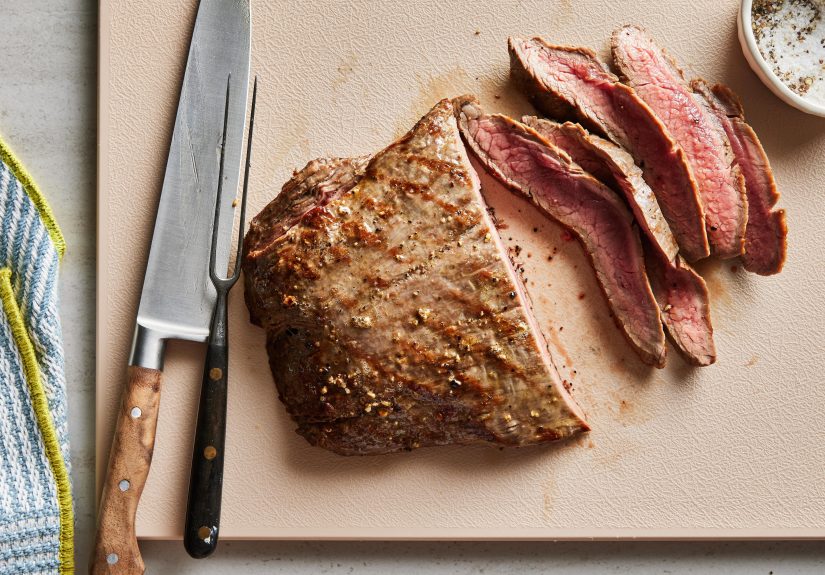
Look for the long lines in the meat. Your goal is to cut perpendicular to those lines. In other words, your knife should cross the grain, not run alongside it.
3. Turn the steak so the grain runs left to right
Many cooks find it easiest to rotate the steak so the fibers run horizontally in front of them. That way, slicing straight down in vertical strokes naturally creates cuts across the grain.
4. Slice thinly
Thin slices are your friend. For most uses, aim for slices about 1/4 inch thick or a little less. Thin slices help keep each bite tender and make flank steak more versatile for serving. Thick hunks can feel chewy even when you technically cut against the grain.
5. Use smooth, confident strokes
Use a sharp carving knife or chef’s knife and slice in clean motions. Sawing aggressively back and forth shreds the meat and makes the slices look rough. You want neat cuts, not steak confetti.
6. Consider a slight bias cut
You will often hear that flank steak should be sliced “on the bias,” which means at a slight diagonal. This can create wider, prettier slices and a more elegant presentation. That is helpful, but it is not the main event. A bias cut only helps if you are still cutting across the grain. Presentation is nice. Tenderness is nicer.
Should You Slice on a Bias?
Yes, often. But only after you understand the bigger rule.
A bias cut means holding your knife at an angle, rather than perfectly straight up and down. On flank steak, that diagonal slice can make each piece look broader and more restaurant-style. It can be great for plating, especially for steak salads or fajitas where you want attractive, thin strips.
But here is the important part: a bias cut is optional; cutting against the grain is not. If you slice diagonally in the wrong direction, the steak will still be chewy. So think of a bias cut as the finishing touch, not the foundation.
How Thick Should You Slice Flank Steak?
The ideal thickness depends on how you plan to serve it, but thinner is generally better.
- For tacos, fajitas, rice bowls, and salads: go thin, around 1/8 to 1/4 inch.
- For plated steak with sides: 1/4 inch works well and still feels substantial.
- For sandwiches: thin slices are best so each bite stays tender and easy to eat.
If you are ever unsure, err on the thinner side. Flank steak is not trying to be a giant steakhouse slab. It shines when sliced smartly and served in manageable, juicy pieces.
Common Mistakes That Make Flank Steak Tough
Slicing with the grain
This is the biggest mistake by far. Even perfectly cooked flank steak can seem tough if the fibers are left long.
Cutting it too thick
Thicker slices mean more chewing. This cut benefits from restraint, not bravado.
Slicing too soon
If the steak has not rested, you lose juices and make the texture less pleasant.
Using a dull knife
A dull blade crushes instead of slices. That makes the meat ragged and the process more annoying than it needs to be.
Overcooking before slicing
Flank steak is not especially forgiving if taken too far. Even a perfect slicing technique cannot fully rescue an overcooked piece of lean beef. Good cooking and good carving work together.
The Best Knife for Cutting Flank Steak
You do not need a theatrical sword or a knife forged on a mountaintop. You need something sharp.
A carving knife, slicing knife, or sharp chef’s knife all work well. The key is a fine edge and enough blade length to make smooth slices. Serrated knives can work in a pinch, but they are usually not ideal because they tend to tear rather than glide.
If you cook flank steak often, keeping one reliably sharp carving knife around is a very smart move. It makes a visible difference in both texture and presentation.
Best Ways to Serve Properly Sliced Flank Steak
Once you slice flank steak correctly, it becomes one of the most useful proteins in your kitchen. It works beautifully in:
- Steak tacos with onions, cilantro, and lime
- Fajitas with peppers and warm tortillas
- Grain bowls with rice, greens, and chimichurri
- Steak salads with arugula and shaved Parmesan
- Sandwiches with horseradish sauce or garlic mayo
- Simple steak platters with roasted potatoes and vegetables
Because the slices are thin and tender, the steak feels generous and easy to eat. It also stretches well, which is wonderful news for both meal prep and grocery budgets.
Frequently Asked Questions
Can you cut flank steak before cooking?
Yes, for certain recipes such as stir-fries, where thin raw strips are useful. But for whole grilled or broiled flank steak, most cooks prefer to cook first, rest, and then slice across the grain.
Do you always have to cut flank steak against the grain?
Yes. If tenderness is the goal, this is non-negotiable. It is the defining technique for this cut.
Is flank steak supposed to be chewy?
It has a firmer texture than highly marbled premium cuts, but it should not feel unpleasantly chewy. Proper cooking, resting, and slicing make a major difference.
What if the grain changes direction slightly?
Cut the steak into smaller sections and adjust as needed. You do not have to be robotic about it, but you do want each section sliced across its visible fibers.
Kitchen Experience: What Actually Happens When You Start Slicing Flank Steak the Right Way
Here is where flank steak becomes a humbling little teacher. Plenty of home cooks assume tenderness starts and ends with the marinade. So they whisk together soy sauce, garlic, citrus, oil, maybe a little brown sugar, and feel extremely accomplished. Then they grill the steak beautifully, let it rest, slice it the wrong direction, and wonder why dinner tastes like it is resisting arrest.
The first real lesson most people learn with flank steak is that good cooking can be undone in less than thirty seconds by bad slicing. It is almost impressive. You can get the sear right, the seasoning right, and the timing right, then accidentally cut with the grain and turn your hard work into a chew toy with grill marks.
Once you correct that mistake, the difference is dramatic. Suddenly the same steak feels softer, juicier, and much more expensive than it actually was. Those long fibers are no longer stretching through every bite. Instead, each slice gives way cleanly. It is one of the most satisfying “why did nobody explain this sooner?” moments in home cooking.
Another common experience is realizing that thinner slices solve more problems than people expect. Thick slices can make flank steak feel stubborn, especially in sandwiches or salads. Thin slices, on the other hand, seem to relax the whole cut. They drape better, pick up sauces more evenly, and fit naturally into tacos, bowls, and wraps. The steak stops acting like the center of a carving-board ceremony and starts acting like a flexible, weeknight-friendly ingredient.
Many cooks also discover that slicing on a slight diagonal makes the steak look more polished. The pieces appear broader and more elegant, which is great when you want a platter that looks restaurant-worthy. But experience teaches an even better lesson: pretty slices are useless if they are angled the wrong way. Across the grain first, pretty second. That order saves dinner.
There is also the timing issue. People get impatient. The steak comes off the heat smelling amazing, and suddenly everyone in the kitchen becomes an expert in why resting is probably optional. It is not optional. Slice too early, and the juices spill out before the meat has settled. Let it rest, and the slices stay more succulent. It is not glamorous advice, but it works every time.
Over time, cutting flank steak correctly becomes second nature. You start checking the grain before the steak even hits the pan. You rotate it automatically on the board. Your knife angle improves. Your slices get cleaner. You stop winging it and start treating the cut like it deserves a small amount of strategy. In return, it rewards you with reliable tenderness and an almost unfair amount of flavor for the price.
And perhaps the most relatable experience of all: once you learn how to slice flank steak properly, it becomes very hard to watch someone else cut it wrong. You will be at a cookout, trying to act normal, while another human being confidently carves long strips with the grain. In that moment, you have two choices. Say nothing and chew in silence. Or gently intervene like the steak whisperer you were meant to be.
Final Takeaway
If you remember only one thing, make it this: flank steak should be sliced thinly against the grain after resting. That single technique shortens the muscle fibers, improves tenderness, and turns a potentially chewy cut into something genuinely delicious. A slight bias cut can make the slices look better, and a sharp knife makes the job easier, but the real magic is crossing the grain.
Get that right, and flank steak stops being intimidating. It becomes one of the smartest, tastiest, most versatile cuts you can cook at home. Which is a nice upgrade from “Why does this steak bite back?”






 Close
Close