
Table of Contents >> Show >> Hide
- The Short Answer: Hire for the Bottleneck, Not the Title
- Stage One: Before Product-Market Fit, Your “Management Team” Is Mostly the Founders
- The Default Hiring Order for a Management Team
- 1. First: A Go-to-Market Leader After Demand Becomes Repeatable
- 2. Second: An Operations Leader When Complexity Starts Eating the Founder Alive
- 3. Third: A Customer Success or Service Leader When Retention Becomes a Growth Lever
- 4. Fourth: A Finance Leader Before Cash Mistakes Get Expensive
- 5. Fifth: A Product or Engineering Leader When Founders Can’t Manage Both Vision and Velocity
- 6. Sixth: A People or HR Leader When Headcount Creates Management Debt
- 7. Last: CFO, COO, and Full C-Suite Roles When the Business Is Truly Scaling
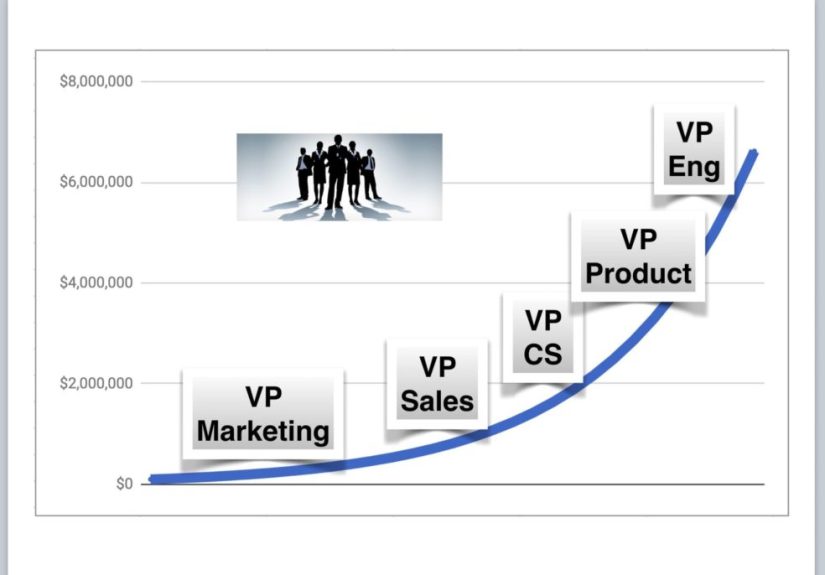
- So What Is the Best Order, Exactly?
- Red Flags You’re Hiring Too Early
- Red Flags You Waited Too Long
- A Simple Four-Question Test Before Every Management Hire
- Experience and Real-World Lessons: What This Looks Like in Practice
- Conclusion
Founders love to ask this question like there is a sacred scroll hidden in a vault somewhere: first hire a VP of Sales, then a COO, then a CFO, and then reward yourself with a stress headache and a celebratory coffee. Real life is messier than that. The right order depends on your business model, your stage, your revenue, your customer complexity, and one very unglamorous question: what problem is hurting the company most right now?
Still, there is a practical default sequence that shows up again and again in real startup and growth-company playbooks. You do not build a full management team early just because an org chart looks pretty in a pitch deck. You hire leaders in the order that removes bottlenecks, protects cash, and gives the founder time to stop being the entire company in one overcaffeinated human body.
For most businesses, the smart order looks something like this: founders first, then a go-to-market leader after you see repeatable demand, then operations or customer success as complexity increases, then finance leadership before the numbers get dangerous, then people leadership as headcount grows, and only after that a fuller C-suite. That is the broad answer. Now let’s turn it into something useful.
The Short Answer: Hire for the Bottleneck, Not the Title
If you remember one thing from this article, make it this: hire the manager who solves your biggest current constraint, not the one with the fanciest title. A startup does not become “serious” because it hired a COO at twelve employees. It becomes serious when it can reliably sell, deliver, retain customers, and make decisions with clean numbers.
That is why the best founders usually avoid two classic mistakes. First, they do not hire senior leaders too early and expect them to magically create product-market fit out of thin air. Second, they do not wait so long that the founder becomes the sales leader, ops chief, recruiter, customer success manager, and reluctant therapist for the whole company.
The sweet spot is simple to describe and tricky to execute: bring in management after a function has started to work, but before it breaks under growth.
Stage One: Before Product-Market Fit, Your “Management Team” Is Mostly the Founders
Before product-market fit, most companies should keep management light. This is the stage where founders are still learning what customers want, which channel works, what pricing sticks, and whether the product solves a real problem or just looked impressive in a demo. Bringing in heavyweight executives too early can create process before there is anything worth processing.
That is especially true for sales and marketing. If you do not yet understand your buyer, your core value proposition, and why customers actually say yes, a senior sales leader is not inheriting a machine. They are inheriting a puzzle missing half the pieces and one corner chewed off by the dog.
In most early companies, founders should still be close to customers, close to the product, and close to the first revenue. If the business is technical, the earliest leadership complement is often a business-minded operator or commercial thinker. If the founder is commercial, the earliest complement may be a technical or product leader. Complementary skills beat status-signaling every time.
The Default Hiring Order for a Management Team
1. First: A Go-to-Market Leader After Demand Becomes Repeatable
For many startups and growing businesses, the first true management hire is in sales, growth, or marketing. But the exact role depends on how customers buy.
If you run a product-led or freemium business, a marketing or growth leader may come first because you need more users, better acquisition data, and cleaner demand generation. If you sell higher-ticket or founder-led deals, a sales leader often comes first once there is evidence that the offer is working and the founder can no longer personally manage every opportunity.
This is the key distinction: you do not hire a sales executive to invent your market from scratch. You hire one to make repeatable revenue more scalable. A good early go-to-market leader should be part strategist, part builder, and part player-coach. At this stage, you usually want someone practical enough to build the playbook, not someone who only knows how to manage a hundred-person team with six dashboards and a chief-of-staff.
Example: imagine a SaaS company at roughly $1 million in annual recurring revenue. The founder is still joining most major sales calls, pricing is getting more consistent, and a few sales reps are already closing business. That is usually a sign the company needs sales leadership. If the founder is still manually generating leads, writing follow-up emails, and deciding messaging line by line, the business is relying on founder energy rather than a system. That is not cute for long.
2. Second: An Operations Leader When Complexity Starts Eating the Founder Alive
After go-to-market starts to gain traction, the next leadership gap often shows up in operations. Orders are coming in, the team is busier, customers expect consistency, internal communication gets messy, and suddenly the founder spends half the week fixing handoffs, chasing deadlines, and asking why three people updated the same spreadsheet in three different ways.
This is when an operations leader becomes valuable. Depending on the company, that might be a Head of Operations, VP of Operations, BizOps lead, or a strong general manager. In services businesses, logistics-heavy businesses, multi-location businesses, and companies with complex delivery, operations can even move ahead of other functions.
If the CEO constantly says things like “I’m the only one who can keep this moving,” congratulations: you have just described an operations bottleneck.
3. Third: A Customer Success or Service Leader When Retention Becomes a Growth Lever
A lot of founders obsess over acquiring customers and then act surprised when churn shows up like an uninvited relative who plans to stay the weekend. Once you have paying customers and the business depends on expansion, retention, renewals, onboarding, or implementation quality, customer success leadership becomes a serious priority.
This is especially important in SaaS, recurring-revenue services, B2B contracts, and any business where the first sale is only the beginning of the money story. If customers need hand-holding, training, implementation, or proactive account management, a thoughtful customer success lead can protect revenue better than another flashy acquisition campaign.
One caution: early companies often overhire here. You usually do not need a grand, polished VP of Customer Success before you even know what healthy onboarding looks like. A hands-on leader who can build process, train a small team, and talk to unhappy customers without breaking into corporate poetry is usually the better move.
4. Fourth: A Finance Leader Before Cash Mistakes Get Expensive
Founders tend to delay finance because it feels less exciting than revenue. Revenue is fun. Revenue gets applause. Revenue buys lunch. But eventually, sloppy finance becomes expensive in a way that no amount of optimistic Slack messages can fix.
The right early finance hire is not always a full CFO. In many companies, the first real finance leader is a controller, head of finance, or experienced accountant with strong startup tolerance. The goal is to create reliable reporting, budgeting discipline, forecasting, payroll sanity, and decision-ready numbers. You want fewer “I think we’re fine” moments and more “Here’s our runway, margin trend, hiring capacity, and collection risk.”
When should finance leadership move up the list? Sooner if you are venture-backed, heavily regulated, inventory-heavy, margin-sensitive, or managing complex cash flow. Later if the business is simple, profitable, and still small. But not too late. One of the fastest ways to turn a promising company into a cautionary tale is to scale with weak financial controls and discover the problem after payroll.
5. Fifth: A Product or Engineering Leader When Founders Can’t Manage Both Vision and Velocity
In many product companies, the founder starts as the de facto head of product. That can work early because founders are usually closest to the problem, the customer pain, and the original insight. But as the team grows, roadmap decisions multiply, engineering coordination becomes harder, and product development needs a more formal operating rhythm.
That is when a Head of Product, VP Product, VP Engineering, or technical people manager can become essential. The timing varies. A deeply technical founding team may push this hire later. A nontechnical founder may need it sooner. The main signal is not team size alone. It is whether product decisions are slowing down, priorities are fuzzy, or engineers are losing momentum because every choice still routes through one founder.
6. Sixth: A People or HR Leader When Headcount Creates Management Debt
HR is rarely the first executive hire in a small startup, but it becomes increasingly important as the organization grows. Once you are hiring managers, dealing with compensation bands, performance issues, onboarding consistency, compliance obligations, and culture questions that no longer fit into a ten-minute hallway chat, a Head of People or HR leader starts to earn their seat.
This role often arrives later than founders expect and then suddenly feels overdue. A good people leader is not there to add bureaucracy for sport. They help the company hire better, onboard faster, reduce avoidable turnover, build management capability, and keep culture from becoming a nostalgic story founders tell about how things used to be when everyone fit around one table.
7. Last: CFO, COO, and Full C-Suite Roles When the Business Is Truly Scaling
For many companies, a true CFO and COO are later-stage hires, not early badges of honor. By the time you need them, the company usually has enough revenue, enough complexity, and enough cross-functional coordination needs to justify someone operating at that level.
A full CFO becomes more important when capital strategy, board reporting, fundraising, scenario planning, pricing leverage, and deeper financial architecture matter. A true COO becomes more important when there are multiple departments to align, execution risk is rising, and the CEO needs a genuine second brain for scaling the company rather than a glorified traffic cop.
Could either role come earlier? Yes. In regulated businesses, operationally intense companies, healthcare, fintech, manufacturing, logistics, and some multi-unit businesses, the default order can change. But in a typical startup, hiring a COO or CFO too early often creates expensive overhead and blurry accountability.
So What Is the Best Order, Exactly?
For a typical growth business, the most useful default sequence is:
- Founder-led phase with complementary early talent
- Go-to-market leader (sales or marketing, depending on motion)
- Operations leader when delivery and internal coordination get messy
- Customer success/service leader when retention and expansion matter
- Finance leader before scaling costs outrun visibility
- Product/engineering leader if roadmap and execution are bottlenecked
- People/HR leader once management layers and hiring systems form
- CFO/COO and broader C-suite when the company is truly scaling
That said, there are three major exceptions:
- Product-led businesses: marketing or growth may beat sales.
- Complex delivery businesses: operations may come earlier than customer success.
- Heavily regulated or cash-complex businesses: finance may need to move up the line.
Red Flags You’re Hiring Too Early
- You cannot clearly define what the role owns in the first six to twelve months.
- You are hiring for prestige, not for a business problem.
- You want a leader to “figure everything out” because you have not identified the actual bottleneck.
- You are bringing in a big-company executive to manage a function that barely exists yet.
- You still need someone to do the work, but you are hiring someone who only wants to supervise it.
Red Flags You Waited Too Long
- The founder is in every important sales call and every urgent internal meeting.
- Customers are closing, but delivery quality is getting shaky.
- Important numbers arrive late, look questionable, or trigger arguments.
- Managers are inconsistent, onboarding is messy, and attrition is creeping up.
- The company is growing, but no one owns cross-functional execution.
A Simple Four-Question Test Before Every Management Hire
Before adding any senior leader, ask:
- What bottleneck does this hire remove?
- What evidence proves the function is ready for leadership, not just more individual contributors?
- What should success look like in six and twelve months?
- Do we need a full-time executive, or would a fractional leader or strong mid-level operator work better first?
That last question matters more than founders think. Sometimes the smartest move is not a full-time executive at all. A fractional CFO, fractional COO, or interim people leader can help a company stand up the function, identify the right long-term needs, and avoid a very expensive mismatch.
Experience and Real-World Lessons: What This Looks Like in Practice
In the real world, the best hiring order usually reveals itself through pain. Founders do not wake up one day, gaze nobly at the sunrise, and whisper, “Today feels like a VP of Operations day.” They hit a wall. Sales are coming in but fulfillment is uneven. Customers are staying but onboarding is chaotic. Revenue is growing but nobody trusts the forecast. That pain is data.
One pattern that shows up often is the founder who waits too long to hand off sales leadership. At first, founder-led selling works beautifully because the founder knows the product cold and can adapt the pitch on the fly. Then the company reaches a point where the founder is still closing the biggest deals, still coaching the reps, still approving discounts, and still trying to build the company. Everything looks “fine” from the outside, but the pipeline gets lumpy and the team becomes dependent on one person’s calendar. That is usually the moment when a solid sales leader creates leverage.
Another common story is the business that underestimates operations. It is easy to see revenue and assume growth is healthy. Then fulfillment slips, handoffs break, project timelines wobble, and internal meetings multiply like rabbits in spring. The founder starts spending more time smoothing friction than steering the company. An operations leader often does not look glamorous on LinkedIn, but in practice this hire can restore sanity faster than a dozen motivational speeches.
Finance teaches another humbling lesson. Many founders postpone it because they think finance leadership is mainly for “later.” Then they raise money, add headcount, sign bigger contracts, or build more inventory, and suddenly the company needs budgeting discipline, cleaner forecasts, better collections, and someone who can explain reality without interpretive dance. In those cases, the right finance hire does not slow growth. It protects it.
Customer success is another sleeper role. Founders sometimes treat it like support with better manners. But once renewals, expansion, onboarding, and retention become meaningful drivers of revenue, this function stops being optional. A strong customer success lead can reduce churn, improve implementation, surface product issues early, and turn a noisy customer base into a compounding asset.
The most memorable lesson, though, is this: companies rarely regret hiring the right leader for a real bottleneck. They regret hiring for symbolism. The fancy executive title that arrives before the business is ready often creates confusion, ego collisions, and a lot of expensive “alignment” meetings. The right leader at the right stage does the opposite. They bring clarity, ownership, and momentum.
So when founders ask what order they should hire their management team in, the honest answer is not a rigid formula. It is a disciplined sequence built around what the company has already proven, what is starting to strain, and what kind of leadership the next chapter actually requires. In other words: build the team your business has earned, not the one your pitch deck thinks looks impressive.
Conclusion
If your company is still searching for product-market fit, keep management lean and close to the work. Once demand becomes real and repeatable, add leadership where it removes the biggest bottleneck. For most businesses, that means a go-to-market leader first, then operations or customer success, then finance, then people and broader functional leadership, with true CFO and COO hires coming later. The right order is not about titles. It is about timing, traction, and leverage. Hire too early, and you add cost without clarity. Hire too late, and the founder becomes the bottleneck. The winning move is to add management one stage at a time, exactly when the business is ready to turn effort into a scalable system.






 Close
Close