
Table of Contents >> Show >> Hide
- Why Bottle-Holding and Self-Feeding Matter
- When Are Babies Ready?
- How to Help Your Child Hold Their Own Bottle Safely
- How to Teach Self-Feeding Without Losing Your Mind
- The Bottle Question: Should You Push This Skill?
- Best Daily Habits That Make Self-Feeding Easier
- Common Mistakes Parents Make
- When to Talk to Your Pediatrician
- What Real-Life Experience Often Looks Like for Parents
- Final Thoughts
There comes a moment in almost every parent’s life when they look at a bottle, a spoon, a bib, a high chair, and a baby wearing sweet potato like a facial mask and think: Surely there is a more elegant system than this. The good news is yes, your child can learn to become more independent at feeding time. The less glamorous news is that the road there is usually sticky, slow, and paved with dropped spoons.
If you want to help your baby hold their own bottle and self-feed, the real goal is not “make them do it faster.” It is to build the motor skills, confidence, posture, and feeding habits that make mealtime safer and easier over time. Independence at meals is a process, not a magic trick. One baby grabs a bottle early. Another acts personally offended by a spoon until one random Tuesday. Both can be completely normal.
This guide walks you through when babies are typically ready, how to encourage bottle-holding safely, how to teach self-feeding without turning dinner into a courtroom drama, and what mistakes are worth avoiding. It also covers what parents often experience in real life, because feeding advice sounds much tidier on paper than it does when there is banana in your hair.
Why Bottle-Holding and Self-Feeding Matter
Helping your child become more independent at feeding time is about more than convenience. These skills support hand-eye coordination, fine motor development, body awareness, and confidence. They also give babies a chance to respond to their own hunger and fullness cues instead of being rushed, distracted, or pressured.
That said, bottle-holding is not the grand championship belt of baby achievement. It is just one small skill. In fact, many pediatric feeding experts place more emphasis on safe feeding, responsive feeding, finger foods, spoon practice, and learning to drink from a cup than on mastering the bottle itself. So if your baby is not clutching a bottle like a tiny gym bro, do not panic. The bigger picture matters more.
When Are Babies Ready?
Readiness for holding a bottle
Some babies begin experimenting with holding a bottle during later infancy, especially as their arm strength and hand control improve. But parents should not force this skill or treat it like a race. A baby needs decent head and trunk control, interest in grasping objects, and the ability to bring hands to the midline and mouth consistently. If your baby still tires easily, loses grip quickly, or gets frustrated, that simply means more practice is needed.
Also, keep one important truth in mind: your baby holding a bottle is not the same thing as a propped bottle. A baby actively gripping and sucking while a caregiver supervises is very different from a bottle balanced on a pillow, blanket, or rolled towel. One is practice. The other is unsafe.
Readiness for self-feeding
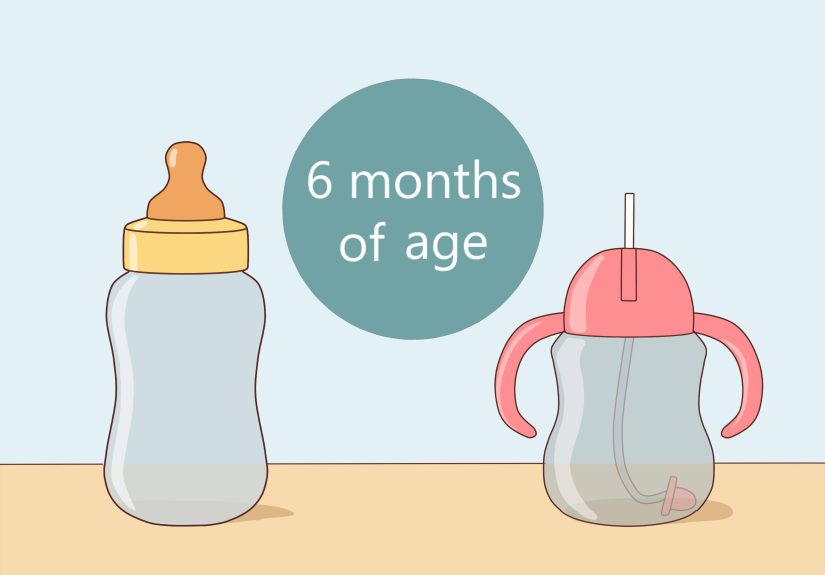
Self-feeding usually starts in stages. First comes curiosity. Then grabbing. Then smashing food like a tiny food critic with no editorial standards. Then eventually, actual eating. Most babies are ready to begin learning about solids around 6 months, especially when they can sit with support, bring hands or objects to their mouth, and show interest in food. From there, finger feeding and spoon practice develop gradually.
If your baby can sit upright, reach for food, and bring things to their mouth, you can begin encouraging self-feeding in age-appropriate ways. Pincer grasp, the thumb-and-finger pickup that makes tiny bits of food possible, often appears later. Before that, babies may rake food into their palms or grip larger soft pieces with the whole hand. That still counts as progress.
How to Help Your Child Hold Their Own Bottle Safely
1. Start with positioning, not independence
A baby who is slumped, distracted, or half-reclined like a sleepy CEO at the end of a long quarter is not set up for success. Hold your baby in a semi-upright, supported position during bottle feeds. Good alignment helps them suck, swallow, breathe, and stay engaged. Before you even think about independence, make sure feeding posture is solid.
2. Let them participate with both hands
Instead of handing over the entire bottle and hoping for a miracle, begin by letting your baby place one or both hands on it while you still support the weight. This teaches the feeling of gripping, stabilizing, and guiding the bottle without making the task too hard too soon. Think of it as co-piloting the bottle.
You can gently guide their hands toward the middle of the bottle where the grip is easiest. Some babies do better with a lighter, smaller bottle because it is easier to control. If the bottle is full and heavy, it may be harder for your baby to keep it steady.
3. Offer short practice windows
Try giving your baby brief chances to hold part of the bottle during a calm feed. Maybe they do it for five seconds. Maybe ten. Maybe they proudly hold it upside down and milk goes nowhere useful. That is still practice. Short, successful attempts are better than turning every feeding into a test.
4. Watch feeding cues closely
Even if your baby can hold the bottle, they still need supervision. Watch for signs they are done, need a break, or are losing coordination. Let them pause. Burp when needed. Reposition when needed. Feeding independence should not replace responsive care.
5. Never prop the bottle
This one deserves bold print and a drumroll: do not prop the bottle. Propped bottles can increase the risk of choking, ear infections, tooth decay once teeth are in, and overfeeding. Your baby should always be actively supervised during bottle feeds, even if they are learning to help hold it.
How to Teach Self-Feeding Without Losing Your Mind
1. Accept that mess is part of the curriculum
Self-feeding is not neat. It is not supposed to be neat. Babies learn by touching, squeezing, dropping, smearing, tasting, and repeating. If you expect a baby to self-feed while preserving your dining area like a museum exhibit, you are setting yourself up for heartbreak and rogue avocado.
Use a wipeable mat, a bib that means business, and clothing you do not mind sacrificing to the cause. Once you stop treating mess as failure, feeding gets much easier.
2. Start with easy wins
Offer soft foods your baby can pick up, gum, and swallow safely. Good starter options may include soft banana pieces, avocado, scrambled egg, well-cooked pasta, soft-cooked vegetables, ripe pear, shredded chicken, or toast strips that soften easily. The food should match your child’s skill level and be cut in a safe size and texture.
A helpful rule is simple: if the food is hard, round, slippery, or sticky in a scary way, it probably needs to be modified or skipped for now. Whole grapes, popcorn, nuts, chunks of raw vegetables, hot dog rounds, and thick globs of nut butter are famous for all the wrong reasons.
3. Use a preloaded spoon
One of the easiest ways to encourage self-feeding is to load a baby spoon for your child and let them bring it to their own mouth. You can also offer a second spoon for them to hold while you feed with another. This trick is surprisingly effective. Babies love having a job, even when they perform it with the confidence of someone who has never once checked the instructions.
4. Offer finger foods and spoon foods together
You do not have to choose one method like you are picking teams in a schoolyard. Many families do best with a flexible approach. Offer some soft finger foods for exploration and some spoon-fed foods for practice and nutrition. A mixed method can lower stress while still building skills.
5. Keep portions small
Babies do better with a few manageable pieces on the tray rather than a mountain of options. Too much food can overwhelm them, create more throwing, and make it harder for them to focus on the actual skill of eating. Tiny portions are your friend. Refills exist. We have the technology.
6. Repeat, repeat, repeat
One of the biggest secrets of baby feeding is that interest is wildly inconsistent. A baby may reject a food six times and then devour it on the seventh try like it just won a major award. Keep offering familiar foods and new foods without drama. Repetition builds comfort.
The Bottle Question: Should You Push This Skill?
Here is the honest answer: not really. You can encourage your baby to participate in holding the bottle, but it should not become the main goal. Why? Because bottles are meant to be a temporary tool. Cup skills and solid-food skills are the more useful long-term milestones.
If your baby is moving toward drinking from a cup and learning to self-feed, you are heading in the right direction even if bottle-holding never becomes their signature move. Many parents are surprised to learn that the better question is often not, “How do I get my baby to hold the bottle?” but, “How do I help my baby transition away from needing bottles so much?”
As solids become more established, cup practice matters more. That transition helps support oral development, independent drinking skills, and a smoother move away from bottles over time.
Best Daily Habits That Make Self-Feeding Easier
Create a predictable mealtime routine
Babies learn faster when meals happen in a familiar rhythm. Sit in the same spot. Use the same chair. Offer food when your baby is alert and hungry but not wildly hungry. A baby who is calm learns better than a baby who is furious that lunch did not arrive 37 seconds sooner.
Let hunger and fullness do some of the teaching
Responsive feeding matters. Offer food, but do not force bites or chase your child around the room like a well-meaning food drone. Babies are born with a strong ability to respond to hunger and fullness. Pressuring them can make meals more stressful and less productive. Your role is to provide the food and the opportunity. Your child’s role is to decide how much to eat from what is offered.
Model the behavior
Babies are professional copycats. Eat in front of them. Exaggerate bringing your spoon to your mouth. Sip from a cup. Show interest in the food. Family meals, even imperfect ones, can make self-feeding feel normal and interesting.
Practice hand skills outside meals
Feeding skills are tied to general motor skills. Let your baby play with teethers, grasping toys, soft blocks, and safe household items that encourage reaching and bringing things to the mouth. The more coordination they build outside meals, the easier mealtime skills become.
Common Mistakes Parents Make
Waiting for a “perfect” moment
There is rarely a flawless day to begin. If your baby shows readiness signs, you can start small. Waiting too long can sometimes make new textures and self-feeding feel more unfamiliar than they need to be.
Offering food that is too difficult
Babies need foods that are soft enough, small enough, and safe enough for their current skill level. When food is too hard or slippery, frustration goes up and confidence goes down.
Overhelping
Yes, this is a thing. Parents often swoop in too fast because they want the baby to “actually eat.” Understandable. But if you never let your child try, they do not get the practice. Give them room to attempt the skill before rescuing the spoon.
Turning meals into a performance review
If every meal feels like an exam, babies pick up on that tension. Keep your face relaxed, your expectations realistic, and your sense of humor available. Feeding progress is usually uneven. Two good days may be followed by one deeply confusing day where your child throws peas like confetti. This is not a moral failure.
Using the bottle to solve every feeding problem
When solids feel slow, some parents lean harder on bottles. Sometimes that is necessary for growth or convenience, and that is okay. But if bottles crowd out opportunities to practice cups, finger foods, and spoon use, independence may develop more slowly. Balance matters.
When to Talk to Your Pediatrician
Reach out if your baby cannot sit with support by the time solids are being considered, gags excessively with most textures, refuses all finger foods over time, seems to cough or choke often during meals, has poor weight gain, avoids bringing hands to the mouth, or shows a broad delay in hand use or coordination. Feeding skills live at the intersection of development, nutrition, and safety, so it is smart to ask early if something feels off.
You should also check in if your child is still very bottle-dependent well past the point when cup and solid skills should be taking over, or if meals have become a constant battle. Sometimes parents just need reassurance. Sometimes a feeding therapist or occupational therapist can help. Either way, getting support is a strength move, not a panic move.
What Real-Life Experience Often Looks Like for Parents
In real homes, feeding progress almost never unfolds in a straight line. One parent may notice their baby suddenly gripping the bottle with both hands for half a feeding, then refusing to do it again for a week. Another may feel thrilled that their child finally picked up a spoon, only to discover the spoon was mainly used as a catapult for oatmeal. This is normal. Development often arrives in bursts, followed by detours, distractions, and what appears to be deliberate anti-schedule behavior.
Many parents say the most helpful shift was changing their expectation from “my child should eat independently now” to “my child is learning the pieces of independence.” That mindset makes a huge difference. Instead of looking for a perfect self-fed meal, they start noticing smaller wins: the baby keeps one hand on the bottle, reaches for the spoon, picks up a banana slice, drinks a few sips from a cup, or stays seated longer at the table. Those smaller steps are the real building blocks.
Parents also often discover that mood, timing, and hunger level matter more than the exact menu. A baby may reject avocado at dinner when tired, then eat it happily at lunch the next day. A child who refuses to self-feed when ravenous may do much better with a few calm bites from a caregiver first, then some tray practice afterward. Families who stay flexible usually feel less frustrated than families who try to make every meal prove a point.
Another common experience is that babies seem more interested in “real food” when they see adults eating it too. Parents often report better success when they sit down and eat alongside their child instead of serving the baby separately and hovering like a nervous restaurant inspector. Babies love imitation. If everyone at the table is chewing, sipping, dipping, and looking pleased, your child may be far more motivated to join the action.
There is also the emotional side. Some parents secretly feel guilty when their baby is late to bottle-holding or self-feeding compared with a cousin, a friend’s child, or that wildly advanced baby on social media who apparently folds laundry between bites of zucchini. Comparison is brutal and rarely useful. What matters most is whether your own child is progressing, staying safe, and growing well. Different babies take different routes to the same destination.
Perhaps the most repeated lesson from parents is this: pressure usually backfires. The more they begged, insisted, entertained, or micromanaged, the worse meals became. When they backed off, created a routine, offered safe foods, and let their baby explore, progress often followed. Not overnight. Not with cinematic music swelling in the background. But steadily.
So if your current feeding journey feels messy, inconsistent, and occasionally absurd, you are probably not doing it wrong. You are probably just parenting a baby. Keep the setup safe, the food appropriate, the expectations realistic, and the opportunities frequent. Over time, the bottle grip gets steadier, the spoon lands closer to the mouth, and the child who once wore more yogurt than they ate eventually becomes a small person who can manage lunch with surprising authority.
Final Thoughts
If you want your child to hold their own bottle and self-feed, the smartest approach is simple: build skills gradually, keep feeding safe, and resist the urge to rush. Encourage participation, but do not confuse pressure with progress. Offer support, but leave room for practice. Focus on posture, readiness, texture, repetition, and responsiveness.
And remember, the long game matters most. The goal is not to create the world’s youngest tidy eater. The goal is to help your child become a confident, capable, safe eater over time. If that journey includes mess, missed spoons, and one absolutely mysterious noodle behind the high chair, congratulations. You are right on schedule.




 Close
Close