
Table of Contents >> Show >> Hide
- Why Guinea Pig Trust Takes Time
- How to Get Your Guinea Pig to Trust You: 14 Steps
- 1. Give Your Guinea Pig Time to Settle In
- 2. Create a Safe, Comfortable Habitat
- 3. Sit Near the Cage Without Asking for Anything
- 4. Use a Gentle, Consistent Voice
- 5. Let Your Guinea Pig Smell Your Hand
- 6. Offer Treats From Your Hand
- 7. Learn Your Guinea Pig’s Body Language
- 8. Avoid Chasing Your Guinea Pig Around the Cage
- 9. Pick Up Your Guinea Pig the Right Way
- 10. Keep Lap Time Short and Positive
- 11. Build a Predictable Daily Routine
- 12. Provide Enrichment and Floor Time
- 13. Respect Your Guinea Pig’s Personality
- 14. Watch for Health or Stress Problems
- Common Mistakes That Slow Down Trust
- How Long Does It Take for a Guinea Pig to Trust You?
- Best Treats for Building Guinea Pig Trust
- Experience Notes: What Trust-Building Looks Like in Real Life
- Conclusion
Winning a guinea pig’s trust is not like winning a goldfish at a fair. You do not simply bring home a fluffy potato, place it in a cage, and expect instant friendship. Guinea pigs are prey animals, which means their tiny internal alarm system is set to “Is that a hawk?” almost 24/7. Your job is to become the opposite of a hawk: calm, predictable, gentle, snack-bearing, and wonderfully boring in the best possible way.
The good news? Guinea pigs are social, curious, food-motivated, and capable of forming sweet bonds with their humans. They may learn your voice, run to the front of the enclosure when you appear, wheek for vegetables, relax in your lap, or even popcorn around like tiny furry popcorn kernels. Trust does not happen overnight, but with patience and consistency, your guinea pig can learn that you are not a giant grabby monster. You are the nice salad person. That is a powerful reputation.
This guide breaks down how to get your guinea pig to trust you in 14 practical steps, from setting up a safe environment to reading body language, offering treats, handling correctly, and building a daily routine your cavy can count on.
Why Guinea Pig Trust Takes Time
Before you start bonding, it helps to understand your guinea pig’s point of view. In the wild, small animals survive by being suspicious of sudden movement, loud noise, and anything approaching from above. Even a well-bred pet guinea pig still carries those instincts. When your guinea pig freezes, hides, squeaks, or bolts away, it is not being rude. It is running an ancient security program called “Please Do Not Eat Me.”
Trust grows when your guinea pig repeatedly experiences the same simple lesson: you bring safety, food, comfort, and gentle interaction. The more predictable you are, the faster your guinea pig can relax.
How to Get Your Guinea Pig to Trust You: 14 Steps
1. Give Your Guinea Pig Time to Settle In
The first few days in a new home can be overwhelming. New smells, sounds, bedding, food bowls, and human faces all arrive at once. Instead of trying to cuddle immediately, let your guinea pig settle into the enclosure. Keep the room calm, speak softly, and avoid unnecessary handling.
During this adjustment period, focus on quiet observation. Refill hay, water, and pellets gently. Offer vegetables near the hideout without forcing your piggy to come out. Think of yourself as a respectful hotel employee: fresh towels, room service, no dramatic entrances.
2. Create a Safe, Comfortable Habitat
A guinea pig is more likely to trust you when its home feels secure. A roomy enclosure with solid flooring, clean bedding, fresh water, unlimited hay, and at least one hideout per guinea pig helps reduce stress. Avoid wire floors because they can injure delicate feet. Place the cage in a quiet area away from barking dogs, loud televisions, slamming doors, and heavy foot traffic.
Hideouts are especially important. Some owners worry that giving a guinea pig a hiding place will make it “less social.” In reality, a safe place to retreat often makes a guinea pig braver. When your pet knows it can hide, it may feel more confident exploring.
3. Sit Near the Cage Without Asking for Anything
One of the easiest trust-building exercises is simply being nearby. Sit beside the enclosure and read, do homework, scroll quietly, or talk in a soft voice. Do not reach in. Do not chase. Do not attempt a dramatic friendship speech. Just exist calmly.
This teaches your guinea pig that your presence does not always mean handling. Over time, your pet may begin sniffing, peeking out, or approaching the front of the cage. That is progress. Tiny progress still counts.
4. Use a Gentle, Consistent Voice
Guinea pigs have strong hearing and can become startled by sudden noises. Use a calm voice whenever you enter the room, feed them, clean the cage, or offer treats. Repeating the same friendly phrase can help your guinea pig connect your voice with good things.
For example, you might say, “Hi, little bean,” every time you bring vegetables. Will your guinea pig understand the exact words? Probably not. Will it understand that the “little bean” sound often predicts lettuce? Absolutely. Guinea pigs are tiny snack economists.
5. Let Your Guinea Pig Smell Your Hand
Before touching your guinea pig, allow it to investigate your hand. Place your hand low and still inside or near the enclosure. Avoid reaching from above, which can feel threatening. Let your guinea pig sniff you at its own pace.
If your guinea pig runs away, do not follow. Keep the interaction short and positive. The goal is not to win the entire trust marathon in one afternoon. The goal is to end each session with your guinea pig thinking, “Well, that was not terrible.”
6. Offer Treats From Your Hand
Hand-feeding is one of the best ways to build guinea pig trust. Start with safe, guinea-pig-friendly vegetables such as small pieces of bell pepper, romaine lettuce, cilantro, parsley, or cucumber. Hold the food still and let your guinea pig come to you.
At first, your piggy may snatch the treat and sprint away like it just robbed a vegetable bank. That is normal. Over time, it may stay closer while eating, then eventually nibble calmly near your hand. Treats should be part of a balanced diet, not an all-day buffet, but a small veggie reward can turn you into a trusted part of the daily routine.
7. Learn Your Guinea Pig’s Body Language
Trust grows faster when you listen to what your guinea pig is telling you. A relaxed guinea pig may explore, groom, stretch out, eat comfortably, or make soft conversational sounds. A frightened guinea pig may freeze, hide constantly, chatter teeth, squeal sharply, tremble, or try to escape.
If your guinea pig shows fear, pause. Back up a step. Trust is not built by proving you are stronger; it is built by proving you are safe. Respecting “not today, human” is one of the most trust-building things you can do.
8. Avoid Chasing Your Guinea Pig Around the Cage
Nothing ruins a bonding session faster than a high-speed chase around the enclosure. To a guinea pig, being chased feels like a predator attack, even if your intention is just a quick cuddle. Instead, guide your guinea pig gently into a hidey, cuddle sack, or small carrier when you need to pick it up.
You can also train your guinea pig to enter a cozy tunnel or hideout voluntarily by placing a treat inside. Then lift the tunnel carefully and transfer your piggy to your lap or play area. Less chasing means less stress, and less stress means more trust.
9. Pick Up Your Guinea Pig the Right Way
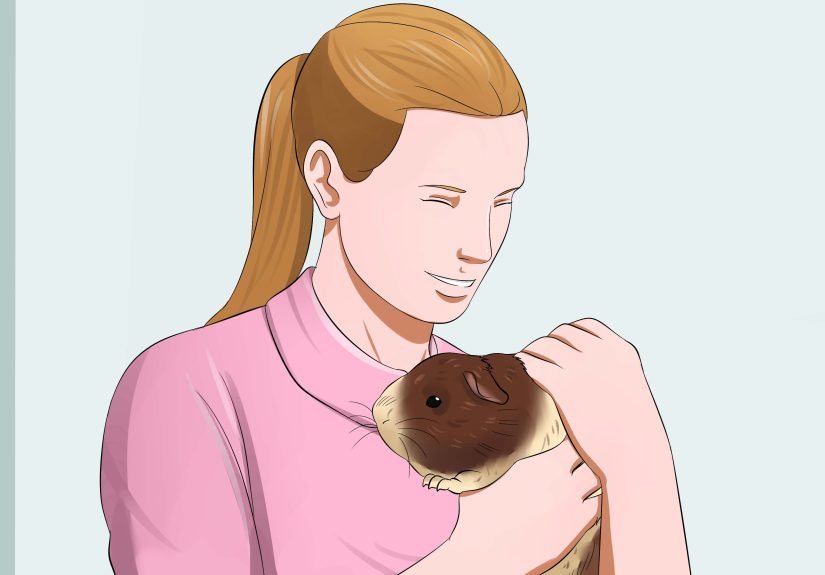
When handling is necessary, use both hands. Support the chest and belly with one hand and the hindquarters with the other. Hold your guinea pig close to your body so it feels secure. Sit on the floor or over a soft surface, especially if your pet is new, nervous, or wiggly.
Never grab a guinea pig from above or lift it by the scruff, legs, or fur. Guinea pigs are fragile, and a fall can cause serious injury. Proper handling tells your pet, “I have you,” not “Congratulations, you are now airborne.”
10. Keep Lap Time Short and Positive
Once your guinea pig tolerates being picked up, begin with short lap sessions. Place a towel or fleece blanket on your lap, offer a small treat, and keep the mood calm. Five minutes of peaceful lap time is better than twenty minutes of squirming, stress, and betrayal.
Watch for signs that your guinea pig has had enough, such as restlessness, repeated attempts to leave, sharp squeaks, or nipping. End before your piggy gets upset. A good ending makes the next session easier.
11. Build a Predictable Daily Routine
Guinea pigs thrive on routine. Try to feed, clean, talk, and interact at similar times each day. Your guinea pig may learn that morning means hay refresh, evening means vegetables, and your footsteps mean something exciting is about to happen.
Predictability is comforting. When your guinea pig can anticipate what comes next, it has fewer reasons to panic. You become part of the rhythm of the home instead of a random giant appearing without warning.
12. Provide Enrichment and Floor Time
A bored guinea pig may become stressed or withdrawn. Enrichment gives your pet safe ways to explore, chew, forage, and exercise. Try tunnels, paper bags with the handles removed, cardboard boxes, hay piles, chew toys, fleece forests, and supervised floor time in a guinea-pig-proofed area.
During floor time, sit nearby and let your guinea pig approach you. Place a few veggies around your legs or on a blanket. Curiosity plus snacks often leads to brave little investigations. Your guinea pig may climb onto your lap eventually, especially if your lap has a reputation for excellent produce.
13. Respect Your Guinea Pig’s Personality
Some guinea pigs become lap-loving cuddle champions. Others prefer gentle head pets, hand-fed snacks, or simply hanging out nearby. Trust does not always look like cuddling. Sometimes trust looks like your guinea pig eating while you sit close. Sometimes it looks like coming to the cage door. Sometimes it looks like not running away when you refill hay.
A confident relationship honors your pet’s personality. Do not compare your guinea pig to videos online. Social media guinea pigs may look like tiny teddy bears with perfect manners, but behind every calm cuddle clip is probably a long history of patience, snacks, and someone cleaning up an impressive amount of poop.
14. Watch for Health or Stress Problems
If your guinea pig suddenly becomes withdrawn, stops eating, hides constantly, changes bathroom habits, breathes strangely, loses weight, or acts unusually aggressive, do not assume it is just a trust issue. Guinea pigs can hide illness, and behavior changes may signal pain, fear, boredom, or a medical problem.
Contact an exotic-pet veterinarian if you notice worrying changes. A healthy guinea pig is more likely to bond, explore, and interact. Trust starts with good care.
Common Mistakes That Slow Down Trust
Moving Too Fast
The biggest mistake is expecting instant affection. Guinea pigs need repetition. If your piggy is still nervous after a week, that does not mean you failed. It means you are working with a small prey animal, not a golden retriever in a guinea pig costume.
Only Interacting During Cage Cleaning
If every human interaction involves moving bedding, lifting hideouts, or rearranging the home, your guinea pig may associate you with disruption. Balance cleaning with calm visits, treats, and quiet companionship.
Letting Children Handle Without Supervision
Children can form wonderful bonds with guinea pigs, but adults should guide handling. Guinea pigs are delicate and easily startled. Teach children to sit down, use soft voices, support the body, and stop when the guinea pig seems uncomfortable.
Ignoring the Need for Guinea Pig Companionship
Human attention is valuable, but guinea pigs are social animals and often do best with another compatible guinea pig. A bonded cage mate can reduce loneliness and help a nervous guinea pig feel safer. Same-sex pairs or properly spayed/neutered pairings are generally preferred to prevent accidental litters.
How Long Does It Take for a Guinea Pig to Trust You?
Some guinea pigs begin approaching their owners within a few days. Others need several weeks or even months. Age, past handling, personality, environment, health, and daily routine all matter. A young guinea pig from a calm home may warm up quickly. A rescue guinea pig with limited socialization may need more time.
Measure progress in small signs: taking food from your hand, staying out while you clean, allowing gentle pets, relaxing during lap time, wheeking when you enter, or exploring near you during floor time. These are all trust milestones. Celebrate them. Quietly, though. No confetti cannon. Guinea pigs do not appreciate confetti cannons.
Best Treats for Building Guinea Pig Trust
Fresh vegetables are usually the best trust-building treats. Small pieces of bell pepper are popular because they are crunchy and contain vitamin C. Many guinea pigs also enjoy romaine lettuce, cilantro, parsley, cucumber, carrot tops, and small occasional pieces of fruit. Introduce new foods gradually and avoid overfeeding sugary treats.
Hay should always be available, and treats should never replace a balanced diet. Think of vegetables as tiny trust coupons. Use them wisely and your guinea pig may decide you are the most interesting creature in the room.
Experience Notes: What Trust-Building Looks Like in Real Life
In real life, getting a guinea pig to trust you is rarely a straight line. One day your piggy may take cilantro from your fingers like a brave little knight. The next day it may flee because you wore a different hoodie. This is normal. Guinea pigs notice details, and they are not embarrassed about being dramatic.
A common experience for new owners is the “vegetable snatch and dash.” You offer a piece of pepper, your guinea pig creeps forward, grabs it, and disappears into a hideout at Olympic speed. Do not be discouraged. That quick dash still means your guinea pig was brave enough to approach. After several days of calm hand-feeding, many guinea pigs begin eating closer to the hand. Eventually, some will stay in the open while munching. That is a major trust upgrade.
Another real-life lesson: lap time often works better when it starts with a blanket. A soft fleece towel gives your guinea pig traction and a cozy place to settle. Bare laps can feel slippery and exposed. Add a small piece of lettuce, keep your hands still, and let your guinea pig relax. Some piggies will sit quietly. Others will explore your sleeves, nibble the blanket, or attempt to climb your shirt like a tiny mountaineer. Stay calm and guide them gently.
Many owners also discover that guinea pigs trust routines more than grand gestures. A piggy may not care that you bought the fanciest toy in the pet store, but it will notice that you bring hay every morning and speak softly every evening. Trust is built through ordinary repetition. The magic is not one perfect bonding session; it is hundreds of small, safe moments stacked together.
There will also be setbacks. Nail trims, vet visits, cage deep-cleaning, loud storms, or accidental sudden movements can make a guinea pig nervous again. That does not erase your bond. After stressful events, return to basics: quiet voice, hand-fed treats, no chasing, short sessions, and predictable care. Your guinea pig can recover confidence when you remain patient.
One of the sweetest signs of trust is when your guinea pig starts communicating with you. It may wheek when it hears the fridge open, rumble softly during social moments, stretch out near you, or come to the cage door when you enter. These little behaviors are easy to miss if you expect dog-like affection. Guinea pig love is quieter, funnier, and often shaped like a bell pepper transaction.
The best experience-based advice is simple: become part of your guinea pig’s safe world. Move slowly. Feed thoughtfully. Handle gently. Respect boundaries. Keep showing up. Over time, your guinea pig may stop seeing you as a suspicious giant and start seeing you as a trusted member of the herd. A very tall, oddly hairless herd member, yesbut a beloved one.
Conclusion
Learning how to get your guinea pig to trust you is really about learning how to see the world through your guinea pig’s eyes. Your pet is small, cautious, sensitive, and wonderfully food-motivated. When you offer a safe habitat, gentle handling, consistent routines, quiet companionship, and healthy treats, you give your guinea pig reasons to relax.
Trust is not forced. It is invited. Let your guinea pig move at its own pace, celebrate small steps, and keep every interaction as positive as possible. With time, your nervous little cavy may become a confident companion who recognizes your voice, greets you for snacks, and maybe even settles into your lap like royalty on a fleece throne.




 Close
Close