
Table of Contents >> Show >> Hide
- Introduction: Old Does Not Automatically Mean Simple
- What Counts as an Antique Firearm Under Federal Law?
- Antique Firearm vs. Curio and Relic: Cousins, Not Twins
- Why State and Local Laws Matter So Much
- Documentation: The Collector’s Best Friend
- Condition, Modification, and Legal Risk
- Inherited Antique Firearms: Family History With Fine Print
- Safe Storage Is Not Optional
- Transportation and Display: Know the Rules Before Moving Anything
- Common Mistakes Antique Firearm Owners Should Avoid
- Practical Examples of Legal Classification Questions
- Insurance, Appraisal, and Preservation
- Responsible Ownership Is About Stewardship
- Collector Experience: Lessons From the World of Antique Firearm Research
- Conclusion: Legal Antique Firearm Ownership Requires Care, Not Guesswork
Important note: This article is written as a general legal and safety overview for adult collectors, historians, museums, and responsible families researching antique firearms. It is not legal advice, not a purchase guide, and not a substitute for speaking with a qualified attorney or local law-enforcement authority. Firearm laws can change, and state or city rules may be stricter than federal law.
Introduction: Old Does Not Automatically Mean Simple
Antique firearms sit at the strange intersection of history, law, craftsmanship, and “wait, is that really from 1873?” For many collectors, these objects are less about modern use and more about preservation: family heirlooms, museum pieces, Civil War-era long guns, frontier-era revolvers, early black-powder designs, and other artifacts that tell a story older than most state DMVs and considerably more interesting.
But here is the catch: in the United States, the word antique has a specific legal meaning. A firearm can look ancient enough to have crossed the Oregon Trail and still be regulated like a modern firearm if it does not fit the legal definition. On the other hand, some genuinely old designs fall outside certain federal firearm-control rules, while still being restricted by state, local, transportation, storage, or public-safety laws.
That is why the safest way to approach antique firearm ownership is not with assumptions, internet folklore, or “my cousin said it is fine.” The better approach is documentation, caution, adult responsibility, and a clear understanding that federal law is only the starting linenot the finish line.
What Counts as an Antique Firearm Under Federal Law?
Under the federal Gun Control Act, the term antique firearm generally includes firearms manufactured in or before 1898. That date matters. It is not “about 100 years old,” not “looks old,” and not “Grandpa said it was old.” The federal line is tied to manufacture date and certain design features.
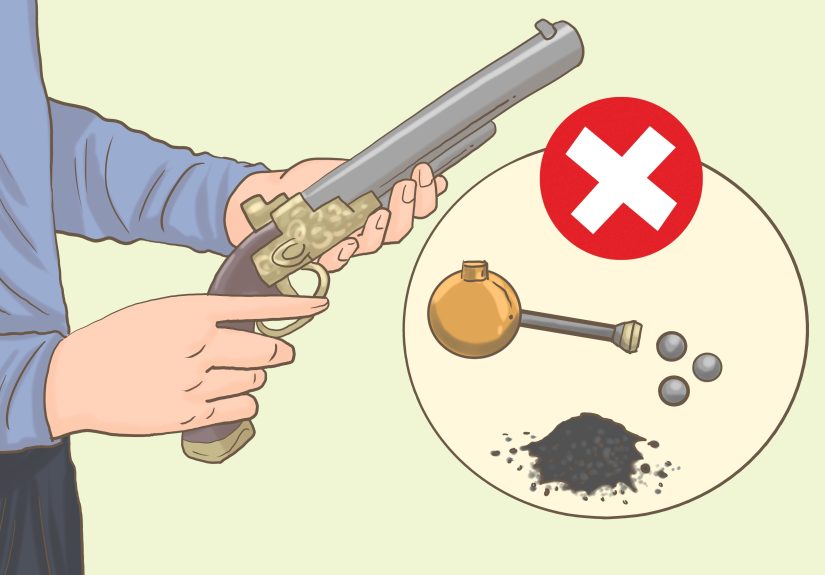
Federal law also includes some replicas of qualifying antique firearms, but only when they are not designed or redesigned to use conventional modern fixed ammunition, or when they use ammunition that is no longer manufactured in the United States and is not readily available through ordinary commercial channels. Muzzle-loading rifles, shotguns, and pistols designed for black powder or black-powder substitutes may also fall within the federal antique definition, provided they cannot use fixed ammunition.
That sounds simple until it is not. A wall-hanger from the 1800s may fit neatly into the antique category. A reproduction that accepts modern ammunition may not. A muzzleloader that can be readily converted to fire fixed ammunition may be treated differently. A firearm with a modern receiver, altered action, or questionable parts history can also raise legal problems.
Antique Firearm vs. Curio and Relic: Cousins, Not Twins
Many people confuse antique firearms with curios and relics, often called C&R firearms. They overlap in collector culture, but they are not the same legal category.
A curio or relic firearm is generally a firearm of special interest to collectors because of age, rarity, historical association, museum interest, or similar collector value. Many C&R firearms are at least 50 years old and in original configuration, but that does not automatically make them antiques under the federal antique-firearm definition. For example, a firearm made in 1965 may be old enough to interest collectors, but it is not an “antique firearm” under the federal 1898 cutoff.
Think of it this way: “antique firearm” is a legal definition with a specific federal meaning. “Curio and relic” is a collector-focused category that can still involve modern firearm regulations. Mixing them up is like calling every old car a Model T. Charming, but legally unhelpful.
Why State and Local Laws Matter So Much
Even when an item qualifies as an antique firearm under federal law, state and local laws may still regulate possession, transportation, storage, display, transfer, or use. Some states follow the federal definition closely. Others add restrictions. Cities may impose additional rules, especially in densely populated areas or places with strict firearm ordinances.
This is the part of antique firearm ownership where responsible collectors slow down. Federal law may answer one question, but it does not answer all of them. A state may define antique firearms differently. A local ordinance may restrict possession in certain settings. Rules can also differ for handguns, long guns, black-powder arms, replicas, inherited items, and items brought across state lines.
The safest habit is to verify the law where the item is located, where it will be stored, and where it may be transported. A collection that is lawful in one state may create headaches in another. Legal compliance is not a road trip snack; you cannot just pick it up at the gas station when you remember.
Documentation: The Collector’s Best Friend
For antique firearm collectors, documentation is everything. A responsible collector keeps records showing manufacture date, model, serial number if present, provenance, appraisal notes, family history, museum letters, repair records, and any expert evaluations. The older the object, the more valuable good documentation becomes.
Documentation helps establish whether an item may qualify as an antique under federal law. It can also help separate a historically important object from a suspiciously modified one. If a firearm has been refinished, rebuilt, re-barreled, converted, or assembled from parts, records may help clarify what it actually is.
A simple file folder can save a mountain of confusion. Include photographs, written descriptions, dates, correspondence with qualified appraisers, and any legal opinions received from professionals. Digital copies are useful too, because paper has a magical talent for disappearing exactly when you need it.
Condition, Modification, and Legal Risk
Condition matters for historical value, but modification matters for both value and legal status. An original nineteenth-century firearm preserved as a collector’s item is not the same as an altered object with modern components. Changes to the receiver, ignition system, barrel, chambering, or ammunition compatibility can affect how the item is classified.
This is especially important with replicas and muzzleloaders. A replica that resembles a pre-1899 firearm may not qualify as an antique if it is designed for modern ammunition. A muzzleloader may raise legal concerns if it incorporates a modern firearm frame or receiver, was converted from a modern firearm, or can be readily converted to fire fixed ammunition.
When in doubt, do not guess. Responsible collectors seek a qualified legal opinion, professional appraisal, or official classification guidance when appropriate. Guessing wrong can turn a hobby into a legal problem faster than you can say, “But it looked old on the mantel.”
Inherited Antique Firearms: Family History With Fine Print
Many antique firearms enter a household through inheritance. A family member passes down an old rifle, revolver, shotgun, or black-powder arm along with a story about a great-grandparent, a farm, a war, or a dusty attic. These stories are meaningful, but the law still matters.
If an antique firearm is inherited, the responsible next step is to identify it carefully and determine whether the person receiving it may legally possess it under federal, state, and local law. Estate rules, probate issues, state firearm statutes, and restrictions on possession can all matter. Some heirs may not be legally allowed to possess firearms at all, and some jurisdictions regulate antique arms more strictly than federal law does.
For families, the safest path is often to involve an estate attorney, a qualified appraiser, or a licensed professional familiar with firearm regulations. This is not about making family history less personal. It is about making sure that a meaningful heirloom does not become an accidental legal problem.
Safe Storage Is Not Optional
Responsible ownership begins with safe storage. Antique firearms may be old, fragile, decorative, or nonfunctional, but they should still be treated with seriousness. Some old firearms can remain mechanically capable of firing. Others may be unsafe to handle. Even an item believed to be unloaded should be handled only by trained adults who understand firearm safety.
Secure storage helps prevent unauthorized access, theft, accidents, and damage to the artifact. Collectors commonly focus on humidity control, rust prevention, wood preservation, and display security. A locked cabinet or safe, proper environmental conditions, and separate secure storage for any related components are basic parts of responsible stewardship.
Families should also consider who has access to the storage area. A historically valuable object can still be dangerous if handled carelessly. A safe collection is one that is protected from both physical deterioration and human bad decisionsthe two great enemies of antiques, along with basement moisture and overconfident relatives.
Transportation and Display: Know the Rules Before Moving Anything
Transporting antique firearms can involve different laws depending on the item, the jurisdiction, and the destination. Moving an antique from one home to another, taking it to an appraiser, loaning it to a museum, or crossing state lines may all raise separate legal questions.
Public display also deserves caution. A collector may view an antique as a historical object, but the public may see only a firearm. Museums, historical societies, and educational displays usually operate with written policies, insurance rules, security plans, and legal review. Private collectors should take the same mindset, even if their “museum” is one glass cabinet and a very patient spouse.
Before moving or displaying an antique firearm, confirm the applicable rules, use secure handling practices, and avoid informal assumptions. If the item has uncertain legal status, resolve that uncertainty before transportation.
Common Mistakes Antique Firearm Owners Should Avoid
Assuming Age Alone Solves Everything
Age is important, but it is not the only issue. The date of manufacture, ammunition type, design, modifications, receiver status, and local law can all affect classification.
Confusing Decorative With Legal
A firearm hanging on a wall may look decorative, but appearance does not determine legal status. A dusty object can still be legally significant.
Ignoring State Law
Federal antique status does not erase state and local rules. Responsible collectors check all relevant jurisdictions.
Skipping Documentation
Without records, proving age, authenticity, or classification becomes much harder. Collectors should keep clear written and photographic documentation.
Handling Without Expertise
Old firearms may be fragile, damaged, loaded, or unsafe. Handling should be cautious and limited to trained, responsible adults.
Practical Examples of Legal Classification Questions
Consider a rifle manufactured in 1895. If documentation supports that date and the item has not been altered in a way that changes its legal classification, it may fit the federal antique definition. But state law still matters, and ownership restrictions may still apply to the person possessing it.
Now consider a modern replica of an old revolver design. If it is designed to use conventional modern ammunition, it may not qualify as an antique firearm under federal law, even if it looks like something from a Western film. The hat may be vintage; the legal category may not be.
Finally, consider a black-powder muzzleloader. Many muzzle-loading designs fall within the federal antique firearm definition, but not all do. If the item uses a modern firearm receiver or can be readily converted to fire fixed ammunition, the analysis changes.
These examples show why antique firearm law is less about vibes and more about definitions. The law does not care if an item looks like it belongs beside a leather-bound history book. It cares about manufacture date, design, function, parts, and jurisdiction.
Insurance, Appraisal, and Preservation
Legal ownership is only one part of responsible collecting. Antique firearms may have historical, sentimental, and financial value. Insurance and appraisal can help protect that value. A qualified appraiser can assess authenticity, condition, rarity, and market context. Insurance providers may ask for documentation, photographs, secure storage details, and updated valuations.
Preservation is equally important. Antique metal and wood can be damaged by moisture, heat, careless cleaning, and amateur restoration. Over-cleaning can reduce value. Aggressive polishing may remove original finish, markings, or patina. In the antiques world, “shiny” is not always “better.” Sometimes shiny just means someone attacked history with enthusiasm and the wrong cloth.
Collectors should seek conservation advice before attempting repairs or restoration. For historically significant pieces, museum-style preservation may be preferable to cosmetic improvement.
Responsible Ownership Is About Stewardship
The best antique firearm collectors think like stewards, not thrill-seekers. They care about provenance, safety, law, and preservation. They understand that these objects may outlive them and become part of a family archive, museum exhibit, or historical collection.
That mindset changes everything. It encourages careful documentation, secure storage, professional advice, and respect for legal boundaries. It also discourages risky behavior, casual handling, and assumptions based on internet chatter.
Owning an antique firearm legally in the United States is not just about whether an item meets a definition. It is about whether the owner understands the responsibilities that come with possessing a historically important and potentially dangerous object.
Collector Experience: Lessons From the World of Antique Firearm Research
One of the most useful experiences in antique firearm collecting is learning that every object has two histories: the story people tell about it and the story the object can prove. The first may be charming. The second is what matters when law, value, and preservation enter the room.
A family might say, “This belonged to a Civil War soldier.” That may be true, partially true, or family folklore that grew taller every Thanksgiving. A responsible collector does not mock the story; they investigate it. They compare markings, manufacturing dates, model features, historical records, and expert opinions. Sometimes the research confirms the legend. Sometimes it reveals a different story that is just as interesting.
Another common experience is discovering that condition is complicated. New collectors often assume that restoring an antique firearm will increase value. In many cases, the opposite is true. Original finish, honest wear, and untouched markings may be more desirable than a polished, refinished surface. The same principle applies to replacement parts. A piece that looks rough but remains historically original may be more significant than one made artificially pretty.
Collectors also learn patience. Identifying an antique firearm properly can take time. Serial-number ranges, maker marks, proof marks, patent dates, arsenal stamps, and configuration details may all matter. A single marking can change the interpretation. A missing record can create uncertainty. The best collectors are comfortable saying, “I do not know yet.” That sentence may not sound dramatic, but it prevents expensive and legally risky mistakes.
Legal caution is another lesson experienced collectors repeat often. Laws are not identical everywhere, and antique status is not a magic shield. Someone who moves from one state to another, inherits a collection, or loans an item for display should re-check the rules. The law cares about location, status, and context. Responsible collectors treat legal review as routine maintenance, like checking humidity levels or updating insurance records.
Storage is also part of the collector experience. Antique firearms need secure storage, but they also need environmental care. Too much humidity can damage metal. Poor display choices can harm wood. Direct sunlight can fade materials. Dust, fingerprints, and careless handling can leave long-term marks. The goal is not merely to lock an item away; it is to preserve it intelligently.
Finally, antique firearm collecting teaches humility. These objects often carry stories of conflict, craftsmanship, migration, industry, and family memory. They deserve more than casual treatment. A collector who approaches them responsibly becomes part historian, part caretaker, part paperwork enthusiast, and part person who owns more acid-free labels than expected. Glamorous? Not always. Responsible? Absolutely.
Conclusion: Legal Antique Firearm Ownership Requires Care, Not Guesswork
Legally owning an antique firearm in the United States begins with understanding the federal definition, but it does not end there. Adult collectors must consider state and local law, documentation, safe storage, transportation, inheritance issues, modifications, appraisal, and preservation. The smartest approach is slow, careful, and well-documented.
An antique firearm may be a family heirloom, a museum-quality artifact, or a fascinating piece of mechanical history. But it is still an object that demands respect. Treat it as history with legal responsibilities attached, and you will be far better prepared than someone relying on rumors, guesswork, or a dusty tag that says “old gun.”





 Close
Close