
Table of Contents >> Show >> Hide
- Why Baguette Pizzas Work So Well
- Choose the Right Bread for the Best Baguette Pizzas
- Ingredients for the Best Baguette Pizzas Recipe
- How to Make Baguette Pizzas
- Best Topping Combinations for Baguette Pizza
- Common Mistakes That Ruin Baguette Pizzas
- What to Serve with Baguette Pizzas
- How to Store and Reheat Leftovers
- Why This Is the Best Baguette Pizzas Recipe for Busy Cooks
- Baguette Pizza Experiences: What You Learn After Making Them Again and Again
- Conclusion
Baguette pizzas are what happens when pizza night stops overthinking things and still wins. You get crisp edges, a chewy center, bubbling cheese, and enough room for creativity without dealing with dough proofing, flour clouds, or an existential debate about hydration percentages. In other words, this is the kind of dinner that feels fun, tastes big, and gets to the table fast.
If you have ever wanted homemade pizza flavor in less time than delivery needs to “find a driver,” this baguette pizzas recipe is your new best trick. The secret is not just piling sauce and cheese onto bread and hoping for the best. The secret is balance: the right baguette, a quick pre-toast, a sensible amount of sauce, and toppings that know how to behave in a hot oven.
This guide walks you through exactly how to make baguette pizzas that are crispy, melty, flavorful, and gloriously unfussy. It also includes topping ideas, common mistakes, storage tips, and a longer section on real-life baguette pizza experiences, because this is one of those recipes you do not just cook once. You end up developing a relationship with it.
Why Baguette Pizzas Work So Well
Great baguette pizza lives in the sweet spot between toast and traditional pizza. The bread gives you structure, which means you can get a crisp base without wrestling with raw dough. A baguette also offers built-in portion control, although let us be honest, that noble concept tends to disappear somewhere around the second slice.
What makes the best baguette pizzas recipe different from a sad cafeteria throwback is technique. A quick pre-toast helps the bread hold up under sauce. A thin layer of fat, such as olive oil or garlic butter, adds flavor and creates a little insurance against sogginess. Cheese should be generous, but not reckless. Sauce should be enough to taste like pizza, not enough to turn dinner into a tomato-soaked sponge.
The result is a weeknight recipe with serious range. Make it for kids, make it for game day, make it for a lazy Friday, or make it when you have random toppings in the fridge and no patience for culinary drama.
Choose the Right Bread for the Best Baguette Pizzas
Not every baguette is equally suited for pizza duty. The ideal loaf is crisp on the outside but not so aggressively hard that it shatters into breadcrumbs the second you slice it. Look for a baguette with some give in the crumb. A supermarket baguette or demi-baguette usually works beautifully because it toasts well without becoming too tough.
If your baguette is extremely crusty and very lean, you can still use it, but give it a gentler pre-toast and go easy on baking time. If it is a day old, that is actually not bad news. This recipe loves bread that is slightly dry, because it tends to crisp up instead of steaming itself into sadness.
Ingredients for the Best Baguette Pizzas Recipe
- 1 large baguette, cut in half lengthwise
- 2 tablespoons olive oil or 3 tablespoons melted garlic butter
- 3/4 to 1 cup pizza sauce or marinara
- 2 cups shredded low-moisture mozzarella cheese
- 1/4 cup finely grated Parmesan cheese
- 1/2 teaspoon Italian seasoning or dried oregano
- Optional crushed red pepper flakes
- Your favorite toppings, such as pepperoni, cooked sausage, mushrooms, bell peppers, olives, onions, or fresh basil
Optional finish: fresh basil, a drizzle of olive oil, a pinch of red pepper flakes, or a little hot honey if you enjoy chaos in a good way.
How to Make Baguette Pizzas
1. Prep the baguette
Heat your oven to 400°F. Slice the baguette lengthwise so you have two long halves. If the interior is very puffy, gently press it down with your hand or scoop out a tiny bit of the soft center. You are not hollowing out a canoe. You are just making room so the toppings sit on the bread instead of sliding off like they have someplace better to be.
2. Pre-toast for a crisp base
Brush the cut sides with olive oil or garlic butter. Place the bread cut-side up on a sheet pan and bake for 6 to 8 minutes, until lightly toasted. This step matters more than people think. It helps build a barrier between the bread and the sauce so the final pizza tastes crisp, not damp.
3. Sauce with restraint
Spread a thin, even layer of pizza sauce over the toasted bread. Start with less than you think you need. You want enough for flavor in every bite, but not so much that the bread turns floppy. Baguette pizza is not a soup delivery system.
4. Add cheese and toppings
Sprinkle on the mozzarella, then Parmesan, then your toppings. Keep them in a single layer whenever possible. If you are using mushrooms, sausage, peppers, onions, or any topping that releases moisture or fat, cook it first. Raw watery toppings look innocent right up until they sabotage your crust.
5. Bake until bubbly
Return the baguette pizzas to the oven and bake for 8 to 12 minutes, or until the cheese is melted and the edges are crisp. For deeper browning, broil for 1 to 2 minutes at the end. Watch closely. Broilers have a delightful habit of turning dinner from golden to tragic in about fourteen seconds.
6. Rest, slice, and serve
Let the baguette pizzas rest for 2 to 3 minutes before slicing. Finish with basil, red pepper flakes, or a tiny drizzle of olive oil. Cut into smaller pieces for party food or larger pieces for dinner. Either way, they disappear quickly.
Best Topping Combinations for Baguette Pizza
Classic Pepperoni
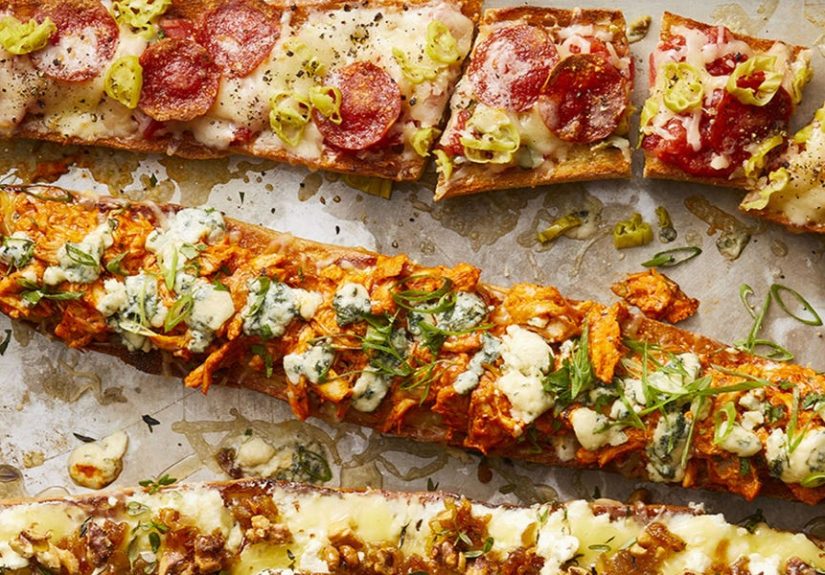
Pizza sauce, mozzarella, pepperoni, Parmesan, basil. This one is the undefeated weeknight champion. It is simple, recognizable, and impossible to dislike unless someone has made hating joy part of their personality.
Sausage and Peppers
Cooked Italian sausage, sautéed bell peppers, onions, mozzarella, Parmesan. This version tastes hearty and a little more dinner-like, especially with a green salad on the side.
Margherita-ish
Pizza sauce, mozzarella, sliced fresh tomatoes used sparingly, Parmesan, basil. Keep the tomatoes light so the bread stays crisp. This is not the moment for a tomato landslide.
Mushroom and Garlic
Garlic butter base, sautéed mushrooms, mozzarella, Parmesan, parsley. Earthy, rich, and excellent for people who want something that feels slightly more grown-up without becoming annoying about it.
BBQ Chicken
A light layer of barbecue sauce mixed with a little tomato sauce, cooked shredded chicken, red onion, mozzarella, cilantro. Sweet, smoky, and very effective at convincing people you put in more effort than you did.
White Pizza Style
Ricotta dollops, mozzarella, Parmesan, garlic oil, spinach, red pepper flakes. No red sauce, no problem. This one is creamy, cheesy, and wildly good.
Common Mistakes That Ruin Baguette Pizzas
Using too much sauce: This is the number one reason baguette pizza turns soggy. Be moderate.
Skipping the pre-toast: It seems like a shortcut. It is actually a trap.
Overloading toppings: Heavy piles of toppings prevent crisping and create uneven cooking. Build smart, not tall.
Using raw watery vegetables: Mushrooms, zucchini, peppers, and onions are best cooked first.
Choosing bread that is too hard: A baguette with some softness inside gives the best bite. If the loaf is weapon-grade crunchy, shorten the bake and add toppings quickly.
Walking away during broiling: A bold move. Also a bad one.
What to Serve with Baguette Pizzas
Baguette pizzas are rich enough to feel satisfying on their own, but a few sides make them even better. A crisp Caesar salad works beautifully. So does a simple arugula salad with lemon and olive oil, especially if your toppings are heavy on cheese or meat. Tomato soup is cozy. Pickles are unexpectedly excellent. Sparkling water, iced tea, or a cold soda complete the whole retro-comfort-food vibe.
If you are serving baguette pizzas for a crowd, cut them into smaller strips and arrange a topping variety board. Suddenly it looks like you planned a whole event instead of just making very smart use of bread and cheese.
How to Store and Reheat Leftovers
Store leftover baguette pizza in the refrigerator, wrapped or in an airtight container, for up to 3 days. Reheat in a 375°F oven or toaster oven until hot and crisp. The microwave will warm it, technically, but it also tends to make the bread limp. That is not a crime, exactly, but it is disappointing.
If you know you want leftovers, keep fresh herbs off until reheating. Add basil after the pizzas come out of the oven so it stays bright and aromatic.
Why This Is the Best Baguette Pizzas Recipe for Busy Cooks
This recipe wins because it respects reality. You do not need a pizza stone, a dough hook, or a free afternoon. You need a baguette, a hot oven, cheese, sauce, and a little common sense. It is fast enough for a weeknight, flexible enough for picky eaters, and tasty enough that nobody feels like they got the “easy” version of dinner.
It is also endlessly adaptable. Use leftover rotisserie chicken, roasted vegetables, random herbs, or the last bit of shredded cheese in the fridge. Baguette pizza is one of those rare recipes that feels casual but still delivers genuine payoff. It is low effort with high reward, which is basically the culinary equivalent of finding money in your jacket pocket.
Baguette Pizza Experiences: What You Learn After Making Them Again and Again
The first time most people make baguette pizzas, they think it is just a shortcut recipe. A smart little backup plan. A cute emergency dinner. Then they make it, take one bite, and realize this is not an emergency meal at all. It is a legitimate craving. That is the funny thing about baguette pizza: it starts as the meal you make because you are tired, and it ends as the meal you make because you genuinely want it.
One of the first lessons you learn from experience is that baguette pizzas are a recipe with personality. Traditional pizza dough can be fussy. It wants time, patience, maybe a scale, maybe a stone, maybe a philosophical commitment to fermentation. Baguette pizza just walks in, throws on a leather jacket, and says, “We can be eating in twenty minutes.” That confidence is part of its charm.
You also learn that not all “quick dinners” are created equal. Some fast meals taste fast. Baguette pizzas do not. With the crisp bread, bubbling cheese, and little browned edges, they taste like something you meant to make. They feel nostalgic without being childish. Adults like them. Kids like them. Guests like them. People hovering in the kitchen “just to see if you need help” definitely like them.
Another real-world discovery is how customizable they are without becoming chaotic. On paper, customization sounds great. In practice, it can mean twelve little bowls, seventeen opinions, and one person asking if pineapple counts as a vegetable. Baguette pizzas somehow avoid that mess. You can split one loaf into different sections and keep everybody happy. Pepperoni on one side, mushrooms on the other, white pizza in the middle, and suddenly dinner diplomacy is achieved.
After a few rounds, you develop instincts. You start spreading less sauce. You stop piling on raw peppers like you are decorating a parade float. You learn that a few minutes of pre-toasting changes everything. You realize that Parmesan on top gives you extra flavor and color. You become the person who casually says things like, “Let the bread set for two minutes before slicing,” which is how kitchen confidence sneaks up on people.
Then there is the social side. Baguette pizzas are weirdly good party food. Cut into smaller strips, they disappear fast. Set out a few versions on a board and everyone gravitates toward them. They feel more fun than regular pizza slices, maybe because they look a little rustic and a little playful. They also make people think you are more resourceful than you probably feel, which is a nice bonus for a recipe that mostly required turning on the oven and trusting cheese.
And finally, there is the emotional truth: baguette pizzas are comforting in a very specific way. They are not fancy, but they are not boring. They are easy, but they do not taste lazy. They sit in that magical category of recipes that solve dinner while also improving the mood of the room. That is why people keep returning to them. Not because they are trendy. Not because they are complicated. Because they work, they taste great, and they make everyday cooking feel a little more fun.
Conclusion
If you want a fast, crispy, cheesy, crowd-pleasing dinner, baguette pizza is hard to beat. The best version comes down to a few simple habits: choose a good loaf, pre-toast it, go easy on the sauce, cook moisture-heavy toppings first, and bake until the cheese is beautifully melted. Do that, and you will get everything people love about pizza night with a fraction of the work.
So the next time you are tempted by takeout, look at that baguette on the counter and recognize its true destiny. It was never meant to be just bread. It was meant to become dinner.






 Close
Close