
Table of Contents >> Show >> Hide
- Quick Table of Contents
- What Makes a Jolly Rancher “A Jolly Rancher”?
- Two Ways to Make Jolly Ranchers at Home
- Ingredients (and Smart Substitutions)
- Equipment Checklist
- Step-by-Step DIY Jolly Rancher-Style Candy Recipe
- How to Nail the Flavor (and the Zing)
- Troubleshooting: When Candy Misbehaves
- Storage & Shelf Life
- Fun Variations (Because You’re Already in Candy Mode)
- Conclusion
- Bonus: Real Candy-Making Experiences (So You Don’t Repeat My Chaos)
Ever wish you could bottle that loud, fruity “Jolly Rancher” vibe at homewithout paying candy-store prices or
accidentally fusing a spoon to your saucepan forever? Good news: you can make Jolly Rancher-style hard candy
in your own kitchen with a handful of ingredients, a thermometer, and a healthy respect for molten sugar (a.k.a. edible lava).
This guide walks you through two foolproof approachesmelt-and-remold for the “I need candy now” crowd,
and a from-scratch hard candy recipe for the “I enjoy tiny culinary triumphs” crowd. Along the way, you’ll learn
how to hit that glassy crunch, how to get the signature fruit punch, and how to add sour zing without turning your tongue
into a regret-filled science project.
What Makes a Jolly Rancher “A Jolly Rancher”?
Let’s be real: “Jolly Rancher” isn’t just a candy. It’s a personality. It’s the fruit-flavored hard candy that refuses to be subtle.
Technically, though, it’s built on a classic hard candy foundation: sugar cooked to the
hard-crack stage, then flavored and cooled into a brittle, glass-like texture.
The hard-candy science (in plain English)
Hard candy is basically a sugar solution that’s been cooked until almost all the water is gone. As the temperature rises,
the sugar concentration increases. At the hard-crack stage (roughly 300–310°F), the syrup sets into a hard, snappy candy
when cooledno chew, no stick, just satisfying crunch (and the occasional dental work, if you’re reckless).
Flavor + tang: why it tastes “so fruity”
That iconic punch comes from concentrated flavorings plus acids (commonly malic acid and/or citric acid)
that sharpen fruit notes. Malic acid is especially famous for that lingering “green apple” style tartness.
You can use a small amount to get that store-bought zing without going full “sour-candy dare.”
Important note: This is a homemade recipe inspired by the classic candy flavor profile.
If you need an exact match to branded candy (including proprietary flavors and processing), buy the originals.
If you want something that tastes amazing, is customizable, and makes you feel like a kitchen wizardkeep reading.
Two Ways to Make Jolly Ranchers at Home
Method 1: Melt-and-Remold (the 15-minute “cheat code”)
This method is perfect if your goal is “make Jolly Ranchers” in the sense of reshaping themlike turning store-bought candies into
lollipops, gems, or cute little hearts that say “I totally planned this.”
- Unwrap candies and sort by flavor (unless you enjoy mystery).
- Place in a silicone mold or a parchment-lined tray.
- Melt gently in the microwave in short bursts (stir carefully) or in a low oven until fluid.
- Let cool completely, then pop out and admire your work.
Best for: molds, lollipops, party candy shapes, minimal drama.
Not ideal for: making “new” candy flavors or controlling ingredients.
Method 2: From-Scratch Jolly Rancher-Style Hard Candy (the real DIY)
This is the classic DIY candy recipe route: sugar + corn syrup + water cooked to hard crack, then flavored.
You control the intensity, the sour level, the colors, and whether the final candy screams “WATERMELON!!!” or whispers “classy citrus.”
Ingredients (and Smart Substitutions)
Pantry basics
- Granulated sugar (the main event)
- Light corn syrup (helps prevent crystallization for a smoother candy)
- Water (just enough to dissolve everything before it boils off)
Flavor boosters and “that Jolly Rancher zing”
- Concentrated flavoring oils (preferred for hard candy; extracts can be weaker)
- Citric acid (bright, quick tartness)
- Malic acid (lingering tartness; very “green apple” coded)
- Food coloring (optional, but funbecause candy should look like it has Wi-Fi)
Optional (but helpful)
- Neutral oil or nonstick spray (for molds)
- Powdered sugar or cornstarch (to dust pieces and reduce sticking in humid climates)
Equipment Checklist
Must-haves
- Heavy-bottom saucepan (prevents hot spots and scorched sugar)
- Candy thermometer (or a fast digital probe; temperature accuracy matters)
- Heat-resistant spatula (silicone is great)
- Parchment paper or silicone mat (for pouring and cooling)
Nice-to-haves
- Silicone candy molds (for uniform shapes)
- Bench scraper or mallet (for breaking cooled candy)
- Heatproof gloves (because sugar burns are not a personality trait)
Safety moment: Hot sugar sticks and keeps burning. Keep kids and pets out of the “splash zone,”
don’t taste-test hot syrup, and work on a stable surface.
Step-by-Step DIY Jolly Rancher-Style Candy Recipe
This recipe makes a generous batch of fruit-flavored hard candy you can break into shards or pour into molds.
Think “homemade Jolly Ranchers,” but with your choice of flavor intensity and sour level.
Recipe: Homemade Jolly Rancher-Style Hard Candy
Yield: About 60–80 small pieces (depends on thickness and how enthusiastic you are with the hammer)
Time: ~10 minutes prep, 15–25 minutes cooking, 30–60 minutes cooling
Ingredients
- 2 cups granulated sugar
- 3/4 cup light corn syrup
- 1/2 cup water
- 1 to 2 teaspoons concentrated candy flavoring oil (see notes below)
- 1/2 to 1 teaspoon citric acid or 1/4 to 1/2 teaspoon malic acid (optional, for tartness)
- Food coloring (optional)
Before you start (do this first)
- Line a rimmed baking sheet with parchment or a silicone mat, or lightly oil silicone molds.
- Have your flavoring, acids, and color measured and ready. Once you hit temperature, the clock starts sprinting.
- Place your thermometer so it reads the syrup, not the bottom of the pot.
Directions
-
Dissolve: In a heavy saucepan, combine sugar, corn syrup, and water. Stir over medium heat until the sugar is fully dissolved
and the mixture looks clear and uniform. -
Boil (then stop stirring): Increase heat to bring it to a boil. Once it boils, avoid stirringstirring can encourage sugar crystals.
If you see sugar on the pot sides, use a damp pastry brush to gently wash down the crystals. -
Cook to hard crack: Continue boiling until the thermometer reads 300–310°F.
Aim closer to 300–305°F for lighter candy; push toward 308–310°F if you want it extra crisp (but don’t wander off to “just check one thing” on your phone). -
Flavor off-heat: Remove from heat. Let bubbling calm for a few seconds, then carefully stir in flavoring oil and food coloring.
Add acids last, stirring gentlytoo vigorous and you’ll trap bubbles. -
Pour: Pour immediately onto the prepared sheet (for shards) or into molds (for neat shapes).
Work carefully; the syrup is extremely hot and thick. -
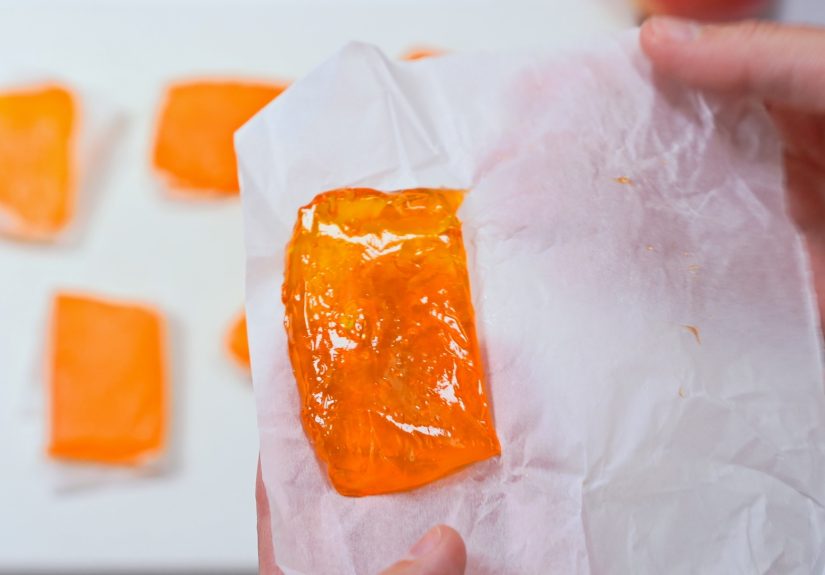
Cool completely: Let candy cool at room temperature until hard (30–60 minutes).
Once fully set, break into pieces (or pop from molds).
Flavoring notes (so it doesn’t taste like “vaguely sweet”)
Concentrated candy oils are strong; start with 1 teaspoon, taste a cooled test drop if you can,
then adjust next batch. Different flavors vary in intensity (cinnamon will try to start a fight; mild fruit flavors may need more).
How to Nail the Flavor (and the Zing)
Flavor oils vs. extracts
For hard candy, oil-based or “super strength” flavorings usually hold up better to high heat than standard extracts,
and they deliver a punchier flavor with less liquid added (extra liquid can mess with texture).
If you only have extracts, you can use themjust expect a gentler taste and consider slightly higher amounts.
Classic “Jolly Rancher” flavor ideas
- Green Apple: apple flavor + a pinch of malic acid (this combo screams “candy aisle nostalgia”)
- Watermelon: watermelon flavor + citric acid for brightness
- Cherry: cherry flavor + a tiny pinch of citric (too much acid can mute cherry)
- Grape: grape flavor + minimal acid (grape is already bold)
- Blue Raspberry: berry/raspberry blend + citric for that “electric” tang
How to make them sour (the smart way)
If you want sour Jolly Ranchers at home, you have two good options:
-
Inside-the-candy sour: Stir a small amount of citric or malic acid into the hot syrup off-heat.
This gives a clean, integrated tartness. -
Outside “sour coating”: Once pieces are cool, very lightly mist with water (or a tiny bit of neutral oil),
then toss with a mix of superfine sugar + citric acid. This hits your tongue first, like classic sour candies.
Friendly warning: Extremely sour candy can irritate your mouth and is rough on enamel.
If you’re going hard on acids, enjoy in moderation, rinse with water afterward, and wait a bit before brushing.
Troubleshooting: When Candy Misbehaves
“My candy is sticky and won’t fully harden.”
Most likely you didn’t reach hard crack. Hard candy needs that 300–310°F window to set properly.
Also: humidity is the ultimate party crashersticky candy loves damp air.
“It’s grainy… like I accidentally made sweet gravel.”
That’s crystallization. Common causes: stirring after boiling, sugar crystals on the pot sides, or scraping the pot too aggressively when pouring.
Use corn syrup, stop stirring once boiling, and brush down the sides with water if crystals appear.
“It tastes burnt.”
Either the temperature ran too high or the pot had hot spots. Use a heavy-bottom pan, keep an eye on the thermometer,
and pull the pot off heat promptly as you hit your target.
“My candy is full of bubbles or looks cloudy.”
Stirring too vigorously after cooking can trap air. Also, certain flavorings and acids can create tiny bubbles when added to very hot syrup.
Let the syrup settle briefly off-heat, then stir gently and pour smoothly.
“It glued itself to the pan like it pays rent.”
Don’t panic. Fill the pot with water and bring it to a boil; the hardened sugar dissolves and releases like magic.
(Your future self will thank you for learning this trick early.)
Storage & Shelf Life
Hard candy’s biggest enemy is moisture. Store pieces in an airtight container at cool room temperature.
If you live somewhere humid, add a food-safe desiccant packet (or keep candy in smaller batches so you open the container less often).
- Best container: airtight jar or container with a tight seal
- Prevent sticking: wrap individually or dust lightly with powdered sugar/cornstarch
- Shelf life: typically weeks to months if kept dry and sealed
Fun Variations (Because You’re Already in Candy Mode)
DIY Jolly Rancher lollipops
Pour the cooked syrup into lollipop molds, insert sticks, and let cool. Instant party candy. Instant “look what I made” bragging rights.
Layered “rainbow” hard candy
Cook one batch, pour a thin layer, let it set slightly, then pour another color/flavor on top. It’s like edible stained glass.
Sour center (advanced but fun)
Make two pours: a thin base layer, sprinkle a tiny amount of citric/malic acid-sugar mix in the middle, then top with more syrup.
Keep the amount modestacid pockets can be intense.
Isomalt version (humidity-resistant “show candy”)
If you want candy that stands up better to humidity and stays clearer, isomalt is popular for candy work.
You’ll generally melt/cook it to around the low 320°F range, then flavor and pour similar to sugar candy.
It’s fantastic for glossy gems and decorations.
Conclusion
Making homemade Jolly Rancher-style hard candy is equal parts science, timing, and “move with purpose.”
Hit the hard-crack stage, flavor it like you mean it, keep moisture away, and you’ll get that bright, fruity crunch that makes store-bought candy famous.
Start with one flavor, get comfortable with the temperature window, then experiment with sour levels, layered colors, and molds.
Your kitchen will smell like a candy shopyour friends will mysteriously “drop by”and you’ll never look at a candy thermometer the same way again.
Bonus: Real Candy-Making Experiences (So You Don’t Repeat My Chaos)
The first time I tried making Jolly Rancher-style hard candy, I treated the thermometer like a “nice suggestion.”
I figured, “I’ve cooked pasta. How hard can sugar be?” Reader, sugar is the kind of ingredient that will let you be confident right up until it humiliates you.
Attempt #1: I pulled the pot at 295°F because it looked thick enough and I was impatient. The candy cooled into a sticky slab that
behaved like a fruit-flavored fly trap. It wasn’t crunchy. It was clingy. It clung to my teeth. It clung to the parchment. It probably would’ve clung to my hopes and dreams
if given enough time. Lesson learned: hard crack is not a vibe; it’s a temperature.
Attempt #2: I got the temperature right, then celebrated by stirring enthusiastically like I was summoning a dessert demon. Tiny sugar crystals formed,
and my “perfect candy” cooled into something that looked like frosted glass. It still tasted good, but the texture screamed, “I tried.”
That’s when I learned the candy-maker mantra: once it boils, stop stirring unless the recipe says otherwise.
Sugar likes calm, not chaos.
Attempt #3: I discovered malic acid and got greedy. I added “just a little more” to chase that iconic tart bite.
The candy was so sour it made my cheeks tighten like I’d just tasted a lemon that owed me money.
Fun for exactly one piece. After that, it felt like my tongue filed a complaint. Now I keep malic acid on a short leash:
start small, taste a cooled shard, and scale up carefully. Sour should be a sparkle, not a punishment.
My favorite breakthrough came from treating prep like a pit crew. I pre-measure the flavoring, set the molds on a sheet pan, line everything before heat,
and keep a heatproof spatula ready. When the syrup hits 305°F, there’s no time to rummage through drawers like a raccoon in a campsite.
Candy-making rewards the organized.
One more real-life tip: if your kitchen is humid, don’t take it personally when candy gets sticky. It’s not youit’s the air.
I once made a gorgeous batch on a rainy day, left it in a bowl “just for a minute,” and came back to candy pieces holding hands like they were forming a support group.
Now I cool, break, and store candy promptly in airtight containers. If it’s extra humid, I dust lightly with powdered sugar or cornstarch, and I keep batches smaller.
Finally: cleanup. If you’ve ever stared at a pot coated in hardened sugar and considered moving to a new apartment instead, here’s the fix:
fill the pot with water and bring it to a boil. The candy dissolves, the pot releases, and peace returns to the kitchen.
Candy is dramatic, but it’s also very water-solublekind of like the confidence of someone who says, “I don’t need a thermometer.”





 Close
Close