
Table of Contents >> Show >> Hide
- Before You Start: Pick Your Dealership “Lane”
- Step 1: Build a Real Business Plan (Not a Vibe)
- Step 2: Form Your Legal Business and Get Tax IDs
- Step 3: Understand Licensing (Because “Selling Cars” Is Not a Hobby)
- Step 4: Choose a Location That Won’t Get You Shut Down
- Step 5: Line Up Your Startup Money and Inventory Funding
- Step 6: Set Up Your Compliance System (So You Don’t Accidentally Become a Cautionary Tale)
- Step 7: Build Your Inventory Pipeline (Where the Money Is Made or Lost)
- Step 8: Create a Sales + Marketing Machine That Doesn’t Feel Slimy
- Step 9: Hire (or Become) the Ops Team: Titles, Accounting, and Delivery
- Common Mistakes New Dealers Make (So You Don’t Have to)
- Frequently Asked Questions
- Real-World Experiences and Lessons That Make the Difference (500+ Words)
- Conclusion
Opening a car dealership looks glamorous from the outside: shiny paint, big bows, and customers driving off into the sunset.
Behind the scenes, it’s closer to a three-ring circus where the rings are licensing, cash flow, and complianceand you’re the ringmaster
trying not to trip over a stack of title paperwork.
The good news: dealerships are absolutely buildable businesses if you treat them like what they area regulated retail operation with
a finance component, a logistics component, and a customer-trust component. This guide breaks it down into nine practical steps,
with “picture ideas” you can add to your web post or internal SOP binder.

Before You Start: Pick Your Dealership “Lane”
Not all dealerships are built the same. Before you spend a dime, decide what you’re actually opening, because this decision affects
licensing, location requirements, insurance, staffing, and how much cash you need to survive the awkward early months.
- Used-car independent dealership: Typically faster to launch, more flexible inventory, lower barriers than a franchise store.
- New-car franchise dealership: Higher capital requirements, franchise approvals, facility image standards, more layers of rules.
- Wholesale-only dealer: Often fewer retail obligations, but you’re living in auction lanes and dealer-to-dealer networks.
- Buy Here Pay Here (BHPH): Higher margins potential, higher risk, and you’re also in the collections business (read that twice).
- Retail + service department: Great for long-term profit, but adds safety, equipment, and staffing complexity.

Step 1: Build a Real Business Plan (Not a Vibe)
“I love cars” is not a business plan. A dealership plan needs numbers, assumptions, and a clear operating system. Whether you’re
seeking a loan, investors, a floorplan lender, or just trying to avoid chaos, your plan is the blueprint.
What your plan must include
- Your niche: commuter sedans under $15k, lifted trucks, EVs, luxury used, work vans, etc.
- Market snapshot: who your local customers are, what they buy, and who you’ll compete against.
- Inventory strategy: auctions, trade-ins, private buys, off-lease sources, consignments (if allowed in your state).
- Unit economics: average gross profit per car, reconditioning cost, days-to-sale target, advertising cost per sale.
- Compliance workflow: buyers guides, odometer disclosures, title processing, record retention, privacy policies.
- Financial projections: conservative first-year model (cash flow matters more than “revenue”).
A quick, practical math example
Say you want to sell 25 cars/month as a used dealer. If your average front-end gross is $1,700 per unit,
that’s $42,500 gross/month. Sounds fununtil you subtract reconditioning, flooring interest, lot rent, insurance, payroll,
advertising, and the “mystery expense” that appears every Tuesday.
A healthy first plan assumes slower sales early on (think 8–12/month), higher recon surprises, and more cash tied up in titles and repairs.
Planning for reality is how you stay open long enough to become “established.”

Step 2: Form Your Legal Business and Get Tax IDs
Dealerships handle big-ticket transactions, financing paperwork, and liability. Set up your legal structure properly so you’re not
running a seven-figure operation on “my cousin’s spreadsheet and a handshake.”
Common setup moves
- Choose an entity: many dealers use an LLC or corporation for liability and credibility.
- Register with your state: file formation documents and confirm name availability.
- Get an EIN: this is your business tax ID (and it’s free through the IRS).
- Open a business bank account: keep dealership money separate from “life money.”
- Set up bookkeeping: dealerships have unique accounting realities (inventory, flooring interest, chargebacks, warranty reserves).
Pro tip: if any website tries to charge you a big fee for an EIN, back away slowly and go directly to the IRS. Free is a beautiful number.
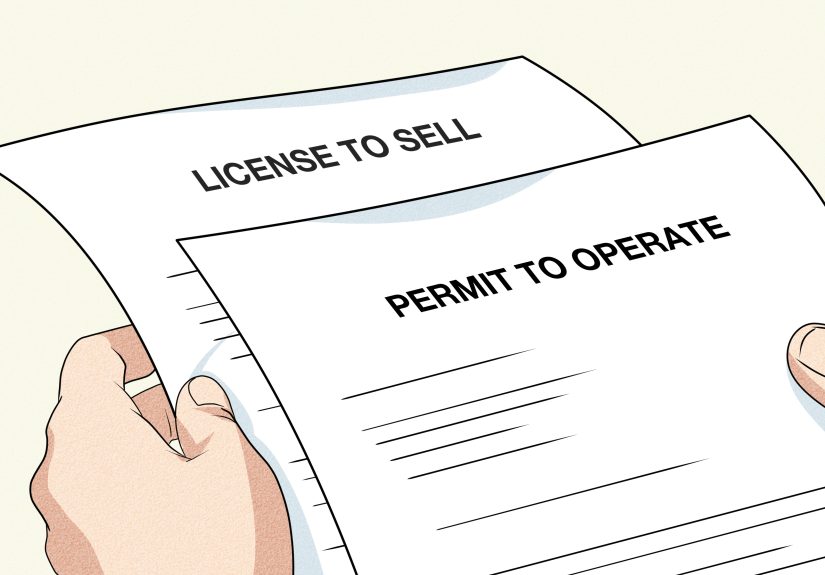
Step 3: Understand Licensing (Because “Selling Cars” Is Not a Hobby)
In the U.S., dealership licensing is mostly handled at the state level. Requirements vary, but the pattern is consistent:
you’ll need a dealer license, a compliant business location, and usually a surety bond.
What licensing typically involves
- Dealer application: forms, fees, background requirements, and business documentation.
- Facility requirements: office space, signage, display lot, and sometimes photos or inspections.
- Surety bond: many states require a dealer bond as part of licensing.
- Dealer plates / tags: rules for use and recordkeeping.
- Local permits: zoning, occupancy, signage permits, sometimes sales tax registration.
Don’t treat licensing like a formality. State agencies can (and do) reject applications over small mismatcheslike your bond name not matching
your business name character-for-character.

Step 4: Choose a Location That Won’t Get You Shut Down
A great location is not just high traffic. It’s also one that meets dealership rules, zoning requirements, and practical customer needs.
Your lot must function as a retail space where cars can be shown safely and paperwork can be completed professionally.
Location checklist
- Zoning approval: confirm that auto sales are allowed (don’t assume).
- Visibility and access: easy entry/exit, safe test-drive routes, clear signage.
- Secure storage: keys, titles, and vehiclesbecause theft is not a “learning experience” you want.
- Office space: private area for finance paperwork and customer conversations.
- Room for recon: either onsite space or reliable vendor access (detailers, mechanics, body shops).
If you’re planning a service department, remember you’re adding new layers: safety procedures, waste handling, equipment, and staffing needs.
Service can be a profit enginebut only if it’s set up like a real operation.
Step 5: Line Up Your Startup Money and Inventory Funding
Dealerships are cash-hungry early on. Not because you’re recklessbut because inventory ties up cash, reconditioning eats cash,
and sales cycles can be unpredictable.
Two buckets of money you need
- Operating capital: rent, payroll, insurance, marketing, utilities, software, repairsyour monthly “keep the lights on” costs.
- Inventory capital: buying cars (or financing them through a floorplan line), plus reconditioning before the first sale.
Inventory funding options (in plain English)
- Cash purchases: simplest, but ties up your capital fast.
- Floorplan financing: a lender pays for inventory, and you pay interest/fees until each unit sells.
- Hybrid approach: cash for cheaper units + floorplan for higher-priced inventory.
Floorplanning can help you scale inventory, but it demands disciplineaging units cost money, and “I’ll discount it next month”
becomes “I’ve been paying interest on it since the Jurassic period.”
Step 6: Set Up Your Compliance System (So You Don’t Accidentally Become a Cautionary Tale)
Dealerships operate under consumer protection rules that are not optional. Compliance isn’t just about avoiding trouble; it’s about building
trust and reducing disputes, chargebacks, and ugly reviews.
Core compliance basics to bake into your process
- FTC Used Car Rule: used vehicles generally require a Buyers Guide display and proper disclosures (with limited state exceptions).
- Odometer disclosures: there are federal rules for mileage disclosure and record retention.
- Clear pricing and add-ons: build transparent menus and consistent disclosures, especially if you sell products like warranties or service contracts.
- Recordkeeping: keep copies of key documents in a system that can be retrieved quickly (because “I think it’s in my glovebox” is not compliance).
Make compliance easy for your team
The trick is designing a workflow where the “right way” is the easy way. Use checklists at every deal stage:
acquisition, reconditioning, online listing, test drive, contracting, delivery, and post-sale titling.

Step 7: Build Your Inventory Pipeline (Where the Money Is Made or Lost)
Inventory is your product, and sourcing is your supply chain. Many new dealers focus on selling, but the real margin is often won
during buyingbecause a bad buy is a bad sale waiting to happen.
Common sourcing channels
- Dealer auctions: fast access to volume, but you need discipline and a condition-report strategy.
- Trade-ins: can be profitable if your appraisal process is strong.
- Private purchases: often better gross potential, but more time and fraud screening required.
- Off-lease and fleet sources: can be consistent if you can access them.
Inventory rules that keep you alive
- Set a “maximum recon budget” per unit before you buy. If it can’t fit the budget, it doesn’t fit your lot.
- Track days-to-sale and create pricing rules for aging inventory.
- Know your “fast movers” by zip code (not just your personal taste in cars).
- Use vehicle history tools and inspection processes to reduce surprises.
Step 8: Create a Sales + Marketing Machine That Doesn’t Feel Slimy
Modern dealership marketing is equal parts listings, reputation, and speed. You’re not just selling carsyou’re selling confidence:
“This dealer will handle paperwork correctly, won’t play games, and won’t vanish after delivery.”
Marketing foundations
- Sharp listings: accurate descriptions, clear photos, transparent pricing.
- Fast response time: calls and messages answered quickly (speed wins deals).
- Reviews: ask for them, respond to them, and learn from them.
- Local SEO: consistent business info, service area clarity, and content that answers buyer questions.
Sales process basics
Make your process consistent: greet, qualify, present options, transparent pricing, test drive, paperwork, delivery, follow-up.
Customers don’t want tricks. They want clarity. The funniest “sales hack” is being normal and prepared.
Step 9: Hire (or Become) the Ops Team: Titles, Accounting, and Delivery
A dealership can sell cars and still fail if operations are sloppy. Titles delayed, paperwork errors, compliance gaps, and
accounting confusion can quietly sink you even when your lot looks busy.
Operations systems you need from day one
- Title and registration workflow: documented steps, timelines, and responsibility assigned.
- Deal jacket standards: required documents list and audit checks.
- Accounting discipline: track inventory cost, recon, pack fees, flooring interest, chargebacks, and true gross profit.
- Delivery checklist: confirm condition, fuel/charge level, accessories, copies of paperwork, customer orientation.
- Post-sale follow-up: reduce complaints and build reviews.
If you’re a one-person shop at launch, that’s okayjust don’t run it like a one-person hobby. Document everything. Future-you will send you a thank-you card.
Common Mistakes New Dealers Make (So You Don’t Have to)
- Buying inventory emotionally: “It’s such a cool car” is not a KPI.
- Underestimating reconditioning: tires, brakes, and sensors love eating margins.
- Ignoring compliance: you don’t want your first viral moment to be “local news investigation.”
- Pricing too high for too long: aging inventory is a silent tax.
- Not tracking real gross profit: if recon and fees aren’t tracked per unit, you’re guessing.
- Skipping cash-flow planning: profit on paper doesn’t pay the floorplan statement.
Frequently Asked Questions
How much money do you need to open a car dealership?
It depends on the model (used vs. franchise), your state’s requirements, and inventory approach. The safest answer is:
enough for licensing/setup plus several months of operating expenses plus inventory funding and reconditioning.
Underfunding is one of the top reasons dealerships close early.
Is owning a car dealership profitable?
It can be, but profitability is tied to disciplined buying, efficient operations, and strong customer trust. Many successful dealers
also build profit centers like financing products (where allowed), service, parts, and repeat customer pipelines.
What’s the hardest part of starting?
Getting the system right: licensing + facility compliance, inventory pipeline, and a repeatable sales/ops workflow.
Selling cars is the visible part. Running a dealership is the iceberg underneath.
Real-World Experiences and Lessons That Make the Difference (500+ Words)
Let’s talk about the stuff that rarely shows up in “9 steps” lists: the lived reality of running a dealership day-to-day. Even if you
do everything “right,” the business will still test youusually on a Friday afternoon, when a customer wants to leave in 20 minutes,
the bank is missing a document, and your printer chooses that moment to develop a personality.
1) The first month feels slow… until it suddenly isn’t
New dealers often assume day one will look like a grand opening movie montage. In practice, the early weeks are usually paperwork-heavy:
licensing steps, inspections, vendor setups, insurance, banking, and building a workable inventory pipeline. Then, once the first few cars
are online and the phones start ringing, the pace changes overnight. The lesson: prepare your sales and contracting workflow before
you have traffic. A simple “deal checklist” prevents panic errorslike missing a required disclosure or forgetting to collect a signature.
2) Reconditioning is where optimism goes to get audited
Many first-time operators underestimate how fast recon costs pile up. It’s not just brakes and tires. It’s wheel sensors, windshields,
battery issues, and the “mystery noise” that appears only on left turns after the test drive. Experienced dealers tend to survive by
building strict rules: a maximum recon budget per unit, a reliable inspection process, and preferred vendor relationships with predictable
turnaround times. The key mindset shift is this: you’re not fixing cars “to perfection,” you’re reconditioning to a standard that matches
your pricing and your market. If your process doesn’t match your price band, your margins disappear.
3) Cash flow is your real boss
Dealers learn quickly that “profit” and “cash” are cousins, not twins. You can have a profitable month and still feel broke if cash is tied up
in inventory, reconditioning, flooring interest, and title processing delays. That’s why seasoned operators obsess over basics like
inventory aging, days-to-sale, and deal funding timelines. A practical habit is building a weekly cash-flow rhythm:
forecast expected sales, expected payoffs, upcoming recon bills, and flooring payments. It’s not glamorous, but it’s the difference between
sleeping normally and staring at the ceiling at 2 a.m. while mentally subtracting invoices.
4) Transparency isn’t just ethicsit’s a competitive advantage
A surprisingly effective “growth strategy” is doing the boring honest things consistently: clear pricing, written disclosures, no weird last-minute
add-on surprises, and a smooth delivery process. Customers are tired. They’ve read horror stories. If your dealership feels calm, organized, and
straightforward, you’ll win deals that bigger stores loseespecially in used cars, where trust is a huge part of the product.
Many dealers find that transparent processes reduce cancellations, chargebacks, and post-sale disputes, which quietly improves profitability.
5) The dealership that lasts is the one that documents everything
“I’ll remember how we do that” is a trap. Over time, your operation grows: more cars, more customers, more vendors, more employees.
The dealers who scale smoothly usually build simple documentation earlychecklists, templates, deal jacket requirements, recon standards,
and a repeatable marketing routine. Documentation also makes training easier and helps maintain compliance consistency. Think of it like
building guardrails for your future business: the bigger you get, the more you need those guardrails to keep quality steady.
If you take one takeaway from these real-world lessons, let it be this: a dealership is not one skillit’s a system. Build the system,
and the sales follow. Skip the system, and the sales (and stress) will still come… just not in the way you want.
Conclusion
Opening a car dealership is equal parts opportunity and responsibility. If you approach it with a real plan, a compliant setup, a disciplined
inventory strategy, and a transparent customer process, you can build something that lastsand that customers recommend instead of warn
their friends about.
Treat the nine steps as your launch sequence, then keep refining: better buying, faster recon, cleaner paperwork, clearer marketing,
and tighter cash-flow control. Do that consistently, and your dealership stops being “a risky idea” and starts becoming “a serious business.”







 Close
Close