
Table of Contents >> Show >> Hide
- Why Pruning Forsythia Is Different From Pruning Other Shrubs
- When to Prune Forsythia
- Tools You Will Need
- How to Prune Forsythia: 9 Steps
- Step 1: Wait Until the Bloom Show Is Over
- Step 2: Start With a Quick Inspection
- Step 3: Remove Dead, Damaged, and Diseased Wood First
- Step 4: Cut Out the Oldest Canes at Ground Level
- Step 5: Thin Out Crossing and Inward-Growing Branches
- Step 6: Shorten a Few Tall Stems the Smart Way
- Step 7: Never Shear It Like a Formal Hedge
- Step 8: Use Rejuvenation Pruning for a Seriously Overgrown Shrub
- Step 9: Clean Up and Make a Simple Maintenance Plan
- Common Mistakes to Avoid When Pruning Forsythia
- What a Well-Pruned Forsythia Should Look Like
- Conclusion
- Real-World Experiences With Pruning Forsythia
- SEO Tags
Forsythia is the kind of shrub that shows up in spring like it owns the season. One minute your yard is still wearing winter pajamas, and the next minute this plant is throwing bright yellow confetti everywhere. Then, just as quickly, it turns into a green fountain of stems that can look charmingly wild or mildly unhinged, depending on how long it has been since you last pruned it.
That is why learning how to prune forsythia matters. Done correctly, pruning keeps the shrub healthy, preserves its graceful arching shape, and sets you up for a better flower show next spring. Done incorrectly, it can leave you with a boxy green blob, fewer blooms, and a yard that looks like the shrub lost an argument with hedge clippers.
This guide breaks the job into nine clear steps, with practical advice for routine trimming, thinning an overgrown plant, and handling a forsythia that has gone full backyard chaos mode. Whether you are dealing with a young shrub or an old specimen that has been freelancing for years, here is how to prune forsythia the right way.
Why Pruning Forsythia Is Different From Pruning Other Shrubs
Forsythia is a spring-blooming shrub that flowers on old wood, which means next year’s flower buds start forming on stems produced during the current growing season. In plain English, that means timing matters a lot. If you prune too late in summer, in fall, or in winter, you can accidentally snip off the buds that would have given you next spring’s yellow explosion.
Forsythia also has a naturally arching, fountain-like habit. It is not meant to be clipped into a hard cube or a perfect meatball. The best pruning method is selective thinning, which removes older stems at the base and opens the center of the plant. That keeps the shrub youthful, airy, and able to flower from top to bottom instead of only on the outer shell.
When to Prune Forsythia
The best time to prune forsythia is right after it finishes blooming in spring. Do not wait until late summer or fall. By then, the shrub is already working on next year’s flower buds. A good rule is to prune within a couple of weeks after the flowers fade, while the plant still has plenty of time to grow new flowering wood for the following season.
If your forsythia is badly overgrown, you have two options. You can gradually renovate it over two to three seasons by removing the oldest stems each year, or you can perform a more dramatic rejuvenation prune and cut it back hard. The gradual method is better if the shrub is an important screen or landscape anchor. The hard reset is faster, but you will sacrifice some blooms while the plant rebuilds.
Tools You Will Need
- Hand pruners for small stems
- Loppers for medium canes
- A pruning saw for thick, old stems
- Gloves
- A tarp or yard bag for cleanup
- Rubbing alcohol or disinfectant to clean blades
Clean, sharp tools make better cuts and reduce plant damage. Dull blades crush stems. Crushed stems are not a gardening flex.
How to Prune Forsythia: 9 Steps
Step 1: Wait Until the Bloom Show Is Over
Do not prune before or during flowering unless you are removing dead or broken wood. Enjoy the blooms first. Once the flowers fade, that is your green light. This timing protects next year’s buds and gives the shrub enough time to push out strong new shoots.
If you are unsure whether the blooms are truly finished, wait until the petals drop and the first fresh leaves begin to appear. That is usually the sweet spot for spring-blooming shrub pruning.
Step 2: Start With a Quick Inspection
Before making the first cut, walk around the shrub and study its shape. Look for dead wood, cracked branches, stems rubbing against each other, crowded growth in the center, and long whippy canes sticking up like antennae trying to contact another garden.
This quick inspection helps you prune with a plan instead of randomly hacking away and hoping the plant forgives you.
Step 3: Remove Dead, Damaged, and Diseased Wood First
Always start with the obvious troublemakers. Cut out any dead, damaged, or diseased branches all the way to healthy wood or back to the base of the shrub. Also remove broken stems and weak twiggy growth that clearly will not contribute to the plant’s shape.
This first pass immediately improves airflow, reduces stress on the shrub, and lets you see the plant’s real structure more clearly.
Step 4: Cut Out the Oldest Canes at Ground Level
This is the heart of proper forsythia pruning. Identify the oldest, thickest stems, usually the ones with the largest diameter and roughest bark, and remove about one-quarter to one-third of them at the base. These older canes are often the tallest and least productive, and they tend to crowd the center.
Cutting them at ground level encourages new shoots to emerge from the base. Those younger shoots become the future of the shrub and carry better blooms as they mature. This method controls height without ruining the natural form.
If your plant is not terribly overgrown, this one step may be enough to keep it looking good for another year.
Step 5: Thin Out Crossing and Inward-Growing Branches
Next, remove stems that cross, rub, or grow toward the center of the shrub. Forsythia gets dense fast, and crowded interiors trap shade and limit air circulation. Thinning these branches helps light reach deeper into the plant and reduces the tangle that makes old shrubs look messy.
Think of this as editing, not buzz-cutting. You are creating space and structure, not giving the shrub a punishment haircut.
Step 6: Shorten a Few Tall Stems the Smart Way
If the shrub still looks too tall after thinning, you can shorten selected stems, but do it carefully. Rather than shearing the whole outside, cut a few overly long canes back to a lower side branch or vigorous shoot. That preserves the arching shape and prevents that blunt, chopped-off look.
This step is especially helpful when a forsythia has started leaning into a walkway, swallowing a window, or auditioning to become a neighborhood privacy fence.
Step 7: Never Shear It Like a Formal Hedge
This step is phrased as a warning because it is one of the biggest mistakes gardeners make. Hedge shears create a dense outer shell of growth, which blocks light from the interior and gradually leads to fewer blooms inside the plant. The result is often a stiff green blob with flowers mostly on the outside.
Forsythia looks best when it keeps its loose, graceful, slightly dramatic shape. Selective pruning with hand tools gives you a healthier plant and a better display.
Step 8: Use Rejuvenation Pruning for a Seriously Overgrown Shrub
If your forsythia is enormous, woody, bare at the base, or generally behaving like a yellow octopus with boundary issues, rejuvenation pruning may be the answer. You have two ways to do it.
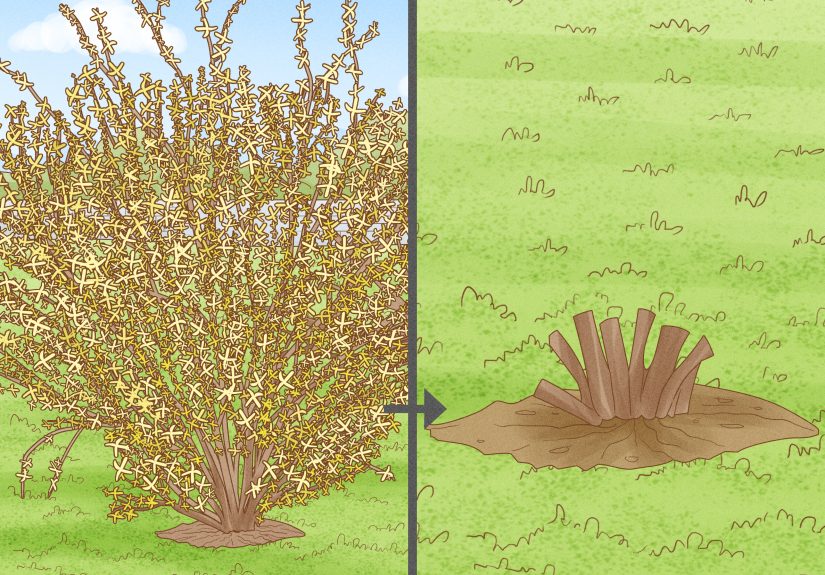
Gradual rejuvenation: remove one-third of the oldest stems this year, more next year, and finish in the third year. This keeps some screening value and avoids shocking the landscape.
Hard rejuvenation: cut the entire shrub back to several inches above the ground or near ground level. This is the fastest reset for a neglected plant, but it takes patience. You will lose the spring display for a season while the shrub regrows and rebuilds.
For many homeowners, the gradual method is easier on the eyes. The hard reset is for the bold, the practical, or the gardener who has finally had enough.
Step 9: Clean Up and Make a Simple Maintenance Plan
Once you finish pruning, remove cut stems from around the base of the plant and dispose of any diseased material. Then make a note to thin the shrub again after flowering next year. Forsythia responds best to regular maintenance instead of long periods of neglect followed by one dramatic intervention involving sweat, regret, and three yard bags full of branches.
A simple yearly or every-other-year thinning routine keeps the shrub manageable, blooming well, and attractive in the landscape.
Common Mistakes to Avoid When Pruning Forsythia
Pruning Too Late
This is the classic mistake. If you prune in late summer, fall, or winter, you will remove flower buds and wonder why spring looks disappointing. The plant is not being rude. It is just following biology.
Removing Only the Tips
Tip pruning can make the shrub denser and taller over time. Instead of controlling the plant, it often creates more branching near the cut points and worsens congestion.
Ignoring the Oldest Wood
If you never remove old canes, the shrub gradually becomes woody, sparse at the bottom, and less floriferous. Forsythia needs periodic renewal from the base.
Overdoing It on a Young Shrub
A newly planted or very young forsythia usually needs little more than cleanup pruning. Let it establish its structure before you start aggressive thinning.
What a Well-Pruned Forsythia Should Look Like
After pruning, your forsythia should still look like a forsythia. That sounds obvious, but it matters. The plant should have an open center, a balanced outline, and a natural arching shape. You should be able to see that some old wood has been removed, but the shrub should not look scalped, squared off, or like it lost a duel with an electric trimmer.
In the following growing season, you should notice stronger young shoots rising from the base, better air circulation, and more even flowering over time. That is the goal: fewer awkward stems, more graceful growth, and a spring display that actually earns the shrub its real estate in your yard.
Conclusion
Pruning forsythia is not complicated, but it does reward good timing and a little restraint. The best approach is simple: wait until the shrub finishes blooming, remove dead and crowded growth, cut out the oldest stems at the base, and avoid shearing the plant into a shape it was never meant to hold.
If your shrub is overgrown, do not panic. Forsythia is tough, forgiving, and surprisingly willing to bounce back from a smart renovation. With the right cuts, you can turn a tangled mass of stems into a healthier, better-looking flowering shrub that still gets to perform its annual yellow fireworks show in spring.
In other words, prune with purpose, not panic. Your forsythia will thank you next year in flowers.
Real-World Experiences With Pruning Forsythia
One of the most common experiences gardeners have with forsythia is inheriting one rather than planting one. It often comes with the house, already oversized, leaning over a path, and blooming so brightly in spring that you forgive it for everything else. Then summer arrives, the flowers vanish, and you realize the shrub is basically a jungle gym made of sticks. That is when many people reach for hedge trimmers. It feels efficient. It feels productive. It also usually makes the problem worse.
A lot of home gardeners learn the hard way that shearing a forsythia gives quick visual control but poor long-term results. The outside looks neat for about five minutes, but the plant responds by pushing out even more twiggy growth near the cuts. Over the next year or two, the shrub gets denser on the surface, emptier inside, and more awkward overall. It becomes a leafy shell with flowers mostly on the exterior, which is not the look most people wanted.
The better experience comes when gardeners try selective thinning for the first time. It can feel slightly reckless because cutting thick stems at ground level seems more dramatic than snipping the tips. But once a few of the oldest canes are removed, the shrub suddenly makes sense. The shape opens up. The arching stems become visible again. The plant stops looking like a green traffic problem and starts looking ornamental.
Another frequent lesson involves timing. Plenty of people prune in fall because that is when they are doing other yard cleanup, only to discover the next spring that the bloom display is disappointing. That moment tends to create lifelong loyalty to the phrase “prune right after flowering.” Once you understand that forsythia blooms on old wood, the whole puzzle clicks into place. You stop fighting the shrub and start working with its growth cycle.
Gardeners with older, neglected shrubs often report being nervous about rejuvenation pruning. Cutting a beloved plant down to several inches above the ground sounds extreme, and honestly, it looks extreme too. For a while, it can resemble a gardening decision made during a minor emotional crisis. But forsythia is resilient. Given time, sun, and decent growing conditions, it often returns with impressive vigor. The recovery may not be glamorous in year one, but by year two the plant can look dramatically better.
There is also a practical side to the experience. Forsythia pruning is easier when done a little at a time. A yearly pass after bloom takes far less effort than dealing with five or six years of unchecked growth. Most gardeners who find a rhythm with it end up spending less time overall and getting better results. That may be the most satisfying lesson of all: the shrub does not need perfection, just consistency.
And perhaps that is why forsythia stays popular. It is flashy in spring, forgiving in recovery, and willing to meet gardeners halfway. Even when pruned imperfectly, it usually survives with enthusiasm. But when pruned well, it becomes one of those plants that makes the whole yard feel brighter, more deliberate, and more alive. Not bad for a shrub that spends part of the year looking like a bundle of sticks with big seasonal ambitions.







 Close
Close