
Table of Contents >> Show >> Hide
- Why Cat Play Looks So Intense
- 11 Key Signs Your Cats Are Playing, Not Fighting
- 1. They Take Turns Being the “Winner”
- 2. Their Bodies Look Loose Instead of Rigid
- 3. The Ears Stay More Neutral or Forward
- 4. There Is Little or No Angry Vocalization
- 5. The Claws and Bites Are More Controlled
- 6. Their Fur Stays Mostly Flat
- 7. The Staring Is Brief, Not Intense and Frozen
- 8. They Pause and Reset
- 9. Nobody Looks Desperate to Escape
- 10. Their Tails Are Expressive, But Not Pure Fury
- 11. They Act Normal Around Each Other Afterward
- Signs the Situation Has Crossed Into a Real Fight
- What to Do If Your Cats Are Actually Fighting
- Common Mistakes Cat Owners Make
- Real-Life Experiences: What This Looks Like in Everyday Homes
- Final Thoughts
Two cats tumbling across the floor can look like a tiny furry action movie. One second they are rolling, pouncing, and doing dramatic ninja kicks. The next second you are standing there like a nervous referee wondering whether you should intervene or just let them settle their own “business meeting.” If you live with more than one cat, this question comes up a lot: are they playing, or are they actually fighting?
The tricky part is that normal cat play can look surprisingly wild. Cats are natural hunters, and their games are built around stalking, chasing, grabbing, bunny-kicking, and mock ambushes. In other words, play often looks suspiciously like a wrestling match designed by a chaos consultant. But real fighting has a different feel, different body language, and very different stakes.
If you know what to watch for, you can usually tell the difference before things get ugly. Below are 11 key signs that help you separate harmless roughhousing from a genuine feline conflict, plus what to do if your cats are crossing the line.
Why Cat Play Looks So Intense
Before jumping into the signs, it helps to understand one thing: healthy cat play is basically pretend hunting. Cats stalk, chase, pounce, swat, and kick because those behaviors are wired into them. Kittens learn bite control and social boundaries through play, and adult cats often keep versions of those behaviors for exercise, stimulation, and social interaction.
That means “play” is not always soft and polite. It can be loud-ish, fast, messy, and full of dramatic body slams that make human owners clutch the nearest throw pillow. The difference is that play stays controlled and mutual. Fighting does not.
11 Key Signs Your Cats Are Playing, Not Fighting
1. They Take Turns Being the “Winner”
One of the clearest signs of play is reciprocity. In healthy play, cats switch roles. One chases, then gets chased. One pounces, then becomes the pounce target. One ends up on top, then a minute later is on the bottom looking mildly offended.
Real fights are usually not balanced. One cat is often trying to dominate, corner, or drive off the other. If the interaction looks fair and back-and-forth, that is a strong sign you are watching play.
2. Their Bodies Look Loose Instead of Rigid
Playful cats usually move with a bouncy, relaxed quality. Their motions have some spring to them. Even when the wrestling is energetic, their bodies tend to look loose rather than stiff.
Fighting cats often look tense, low, and rigid. The muscles seem tight. The movements can become deliberate, frozen, or sharply explosive. If the whole scene suddenly feels less like a game and more like a staring contest before a bar fight, pay attention.
3. The Ears Stay More Neutral or Forward
Ears are one of the fastest ways to read cat intentions. In play, ears are often forward or in a more neutral position. During conflict, ears flatten backward or sideways, sometimes tightly pinned to the head.
You do not need to be a feline body-language detective with a magnifying glass. Even from across the room, pinned ears often scream, “This is not fun anymore.”
4. There Is Little or No Angry Vocalization
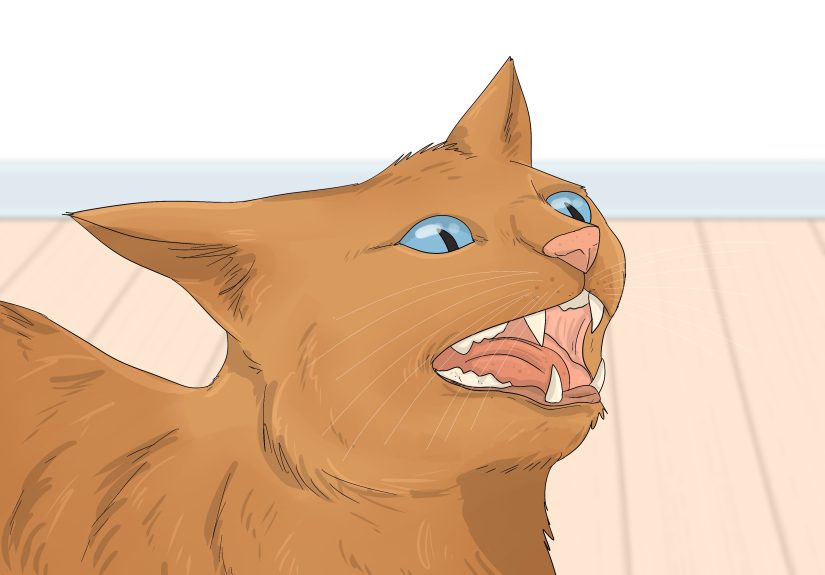
Play can include the occasional chirp, puff, or protest noise, especially if one cat gets overstimulated. But real fighting usually comes with the classic soundtrack: hissing, growling, yowling, shrieking, or harsh, drawn-out vocalizing.
If your cats are mostly silent while they chase and wrestle, that leans toward play. If the room suddenly sounds like a haunted violin section, that leans toward fighting.
5. The Claws and Bites Are More Controlled
Play fighting can involve swats and mock bites, but they are usually inhibited. Cats in play often keep enough control that they do not cause actual injury. You may see paws flying, but not much damage.
In a real fight, contact becomes harder, more committed, and more dangerous. If you see fur flying, skin punctures, scratches, or obvious pain, the interaction has moved beyond harmless play.
6. Their Fur Stays Mostly Flat
When cats feel seriously threatened, they often try to look bigger. That means puffed fur, raised hackles, a bottlebrush tail, or an arched back. Those are classic conflict signals.
During ordinary play, the fur usually stays flatter, and the cats do not seem focused on making themselves look intimidating. A puffed-up cat is not saying, “What a delightful game.” That cat is saying, “Back off.”
7. The Staring Is Brief, Not Intense and Frozen
Playful cats may watch each other closely, but the mood tends to stay active and fluid. In contrast, pre-fight behavior often includes a hard stare, very wide eyes, and a stillness that feels loaded.
If both cats freeze, lock eyes, and look like tiny statues powered by spite, that is a warning sign. Cats often advertise their discomfort before they escalate.
8. They Pause and Reset
Healthy play usually includes little breaks. One cat may wander off for a moment. The other may groom, shake it off, or casually look out the window as if nothing happened. Then the game resumes.
Those pauses matter. They show both cats are regulating themselves. Real fighting tends to have more intensity and less willingness to reset. When one cat wants distance and the other will not allow it, that is no longer balanced play.
9. Nobody Looks Desperate to Escape
Ask yourself a simple question: does one cat seem trapped? A playful cat may run, but usually not in panic. In a real conflict, one cat often tries hard to flee, hide, or put space between them while the other keeps pursuing.
If one cat repeatedly darts under furniture, presses into corners, or tries to leave and gets chased down every time, that is a red flag. A game requires consent. Feline wrestling is no exception.
10. Their Tails Are Expressive, But Not Pure Fury
Tail language can tell you a lot. During play, tails may twitch with excitement, but extreme thrashing often signals agitation. A tail puffed into a bottlebrush, held low and tense, or lashing hard side to side suggests the cat is stressed, fearful, or ready to fight.
Think of the tail as the emotional subtitle track. If the subtitle says, “I am becoming deeply annoyed,” believe it.
11. They Act Normal Around Each Other Afterward
This is the big-picture test. After play, cats often go back to normal life. They may eat, groom, nap, sit in the same room, or simply ignore each other without drama. The interaction ends, and the world keeps turning.
After a real fight, the tension usually lingers. One cat may keep staring, blocking pathways, hiding, avoiding shared spaces, or showing stress around food, litter boxes, or favorite resting spots. If the “match” ends but the social unease does not, you are dealing with conflict, not innocent play.
Signs the Situation Has Crossed Into a Real Fight
If you want the short version, real cat fighting often includes these danger signs: pinned ears, dilated pupils, tense crouched posture, puffed fur, aggressive vocalization, full-contact grabbing, injury, hard staring, and one cat trying to escape while the other keeps attacking. That combination means you should not shrug it off as “cats being cats.”
It is also worth noting that sudden aggression can have a medical cause. Pain, arthritis, dental disease, thyroid problems, neurological issues, and other health changes can make a cat more irritable or reactive. If your cat suddenly starts fighting when that was never part of their normal behavior, a veterinary check is smart.
What to Do If Your Cats Are Actually Fighting
Do not grab them with your hands
This is the heroic move people imagine making, and it is usually the wrong one. Frightened or aroused cats can redirect aggression fast. Your hands are not diplomatic tools. They are soft targets.
Interrupt safely
Instead, use a safer interruption: make a sudden noise from a distance, toss a blanket between them, place a barrier in their line of sight, or separate them into different rooms. The goal is to break the moment without getting physically involved.
Give them time to decompress
Do not force an immediate reunion like an awkward family sitcom ending. Let both cats cool down separately with access to water, litter, hiding spots, and calm space.
Reduce competition
Multi-cat households work better when resources are plentiful. That means separate feeding areas, enough litter boxes, more than one water station, scratching posts, hiding spaces, window perches, and vertical territory like cat trees or shelves.
Build in daily play
Bored cats are more likely to create their own entertainment, and sometimes that entertainment is “annoy my housemate.” Structured interactive play helps burn energy in productive ways. Short sessions once or twice a day can go a long way, especially for younger, high-energy cats.
Reintroduce slowly if needed
If there has been a serious fight, a gradual reintroduction is often the safest path. Start with separation, scent swapping, positive associations through a barrier, and very short supervised sessions. Go at the pace of the more stressed cat, not the pace of your personal impatience.
Common Mistakes Cat Owners Make
The biggest mistake is assuming every rough-looking interaction is aggression. That can lead owners to interrupt healthy play constantly, which may create frustration rather than peace.
The second big mistake is the opposite: ignoring repeated bullying because “they’ll work it out.” Cats are not tiny marriage counselors. If one cat is fearful, hiding, losing access to resources, or getting hurt, the problem needs intervention.
Another mistake is punishment. Yelling, spraying, hitting, or physically scolding cats usually adds fear and can make aggression worse. Cats learn better from safe interruptions, environmental changes, and positive associations than from dramatic lectures they did not ask for.
Real-Life Experiences: What This Looks Like in Everyday Homes
In many homes, the first clue that cats are playing is not what happens during the wrestling, but what happens five minutes later. Owners often notice that after a noisy burst of zoomies, both cats stroll into the kitchen together like nothing happened. One jumps onto a chair, the other cleans a paw, and the supposed “victim” is perfectly happy to go right back for round two. That pattern usually points to play. The intensity may look chaotic to humans, but the cats are staying socially comfortable.
A very common situation happens with kittens and young adults. One cat barrels down the hallway, launches into a dramatic shoulder tackle, and both of them roll like furry tumbleweeds. It looks outrageous, but the roles keep changing. The chaser becomes the chased. The cat on the bottom wriggles free and comes back for more. There may be a tiny squeak, but not the deep, sharp sound of fear. Owners in these situations often realize the cats are not upset at all. They are just enthusiastic, and possibly auditioning for a sports network no one requested.
By contrast, homes with real tension usually describe a different rhythm. One cat starts avoiding certain rooms. The other cat appears in doorways, stares, and blocks access to food, water, or the litter box. Instead of mutual wrestling, there is one-sided pursuit. The chased cat does not circle back to continue the game. That cat disappears under the bed, hides on top of a cabinet, or waits until the house is quiet to move around. Even without a dramatic fight scene, that pattern tells you the relationship is strained.
Another real-world clue shows up around introductions. When a new cat arrives, owners sometimes expect instant friendship and get worried when the resident cat hisses. A hiss alone does not automatically mean disaster. Cats often need time, distance, and positive associations before they feel comfortable. Many owners see progress in small moments first: the cats eat treats near each other, play on opposite sides of a gate, or calmly ignore one another. That “boring” behavior is actually wonderful. In cat diplomacy, peaceful indifference can be a huge win.
Some of the hardest cases involve overstimulation. Owners report that play starts normally, then suddenly one cat’s tail begins lashing, the ears turn back, and the whole mood changes. That is the turning point. If the owner interrupts early with a toy toss, brief separation, or a redirect into a different activity, the cats often settle quickly. If nobody notices the body language, the game can tip into real conflict. Over time, experienced owners get better at spotting that shift before it explodes.
Senior cats add another layer. A younger cat may try to play the same way with an older cat who has arthritis or less patience. The younger cat thinks, “Let us wrestle.” The older cat thinks, “Absolutely not.” In these homes, the solution is often not punishment but management: more interactive play for the younger cat, more escape routes and high resting spots for the older cat, and more respect for different energy levels.
The most reassuring experience many cat owners report is that once they learn the body language, the mystery fades. They stop panicking at every pounce and stop ignoring the truly important signs. They recognize when the cats are simply having a rowdy game and when one cat is saying, very clearly, “I need space now.” That is the sweet spot: less guesswork, fewer unnecessary interventions, and a calmer, safer home for everyone involved.
Final Thoughts
When cats play, the action can be wild, fast, and slightly ridiculous, but it stays mutual, flexible, and relatively controlled. When cats fight, the energy shifts. Bodies stiffen, ears flatten, eyes harden, vocalizations intensify, and one cat often stops participating willingly.
If you remember nothing else, remember this: look for balance, body language, and what happens afterward. Those three clues will tell you more than the dramatic wrestling ever will. Your cats may still perform like tiny stunt professionals, but you will be better equipped to know whether you are watching a game or the feline version of a serious dispute.





 Close
Close