
Table of Contents >> Show >> Hide
- Wired Earbuds Still Do the Most Important Thing Better: They Just Work
- No Charging Is a Feature, Not a Missing Feature
- Latency Is Still a Real Reason to Go Wired
- Wired Earbuds Often Deliver Better Value Per Dollar
- Sound Quality Is About More Than Marketing
- Wired Earbuds Are Also a Rebellion Against Disposable Tech
- AirPods Are Great, But They Solve Different Problems
- Why Wired Earbuds Fit My Actual Life Better
- A 500-Word Real-Life Experience: Why Wired Earbuds Keep Winning for Me
- Final Thoughts
In 2025, choosing wired earbuds can feel a little like bringing a paperback to a room full of tablets. People look at you with polite concern, as if you’ve just announced that you still use cash, paper maps, and possibly a sword. Meanwhile, AirPods have become the default answer for millions of people: easy pairing, seamless Apple integration, strong microphones, active noise cancellation, and the kind of convenience that makes you forget how annoying charging cases really are until the battery dies at exactly the wrong moment.
And yet, here I am, still reaching for wired earbuds.
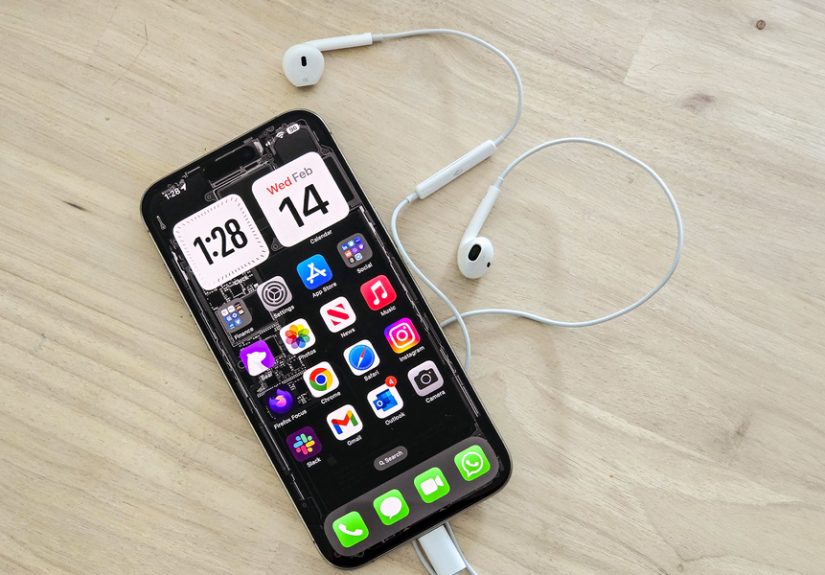
Not because I think wireless audio is a scam. It isn’t. AirPods are good. In many situations, they are excellent. But “excellent” is not the same thing as “best for me.” When I want reliable sound, instant connection, lower fuss, lower cost, and fewer tiny battery-related betrayals, wired earbuds still win. They are simple in the best possible way: plug in, press play, hear sound, continue living your life. No pairing dance. No battery percentage anxiety. No searching for the one bud that rolled under the passenger seat like it’s filming an escape scene.
So this is not a breakup letter to AirPods. It is more of a calm, grown-up declaration that I still prefer the old-school option because old-school still solves a shocking number of modern problems.
Wired Earbuds Still Do the Most Important Thing Better: They Just Work
The biggest reason I still choose wired earbuds over AirPods in 2025 is brutally simple: wired earbuds are ready the second I pick them up. That matters more than most people admit. When I’m taking a call, editing a video, joining a meeting, or trying to watch something without waking up half the house, I do not want a “smart” audio experience. I want a dependable one.
With wired earbuds, there is no battery to charge, no case to remember, and no moment where one earbud decides it is at 7 percent while the other is feeling optimistic at 61 percent. There is also no mystery about whether the earbuds will connect to my phone, my laptop, my tablet, or my neighbor’s television because Bluetooth decided chaos builds character.
That instant reliability is underrated. We tend to talk about convenience as if wireless automatically owns the category, but convenience is not just about freedom of movement. It is also about reduced friction. Plug-and-play is still one of the lowest-friction experiences in consumer tech, and that is exactly why wired earbuds keep surviving every year people predict their extinction.
No Charging Is a Feature, Not a Missing Feature
Wireless earbuds are convenient until they are not. The moment you need them and they are dead, convenience becomes comedy. Unfunny comedy. The kind where you stand in an airport gate area digging through your bag for a cable while your boarding group gets called.
Wired earbuds do not ask for that kind of relationship maintenance. They do not need topping off overnight. They do not need a charging case that is somehow always low on power right when you assumed it was full. They do not gradually become less dependable as a tiny internal battery ages. They just exist, quietly, like the most emotionally stable person in a group chat.
That matters in long workdays. It matters during travel. It matters when you are using audio for practical reasons rather than lifestyle reasons. If I am on my third video call of the day, or commuting while bouncing between podcasts, voice notes, and short-form video, I do not want one more battery-powered thing asking for attention. My phone already does that job with enthusiasm.
Latency Is Still a Real Reason to Go Wired
For casual music listening, wireless audio is usually fine. For anything timing-sensitive, “fine” can become irritating fast. Anyone who has edited video, played mobile games, monitored audio, or watched a badly synced clip knows the problem. Even small delays can make sound feel detached from the screen, which is one of those annoyances that starts tiny and ends with you muttering at your device like it has personally wronged you.
Wired earbuds still shine here. The connection is direct, stable, and predictably fast. That makes them easier to trust for gaming, content creation, monitoring, livestreaming, and everyday video watching when you are picky about sync. AirPods and other wireless earbuds have improved a lot, but if you want the least drama and the most consistency, wired audio remains the safer bet.
This is one of those categories where the “older” technology does not feel old at all. It feels efficient. A cable may not look futuristic, but neither does tapping your earbud three times and praying the lag disappears.
Wired Earbuds Often Deliver Better Value Per Dollar
Another reason I still choose wired earbuds over AirPods in 2025 is value. With wireless earbuds, part of what you pay for goes into batteries, chips, antennas, charging hardware, software features, and all the engineering required to make tiny objects behave like miniature computers. That is impressive. It is also expensive.
Wired earbuds can put more of the budget into the actual audio hardware and physical design. That does not mean every cheap wired pair sounds magical, because some sound like they were tuned inside a soup can. But it does mean you can often get solid everyday sound, a decent microphone, and straightforward controls for a fraction of what AirPods cost.
That is especially true if your needs are practical. If you mainly listen to music, watch videos, take calls, and want something compact that works immediately, a good wired pair makes a lot of economic sense. When a wired pair costs closer to lunch money than rent money, the risk feels a lot lower too.
And let’s be honest: losing a pair of AirPods hurts in a very specific way. It is not just financial pain. It is also the smug little voice in your head saying, “You paid how much for two tiny white escape artists?” Losing a pair of wired earbuds is annoying. Losing AirPods feels like a personal character flaw.
Sound Quality Is About More Than Marketing
AirPods are not bad-sounding earbuds. In fact, Apple has spent years improving sound quality, call performance, and features that make the listening experience more polished. But wired audio still has a certain honesty to it. There is less processing theater. Less software magic pretending to be simplicity. Less reliance on codecs, wireless conditions, and battery management to deliver a consistent experience.
For people who care about the sound itself more than the ecosystem around the sound, wired earbuds are still appealing. Even when the difference is not night and day for everyday listeners, the consistency matters. A wired connection feels direct. It removes variables. And the more variables you remove, the easier it becomes to trust what you are hearing.
That is why wired earbuds remain popular with people who record, monitor, edit, or just enjoy knowing that their audio chain is not negotiating with the room, the signal, the battery, and the firmware before it reaches their ears.
Wired Earbuds Are Also a Rebellion Against Disposable Tech
This part matters more in 2025 than it did a few years ago. Wireless earbuds are marvels of miniaturization, but many are also difficult to repair. Once those tiny internal batteries degrade, the experience gets worse, and fixing them is not always practical. That makes a lot of true wireless gear feel semi-disposable, which is a fancy way of saying “expensive until suddenly not worth the hassle.”
Wired earbuds are not immortal, but they are refreshingly low-drama. No charging case battery. No two separate bud batteries aging at different speeds. Fewer components that can fail in invisible, infuriating ways. If a wired pair breaks, the problem is often obvious: damaged cable, worn connector, dead speaker. That is annoying, yes, but also easier to understand. There is value in that.
And there is a bigger-picture issue here too. Tiny wireless devices pack lithium-ion batteries into products that many people replace frequently. That may be the tradeoff for convenience, but it is still a tradeoff. Choosing wired earbuds can feel like choosing a less disposable path, especially if you do not need all the premium wireless extras in the first place.
AirPods Are Great, But They Solve Different Problems
To be fair, AirPods remain a strong choice in 2025. They are especially compelling for iPhone users who want seamless pairing, noise cancellation, transparency mode, hands-free features, and better mobility. If you work out often, walk around a lot, or simply hate cables with the intensity of a thousand suns, AirPods make perfect sense.
They also shine when convenience means freedom, not simplicity. There is a real difference. Wireless earbuds let you move around the kitchen, the gym, the office, or the airport without getting snagged on anything. That is useful. For many people, it is worth paying for.
But my argument is not that AirPods are bad. My argument is that they are overqualified for what I need most of the time. I do not always need active noise cancellation, spatial audio, or a smart charging ecosystem. Sometimes I just need clear sound, a decent mic, and an audio product that behaves like a toaster: one job, done reliably, no ceremony.
Why Wired Earbuds Fit My Actual Life Better
They are better for work
When I am on calls, recording quick voice clips, or hopping between devices, wired earbuds feel immediate and dependable. I do not have to wonder whether my audio output switched to the wrong device or whether the earbuds are connected but somehow not really connected, which is a deeply wireless kind of problem.
They are better for travel backups
A wired pair in a bag is the audio equivalent of carrying an umbrella. You may not always need it, but when you do, you are very glad it is there. They are great for flights, trains, hotel rooms, old laptops, seatback screens, adapters, and all the random situations where simple gear beats smart gear.
They are better for my budget brain
I enjoy nice tech, but I also enjoy not babying it. Wired earbuds let me relax. I do not panic if they get tangled. I do not perform a dramatic pocket pat-down every six minutes. I do not feel like I am carrying a tiny mortgage in my ears.
They are better for “grab and go” listening
If I want to listen right now, wired wins right now. That speed matters. The fastest interface in consumer electronics is still the one that removes the most decisions.
A 500-Word Real-Life Experience: Why Wired Earbuds Keep Winning for Me
My most honest answer is that wired earbuds keep winning in the small moments, and small moments are where products earn their place. The argument for AirPods usually sounds spectacular on paper: better integration, better features, better freedom. The argument for wired earbuds sounds boring by comparison: they work, they last through the day, and they do not need to be fed electricity like a digital pet. But boring has a funny habit of becoming wonderful once real life enters the chat.
I noticed this on workdays first. I would sit down at my desk, ready to join a meeting, and my wireless earbuds would already have a personality. Maybe they were connected to my phone instead of my laptop. Maybe one was low. Maybe the case had not charged correctly. Maybe audio was technically connected but the microphone was doing something mysterious and anti-cooperative. None of this was catastrophic. It was just irritating in a slow, cumulative way. Wired earbuds removed that friction. I plugged them in, and the problem was over before it had time to become a mood.
Then there was commuting. Wireless earbuds are supposed to be ideal for this, and to be fair, sometimes they are. But I kept running into tiny inconveniences: touch controls firing when I adjusted an earbud, one bud slipping loose, or that weird moment when you put one bud away and suddenly your audio behaves like it is improvising jazz. Wired earbuds felt less glamorous, but also less needy. They stayed predictable. I could take one out quickly, let it hang, pop it back in, and move on with my life. No swipes, no taps, no tiny case management strategy.
Travel made the difference even clearer. A wired pair became my dependable backup for flights, hotel TVs, laptops, handheld devices, and borrowed adapters. It was the pair I could stuff into a pocket without feeling precious about it. That changed how I used them. I was more relaxed. I was less protective. I did not worry about battery percentages or whether the case would disappear somewhere between the boarding gate and the hotel nightstand.
The strangest part is that wired earbuds also helped me listen more intentionally. Because they are simpler, I spend less time fiddling with settings and more time actually hearing what I put on. Music starts faster. Podcasts feel easier to dip into. Calls become tools instead of mini tech rehearsals. It sounds dramatic to say a cable improved my relationship with audio, but in a quiet, practical way, it did.
That is why I still choose wired earbuds over AirPods in 2025. Not because I am anti-progress. Not because wireless is bad. But because the best product is not always the one with the longest feature list. Sometimes it is the one that asks the least from you. Wired earbuds ask very little. In return, they give me reliability, value, and peace of mind. And honestly, that is a pretty great deal for something small enough to live in a pocket.
Final Thoughts
In a market obsessed with smarter, smaller, and more expensive audio gear, wired earbuds remain refreshingly practical. They are not flashy, but they are useful. They are not trendy, but they are trustworthy. And in 2025, when so much technology demands constant charging, syncing, updating, and replacing, there is something deeply satisfying about a product that still succeeds by being simple.
So yes, AirPods are impressive. They deserve their popularity. But when I look at my actual habits, my work routine, my travel needs, and my tolerance for avoidable tech nonsense, wired earbuds still make more sense. They are cheaper, more predictable, lower-latency, and less demanding. That combination keeps winning.
Sometimes progress means adding more features. Sometimes progress means realizing you were already holding the right tool.





 Close
Close