
Table of Contents >> Show >> Hide
- What Is a Mandoline Slicer, Exactly?
- Why Use a Mandoline Instead of a Knife?
- Mandoline Safety First: The Rules That Matter Most
- How to Use a Mandoline Slicer Step by Step
- Best Foods to Slice on a Mandoline
- Common Mandoline Mistakes That Lead to Trouble
- How to Clean a Mandoline Slicer Safely
- How to Store a Mandoline Without Future Regret
- Should You Buy a Safer Enclosed Mandoline?
- Final Thoughts: Respect the Tool, Love the Results
- Real-World Experiences: What Using a Mandoline Actually Feels Like
- SEO Tags
If you have ever admired those paper-thin potato slices in a gratin, the whispery ribbons of cucumber in a salad, or the mountain of shaved cabbage in a slaw that looks suspiciously restaurant-perfect, chances are a mandoline slicer was involved. A mandoline is one of those kitchen tools that can make you feel like a total pro for about thirty seconds. Then you notice the blade. Then the blade notices you back.
That is the magic and menace of the mandoline slicer. It is fast, precise, and wildly efficient. It is also not the tool for daydreaming, texting, or trying to prove you are “basically fine without the guard.” You are not basically fine without the guard. None of us are. The mandoline is the sports car of vegetable prep: thrilling, useful, and a terrible place to test your luck.
This guide covers exactly how to use a mandoline slicer safely, how to choose the right settings, what foods work best, what mistakes to avoid, and how to clean and store it without turning dish duty into a contact sport. By the end, you will know how to use a mandoline slicer efficiently, confidently, and with all ten fingers still available for high-fives.
What Is a Mandoline Slicer, Exactly?
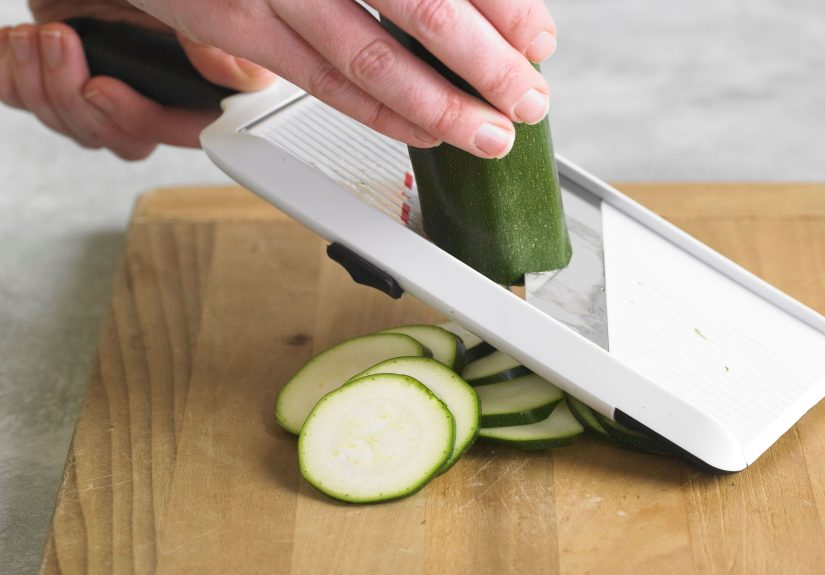
A mandoline slicer is a kitchen tool designed to make uniform cuts quickly. At its simplest, it is a flat surface with an exposed blade set into it. You slide food across the blade, and it produces slices that are much more even than what most people can do with a knife on a random Tuesday night.
Many mandolines also have adjustable thickness settings and interchangeable blades for julienne cuts, waffle cuts, crinkle cuts, or matchsticks. Some are compact handheld models; others sit on the counter with legs or a kickstand for stability. Some newer designs are built with enclosed or chute-style safety features that keep your hand farther from the blade. That extra protection can be a big confidence boost for beginners.
The biggest reason people love mandolines is consistency. Even slices cook at the same rate, which matters a lot for dishes like scalloped potatoes, chips, gratins, pickles, slaws, and shaved salads. A knife can absolutely get the job done. A mandoline just gets the job done with less fuss and fewer oddly thick “bonus slices” hiding in the pile.
Why Use a Mandoline Instead of a Knife?
A mandoline slicer shines when you want speed and uniformity. If you are slicing one tomato for a sandwich, a knife is easier. If you are slicing three pounds of potatoes for a casserole or half a cabbage for taco night, the mandoline starts to look like the hero of the week.
Here is where a mandoline really earns its keep:
- Even cooking: Potato slices of the same thickness cook at the same pace.
- Better texture: Shaved fennel, cucumber, onion, cabbage, radish, and apple taste more delicate when sliced thinly.
- Faster prep: You can knock out a pile of vegetables in minutes.
- Cleaner presentation: Your salads, gratins, and garnishes look polished instead of “rustic” in the suspicious sense.
That said, the mandoline is not mandatory for every ingredient. It is best for firm produce that benefits from thin or precise cuts. It is not always the best choice for tiny items, very soft produce, or anything that makes you feel wobbly and uncertain. There is no shame in switching to a knife. The vegetables will not gossip about you.
Mandoline Safety First: The Rules That Matter Most
Before you slice a single cucumber, let’s talk about the one thing every sensible person learns about mandolines: the blade is extremely sharp. That sharpness is why it works so well. It is also why you need a plan before you start.
1. Always use the hand guard if your mandoline came with one
The hand guard is not decorative. It is not optional. It is not that weird piece you lose in a drawer and pretend you never had. It is there to grip the food and keep your hand farther from the blade. Yes, it can feel awkward at first. Yes, it is still better than introducing your fingertip to stainless steel.
2. Wear a cut-resistant glove for extra protection
Many experienced cooks use a cut-resistant glove on the hand guiding the food, especially when the hand guard feels clunky or the ingredient is slippery. A cut-resistant glove is not a superhero cape, but it adds a helpful layer of protection. Think of it as a seat belt, not a force field.
3. Set the mandoline on a stable surface
If your model has a kickstand or non-slip feet, use them. Place it on a flat cutting board or countertop. A sliding mandoline is a bad time. If it can perch over a bowl securely, that is great for catching slices, but only if the setup feels solid.
4. Start with dry hands and dry produce
Wet cucumbers and oily fingers are not a confidence-building combo. Pat your produce dry, especially smooth vegetables like zucchini, cucumbers, and potatoes. The less slip, the more control.
5. Make a flat side when needed
Round produce likes to roll. Give onions, potatoes, apples, or beets a stable flat side before you start if the shape feels awkward. Stability beats drama every time.
6. Stop before the last nub
This is where ambition becomes a problem. Do not try to slice the very last little piece of vegetable. Save that chunk for stock, soup, roasting, or knife work. The final inch is where overconfidence likes to stage its comeback tour.
7. Focus only on the slicing
No multitasking. No reaching for your phone. No yelling across the room, “Can someone check the oven?” Mandolines reward attention and punish autopilot.
How to Use a Mandoline Slicer Step by Step
Step 1: Read the settings before you start
Every mandoline is a little different. Some use a dial. Some use notches. Some have interchangeable blades you swap in for julienne or crinkle cuts. Before food enters the scene, figure out which blade is active and what thickness setting you want. Thin slices are perfect for chips, pickles, and shaved salads. Slightly thicker slices work better for gratins, roasted vegetables, or layered casseroles.
Step 2: Prep the produce
Wash it, dry it, peel it if needed, and trim it to a manageable shape. Large potatoes, cabbage wedges, onions, apples, fennel bulbs, radishes, sweet potatoes, and cucumbers are all common mandoline candidates. If the ingredient is huge or oddly shaped, cut it into smaller sections so it fits securely in the guard.
Step 3: Secure the food in the guard
Press the food firmly into the hand guard so it does not wobble. If you are using a cut-resistant glove as backup, great. You still want the food attached securely. A loose ingredient is harder to control and more likely to shift mid-slice.
Step 4: Use smooth, even strokes
Run the food across the blade in a steady motion. Do not slam it. Do not saw at it. Do not try to win a race against a potato. Firm, even pressure is the goal. Let the blade do the work. If you find yourself forcing the food, stop and check the setup. You may need a different angle, a different thickness, or a flatter side on the ingredient.
Step 5: Watch the food, not your growing sense of power
As the ingredient gets smaller, keep an eye on how much remains between your hand and the blade. When it gets too short to feel safe, stop. Congratulations, you have just won the highly competitive event called “not slicing the last nub.”
Step 6: Move sliced food out of the way
If slices collect underneath the blade and start crowding the work area, pause and clear them. Keeping the area tidy improves control and helps you see what you are doing.
Best Foods to Slice on a Mandoline
The best foods for a mandoline slicer are usually firm fruits and vegetables that benefit from uniform slices.
Great choices include:
- Potatoes for gratins, chips, and dauphinoise
- Cucumbers for salads and pickles
- Cabbage for slaw
- Onions for sandwiches, burgers, and caramelizing
- Radishes for salads and garnishes
- Fennel for shaved salads
- Apples and pears for tarts and salads
- Zucchini and eggplant for layering or roasting
- Carrots and sweet potatoes for chips and matchsticks
Some foods can be tricky. Soft tomatoes, ripe peaches, or squishy mozzarella are not beginner-level projects. Extra-hard or oddly shaped foods may also be awkward unless your mandoline is especially sturdy. When in doubt, use a knife. Bravery is overrated when dinner is on the line.
Common Mandoline Mistakes That Lead to Trouble
Using it without the guard because “it is faster”
This is the kitchen version of saying you do not need sunscreen because you are “only outside for a minute.” It is a bad plan. Use the guard.
Slicing too fast
Speed makes for fun social media videos and less fun real-life accidents. You do not need to move quickly for a mandoline to be effective. Slow is smooth, and smooth is safe.
Trying to force uneven produce
If your onion is wobbling, your potato is too long, or your beet is skidding around like it has places to be, stop and reshape it. Trimming for stability is part of the process, not cheating.
Using a dull or damaged mandoline
A mandoline blade should cut cleanly. If it feels rough, catches on produce, or requires extra force, it may be worn or damaged. That is not just annoying; it can be less safe because you are more likely to push harder than you should.
Cleaning it carelessly
A lot of people focus on slicing injuries and forget that cleanup is another danger zone. Reaching into soapy water for a blade you cannot fully see is a terrible surprise nobody needs.
How to Clean a Mandoline Slicer Safely
Unplugging a toaster is obvious. Respecting the blade during cleanup should be just as obvious, but somehow this is where many people get a little too casual. Do not.
Safe cleaning tips:
- Clean it as soon as you are done so food does not dry onto the blade.
- Use a brush, thick sponge, or cloth with deliberate movements away from the sharp edge.
- Do not reach blindly into a sink full of suds.
- If your model has removable blades, remove them carefully and wash them one at a time.
- Follow the manufacturer’s instructions for dishwasher safety. Many parts may be top-rack safe, but not every mandoline is dishwasher-friendly.
After washing, dry it thoroughly before storing. Moisture and metal do not always make the happiest long-term roommates, and a damp blade stored loosely is not doing anyone any favors.
How to Store a Mandoline Without Future Regret
Store your mandoline with the blade protected if your model has a cover, lock, or folded position. Keep the hand guard with it so you are not tempted to “just do a few slices” without it next time. If your mandoline has interchangeable blades, store them in a labeled container or built-in compartment. Loose blades drifting around a kitchen drawer are chaos in physical form.
If you use the mandoline often, keep your cut-resistant glove nearby too. Safety equipment works best when it is not hidden behind a waffle iron you forgot you owned.
Should You Buy a Safer Enclosed Mandoline?
If traditional mandolines make you nervous, an enclosed or chute-style model may be worth considering. These designs keep your hand farther from the exposed blade and can feel much more approachable for beginners. The trade-off is that they may be bulkier, less versatile with very large produce, or a bit slower. Still, for many home cooks, a slightly less flexible mandoline they will actually use safely is better than an ultra-versatile one that inspires fear and questionable decisions.
Final Thoughts: Respect the Tool, Love the Results
A mandoline slicer is not dangerous because it is evil. It is dangerous because it is excellent at being a blade. Treat it with respect, set it up properly, use the hand guard, add a cut-resistant glove if you can, and stop before the tiny end piece turns your dinner prep into a dramatic life lesson.
Once you get comfortable, the mandoline becomes one of the most useful tools in your kitchen. It can make weeknight prep faster, salads prettier, casseroles more evenly cooked, and homemade chips dangerously easy to justify. The key is not fear. The key is paying attention and building good habits from the start.
So yes, use the mandoline. Slice those potatoes. Shave that fennel. Make those pickles. Just do it like a person who would also like to continue opening jars, tying shoelaces, and gesturing confidently for the foreseeable future.
Real-World Experiences: What Using a Mandoline Actually Feels Like
The first time I used a mandoline slicer, I had the same emotional arc most people do: curiosity, delight, overconfidence, and then sudden respect. I was making scalloped potatoes and thought, “Wow, this is so much easier than using a knife.” Two minutes later, I understood why every experienced cook sounds like a camp counselor when they talk about mandoline safety. The tool was incredible. It was also very clearly not messing around.
What surprised me most was how quickly a mandoline changes your cooking. Potatoes that used to take forever to slice suddenly became neat, identical stacks. Cucumbers for salad came out thin enough to fold. Onions for burgers looked clean and even instead of a little chaotic. The results were so good that I immediately understood why people swear by this tool for gratins, slaws, chips, and shaved vegetable salads.
But the learning curve is real. Early on, the hand guard felt awkward, almost like trying to write with oven mitts on. I kept wanting to remove it because I thought I could get better control with my bare hand. That idea lasted exactly until the vegetable got shorter and my common sense returned from vacation. Once I committed to using the guard consistently, the whole process became less stressful. It stopped feeling like a dare and started feeling like a technique.
I also learned that speed is a trap. When you watch someone experienced using a mandoline, it looks effortless and quick. When a beginner tries to copy that speed, the tool suddenly feels much scarier. The best slices I have ever gotten came from slow, smooth strokes with steady pressure. Not dramatic swipes. Not aggressive chopping energy. Just calm, repeatable motion.
Another real-life lesson: shape matters. A round potato that wobbles is annoying. A half onion with a flat side is cooperative. A cabbage wedge can be a dream on a mandoline because it is easier to control, while a tiny radish near the end can turn into a “maybe I should switch to a knife” moment. Learning when not to use the mandoline is part of learning how to use it well.
One of the most practical changes I made was keeping a cut-resistant glove in the same drawer as the mandoline. Before that, the glove lived somewhere else, which meant I was less likely to grab it. Once it became part of the same setup, I used it far more often. That one tiny organizational decision made me more consistent and more relaxed every time I pulled the slicer out.
Cleanup was the other eye-opener. Slicing is the flashy part, but cleaning is where carelessness likes to sneak in. I once started washing the mandoline while distracted and realized halfway through that I was holding a sponge far too casually near the blade. Since then, I clean it with the same level of attention I use while slicing. Brush first, wipe carefully, dry fully, store safely. It is not dramatic, but it is smart.
If you are new to mandolines, the best experience you can have is a boring one. No close calls. No “I almost got myself.” No storytelling material for later. Just a stable setup, a guarded hand, a pile of beautifully sliced vegetables, and the deeply satisfying feeling that dinner prep went smoothly. Honestly, that is the dream. A mandoline should make you feel efficient, not heroic.
And once you get there, it becomes one of those kitchen tools you reach for more often than expected. Not because it is flashy, but because it works. It turns a whole bowl of vegetables into something tidy and elegant with surprisingly little effort. That is a pretty nice reward for a little caution and a lot of respect.




 Close
Close