
Table of Contents >> Show >> Hide
- Why Writing Matters in Modern Medicine
- Writing Makes You Pay Attention
- Reflective Writing Builds Better Judgment
- Empathy Is Not Magic. Writing Helps Train It.
- Clear Writing Can Improve Patient Care
- Writing Helps Physicians Influence Colleagues, Systems, and the Public
- Writing Strengthens Professional Identity
- Why Physician-Writers Often Become Better Listeners
- Practical Ways Writing Makes You a Better Physician
- How Physicians Can Start Writing Without Making It Weird
- Experiences That Show the Power of Writing in Medicine
- Conclusion
Medicine has a funny relationship with writing. Doctors spend years learning how to diagnose chest pain, recognize a rash, and survive on coffee with the emotional durability of a raccoon in a thunderstorm. Then they discover that an enormous chunk of medicine is made of words. Words in charts. Words in discharge instructions. Words in emails to colleagues. Words spoken to patients and later shaped into notes, referrals, and articles. And, occasionally, words written just to make sense of the day before the day makes soup of the brain.
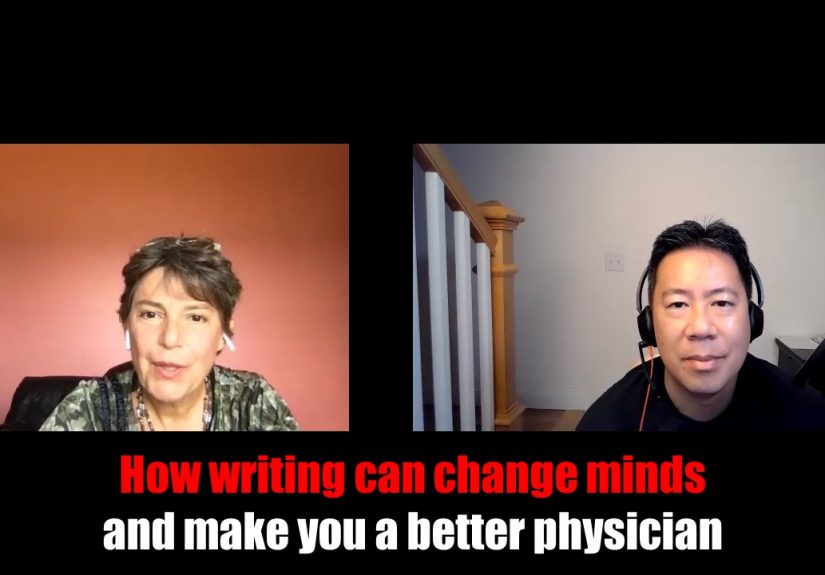
That is why writing matters more than many physicians realize. Writing is not merely a documentation chore with a keyboard attached. Done well, writing can sharpen clinical thinking, improve empathy, strengthen doctor-patient communication, influence public conversations, and help physicians become more reflective, more human, and, yes, better at the actual job. If that sounds dramatic, good. Medicine is dramatic. There are pagers, impossible schedules, and charts that multiply in the dark.
In today's clinical world, writing in medicine is part craft, part mirror, and part megaphone. It helps physicians understand what patients are saying, what they themselves are feeling, and what the public needs to hear. That combination can change minds, including the writer's own. And when a physician's mind changes for the better, patients often feel the difference first.
Why Writing Matters in Modern Medicine
A physician writes constantly, whether or not that physician identifies as “a writer.” Progress notes, consult letters, patient portal messages, discharge summaries, research abstracts, op-eds, reflective essays, educational handouts, speeches, and even condolence notes all belong to the same family. They are acts of interpretation. They take raw experience and shape it into meaning.
That shaping process is where the real value begins. When doctors write carefully, they do more than record events. They notice patterns, hear subtext, and slow down enough to ask a better question. Why was this patient angry? What did I miss in that rushed encounter? Why did the family nod when I explained the plan but still look terrified? Why does this note make the patient sound like a problem instead of a person?
Those are not small questions. They sit at the heart of narrative medicine, reflective writing in medicine, and physician communication. Writing gives clinicians a way to revisit clinical encounters with fresh eyes. That second look often reveals what the first one missed.
Writing Makes You Pay Attention
The first gift of writing is attention. Good writing demands close observation. You cannot write clearly about a patient encounter unless you have actually noticed what happened. Not just the lab values and the medication list, but the hesitation before the answer, the spouse who keeps correcting the story, the joke that landed flat, the fear hidden under “I'm fine.”
In medicine, attention is a clinical skill. Writing trains it. A reflective paragraph about a difficult visit can expose assumptions that flew under the radar in real time. A carefully written case summary can reveal contradictions that point toward the correct diagnosis. A patient-centered note can remind the physician that the person in Bed 12 is not “the pancreatitis in 418,” but a school bus driver who is worried about missing rent.
That is one reason physician-writers often seem unusually perceptive. Writing teaches them to look twice. Once with the clinician's eye, and again with the human eye. The second look is often where wisdom lives.
Reflective Writing Builds Better Judgment
There is a reason medical educators keep returning to reflective writing. Reflection is not a fluffy extracurricular activity reserved for people who own fountain pens and say things like “liminal space.” In medicine, reflection improves judgment.
When physicians write about a clinical experience, they are forced to organize thoughts, examine emotions, and identify the beliefs driving decisions. That process can improve self-awareness, which matters because a doctor who does not understand personal bias, frustration, overconfidence, or fatigue is more likely to let those forces sneak into care.
Consider the difference between thinking, “That patient was noncompliant,” and writing a full page about the same visit. By the second paragraph, the doctor may realize the patient could not afford the medication, did not understand the instructions, or had been trying to care for a parent with dementia. One label collapses complexity. Writing reopens it.
That is how writing changes minds. It interrupts lazy conclusions. It makes snap judgments work overtime. It invites humility into rooms where certainty can get a little too comfortable.
Empathy Is Not Magic. Writing Helps Train It.
Physician empathy is often discussed as though some doctors simply arrive with it fully assembled, like a premium appliance. In reality, empathy can be practiced, strengthened, and refined. Writing helps with that because it asks physicians to imagine another perspective with discipline rather than sentimentality.
When a doctor writes about a patient's story, the act itself can deepen understanding. Narrative exercises, close reading, journaling, and even short reflective prompts encourage doctors to pause long enough to ask, “What is this illness like from the inside?” That question changes bedside manner, but it also changes decisions. A physician who better understands fear, shame, confusion, or cultural context is more likely to communicate clearly and recommend care patients can realistically follow.
Empathy in medicine is not about becoming emotionally soggy. It is about becoming accurate. Patients do not experience disease as an abstract pathology. They experience it in bodies, families, jobs, identities, and histories. Writing helps physicians remember that a diagnosis is only one chapter, not the whole book.
Clear Writing Can Improve Patient Care
Here is where the keyboard gets clinical. Not all medical writing is reflective. Some of it needs to be plain, direct, and beautifully boring. That matters because patients cannot follow instructions they do not understand.
A physician who learns to write clearly becomes more effective in patient care. Discharge instructions become less confusing. Portal messages become less intimidating. Patient education materials become more usable. Consultation notes become easier for other clinicians to act on. Public-facing health messages become more persuasive because they make sense to actual human beings instead of sounding like a committee wrote them during a hostage situation.
Health communication is not separate from medicine. It is medicine. The right treatment poorly explained can function like the wrong treatment. Writing in plain language helps bridge the gap between expertise and understanding. And in a time when patients are drowning in misinformation, that skill is not optional. It is part of safety, trust, and adherence.
Writing Helps Physicians Influence Colleagues, Systems, and the Public
Many doctors think writing matters only in exam rooms and electronic records. Not true. Writing also changes minds far beyond the bedside.
When physicians write opinion essays, policy memos, newsletters, testimony, or educational articles, they bring frontline credibility to public conversations. A well-argued physician essay on vaccine confidence, rural access, prior authorization, maternal mortality, disability rights, or palliative care can move audiences in ways a sterile white paper cannot. Why? Because physicians often sit at the intersection of evidence and lived reality. They see where systems fail, where language harms, and where policies sound elegant until they meet a real patient at 4:47 p.m. on a Friday.
Writing is how doctors can convert witness into influence. It is also how they can advocate without shouting. A clear, humane piece of writing can challenge a bad assumption, expose a broken workflow, or persuade a hospital, legislature, or community to think differently. Sometimes it changes minds slowly. Sometimes it changes them all at once. Either way, the pen has a longer shift than the pager.
Writing Strengthens Professional Identity
One of the quietest uses of writing is also one of the most powerful: it helps physicians figure out who they are becoming. Medicine can be so demanding that clinicians drift into a strange professional autopilot. Work gets done, notes get signed, inboxes refill, and somewhere along the way the original sense of purpose starts hiding behind billing codes.
Reflective writing pushes back against that drift. It helps physicians reconnect with values, name conflicts, and process experiences that would otherwise calcify into cynicism. That matters for students, residents, and attending physicians alike. Writing can help a trainee move from simply “performing medicine” to understanding what kind of doctor they want to be.
That identity work is not indulgent. It is protective. A physician with a sturdier sense of purpose often communicates better, makes more grounded decisions, and is less likely to become emotionally flattened by the machinery of clinical life. Writing does not erase burnout, moral injury, or systemic dysfunction. But it can help prevent the soul from being completely outsourced.
Why Physician-Writers Often Become Better Listeners
The best writers are good listeners with revision habits. The same rule works in medicine. A doctor who writes regularly often becomes more attentive during conversations because writing depends on detail, cadence, contradiction, and subtext. In other words, the exact things patients bring into clinic.
When physicians care about language, they start noticing how patients describe symptoms, not just what symptoms they list. One patient says pressure. Another says heaviness. Another says “like someone parked a truck on my chest.” Those differences matter. So do the metaphors patients use for depression, pain, or grief. Writing trains the ear to hear those distinctions, and listening that carefully can improve both diagnosis and trust.
It also changes how doctors speak. The physician who has wrestled with words on the page is usually less casual about using jargon, less likely to hide behind vague phrasing, and more likely to explain uncertainty honestly. Patients notice that. They may not compliment the syntax, but they feel the respect.
Practical Ways Writing Makes You a Better Physician
1. It sharpens clinical reasoning.
Writing a case forces organization. Organization reveals gaps. Gaps lead to better questions. Better questions lead to better medicine.
2. It improves empathy without sacrificing rigor.
Reflective and narrative writing invite perspective-taking while keeping physicians grounded in observation rather than assumption.
3. It upgrades patient communication.
Doctors who practice clear writing are usually better at giving clear instructions, translating jargon, and crafting more useful patient messages.
4. It supports resilience and meaning.
Writing offers a structured way to process grief, frustration, uncertainty, and moral tension instead of pretending those things evaporate after rounds.
5. It strengthens advocacy.
Whether in op-eds, internal proposals, or public education, physician writing can shift conversations about health policy and patient care.
6. It humanizes documentation.
A better note can do more than satisfy a requirement. It can communicate the patient's reality, preserve context, and improve continuity of care.
How Physicians Can Start Writing Without Making It Weird
Doctors do not need to announce they are beginning “a sacred literary practice” while lighting a candle next to the laptop. They can start small. Write for ten minutes after a difficult case. Rewrite one patient handout in plain English. Keep a private notebook of moments that linger. Draft a short essay about a clinical lesson that changed your view. Join a writing group. Read physician essays and notice what stays with you. Write one paragraph that captures a patient encounter without reducing the person to the illness.
The goal is not performance. It is attention, clarity, and reflection. Some of the most useful medical writing will never be published. It may live in a notebook, a workshop, or a draft folder. That does not make it less valuable. Plenty of writing changes the writer first, and that is often where the ripple begins.
Experiences That Show the Power of Writing in Medicine
Spend enough time around physicians who write, and certain patterns appear. A third-year medical student scribbles in a notebook after a patient dies and realizes, for the first time, that she has been protecting herself by sounding detached. On the page, the patient stops being “the sepsis in room seven” and becomes the grandfather who kept apologizing for bothering the staff. The student returns to the hospital the next day a little less armored and a little more present. That is not nothing. That is professional formation happening in real time.
Or picture a family physician who keeps wondering why some patients leave visits confused despite careful counseling. He begins rewriting his after-visit summaries in plain language. Fewer acronyms. Shorter sentences. Direct instructions. Instead of “initiate antihypertensive therapy and monitor for orthostatic symptoms,” he writes, “Start this blood pressure medicine tomorrow morning. If you feel dizzy when standing, call us.” Suddenly, fewer portal messages arrive asking what the plan meant. Patients follow through more often. The doctor did not discover a miracle drug. He discovered that writing clearly is a form of care.
Then there is the hospitalist who starts publishing essays about prior authorization after watching delay after delay hurt real patients. At first, the writing feels small compared with the machinery of the system. One article becomes two. A local paper calls. A professional society shares a piece. Administrators begin discussing workflow changes. Colleagues start speaking up too. The doctor did not win a cape or a soundtrack, but the writing turned private frustration into public argument. Minds shifted because the message came from someone who had seen the consequences up close.
Another common experience is quieter. A resident joins a writing workshop during a brutal year and expects nothing more than mild emotional ventilation. Instead, she discovers that hearing others write honestly about shame, uncertainty, and fatigue makes her feel less isolated. Her own writing becomes less polished and more truthful. She notices that when she is kinder to herself on the page, she is less defensive with patients and nurses off the page. Again, not magic. Practice.
Even physicians who write fiction often describe a clinical benefit. Building characters teaches patience with complexity. Plot teaches causality. Dialogue teaches listening. Revision teaches humility. A sentence that looked perfect at midnight can be nonsense by morning. That lesson transfers beautifully to medicine, where first impressions are useful but dangerous if treated as sacred.
What ties all these experiences together is simple: writing slows perception just enough for insight to catch up. It helps physicians hear better, explain better, advocate better, and recover more of their own humanity in a profession that regularly asks for superhuman output. The doctor who writes may not become softer in the sentimental sense, but often becomes sharper in the moral sense: more careful with language, more curious about people, more willing to reconsider, and more skilled at turning observation into action. That kind of physician is not just easier to read. That kind of physician is better to be treated by.
Conclusion
Writing can change minds because writing changes attention. It forces physicians to look again, listen harder, and explain with greater precision. It transforms emotion into reflection, complexity into understanding, and experience into usable wisdom. In the clinic, that means better notes, clearer communication, and deeper empathy. Beyond the clinic, it means stronger advocacy, sharper teaching, and more persuasive public voice.
Most of all, writing makes physicians better by making them more awake to the people in front of them, including themselves. And in medicine, where rushed certainty is always waiting to take the wheel, that kind of wakefulness is a serious professional advantage.
Note: This article is publication-ready HTML and intentionally omits placeholder citations, editor artifacts, and code comments.






 Close
Close