
Table of Contents >> Show >> Hide
- What Real Caviar Actually Is
- How to Read a Caviar Label Like a Sharp Buyer
- Visual Signs of Real Caviar
- Texture and Taste: Where the Truth Usually Shows Up
- Important Caviar Terms That Actually Mean Something
- Real Caviar vs. Other Roe vs. Imitation
- Price, Origin, and Sustainability Clues
- Storage and Serving Clues Buyers Often Overlook
- Common Shopping Mistakes That Lead to Disappointment
- Real-World Experiences With Identifying Real Caviar
- Conclusion
If you have ever stared at a shiny little tin labeled caviar and wondered whether you were buying the real thing or just very expensive fish confetti, welcome to the club. The world of caviar is glamorous, delicious, and just confusing enough to make a shopper feel like they need a law degree, a marine biology textbook, and a monocle. The good news is that identifying real caviar is not impossible. Once you know what to look for on the label, in the tin, and on your palate, the mystery gets a lot less dramatic.
At its simplest, real caviar means salt-cured roe from sturgeon. That definition matters because the market is packed with products that are tasty, attractive, and worth eating, but not technically the same thing. Salmon roe, trout roe, whitefish roe, bowfin roe, and paddlefish roe may all show up in stores under names that sound luxurious, but identifying real caviar starts with separating true sturgeon caviar from other fish eggs, substitutes, and imitation products. Once you do that, you are already smarter than half the room at the fancy dinner party.
What Real Caviar Actually Is
The first rule of identifying real caviar is wonderfully unromantic: read the definition before you read the marketing. True caviar comes from sturgeon, a family of ancient fish prized for roe that is cured with salt. If the eggs come from another fish, the product may still be delicious, but it is not plain, unqualified caviar in the strict sense.
This is why wording matters so much. A jar labeled salmon caviar is telling you exactly what it is: salmon roe prepared in a caviar style. A product labeled whitefish caviar or trout caviar is doing the same thing. Those products are not fraud merely because they are not sturgeon. The problem begins when a label leans on the glamour of the word caviar while hiding the fact that the roe came from another species. If the fish name is tiny, vague, or suspiciously absent, your eyebrows should rise before your spoon does.
How to Read a Caviar Label Like a Sharp Buyer
1. Look for the species name first
The species is the heart of the matter. Authentic caviar should identify the sturgeon species or use a recognized market name tied to sturgeon. Common examples include osetra, sevruga, Siberian sturgeon, white sturgeon, and hackleback. If the product instead says salmon, lumpfish, whitefish, paddlefish, or bowfin, you are buying roe, not plain true caviar.
2. Check whether the label is transparent or theatrical
Real caviar labels tend to be specific. Good sellers usually tell you the species, country of origin, harvest or packing information, and whether the roe is farmed. Vague luxury language such as “premium black caviar,” “royal reserve,” or “classic imported delicacy” sounds impressive, but those phrases mean very little without species information. In the caviar aisle, poetry is nice, but facts are better.
3. Pay attention to imported tin markings
When imported sturgeon caviar is packaged for trade, the tin may include a specialized non-reusable label or code showing details such as species, source, country of origin, year of harvest or production, and plant or lot identification. You do not need to decode it like a spy movie, but its presence can be a good sign that the supply chain is taking traceability seriously.
4. Read the ingredient list
High-quality caviar usually keeps the ingredient list short. In many cases, you will see roe and salt, sometimes with a preservative. The shorter and clearer the list, the better. If a product contains coloring, lots of additives, or mysterious stabilizers, it may still be edible, but it should not inspire much confidence in a buyer searching for authentic caviar quality.
Visual Signs of Real Caviar
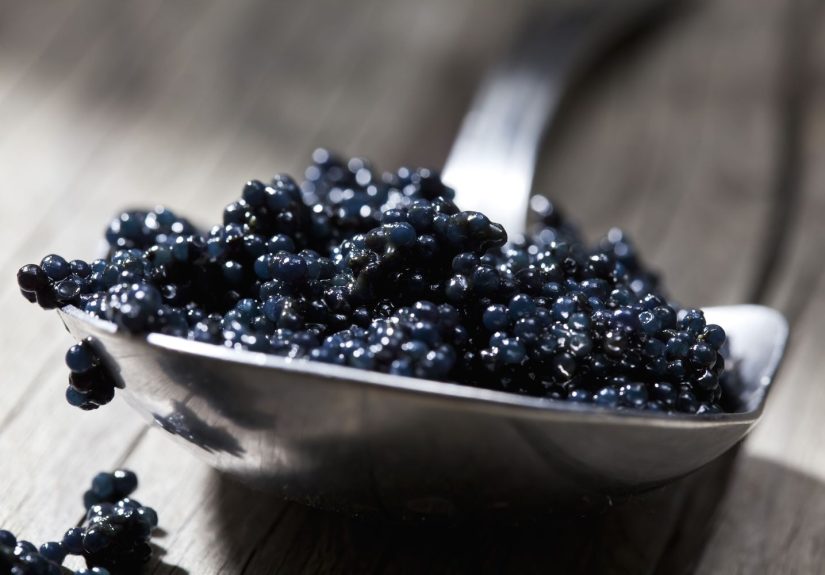
Once the label passes inspection, your next clues come from the appearance of the eggs. Real caviar should look glossy and distinct, not mashed together like fishy jam. The beads should be intact and reasonably uniform for their type, even though natural products will always show some variation. That little difference is part of the charm. Perfectly identical beads can feel a bit suspicious, like a choir where every singer has the exact same face.
Color matters too, but not in the way many people assume. Real caviar is not always jet black. Depending on the species, it can range from gray and brown to olive, gold, amber, or near-black. What matters more than exact shade is whether the color looks natural and appropriate for the species. Bright, artificial-looking tones can be a warning sign, especially in lower-end products trying to imitate prestige with drama.
You should also watch for excessive liquid in the container. Good caviar should feel moist and fresh, but it should not be swimming. Too much liquid can suggest rough handling, poor storage, or a product that has started to lose its structure. A clean tin with separate beads is usually a much better sign than one that looks like it survived a tiny seafood earthquake.
Texture and Taste: Where the Truth Usually Shows Up
If you really want to identify real caviar, taste tells the truth quickly. Good caviar should have a gentle pop when the eggs press against the roof of your mouth. The beads should not feel rubbery, pasty, or weirdly hard. A pleasant burst is what you want; a sad collapse is not.
Flavor should be clean, briny, buttery, mineral, and sometimes faintly nutty depending on the species. Real caviar should taste of the sea, but it should not punch you in the face with harsh fishiness. That is one of the biggest clues for shoppers and first-time tasters. If the flavor is overwhelmingly fishy, sour, metallic, or aggressively salty, the product may be low quality, poorly stored, over-processed, or simply not the luxurious thing it was pretending to be.
This is where a lot of buyers get surprised. Expensive does not always mean better, and mild does not mean fake. In fact, many respected caviars are elegant because they are balanced. Think less “bait bucket,” more “clean ocean breeze with a tuxedo.”
Important Caviar Terms That Actually Mean Something
Malossol
One term worth knowing is malossol, which roughly refers to low-salt processing. It is not a species, not a grade, and not a guarantee of perfection. It simply tells you the caviar was prepared with relatively little salt. That often appeals to buyers who want more nuanced flavor and less salinity, though it can also mean the product is more delicate and perishable.
Pasteurized
Pasteurized caviar has been heat treated for longer shelf life. That does not automatically make it bad, but it often changes the texture. Many buyers find pasteurized caviar firmer and less subtle than fresh chilled caviar. If your goal is the classic pop and silky finish associated with top-tier caviar, fresh refrigerated product is usually the benchmark.
Pressed caviar
Pressed caviar is made from broken or softer eggs that are salted and compressed into a richer, denser product. It can be flavorful and useful in recipes, but it is not the same experience as spooning whole pearls from a tin. If you expect distinct individual beads, pressed caviar will feel like the plot twist nobody warned you about.
Real Caviar vs. Other Roe vs. Imitation
Not all alternatives are bad, and this is where smart shopping beats snobbery. Salmon roe is bright, bold, and often more affordable. Trout roe can be delicate and beautiful. Whitefish roe is mild and versatile. Paddlefish and bowfin roe have long been sold as American alternatives to sturgeon caviar. These products can be excellent for canapés, eggs, potatoes, and casual entertaining.
But they are still alternatives. If your goal is identifying real caviar, the question is not “Is this tasty?” The question is “Is this sturgeon?” Those are very different questions, and answering the second one saves you from overpaying for the first.
Then there is imitation caviar, which may be made from non-roe ingredients designed to mimic the color and pop of fish eggs. Some vegan or novelty versions are fun in their own lane, but they belong in a separate category entirely. Calling them caviar in the same sense as sturgeon roe is like calling sparkling grape juice vintage Champagne. Enthusiastic? Sure. The same thing? Not even a little.
Price, Origin, and Sustainability Clues
Real sturgeon caviar is rarely cheap, because sturgeon are slow-growing fish and the product is labor-intensive, carefully handled, and often tightly regulated. That does not mean every expensive tin is superb, but a suspiciously cheap product labeled simply “caviar” should make you pause. Sometimes the bargain is real. Sometimes it is just wearing a tuxedo made of fine print.
Origin also matters. Today, much of the caviar available to consumers is farmed rather than wild, and that is not a downgrade. In many cases, it is exactly what you should want. Overfishing devastated many sturgeon populations, and modern aquaculture has become an important source of quality caviar while reducing pressure on wild stocks. A seller who is honest about farmed sourcing, harvest practices, and origin is often giving you more confidence, not less.
When in doubt, buy from a reputable specialty retailer, gourmet grocer, or established online seller that ships cold and lists traceable details. The more transparent the seller is, the less likely you are to end up paying luxury prices for mystery beads.
Storage and Serving Clues Buyers Often Overlook
Even real caviar can disappoint if it is handled badly. Authentic caviar should be kept very cold, ideally in the coldest part of the refrigerator until serving. Heat and oxygen are not its friends. If a seller displays it carelessly, ships it warm, or cannot explain storage, that is a red flag.
When you serve it, use a nonreactive spoon such as mother-of-pearl, wood, plastic, glass, or another neutral material. Many experienced buyers avoid reactive metals because they can alter flavor. Serve the tin chilled, often nestled on ice, and pair it with mild foods like blini, toast points, potato chips, or boiled potatoes if you want to evaluate the caviar itself rather than drown it under a parade of toppings.
Common Shopping Mistakes That Lead to Disappointment
- Buying the word, not the species: Fancy branding is not a substitute for knowing the fish.
- Assuming black eggs equal luxury: Color alone proves almost nothing.
- Ignoring texture terms: Fresh, pasteurized, and pressed caviar eat very differently.
- Judging only by price: Some excellent farmed caviars cost less than prestige names and still taste fantastic.
- Skipping storage details: A great product mishandled becomes an expensive lesson.
Real-World Experiences With Identifying Real Caviar
One of the most common experiences happens at a gourmet store counter. A shopper sees two products side by side: one sleek black tin labeled simply “caviar,” and one clear jar labeled “salmon caviar.” The jar is bright orange and cheerful, the tin looks like it has a private driver. The shopper assumes the tin must be the real deal, and often it is, but the smart move is still to read the species. If the tin names a sturgeon, great. If it says almost nothing useful, the more honest jar may actually be the better buy.
Another classic moment happens online. A first-time buyer finds a “luxury caviar” deal that seems almost too good to be true. Spoiler: it often is. The product photo looks glamorous, but the description turns out to mention lumpfish or paddlefish deep in the text, or uses phrases like “black caviar style pearls.” That does not mean the seller is evil. It means the buyer nearly paid champagne money for sparkling water with ambition. The experience teaches a valuable lesson: never let the front label have the final word.
A third experience comes during the first tasting. Many people expect caviar to taste aggressively fishy because, well, fish eggs sound like they should arrive swinging. Then they try a good spoonful of authentic sturgeon caviar and realize the texture is the star: individual beads, clean pop, gentle brine, buttery finish. Later they try a low-quality alternative that is mushy, overly salty, or muddy, and suddenly the difference becomes obvious. Reading about caviar helps, but tasting side by side is where the light bulb really flicks on.
Restaurant experiences also teach buyers fast. Someone orders a dish topped with “caviar” and assumes they are getting sturgeon roe, only to learn the garnish is trout roe or salmon roe. Again, that is not automatically a problem. Many chefs use other roe beautifully. The lesson is that menu language can be casual, while real caviar buying should be precise. If authenticity matters, ask what fish it comes from. A good restaurant will answer clearly, not act like you just interrupted a state dinner.
Then there is the gift-tin scenario, where a person receives caviar for a holiday or celebration and has no idea what to check first. The best approach is simple: make sure it arrived cold, read the species and origin, inspect the beads for gloss and separation, and then trust your senses. Clean, briny aroma? Good sign. Sour, metallic, or oddly fishy smell? Not so charming. Many people remember this moment because it turns caviar from a luxury symbol into a product they can actually judge with confidence. That is the real upgrade.
Conclusion
Identifying real caviar is not about memorizing every famous variety or pretending you were born with a mother-of-pearl spoon in your hand. It comes down to a few reliable habits: confirm that the roe comes from sturgeon, read the label carefully, look for transparent sourcing, judge the beads for gloss and structure, and expect a clean briny pop rather than a harsh fishy blast. Once you know those basics, you can shop with confidence, enjoy alternatives without confusion, and save your splurges for the tins that truly earn them. In other words, you do not need to be a caviar snob. You just need to be a caviar detective with good taste.






 Close
Close