
Table of Contents >> Show >> Hide
- Why inhalers are the backbone of COPD treatment
- Types of COPD inhaler medications
- Inhaler device types: not all “puffers” puff the same
- How to use your inhaler correctly (so it actually works)
- Pros and cons: what you gain, what to watch for
- Common inhaler mistakes (and quick fixes)
- How clinicians choose an inhaler plan (and how you can help)
- When to seek urgent medical help
- Conclusion
- Real-world experiences: what using COPD inhalers is actually like (the part no one puts on the prescription label)
If you have COPD, inhalers can feel like tiny, handheld “remote controls” for your lungs. Press, breathe, repeatexcept the stakes are higher than changing the TV channel,
and the instructions somehow come in six-point font with seventeen caveats. The good news: once you understand what each inhaler does and how to use it correctly,
you can often breathe easier, reduce flare-ups, and feel more confident leaving the house without packing your entire medicine cabinet.
This guide breaks down the main types of COPD inhalers (and nebulized options), how to use the most common devices, and the real-world pros and consso your medication
ends up in your lungs, not on your tongue, your shirt, or the general atmosphere.
Quick note: This article is educational and can’t replace your clinician’s advice. COPD treatment is individualizedespecially if you have heart conditions, glaucoma, prostate issues, diabetes, or frequent infections.
Why inhalers are the backbone of COPD treatment
COPD (chronic obstructive pulmonary disease) makes it harder to move air in and out of your lungs. Inhaled medicines are a cornerstone of treatment because they deliver medication
directly to the airwaysoften with faster symptom relief and fewer whole-body side effects than pills.
Most COPD inhaler plans include:
- A rescue inhaler for sudden breathlessness (quick relief).
- A maintenance inhaler used daily to keep airways open and reduce symptoms and flare-ups over time.
- Sometimes an anti-inflammatory inhaler (often an inhaled steroid) for people with frequent exacerbations or certain inflammation patterns.
Types of COPD inhaler medications
1) Rescue inhalers: quick relief when symptoms spike
Rescue inhalers usually contain a short-acting beta2-agonist (SABA) (like albuterol). They relax airway muscles quickly, helping with sudden wheezing,
tightness, or shortness of breath. Some people also use a short-acting muscarinic antagonist (SAMA) (like ipratropium) depending on their plan.
Pros: Fast relief; portable; helpful during exertion or sudden triggers.
Cons: Not designed to control COPD long-term; overuse may signal poorly controlled disease. Side effects can include jitteriness, tremor, or a racing heart.
2) Maintenance bronchodilators: daily “airway keep-openers”
Maintenance inhalers are the everyday foundation for many people with COPD. The two big families are:
- LABA (long-acting beta2-agonists): relax airway muscles for ~12–24 hours.
- LAMA (long-acting muscarinic antagonists, sometimes called long-acting anticholinergics): prevent airway tightening and can reduce mucus-related symptoms in some people.
Many guidelines and clinical recommendations favor dual bronchodilation (LABA/LAMA) for people with persistent symptoms because combining mechanisms can improve breathing
and reduce flare-ups more than a single long-acting inhaler for many patients.
Pros: Better day-to-day breathing, less rescue use, improved activity tolerance.
Cons: Dry mouth can happen (more common with LAMAs); LABAs can cause shakiness or palpitations in some people; some devices require good inhalation technique.
3) Inhaled corticosteroids (ICS): helpful for some, not for everyone
Inhaled corticosteroids (ICS) reduce airway inflammation. In COPD, they’re usually not the first medication added for everyone.
They’re more often used when someone has frequent exacerbations despite bronchodilators, or when clinical clues suggest a stronger inflammatory/eosinophilic component.
The tradeoff: ICS can increase the risk of oral thrush (a mouth yeast infection) and may raise the risk of pneumonia in some COPD patients.
That’s why clinicians weigh benefit vs risk rather than handing out steroid inhalers like candy.
Pro tip: If your inhaler includes a steroid, rinse your mouth with water and spit after use to reduce mouth irritation and thrush risk.
4) Combination inhalers: two (or three) medicines in one device
Combination inhalers can simplify your routine and improve adherence (because fewer devices = fewer chances to forget something). Common combinations include:
- LABA/LAMA (dual bronchodilators): often used for ongoing symptoms.
- ICS/LABA: used when an anti-inflammatory component is needed (typically with exacerbation risk).
- Triple therapy (ICS/LABA/LAMA): used for certain higher-risk patientsespecially those with persistent symptoms or exacerbations despite other therapy.
Pros: Convenience; fewer inhalers; can reduce exacerbations for the right patient.
Cons: If it includes an ICS, you inherit steroid-related downsides; cost/coverage can be tricky; you can’t “customize” doses as easily as with separate inhalers.
5) Nebulized options and newer add-ons
A nebulizer turns liquid medication into a mist you breathe in through a mouthpiece or mask. It can be useful if you have trouble coordinating an inhaler,
have limited hand strength/dexterity, or struggle to generate the fast inhalation some dry powder inhalers require.
There are also newer COPD add-on options delivered by nebulizer. For example, ensifentrine (brand: Ohtuvayre) is an FDA-approved nebulized maintenance treatment
that combines bronchodilation with non-steroidal anti-inflammatory effects. It’s not a rescue medication for sudden symptoms, but it may be added to a maintenance plan for appropriate patients.
Inhaler device types: not all “puffers” puff the same
Medication class matters, but so does the device. The best inhaler is the one you can (1) use correctly, (2) use consistently, and (3) afford.
Metered-dose inhalers (MDIs)
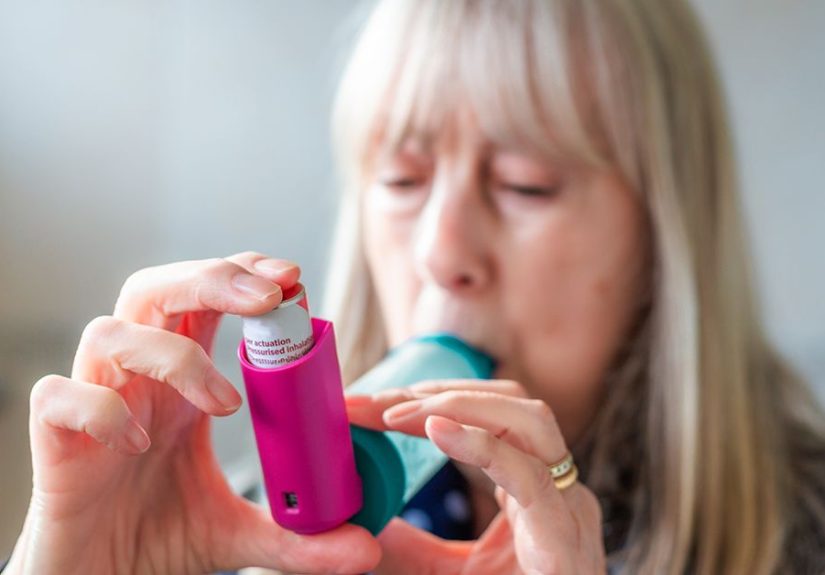
MDIs deliver a measured spray (aerosol) using a propellant. They require timing: you press the canister and inhale slowly at the same time.
Many people do better with a spacer (valved holding chamber), which makes coordination easier and helps more medicine reach the lungs.
Dry powder inhalers (DPIs)
DPIs deliver medicine as a powder, and your own inhalation pulls it in. The trick: you usually need a fast, deep, forceful breath.
DPIs can be great for simplicity (no pressing at the perfect moment), but they can be challenging during severe breathlessness or if inspiratory flow is low.
Soft mist inhalers (SMIs)
SMIs release a slower-moving mist that can be easier to inhale than an MDI spray. Technique still matters, but the mist is less “blast-y.”
Nebulizers
Nebulizers are less dependent on precise timing or strong inhalation. The tradeoff is time (treatments take longer), maintenance (cleaning), and portability.
How to use your inhaler correctly (so it actually works)
Across devices, a few technique principles show up again and again:
- Posture matters: Sit or stand up straight.
- Empty first: Breathe out fully before inhaling medication (away from the device when appropriate).
- Seal the deal: Tight lip seal around the mouthpiece.
- Hold it: Hold your breath after inhaling (often up to ~10 seconds if comfortable) to let medicine settle in the lungs.
- Rinse when needed: If there’s an ICS, rinse and spit afterward.
Step-by-step: Metered-dose inhaler (MDI) no spacer
- Remove the cap and check the mouthpiece for debris.
- If it’s new or hasn’t been used recently, prime it as the label instructs.
- Shake well (many MDIs require shakingcheck your specific device).
- Breathe out fully (away from the inhaler).
- Place the mouthpiece in your mouth and seal your lips.
- Start to inhale slowly and deeply, then press the canister once.
- Continue slow, deep inhalation until your lungs feel full.
- Hold your breath (up to ~10 seconds if comfortable), then breathe out slowly.
- If you need a second puff, wait the recommended time (often about 1 minute for quick-relief inhalers) and repeat.
- Replace the cap. If it contains a steroid, rinse your mouth and spit.
Step-by-step: MDI with a spacer (valved holding chamber)
- Assemble the spacer if needed. Insert the inhaler into the spacer.
- Prime/shake the inhaler as directed.
- Breathe out fully, away from the device.
- Seal lips around the spacer mouthpiece.
- Press the inhaler once into the spacer.
- Breathe in slowly and deeply, then hold your breath (if comfortable).
- If you can’t do one slow deep breath, some plans allow “tidal breathing” (several normal breaths) depending on spacer instructionsask your clinician/pharmacist.
- Wait the recommended time before the next puff, if prescribed.
- Clean the spacer as instructed (and never dunk the medication canister in water).
Step-by-step: Dry powder inhaler (DPI)
- Open the device and load the dose as your inhaler instructions show.
- Don’t shake the DPI unless your specific device says otherwise.
- Breathe out fully away from the mouthpiece (breathing into the device can clump the powder).
- Seal lips around the mouthpiece.
- Inhale fast, deep, and forcefully through your mouth.
- Hold your breath (if comfortable), then breathe out slowly.
- Close the device and store it in a dry place.
- If it contains a steroid, rinse and spit afterward.
Step-by-step: Soft mist inhaler (SMI)
- Prepare/prime the device if it’s new or hasn’t been used (device-specific).
- Breathe out fully.
- Seal lips around the mouthpiece without blocking vents.
- Start a slow, deep breath and activate the dose as instructed.
- Hold your breath briefly (if comfortable), then exhale slowly.
Step-by-step: Nebulizer (the “sit and breathe” method)
- Wash hands. Place the compressor on a stable surface.
- Measure or add the medication to the nebulizer cup as prescribed.
- Connect tubing and mouthpiece/mask. Keep the cup upright.
- Turn on the machine. Sit upright and breathe the mist in through your mouth (slow, relaxed breaths).
- Continue until the cup is empty or the mist stops (time varies by device/medication).
- Clean and air-dry parts as instructed. Regular cleaning reduces infection risk and keeps the device working properly.
Pros and cons: what you gain, what to watch for
Here’s a practical, plain-English look at common COPD inhaler categories.
| Type | What it does | Pros | Cons / common downsides |
|---|---|---|---|
| SABA (rescue) | Quickly relaxes airway muscles | Fast relief; helpful during sudden symptoms | Tremor, nervousness, faster heartbeat; not a long-term controller |
| LAMA (maintenance) | Keeps airways from tightening; can reduce exacerbations | Strong symptom control for many; often once daily | Dry mouth; urinary retention risk in susceptible people; can be tricky if you have certain eye conditions (ask your clinician) |
| LABA (maintenance) | Long-acting airway relaxation | Improves breathing and activity tolerance | Tremor/palpitations in some; needs consistent daily use |
| ICS (anti-inflammatory) | Reduces inflammation; can reduce exacerbations in selected patients | Helpful if you have frequent flare-ups or an eosinophilic pattern | Thrush, hoarseness; may increase pneumonia risk in some; not usually first-line for COPD alone |
| LABA/LAMA combo | Dual bronchodilation | Often better symptom control than one long-acting inhaler | Side effects from either class; device technique still matters |
| Triple therapy (ICS/LABA/LAMA) | Bronchodilation + anti-inflammatory effect | Convenient “one-inhaler” approach for some higher-risk patients; can reduce exacerbations | ICS-related risks still apply (thrush/pneumonia); may be more expensive |
| Nebulized therapies | Mist delivery of medications | Less coordination; useful if inspiratory flow is low or hand strength is limited | Less portable; takes longer; cleaning required |
Common inhaler mistakes (and quick fixes)
- Mistake: Not breathing out first.
Fix: Empty your lungs (away from the device when appropriate) before the dose. - Mistake: Inhaling too fast with an MDI.
Fix: Slow and steadyconsider a spacer if timing is hard. - Mistake: Inhaling too gently with a DPI.
Fix: Fast and forceful for most DPIspractice with your pharmacist’s coaching. - Mistake: Forgetting to hold your breath.
Fix: Even a few seconds helps; aim for up to ~10 seconds if comfortable. - Mistake: Skipping mouth rinse after steroid inhalers.
Fix: Rinse and spit to reduce thrush and hoarseness risk. - Mistake: Assuming “I don’t feel it” means “it didn’t work.”
Fix: Some DPIs don’t have a strong tastefocus on technique, dose counters, and symptom trends.
How clinicians choose an inhaler plan (and how you can help)
COPD inhaler choices aren’t one-size-fits-all. Your clinician will usually consider:
- Symptom burden: breathlessness, exercise limits, nighttime symptoms.
- Exacerbation history: flare-ups needing steroids/antibiotics or hospital visits.
- Inflammation clues: sometimes blood eosinophil count informs whether ICS may help.
- Device fit: can you coordinate an MDI? can you inhale forcefully enough for a DPI?
- Side-effect risk: pneumonia risk with ICS, urinary retention with anticholinergics, heart rhythm issues, etc.
- Cost and coverage: what your insurance covers can influence the “best” option in real life.
Want to be a power user of your treatment plan? Bring your inhalers to appointments and ask for a technique check. Many people use inhalers “mostly right,”
and “mostly right” can still mean you’re missing a big chunk of the dose.
When to seek urgent medical help
If you have COPD and experience severe shortness of breath that doesn’t improve with your rescue medication, chest pain, bluish lips/face, new confusion, fainting,
or signs of serious infection (high fever, worsening cough with significant change in sputum), seek urgent care or emergency help.
Conclusion
COPD inhalers come in different medication classes and different devicesbut the goal is the same: get the right medicine into your lungs in a way you can repeat
every day. Most people do best with a maintenance bronchodilator plan (often LABA/LAMA), plus a rescue inhaler, and sometimes an inhaled steroid or triple therapy when
exacerbation risk is high and benefits outweigh risks. Technique is not a minor detailit’s the difference between “I took my medicine” and “my lungs received my medicine.”
Real-world experiences: what using COPD inhalers is actually like (the part no one puts on the prescription label)
In real life, COPD inhalers aren’t just “medication”they’re routines, habits, and tiny daily negotiations with your schedule. A lot of people start out thinking
the medication “doesn’t work,” when the real issue is technique or consistency. The first time someone learns to fully exhale before inhaling, keep a tight seal,
and hold their breath afterward, they often say the same thing: “Wait… that’s what it was supposed to feel like?”
There’s also the device-learning curve. MDIs can be frustrating because they demand timingpress and inhale togetherso people sometimes end up puffing into their mouth
and then inhaling late (which mostly decorates the back of the throat). Adding a spacer can feel like admitting defeat at first, but many patients end up loving it:
less coordination, less throat hit, and more confidence that the dose actually got where it’s supposed to go. DPIs flip the scriptno pressing, but now you need that
fast, forceful inhale. Some people find DPIs wonderfully simple; others struggle on bad-breathing days because they can’t pull hard enough.
Maintenance inhalers can be subtle. A rescue inhaler gives quick feedback (“Ahh, relief!”), but daily LABA/LAMA therapy often shows up as fewer interruptions:
fewer “pause-and-catch-your-breath” moments, fewer rescue puffs, and less planning your day around stairs. That subtlety can mess with motivationif you don’t feel
an immediate effect, it’s easy to forget doses. Many people do best when they tie inhaler use to something already automatic: brushing teeth, morning coffee,
or setting a phone alarm that’s labeled with something more inspiring than “INHALE NOW.”
Side effects are another lived experience. Dry mouth from anticholinergics can be annoying but manageable with hydration, sugar-free lozenges, and good oral care.
With steroid-containing inhalers, mouth rinsing feels like a small choreuntil someone gets thrush once, and then suddenly rinsing becomes a beloved hobby.
People who’ve had pneumonia (or who are at higher infection risk) often become more cautious about ICS use, which is exactly why clinicians weigh risks carefully.
Then there’s the “logistics layer”: refills, dose counters, and the dreaded empty-canister surprise. Patients often say they wish they’d been taught early to
check the dose counter weekly, keep a backup rescue inhaler, and store devices away from heat and moisture. Nebulizers add a different set of tradeoffs:
treatments can take longer, but many people appreciate the calmer, simpler breathing patternespecially if hand strength or coordination is a challenge.
The cleaning routine is the make-or-break factor; those who build it into the process (wash, air-dry, done) usually stick with it, while those who skip cleaning
tend to abandon nebulizers out of frustration.
The most consistent “experienced patient” advice is surprisingly empowering: don’t guess. Ask for a technique check, ask what each inhaler is for (rescue vs maintenance),
and ask what to do if you’re using rescue medication more often than usual. When you understand your inhalers, they stop feeling like random gadgets and start acting like tools
you can actually useon purpose.







 Close
Close