
Table of Contents >> Show >> Hide
- Why surgical residency can feel like a pressure cooker
- The hours are cappedso why are residents still exhausted?
- Bullying, mistreatment, and “feedback” that’s just cruelty in a lab coat
- Gender discrimination and harassment: the toxicity isn’t evenly distributed
- How toxic training environments can affect patient care
- Why “just be tougher” is a terrible training strategy
- So what changes could actually make residency less toxic?
- 1) Stronger, safer reporting pathways
- 2) Real accountability for repeat offenders
- 3) Scheduling that respects biology (not just policy)
- 4) Culture training for leaders (yes, even the legendary surgeons)
- 5) Structural support: staffing, workflow, and admin burden
- 6) Resident collective voice (including unionization conversations)
- What the podcast adds that studies can’t
- If you’re a resident listening and thinking, “Yep, that’s my life”
- Conclusion: surgical training doesn’t have to be toxic to be rigorous
- Experiences from the trenches (composite stories inspired by real patterns)
Surgical residency has a reputation that’s equal parts heroic and horrifying. The hero part is easy to understand:
you’re learning how to fix bodies with your hands, your brain, and a level of focus that makes “multi-tasking” look
like a toddler juggling crayons. The horrifying part? Too often, the training environment is built on exhaustion,
hierarchy, and a “toughen up” culture that treats basic human needs like optional accessories.
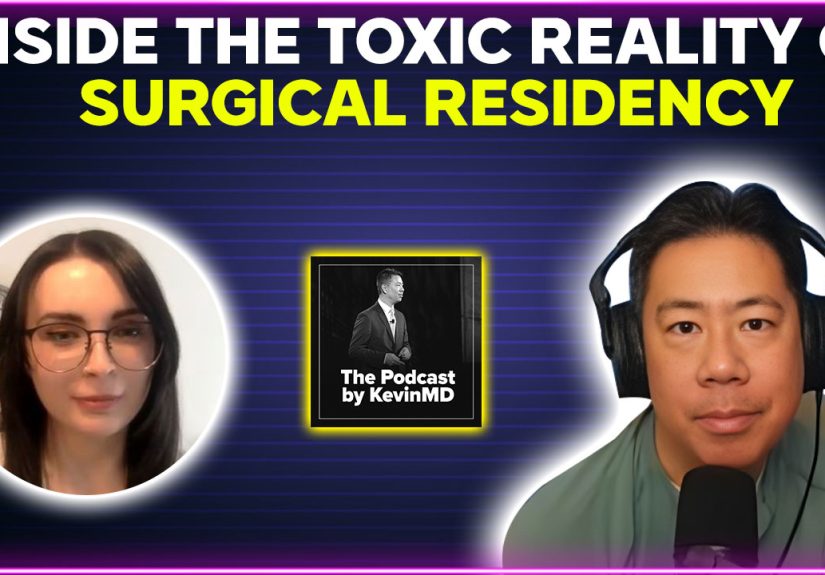
The KevinMD podcast episode “Inside the toxic reality of surgical residency” puts a spotlight on this problem,
featuring surgical resident Audra King discussing workplace bullying, disrespect, power dynamics, and the emotional
toll of being trained in a system that sometimes confuses suffering with strength. The episode isn’t just a rantit’s
a mirror. And for many trainees, it’s an uncomfortably accurate one.
Why surgical residency can feel like a pressure cooker
Residency is designed to be intense. Surgical trainees must build technical skill, clinical judgment, and team
leadershipoften while managing emergencies, complications, and the reality that patients aren’t textbook chapters.
Pressure is part of the job. But pressure becomes toxicity when the system relies on chronic sleep deprivation,
humiliation as feedback, and fear as the primary motivator.
The hidden curriculum: what you learn when nobody’s “teaching”
Every residency has a formal curriculumlectures, case conferences, competencies. Then there’s the hidden curriculum:
how people talk to each other in the OR, what happens when a resident reports mistreatment, whether taking a meal break
is treated like a moral failure, and who gets protected when something goes wrong.
In the podcast, King describes the emotional weight of being a trainee in an environment where disrespect and bullying
can be normalized. That “normalization” is a key ingredient in toxic culture: if everyone shrugs, the problem becomes
tradition.
The hours are cappedso why are residents still exhausted?
In the U.S., ACGME work-hour standards set boundaries like an 80-hour weekly limit (averaged over four weeks) and
requirements for time off. Many programs also emphasize minimum time between shifts and days free of clinical work.
In theory, that should reduce fatigue. In reality, the lived experience can be messy. Work doesn’t disappear just
because the clock says it should. When staffing is tight and patient volume is high, residents may feel forced to
“make the math work” through rushed handoffs, skipped meals, or charting from home. Even when programs follow the
letter of duty-hour rules, the spirit can get lost in the daily scramble.
Duty hours helpedbut the evidence is complicated
The 80-hour workweek policy (implemented nationally in 2003) was a major shift, and research has examined its impact
on surgical education and patient outcomes. Some studies found improvements in resident well-being and fatigue-related
issues, while others raised concerns about reduced continuity and training opportunities. The takeaway: limiting hours
is necessary, but it’s not sufficient if the culture still rewards burnout as proof of dedication.
Bullying, mistreatment, and “feedback” that’s just cruelty in a lab coat
Here’s the part that people whisper about in hallways but rarely put on the recruitment brochure: mistreatment in
residency is common. Large national surveys have reported substantial proportions of residents experiencing or
witnessing mistreatment during training.
In surgical training specifically, research has documented bullying behaviors and linked them with burnout symptoms.
Bullying doesn’t always look like a dramatic yelling scene from a medical TV show. It can be repeated reminders of
mistakes delivered with contempt, being singled out, being ignored when you ask for help, or being treated like you
should already know everythingdespite being in a place literally designed for learning.
Why hierarchy can turn harmful
Surgery is hierarchical for a reason: in the OR, clear leadership matters. But hierarchy becomes toxic when it blocks
psychological safetywhen asking a question gets you labeled “weak,” when reporting abuse feels career-ending, or when
a resident’s value is measured in how much misery they can silently absorb.
The podcast conversation highlights how power dynamics can make residents feel trapped: you need evaluations, letters,
and case exposure from people who also control your daily life. That imbalance can turn “training” into survival mode.
Gender discrimination and harassment: the toxicity isn’t evenly distributed
Multiple studies have found that women in surgical training report higher rates of gender discrimination and sexual
harassment, and that mistreatment is associated with burnout and distress. This isn’t just a personal problem; it’s a
training-quality and patient-safety problem, because residents who are worn down by mistreatment have less bandwidth
for learning, teamwork, and careful decision-making.
It’s also not limited to gender. Research suggests mistreatment patterns can differ based on race/ethnicity and
training background (including international graduates), with mistreatment associated with worse wellness outcomes.
How toxic training environments can affect patient care
Hospitals run on teamwork: nurses, residents, attendings, techs, and everyone else trying to do complex work under
time pressure. Toxicity doesn’t just hurt feelingsit can distort communication.
- Residents may hesitate to speak up about a concerning change in a patient’s condition.
- Handoffs may get rushed when the priority becomes “get out before you violate duty hours.”
- Learning becomes defensive: residents focus on not getting blamed instead of improving systems.
National discussions about burnout increasingly frame it as a system-level risk to quality and safetynot simply an
individual resilience issue. That matters because it pushes institutions to fix workflows, staffing, and culture
instead of telling residents to do more yoga on their one free evening every month.
Why “just be tougher” is a terrible training strategy
Surgical residents are already tough. You don’t walk into year one and think, “I’d love to be responsible for human
lives while operating on caffeine and hope.” The myth that cruelty builds competence ignores what high-performance
training actually looks like in other fields:
- Clear expectations and consistent coaching
- Rapid feedback that’s specific and fixable
- Psychological safety to ask questions before mistakes happen
- Systems that prevent predictable failures (like fatigue, understaffing, and broken workflows)
In other words: surgical excellence doesn’t require emotional demolition. It requires serious training done in a
serious, humane environment.
So what changes could actually make residency less toxic?
The podcast raises an important point: mentorship and culture change matter. But “be nicer” isn’t a plan. If we want
a healthier surgical training environment, interventions need to be practical, measurable, and backed by leadership.
Here are strategies commonly discussed across U.S. graduate medical education:
1) Stronger, safer reporting pathways
Reporting mistreatment should feel like reporting a broken ventilatornecessary, protected, and taken seriously. Large
surveys suggest many residents experience or witness mistreatment, which implies that reporting systems must be
trustworthy and effective, not performative.
2) Real accountability for repeat offenders
Programs can track patterns (not just single incidents), use anonymous climate data, and tie faculty leadership roles
to professionalism outcomes. If an institution can audit hand hygiene compliance, it can audit “don’t bully the people
keeping the hospital alive.”
3) Scheduling that respects biology (not just policy)
ACGME standards emphasize well-being and limits like the 80-hour workweek. The next step is designing schedules and
staffing that make compliance realistic without pushing work into invisible cornerslike never-ending after-hours
documentation.
4) Culture training for leaders (yes, even the legendary surgeons)
Technical mastery doesn’t automatically equal leadership mastery. Training chiefs and attendings in coaching,
conflict de-escalation, bias awareness, and feedback models can change the daily tone without lowering standards.
5) Structural support: staffing, workflow, and admin burden
National frameworks on clinician burnout emphasize system design: workflow, documentation burden, staffing ratios,
and leadership. Residents shouldn’t be used as duct tape for broken systems.
6) Resident collective voice (including unionization conversations)
In some institutions, resident physicians have pursued unionization to negotiate pay, benefits, time off, and working
conditions. Recent U.S. research describes increasing interest and activity around resident unionization, especially
in the post-pandemic landscape. The goal isn’t “residents vs. hospitals”it’s creating guardrails that keep training
humane and sustainable.
What the podcast adds that studies can’t
Data can tell you prevalence and correlations. A podcast episode can show you what it feels likehow humiliation
lands in the body, how a single cruel comment can echo through a 28-hour call, how a resident can love surgery and
still feel ground down by the environment.
In the KevinMD episode, Audra King describes disrespect, bullying, and the emotional labor of navigating power
dynamics. She also emphasizes mentorship and what needs to change so residents can thrive. That combinationnaming
the harm while pointing to solutionsis exactly the kind of conversation medicine needs more of.
If you’re a resident listening and thinking, “Yep, that’s my life”
You deserve support, not a shrug. While each institution has its own resources, there are a few grounded principles
that many trainees and educators emphasize:
- Document patterns (dates, incidents, witnesses) when mistreatment occurs.
- Find safe mentorshipa faculty member, chief resident, or program resource known for integrity.
- Use formal channels when needed; toxic culture persists when silence is the default.
- Protect recovery time like it’s part of your jobbecause it is.
- Remember the goal: becoming an excellent surgeon without losing your humanity in the process.
And if you’re a program leader reading this, here’s the blunt truth: if your residents are afraid to speak, your
program is not “tough”it’s fragile.
Conclusion: surgical training doesn’t have to be toxic to be rigorous
Surgical residency will never be easy. It’s not supposed to be. But there’s a difference between high standards and
harmful systems. The “toxic reality” described in the podcast isn’t inevitableit’s the result of choices, norms, and
structures that can be redesigned.
A healthier residency culture would still demand excellence. It would still correct mistakes. It would still push
trainees to grow. It just wouldn’t confuse intimidation with educationor treat burnout like a badge you earn in the
call room along with your free hospital socks.
Experiences from the trenches (composite stories inspired by real patterns)
The stories below are compositesblended from common themes residents describe in public discussions, research
findings, and episodes like the one featured on KevinMD. They’re not about one specific program or person. They’re
about what keeps showing up in surgical training when the culture tilts toxic.
1) “I stopped asking questions because I didn’t want to be a target.”
A PGY-1 starts the year eager, early, and annoyingly optimisticlike a golden retriever in scrubs. On rounds, they
ask a reasonable question about a post-op fever workup. The response isn’t educational; it’s performative: a sharp
comment delivered loud enough for the entire team to hear, followed by a smirk that signals, “Lesson learned.”
After that, the intern still has questions. They just ask Google in the stairwell instead of their seniors.
Everyone loses: the learner, the team, and potentially the patient who needed a clarifying conversation five minutes
earlier.
2) The “good resident” who is actually just chronically underwater
A PGY-2 becomes known as reliable. They never complain. They never say no. They stay late to finish notes, cover for
colleagues, and smooth out every crack in the schedule. Faculty praise them for being “solid.”
What nobody sees is the slow trade: exercise disappears, meals become whatever fits in a pocket, and relationships
become text messages sent at red lights. When they finally make a small mistakemissing a lab trend during a chaotic
cross-cover nightthe shame hits harder than it should. Not because the mistake is unforgivable, but because they’ve
been running on fumes for so long that one slip feels like proof they never deserved the praise.
3) “It wasn’t the hours. It was the disrespect.”
A chief resident can manage the workload. They can take a tough call. They can handle complications. What erodes them
is the casual disrespect: the attending who humiliates residents in the OR, the consultant who acts like a resident
is an inconvenience, the constant message that their time and dignity are cheap. They start realizing that the most
draining part of the job isn’t the pagerit’s the emotional armor they put on before walking into certain rooms.
When a new intern arrives, the chief faces a choice: repeat what was done to them, or protect the next person.
Culture changes (or doesn’t) in moments exactly like that.
4) Microaggressions that pile up until they’re no longer “micro”
A resident who is a woman or from a marginalized background gets interrupted more, second-guessed more, and mistaken
for non-physician staff moresometimes by patients, sometimes by colleagues. One incident might be brushed off.
A hundred incidents become a weight you carry into every interaction. The resident becomes hyper-prepared, not
because they love overachievement, but because they’re trying to preempt doubt. Over time, that constant vigilance
steals energy that could have gone to learning, rest, or simply feeling like a full human being at work.
5) The moment mentorship changes everything
Then there’s the counter-storythe reason many residents stay and eventually thrive. A resident has a rough case.
They’re convinced they failed. Instead of a public takedown, an attending pulls them aside: “Here’s what went well.
Here’s what to fix. You’re going to be fine, and we’re going to practice this together.”
That resident doesn’t become “soft.” They become better. They learn faster because fear isn’t clogging their brain.
They take the lesson into their own leadership style. And one day, when they’re the senior in the room, they choose
coaching over crueltybecause they’ve seen that rigor and respect can coexist.
If surgical residency is going to keep producing excellent surgeons without burning people down to the studs, these
mentorship moments can’t be rare strokes of luck. They have to be the standard.




 Close
Close