
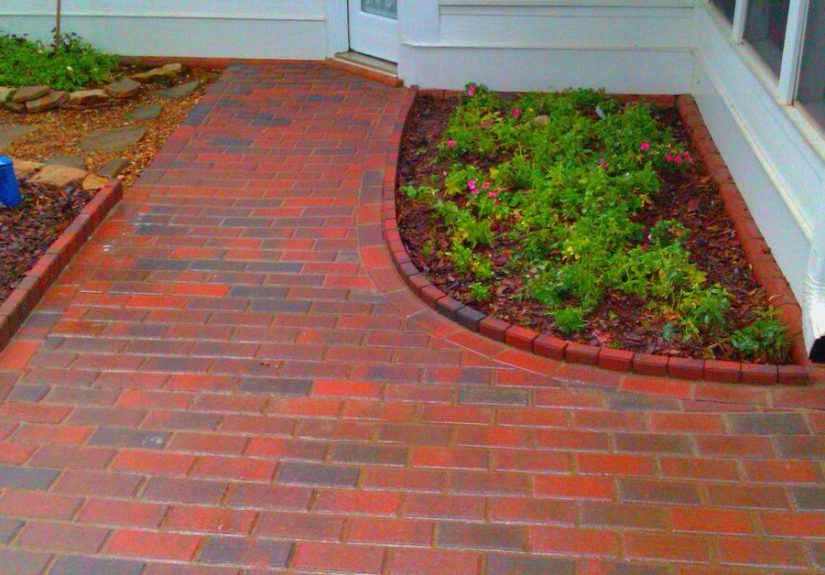
Table of Contents >> Show >> Hide
- Can you really put pavers over an existing patio?
- Why pavers are a “glow-up” that actually lasts
- Quick checklist: is your patio ready for pavers?
- Choose your install method: three smart options
- Materials and tools you’ll likely need
- Step-by-step: how to install pavers over an existing concrete patio
- 1) Check slope and plan drainage (before you touch a single paver)
- 2) Confirm height and clearance
- 3) Clean the slab like you mean it
- 4) Repair obvious defects
- 5) Install edge restraint (your “keep it all together” insurance)
- 6) Add a thin, consistent bedding layer
- 7) Lay pavers in your chosen pattern
- 8) Compact the surface (carefully)
- 9) Fill joints with polymeric sand (and avoid the classic haze mistake)
- 10) Final check: wobble test + water test
- Specific examples (so this doesn’t stay theoretical)
- Common mistakes to avoid
- Maintenance: keep it looking great without making it your new personality
- Cost and time: what to expect
- When it’s worth calling a pro
- Real-world experiences: what DIYers and homeowners learn after the first weekend
- Conclusion
If your patio could talk, it would probably say something like: “I’ve been holding your grill, your muddy shoes, and your questionable
DIY phase together for years. A little respect, please.” And honestly? Fair.
The good news is you don’t always have to jackhammer your way to a better backyard. In many cases, you can install pavers over an
existing patioespecially an older concrete slabto get a fresh, high-end look without a full tear-out. Done right, a paver overlay
can upgrade curb appeal, improve traction, and make your outdoor space feel more “magazine spread” and less “sad rectangle.”
Done wrong, though, you can end up with drainage drama, a door that suddenly won’t open, or pavers that rock like they’re auditioning
for a seesaw competition. This guide walks you through how to do it correctly, what to watch out for, and which installation method
fits your patio’s condition and your patience level.
Can you really put pavers over an existing patio?
In many situations, yes. A structurally sound concrete slab can act like a ready-made basesaving time, mess, and often money compared
to removal and rebuilding. But “existing patio” is a broad category, so the real answer is: yes, if the surface is stable, drains properly,
and the added height won’t cause problems.
Best candidates for a paver overlay
- Concrete patios that are intact, stable, and not actively heaving or shifting
- Patios with decent drainage (water moves away from the house instead of pooling)
- Spaces with clearance at doors, steps, and transitions to handle added thickness
When you should not overlay (or you should pause and rethink)
- Large cracks with vertical movement (one side higher than the other)
- Sections that sound hollow, crumble, or feel loose
- Persistent puddles after rain (drainage must be fixed first)
- Doors that already barely clear the slab (adding pavers can become… a surprise renovation)
Why pavers are a “glow-up” that actually lasts
Pavers aren’t just pretty. They’re practical. A well-installed paver surface offers a mix of style and performance that’s hard to beat:
textured finishes for traction, easy repairs (swap a single unit instead of patching a whole slab), and endless pattern options.
Pros of installing pavers over an existing patio
- Fast transformation: You can change the entire vibe of your outdoor space in a weekend or two.
- Less demolition: Avoids the cost, noise, and disposal headaches of ripping out concrete.
- Design flexibility: Herringbone, running bond, basketweave, modern large-formatpick your personality.
- Repair-friendly: Pavers can be lifted and reset if needed (especially with sand-set systems).
Cons (a.k.a. the stuff people learn after they already bought 600 pavers)
- Added height: A paver overlay can raise the patio surface and create clearance or trip issues.
- Drainage challenges: Concrete is impervious, so water management becomes the main character.
- Extra detail work: Edging, transitions, and careful joint filling matter more than you think.
Quick checklist: is your patio ready for pavers?
Walk your patio like you’re a home inspector with a caffeine problem. If you can check most of these boxes, you’re in good shape:
- Stability: The slab doesn’t rock, sink, or show signs of ongoing movement.
- Surface condition: No major spalling (flaking), crumbling edges, or deep scaling.
- Drainage: Water runs off instead of sitting in puddles.
- Slope: Ideally, the patio slopes away from the house (a common DIY guideline is about 1 inch drop per 8 feet).
- Clearance: Doors and steps can handle the finished height (paver + bedding layer + jointing).
- Transitions: You have a plan for edgeswhere pavers end, meet grass, or hit a walkway.
Choose your install method: three smart options
“Putting pavers over a patio” isn’t one method. It’s a category. The right approach depends on how perfect your slab is and how permanent
you want the result to be.
Option 1: Sand-set overlay (most common DIY approach)
You install a thin, consistent bedding layer (often sand or approved chips) over the concrete, then lay pavers, add edge restraint, and
lock everything with joint sand (often polymeric sand). This method is popular for patios and walkways because it’s forgiving and repairable.
Option 2: Mortar-set (adhered) pavers (more “masonry project” than “weekend project”)
Pavers are bonded to the slab with a mortar bed and the joints are finished with mortar or specific joint products. This can look
polished, but it’s less flexible and more sensitive to cracking if the slab moves. It’s often best for pros or advanced DIYers.
Option 3: Overlay panel systems (fast, tidy, and surprisingly DIY-friendly)
Some systems use panels or grids designed for overlays (often paired with fabric and a thin leveling layer), then pavers or tiles on top.
These can reduce digging and simplify levelingespecially when you’re working around an existing slab and want predictable thickness.
Materials and tools you’ll likely need
Materials
- Pavers (concrete pavers, brick/clay, or porcelain paver tiles rated for outdoor use)
- Bedding material (leveling sand or approved chip/bedding layer for overlays)
- Edge restraints (metal/plastic edging, or perimeter/border pavers anchored appropriately)
- Jointing sand (often polymeric sand for weed resistance and lock-in)
- Construction adhesive (commonly used for borders in certain overlay designs)
- Optional: fabric (for certain overlay systems), drain solution (if needed), sealer (if desired)
Tools
- Measuring tape, chalk line, straightedge
- Level (a long level is helpful) and/or string lines
- Broom and leaf blower (yes, this matters for polymeric sand cleanup)
- Rubber mallet
- Plate compactor (often rented; use a protective mat when compacting pavers)
- Masonry saw or angle grinder with a diamond blade (for cuts)
- Pressure washer (for prep) and a garden hose (for setting polymeric sand)
Step-by-step: how to install pavers over an existing concrete patio
This walkthrough assumes a sand-set overlay approach, which is the most common choice for homeowners refreshing a tired concrete patio.
If your project is small (say, a 6×10 sitting area) you may knock it out in a weekend. Bigger patios often take longer because leveling,
cutting, and joint work take time.
1) Check slope and plan drainage (before you touch a single paver)
Drainage is the #1 reason paver-over-concrete projects fail. Concrete doesn’t absorb water, so if water gets trapped under the pavers
and can’t escape, you’re inviting shifting, winter damage in colder climates, and joint issues.
- Watch the slab during (or right after) rain. Where does water go? Where does it sit?
- If the patio is mostly flat or puddles, plan a solution: improve surface slope where possible, add a drain feature, or use strategic drain openings.
- Make sure runoff moves away from the house, not toward it.
2) Confirm height and clearance
Your new surface will be higher than the old one. That’s normal. The key is making sure it’s not a problem. Measure at doors, steps,
and any tight transitions. If adding pavers would block a door swing or create an awkward step, consider thinner pavers/tiles or a different approach.
3) Clean the slab like you mean it
Dirt, grease, peeling paintanything loose becomes a future problem. Pressure wash the patio and let it dry thoroughly. Remove
stubborn buildup. If the slab has high spots, grind them down so your bedding layer can be consistent.
4) Repair obvious defects
Small cosmetic cracks are usually fine. But if you have chunks missing, crumbling edges, or areas that are significantly uneven,
patch or repair those sections first. Remember: pavers can hide a lot of ugly, but they can’t magically stabilize a slab that’s failing.
5) Install edge restraint (your “keep it all together” insurance)
Without solid edges, pavers can creep and spread over time. Depending on your layout, you may:
- Install paver edging on exposed sides (fastened appropriately for an overlay application), or
- Create a perimeter/border system (often thicker or secured units) to contain the field, or
- Use walls/steps as confinement where the patio already has solid boundaries.
6) Add a thin, consistent bedding layer
The bedding layer helps you fine-tune level and provides a uniform seat for the pavers. The goal is consistencyno random thick piles,
no thin bare spots. Screed it with straight pipes/rails and a board so the surface is even.
Tip: Work in sections you can cover fairly quickly. A screeded bedding layer is not a “walk around and contemplate life choices”
zonefootprints and ruts can translate into rocking pavers later.
7) Lay pavers in your chosen pattern
Start from a straight reference line (often the house or a snapped chalk line) and lay pavers outward. Keep joint spacing consistent.
Check alignment every few rows so the pattern doesn’t drift.
- Use a rubber mallet to seat pavers gently.
- Mix pavers from multiple pallets if possible to blend color variation naturally.
- Cut pavers for edges and obstacles (plan your cut station so dust stays out of your sandwich).
8) Compact the surface (carefully)
After the pavers are laid, compact the surface to seat them into the bedding layer. Use a plate compactor with a protective pad/mat so you
don’t scuff pavers. This step helps even out minor variations and tightens the system.
9) Fill joints with polymeric sand (and avoid the classic haze mistake)
Polymeric sand is popular because it hardens in joints, helps lock pavers, and can reduce weed growth and washout compared to regular sand.
But it’s pickyapply it carefully.
- Make sure the surface and joints are dry.
- Sweep sand into joints thoroughly, then vibrate/compact again if recommended.
- Remove excess dust from the paver surface (a leaf blower on low can help).
- Lightly mist water to activateenough to set it, not so much you wash it out.
Pro move: Read the manufacturer’s instructions like they’re a treasure map. Because they are.
10) Final check: wobble test + water test
Walk the patio slowly. If a paver rocks, lift it and adjust bedding beneath. Then hose the patio lightly to confirm water moves off the surface
and doesn’t collect in new low spots. Fixing problems now is far easier than after your first backyard party.
Specific examples (so this doesn’t stay theoretical)
Example 1: The “good slab” 12×16 patio upgrade
A homeowner has a 12×16 brushed concrete patio that’s stained but stable. Water already drains away from the house. They choose a sand-set overlay
with 2 3/8-inch concrete pavers in a running bond pattern, add edge restraints on two exposed sides, and finish joints with polymeric sand.
Result: a clean, modern patio with minimal demolition, and maintenance mostly limited to occasional sweeping and re-sanding if needed over time.
Example 2: The “puddles in the corner” problem patio
Another patio is structurally okay, but one corner holds water. Instead of pretending water will suddenly become polite, the homeowner addresses drainage
firstcorrecting the low area and adding an escape path so water doesn’t get trapped beneath the pavers. The overlay still happens, but it’s built on a plan
that prevents future shifting and joint failure.
Common mistakes to avoid
- Ignoring drainage: If water pools now, it will pool laterjust with prettier scenery.
- Skipping edge restraint: Pavers need containment or they can drift and separate over time.
- Uneven bedding thickness: Thick bedding pockets can settle; thin spots can cause rocking.
- Rushing polymeric sand: Applying it to damp pavers or leaving dust on the surface can cause haze and staining.
- Not planning transitions: Think about stairs, door thresholds, and how the new surface meets the lawn or walkway.
Maintenance: keep it looking great without making it your new personality
- Sweep regularly to keep debris from building up in joints.
- Rinse occasionally; use gentle cleaners appropriate for your paver type.
- Check joints annually; top off joint sand if needed.
- Address low spots earlyresetting a few pavers is easier than living with a permanent puddle.
Cost and time: what to expect
Costs vary widely depending on paver type, design complexity, and whether you hire help. Industry cost guides commonly cite a wide per-square-foot range
for installed paver patios, influenced by materials, labor, and site conditions. DIY can reduce labor costs, but it demands time, tools (often rentals),
and some heavy lifting. A smart approach is pricing your materials first, then deciding which steps you can realistically DIY.
When it’s worth calling a pro
DIY is absolutely possible, but there are times a professional installer is the best investment:
- The slab has drainage problems you can’t easily resolve
- The patio ties into door thresholds, steps, or complex transitions
- You’re overlaying a larger space and want machine-level precision
- You want an adhered (mortar-set) system or specialty materials
Real-world experiences: what DIYers and homeowners learn after the first weekend
Let’s talk about the part the internet often skips: the “in the wild” experience of overlaying pavers on an existing patio. The process looks simple
in a 90-second videothen real life shows up with a tape measure, a slope, and a neighbor who wants to talk right when you’re mid-cut.
The “my door won’t open” moment
One of the most common experiences is the surprise of finished height. On paper, “paver + bedding layer” sounds like a small change. In practice,
a couple inches can turn into a functional issueespecially with exterior doors that swing out or have tight thresholds. Homeowners who avoid this problem
usually do two things early: (1) measure clearance at multiple points, not just the middle of the doorway, and (2) mock up the height with a sample paver
and bedding thickness. That tiny test stack can save you from a very expensive “why is my patio now a doorstop?” storyline.
Drainage lessons usually arrive in the form of puddles
Another common “experience” is discovering that water doesn’t care how cute your herringbone pattern is. If the underlying slab has low spots, water will
find them. Homeowners who report the best long-term results often say the same thing: they treated drainage as the main project and aesthetics as the reward.
That might mean rechecking slope multiple times, watching how water behaves after a rain, or designing an escape route so moisture doesn’t get trapped beneath
the new surface. It’s not glamorous, but it’s the difference between “luxury patio” and “mystery swamp corner.”
The cutting station becomes a whole personality for a day
People underestimate how many cuts a patio requiresespecially if you want clean edges, a soldier course border, or a pattern that ends nicely at a wall.
DIYers often discover that setting up a dedicated cutting station (with a stable surface, water control if using a wet saw, and a plan for dust) makes the day
dramatically easier. It also keeps you from doing that classic mistake: cutting “just one more paver” in flip-flops because you’re tired. Your toes deserve better.
Polymers, haze, and the importance of “sweep like you mean it”
If you ask homeowners what they’d do differently, polymeric sand shows up a lot. The best experiences usually come from people who slowed down at the end:
ensuring the pavers were dry, filling joints completely, and removing all dust from the surface before activating. The not-so-great experiences often involve
haze or stainingusually because the surface wasn’t cleaned well enough before watering, or because the patio was still damp from a washdown. The shared lesson:
the last 10% of the project is what makes it look professional.
The “this looks expensive” payoff is real
On the bright side, people consistently report that this is one of the most dramatic exterior upgrades for the effort. Covering a stained, dated slab with a
clean paver layout can make the entire yard feel intentionallike you planned outdoor living instead of accidentally owning it. Many homeowners describe the
payoff as immediate: furniture looks better, the space feels finished, and the patio becomes a place you actually want to use. Add string lights or a simple
seating set and suddenly you’re hosting “casual evenings” like you’re in a lifestyle catalog.
What experienced DIYers recommend to first-timers
- Do a small test area first: Lay a few pavers, check wobble, check height, and confirm the look.
- Rent the right tools: A plate compactor and proper saw setup can turn frustration into progress.
- Plan edges early: The field is easy; edges and transitions are where projects get weird.
- Give yourself extra time: Layout and leveling always take longer than expected.
- Take photos of your layout: It helps you stay consistent (and proves you did it when everyone asks).
Bottom line: installing pavers over an existing patio is absolutely a smart way to change the look of your outdoor spacewhen you treat it like a system.
Start with drainage and clearance, build solid edges, keep the bedding consistent, and finish joints carefully. Do that, and your old patio doesn’t just get
covered up. It gets a second life.
Conclusion
A paver overlay is one of the best “big impact, manageable chaos” upgrades you can do outdoors. It can turn a tired patio into a polished hangout zone
without the demolition circusprovided you respect the fundamentals: a stable base, smart drainage, and a properly contained paver field.
If you want a patio that looks custom, feels solid underfoot, and makes your backyard more usable, installing pavers over your existing patio can be the move.
Just remember: water always wins. Plan for itand then enjoy your new outdoor space like it’s been waiting for you all along.




 Close
Close