
Table of Contents >> Show >> Hide
- The Real 2026 Verdict: Wallpaper Is Evolving, Not Dying
- Why Some People Think Wallpaper Is “Out”
- Wallpaper Trends That Feel Dated in 2026
- Wallpaper Trends Designers Love in 2026
- Where Wallpaper Works Best Right Now
- When Paint, Limewash, or Paneling Might Be Better
- So, Is Wallpaper Finally Out in 2026?
- What Living With Wallpaper in 2026 Actually Feels Like: Real-World Experience and Design Takeaways
- SEO Tags
Wallpaper has had quite a life. It has been beloved, mocked, ripped down, pasted back up, and blamed for at least half of humanity’s design regrets between 1987 and 2004. So it is fair to ask the question hanging in the air in 2026: Is wallpaper finally out?
The short answer is no. Wallpaper is not out in 2026. But some wallpaper looks absolutely are. That distinction matters. Designers are not walking away from wallpaper itself; they are walking away from wallpaper that feels overly trendy, fake, noisy, or forced. In other words, the problem is not wallpaper. The problem is wallpaper with commitment issues, wallpaper pretending to be brick, and wallpaper that screams louder than the furniture.
What designers are embracing now is a more thoughtful version of wallcovering: textured surfaces, heritage-inspired patterns, softer repeats, painterly botanicals, reimagined stripes, statement ceilings, and murals used with intention. In 2026, wallpaper is less about covering a wall because it looked fun on social media and more about shaping mood, depth, and personality in a room.
So if you were about to break up with wallpaper for good, hold that text draft. The relationship is not over. It just got more mature, better dressed, and significantly less interested in fake shiplap.
The Real 2026 Verdict: Wallpaper Is Evolving, Not Dying
Design trends in 2026 are moving toward homes that feel warmer, more expressive, and more collected. That larger shift matters because wallpaper thrives in rooms that are layered and personal. A plain white box does not need wallpaper nearly as much as a home that is trying to feel memorable, cozy, storied, or a little dramatic in the best possible way.
This is why the current conversation is not really “wallpaper versus paint.” It is more like “What kind of atmosphere are you trying to create?” Paint is excellent when you want simplicity, softness, or flexibility. Wallpaper wins when you want texture, pattern, movement, and a stronger emotional point of view. Designers in 2026 are leaning into that difference rather than pretending every room should be a blank neutral cube with one lonely olive tree in the corner.
Another reason wallpaper is staying relevant is that the market has changed. Peel-and-stick options are better than they used to be, textured wallcoverings feel more refined, and clients are more comfortable using wallpaper in smaller, strategic spaces. Instead of papering an entire open-plan home like it is a Victorian fever dream, people are using it with precision: powder rooms, dining rooms, nurseries, ceilings, entryways, laundry rooms, built-ins, and paneled walls.
Why Some People Think Wallpaper Is “Out”
If wallpaper is still very much alive, why does it suddenly feel controversial? Because a few specific wallpaper habits have hit trend fatigue.
1. The accent wall has lost some magic
For years, the easiest way to “be bold” was to wallpaper one wall and call it a day. Designers are increasingly less excited by that move in 2026. A single wallpaper feature wall can feel incomplete or visually awkward, especially if the rest of the room does not support it. Instead of looking curated, it can look like the room ran out of courage halfway through.
2. Faux finishes are wearing thin
Wallpaper that imitates brick, stone, wood planks, or other architectural materials can read as gimmicky when done poorly. In a design climate that values authenticity, a print pretending to be a material often loses to the real thing or to a wallpaper that proudly acts like wallpaper.
3. Busy patterns are exhausting people
High-contrast geometrics, giant repetitive florals, and patterns that dominate a room without adding nuance are falling out of favor. After years of trend-chasing, many homeowners want rooms that still have personality but feel calmer and more livable.
4. Some nostalgia trends have simply peaked
Not every retro-inspired print is aging gracefully. Certain 1970s-inspired repeats, shiny metallic finishes, and overly literal patterns are starting to feel more costume than character. The lesson is not “old is bad.” It is “old needs editing.”
Wallpaper Trends That Feel Dated in 2026
To understand what is in, it helps to know what designers are backing away from. Here are the wallpaper moves that feel less current in 2026:
Overly busy black-and-white patterns
They can feel sharp, loud, and visually restless. If the room starts to resemble a dizzy chessboard, it may be time to reconsider.
One-and-done statement walls
Feature walls are not illegal. They just no longer feel as fresh unless there is a strong architectural reason for them, such as behind a bed or within panel molding.
Chaotic oversized florals
Florals are still popular, but the giant, room-swallowing versions are losing momentum. Softer block prints and more restrained botanicals feel easier to live with.
Fake brick, fake stone, fake wood
When wallpaper tries too hard to impersonate another material, the result can cheapen the room. Texture is in, but trickery is not.
Ultra-shiny metallic looks
High-shine surfaces can feel formal or dated when overused. Designers are favoring warmth, tactile depth, and finish variation over glossy drama for drama’s sake.
Harsh retro geometrics
Some vintage-inspired shapes are staying, but the loudest, most rigid versions are being replaced by stripes, arches, marbling, block prints, and more organic movement.
Wallpaper Trends Designers Love in 2026
Now for the fun part. If wallpaper is not out, what exactly is taking off?
Textured wallcoverings
Grasscloth, woven-look papers, brush-stroke finishes, plaster-inspired surfaces, and soft tactile textures are everywhere in 2026. The appeal is easy to understand: they add depth without demanding constant attention. A textured wallpaper can make a room feel finished and rich without screaming, “Look at me, I cost a weekend and several arguments.”
Reimagined stripes
Stripes are having a surprisingly chic comeback. But these are not the stiff nautical stripes of the past. Designers are into softer, moodier, more playful versions: dual tones, painterly edges, floral stripes, and low-contrast patterns that almost read like movement from across the room.
Block prints and artisanal repeats
Block-print wallpaper feels perfectly timed for 2026 because it balances old and new. It has hand-crafted charm, visual warmth, and just enough imperfection to feel human. That matters in a culture increasingly tired of polished sameness.
Painterly botanicals and natural motifs
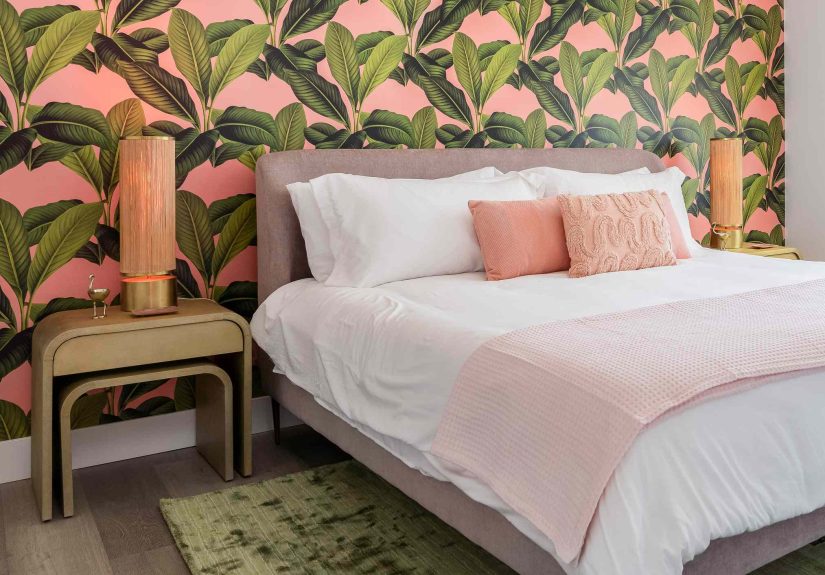
Nature-inspired wallpaper is still going strong, but the mood is changing. Instead of loud tropical overload, designers are leaning toward foliage, vines, trees, and florals that feel softer, more atmospheric, and more layered. Think “English garden with good lighting,” not “jungle theme restaurant near the airport.”
Murals with story
Murals remain powerful in 2026 when they are used intentionally. Landscape scenes, old-world fresco effects, and tapestry-inspired papers are especially appealing because they create mood and narrative. A mural turns a room into an experience, not just a color scheme.
The fifth wall: ceilings
Ceiling wallpaper continues to gain traction because it delivers drama without always overwhelming the space. It is especially effective in foyers, dining rooms, nurseries, bedrooms, and rooms with interesting trim details. If the walls stay relatively calm, the ceiling can do something memorable overhead.
Paneled wallpaper and framed applications
Wallpaper within trim boxes or architectural panels feels custom, elevated, and easier to control visually. This is one of the smartest 2026 applications because it creates impact while avoiding pattern overload.
Print layering
As maximalism becomes more mainstream, wallpaper is no longer being treated like the only pattern in the room. Designers are layering it with drapery, upholstery, art, rugs, and bedding. The result works best when color palettes are coordinated and scale is varied. Translation: do not make every pattern fight for first place.
Where Wallpaper Works Best Right Now
One of the biggest shifts in 2026 is that wallpaper is being used more strategically. Designers are asking not just “Should we use wallpaper?” but “Where will wallpaper do the most work?”
Powder rooms
This remains one of the best places for bold wallpaper. Small rooms can handle drama because the commitment is contained and the payoff is high.
Dining rooms
Wallpaper adds ceremony to a space that is naturally meant to feel a little special. Murals, grasscloth, and heritage patterns all work beautifully here.
Bedrooms
Bedrooms benefit from wallpaper that creates softness, warmth, or cocooning. Reimagined stripes, low-contrast botanicals, and textured papers are especially effective.
Entryways
If you want to set a tone immediately, wallpaper in the foyer makes sense. It signals that the rest of the home has a point of view.
Ceilings, niches, cabinets, and built-ins
This is where 2026 gets playful. Wallpaper is turning up on cabinet backs, inside bookcases, in alcoves, and overhead. These smaller applications are smart for homeowners who want personality without turning the entire room into a pattern convention.
When Paint, Limewash, or Paneling Might Be Better
Wallpaper is not automatically the answer to every design question. Sometimes another wall treatment makes more sense.
If you want flexibility, paint is still the easiest option. If you want softness and movement without pattern, limewash or plaster-style finishes can create a beautiful atmosphere. If you want architectural depth, paneling or millwork may deliver more value than paper alone. In kitchens and baths, moisture and maintenance should always be part of the conversation too.
The smartest 2026 interiors do not pick wallpaper because it is trendy. They pick it because it solves a design problem better than paint can. Maybe the room feels flat. Maybe it needs scale. Maybe it needs romance. Maybe it needs to stop looking like a rental listing from 2018. Wallpaper can help, but only when it matches the room’s purpose.
So, Is Wallpaper Finally Out in 2026?
No. Wallpaper is not finally out in 2026. Lazy wallpaper is out. Gimmicky wallpaper is out. Wallpaper used without context is out. But good wallpaper, the kind that adds texture, story, intimacy, wit, and character, is very much in.
The best designers are not treating wallpaper as a default or a dare. They are treating it as a design language. When used well, it can soften a room, energize it, historicize it, modernize it, or make it feel deeply personal. That is a lot of heavy lifting for something that comes on a roll.
If you are decorating in 2026, the smarter question is not “Is wallpaper out?” It is “Which wallpaper choices still feel worth living with?” And the answer is clear: choose depth over gimmick, texture over imitation, mood over noise, and intention over trend-chasing. Your walls will thank you. Possibly silently. Walls are like that.
What Living With Wallpaper in 2026 Actually Feels Like: Real-World Experience and Design Takeaways
In real homes, the experience of wallpaper in 2026 is less about shock value and more about atmosphere. That is the biggest change. People who choose wallpaper now are often not trying to impress visitors with a loud “before and after” moment. They are trying to create a room that feels finished when the overhead light is off, the lamp is on, and actual life is happening. Wallpaper works especially well in those quieter moments. A textured wallcovering in a dining room catches soft evening light. A block print in a bedroom makes the space feel warmer before you even add bedding. A papered ceiling in a hallway turns a pass-through space into something that feels intentional rather than forgotten.
Another common experience is that wallpaper changes how people use a room. A powder room with a mural feels more like a jewel box, so guests remember it. A laundry room with a playful stripe or botanical print feels less like a punishment chamber for unmatched socks. Even a small niche lined with wallpaper can make shelving look curated instead of accidental. In other words, wallpaper often changes behavior by changing mood. That is part design psychology, part visual magic, and part simple human nature: we tend to enjoy rooms that give us something back.
There is also a practical side to the wallpaper experience in 2026. Homeowners are more selective about scale, maintenance, and placement. They are requesting samples, testing papers in different light, and thinking carefully about whether a pattern will still feel good six months later. This is healthy. Good wallpaper should age with the room rather than overpower it. The most satisfying installs are usually the ones that feel aligned with the architecture and the homeowner’s taste, not the ones copied from a viral post at midnight.
Designers also talk more openly now about wallpaper confidence. Many people want it, but they do not want to overdo it. That is why ceilings, panel inserts, cabinet backs, and smaller rooms are so popular. These applications let homeowners experiment without feeling trapped by a giant commitment. Once they see how much warmth and personality wallpaper adds, they often become more open to using it elsewhere. It is a gateway design move, but a stylish one.
Perhaps the most telling experience of all is this: when wallpaper is right, people stop asking whether it is trendy. They just say the room feels good. It feels layered. It feels alive. It feels like somebody actually lives there and did not decorate solely for resale photos. In 2026, that may be the strongest argument for wallpaper of all. The best rooms are not the emptiest ones or the safest ones. They are the ones with mood, memory, and a little point of view. Wallpaper still does that beautifully.





 Close
Close