
Table of Contents >> Show >> Hide
- Bennifer 2.0 Was More Than a Reunion
- The Marriage Moved Fast, but the Meaning Moved Even Faster
- By 2024, the Fairy Tale Was Showing Stress Fractures
- Why This Second Split Hurt More Than the First
- Jennifer Lopez’s Aftermath Framed the Pain Clearly
- What J.Lo and Ben Affleck’s Story Says About Modern Love
- Experiences Behind the Headline: Why Second Chances Can Feel So Powerful and Break So Hard
- Conclusion
Hollywood loves a sequel, but romance? Romance is a little less dependable. Sometimes it gives you Before Sunrise. Sometimes it gives you a reboot nobody asked for. And sometimes, very occasionally, it gives you a comeback so irresistible that the whole internet leans in like it’s peeking through a velvet curtain. That was Bennifer 2.0.
Jennifer Lopez and Ben Affleck’s reunion felt less like celebrity gossip and more like a pop-culture plot twist written by a screenwriter who had clearly been bingeing nostalgia. Here were two people who had already tried this once, failed very publicly, moved on, built separate lives, and then somehow found each other again nearly two decades later. If that does not scream “fate,” it at least whispers it in a very expensive coat.
And yet, their second attempt did not end with some grand Hollywood proof that true love always circles back. It ended the way many adult relationships do: sadly, quietly, and with the uncomfortable realization that timing matters, but timing is not magic. Their split was heartbreaking not because it was messy in a tabloid sense, but because it seemed to be built on genuine hope. That is what made the ending sting.
Bennifer 2.0 Was More Than a Reunion
When Lopez and Affleck first became a couple in the early 2000s, they were not just dating. They were a full-blown cultural weather system. They met, fell hard, got engaged, and became one of the most overexposed couples of the era. The press fixation was intense, the nickname was unavoidable, and the relationship eventually cracked under the weight of attention, expectation, and the kind of media circus that made ordinary breathing seem like a public event.
So when they reunited in 2021, the appeal was obvious. This was not just “two celebrities dating again.” It was unfinished business with better skincare. Fans saw redemption. Commentators saw a second-chance romance. Lopez herself had spoken publicly about growth, healing, and learning more about herself over the years. Affleck, too, had reflected on second chances in life and love. Suddenly, the old story did not look doomed anymore. It looked revised.
That is why the reunion landed so hard. It tapped into something bigger than celebrity fascination. People love the idea that the right person can return when the wrong timing finally leaves the room. Bennifer 2.0 was sold, gently and sometimes not so gently, as proof that maturity could do what chemistry alone could not.
Why the Public Fell for It All Over Again
The public did not just watch this relationship. It invested in it. Lopez and Affleck were not presented as two stars casually seeing where things went. They became symbols of rekindled love, emotional growth, and late-in-the-game possibility. In an era of cynical dating discourse, algorithm-fed doom, and “situationship” fatigue, their reunion looked almost old-fashioned. It had sweep. It had history. It had a plot.
Then came the wedding in Las Vegas in July 2022, followed by the larger Georgia celebration. That double-wedding energy said everything about the mood around them. This was not a low-key shrug into marriage. This was romance with a capital R, complete with public symbolism and enough emotional resonance to power several think pieces and at least one group chat meltdown.
But that huge emotional narrative would later become part of the problem. When a relationship becomes a cultural symbol, every ordinary strain starts to look like a betrayal of the myth.
The Marriage Moved Fast, but the Meaning Moved Even Faster
The second Bennifer era was not only romantic. It was highly curated as a story about destiny, survival, and getting it right the second time. Lopez leaned into that feeling with visible sincerity. Her album and visual projects tied to this chapter of her life framed love as both a personal triumph and a kind of emotional homecoming. It was heartfelt, dramatic, and very on-brand for someone who has always understood that emotion and spectacle are not enemies.
Affleck, on the other hand, has long seemed more ambivalent about fame’s nonstop spotlight. That difference did not necessarily mean the marriage was doomed, but it did create a notable contrast. One of the more useful things Affleck later said was that Lopez handled celebrity far more adeptly than he did. That is not an insult. It is a recognition that two people can love each other and still experience the public side of life very differently.
And this was no small issue. For celebrities at this level, publicity is not just annoying background noise. It is part of the architecture of daily life. It affects travel, work, family rhythms, and even mood. A couple does not need a dramatic betrayal to feel worn down. Sometimes different tolerances for exposure can create slow, stubborn friction.
When Romance Becomes a Brand
The harder truth about Bennifer 2.0 is that it was not just a marriage. It was also a story being consumed in real time. And once a relationship becomes content for the culture, it has to fight for oxygen. Every outing becomes a clue. Every expression becomes a headline. Every normal rough patch gets treated like the trailer for a disaster movie.
That does not mean Lopez and Affleck were fake. If anything, the opposite seems more likely. The optimism felt real, which is exactly why the collapse landed so painfully. People were not mourning a PR arrangement. They were mourning the idea that a love story with history, maturity, and hard-won perspective should have had a better ending.
By 2024, the Fairy Tale Was Showing Stress Fractures
As 2024 wore on, the narrative shifted. Public sightings became more scrutinized, speculation intensified, and the tone around the marriage grew increasingly uneasy. Lopez also canceled her summer tour, saying she needed time with her children, family, and close friends. That announcement alone said a great deal. It suggested someone stepping away from performance mode and toward emotional survival mode.
Then came the formal turn: Lopez filed for divorce on August 20, 2024, listing April 26, 2024 as the date of separation. The symbolism of the filing date did not go unnoticed. It fell on the anniversary of the pair’s larger Georgia wedding celebration, which made the filing feel especially brutal in a poetic, deeply Hollywood way. If irony had a publicist, it would have booked that date.
Still, what emerged afterward was not a story of shocking scandal. It was, if anything, a story of deflation. By the time the divorce was finalized in early 2025, the tone from both sides sounded notably restrained. No volcanic accusations. No theatrical blame game. No splashy villain reveal. Just a sad acknowledgment that this did not work.
No Soap Opera, Just Sadness
That distinction matters. In later comments, Affleck said there was no scandal, no soap opera, and no intrigue. That line matters because it pushes against the public’s hunger for a twist. We love neat explanations for celebrity breakups because they let us package complex people into digestible roles: hero, villain, wronged lover, emotionally unavailable raccoon in a blazer, and so on.
But heartbreak is usually less cinematic than that. Relationships can end because two people are carrying different habits, different needs, different tolerances, and different visions of peace. Those differences may not look dramatic from the outside, but they can still be decisive. Bennifer 2.0 appears to have ended not with a thunderclap, but with the kind of ongoing incompatibility that can quietly flatten even a deeply felt love.
Why This Second Split Hurt More Than the First
Their first breakup in the early 2000s was devastating, but it came with an easy explanation: they were younger, the fame machine was relentless, and the tabloid culture of that era was uniquely savage. The second breakup carried a heavier emotional charge because it challenged the comforting theory that maturity solves everything.
By the time they reunited, both Lopez and Affleck had lived entire adult lives apart. They had marriages behind them, children to prioritize, careers to manage, and enough experience to know the difference between infatuation and reality. That is why people assumed this version had stronger bones. If two people come back together after all that growth, surely they know what they are doing, right?
Well, yes and no. Growth helps. But growth does not erase personality. It does not eliminate stress. It does not turn nostalgia into a marriage counselor. And perhaps that is the most bittersweet lesson in their story: a second chance can be real, sincere, and still not be sustainable.
Nostalgia Can Be Tender, but It Can Also Be Tricky
There is something profoundly seductive about returning to a person who once represented possibility. You are not just revisiting them; you are revisiting yourself. The younger self. The hopeful self. The self before certain disappointments hardened into habits. In that sense, second-chance relationships often carry extra emotional voltage. They are not only about the present. They are also about rewriting the past.
That can be beautiful. It can also be dangerous. Because the more meaning a relationship is asked to hold, the more pressure it faces. Bennifer 2.0 was not simply expected to succeed as a marriage. It was expected to redeem history. That is a huge emotional mortgage to place on any couple, even one with matching jawlines and excellent tailoring.
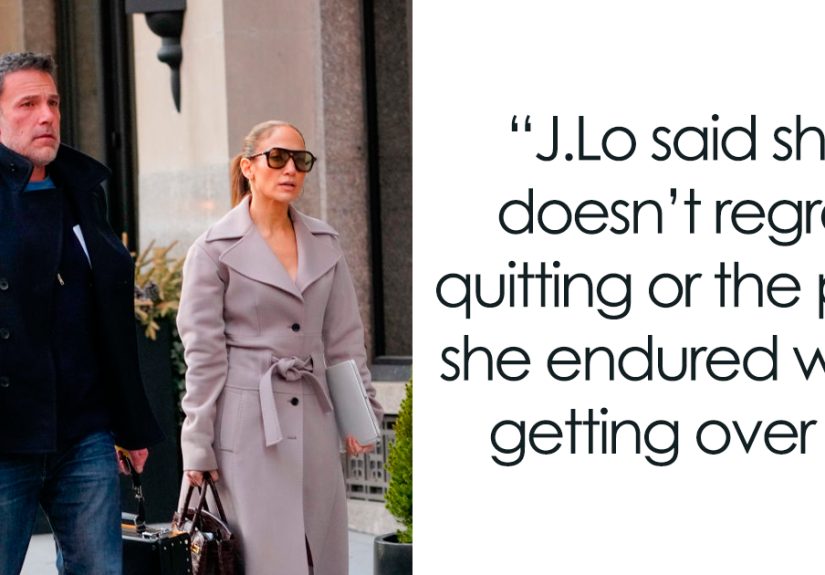
Jennifer Lopez’s Aftermath Framed the Pain Clearly
If Affleck’s later comments emphasized the lack of scandal, Lopez’s later comments emphasized the emotional cost. In speaking about life after the split, she described stepping away, taking time, and learning to be okay on her own. That is not the language of someone brushing off a breakup like an inconvenient brunch cancellation. It is the language of someone who had to stop and rebuild internally.
And that is part of why the phrase “ends in heartbreak” feels fair here. Heartbreak does not always need public chaos to qualify. Sometimes the most heartbreaking stories are the ones where the love seems sincere, the effort appears real, and the ending still arrives anyway. That kind of disappointment feels less like a scandal and more like grief.
There is also something distinctly painful about how this relationship was wrapped in hope. The comeback had so much emotional narrative attached to it that its failure became larger than a celebrity divorce. It felt like the collapse of a romantic theory many people wanted to believe in: that if love returns at the right time, it will finally stay.
What J.Lo and Ben Affleck’s Story Says About Modern Love
For all the glamour, the houses, the couture, and the endless attention, the real lesson of this story is surprisingly ordinary. Second chances are not fairy dust. They are opportunities. That sounds less romantic, but it is more honest.
An opportunity is not a guarantee. It is simply a new attempt by two changed people carrying old history into a new context. Sometimes that works wonderfully. Sometimes it almost works. Sometimes it works just long enough to make the ending hurt more than the beginning. Lopez and Affleck’s second attempt appears to fall into that third category.
There is also a useful reminder here about compatibility in adulthood. Mature love is not just about passion or timing. It is about lifestyle fit, emotional pace, family integration, privacy preferences, work demands, and how two people regulate stress when the world is watching. That is not glamorous, but it is the scaffolding that holds everything up.
And in that sense, Bennifer 2.0 may have been both genuine and unsustainable. Those things can coexist, however inconvenient that is for fans of happy endings and for the rest of us who occasionally like our celebrity love stories with a little unrealistic sparkle.
Experiences Behind the Headline: Why Second Chances Can Feel So Powerful and Break So Hard
What makes the Bennifer story so relatable is not the celebrity of it all. Most people do not have paparazzi outside the coffee shop or a wedding archive that could fill a museum gift store. What feels familiar is the emotional shape of the story. Many people have had some version of a “what if” person. The one who arrived at the wrong time. The one you loved before you knew how to love well. The one whose memory stayed strangely polished in your mind because real life never got the chance to scuff it up properly.
When that person returns, the reunion can feel electric. It feels like fate, but it also feels like relief. Suddenly, you do not just have a future to explore. You have a past you might finally repair. That is a powerful emotional cocktail. It is hope mixed with nostalgia, and it can make even cautious adults act like they are standing in the rain during the final scene of a romantic movie.
But second chances are complicated precisely because they carry two timelines at once. You are dating the person in front of you, yes, but you are also dating the memory of who they were, the dream of who you were together, and the fantasy of what it would mean if this time it worked. That is a lot of invisible luggage for any relationship to haul through the airport.
People also tend to assume that because time has passed, the old problems have expired. Sometimes they have. Sometimes they have simply changed outfits. A person can mature, heal, and still remain deeply themselves. Someone who values privacy may still value privacy. Someone who thrives in public expression may still thrive there. Someone who once felt overwhelmed by scrutiny may not magically enjoy it later just because the lighting is better and the therapy vocabulary is stronger.
There is another layer, too: second chances often come later in life, when the stakes are different. There may be children involved, demanding careers, complicated schedules, emotional scar tissue, and less appetite for chaos. That can make a reunion richer, but it can also make it harder. Love is not happening in a vacuum. It is happening in a crowded room with calendars, responsibilities, and fatigue.
That is why stories like Lopez and Affleck’s hit people so hard. They remind us that sincerity is not always enough. Effort is not always enough. Even history is not always enough. Sometimes two people really do care for each other, really do want it to work, and still discover that wanting something and building something are not identical skills.
And yet, there is something oddly hopeful in that honesty. A relationship does not become meaningless just because it ends. A second chance that fails is not automatically a mistake. Sometimes it gives closure. Sometimes it reveals how much you have changed. Sometimes it teaches you that longing and compatibility are cousins, not twins. And sometimes it simply confirms that the fantasy was beautiful, but real peace lives elsewhere.
That may be the deepest human truth inside this very public breakup. Heartbreak is not proof that the love was fake. Sometimes heartbreak is proof that the hope was real.
Conclusion
J.Lo and Ben Affleck’s second attempt did not end with a tabloid explosion or a cartoonishly dramatic twist. It ended with something more human and, in many ways, sadder: the collapse of a love story that people genuinely wanted to believe could outrun its history.
That is what gives this breakup its staying power. Bennifer 2.0 was not just gossip fuel. It was a glossy, hopeful, beautifully lit argument for second chances. And when it ended, it left behind a tougher lesson: sometimes love returns, sometimes it is real, and sometimes even then, it still does not last.
Heartbreak, in other words, does not always arrive because love was missing. Sometimes it arrives because love showed up, tried its best, and could not quite carry the weight of everything else.
Note: This article is based on publicly reported information from reputable U.S. outlets and is written in standard American English for web publication.





 Close
Close