
Table of Contents >> Show >> Hide
- Who Is John Pawson, and Why Does His Flatware Matter?
- The Origin: A Monastic Table With Modern Precision
- Design Details: The Beauty of Almost Nothing
- Why Sterling Silver Changes the Experience
- John Pawson Sterling Silver Flatware vs. Stainless Steel
- How to Style John Pawson Sterling Silver Flatware
- Care Tips for Sterling Silver Flatware
- Buying Considerations: What to Know Before You Invest
- Why Collectors Love It
- Experience Notes: Living With John Pawson Sterling Silver Flatware
- Conclusion
John Pawson sterling silver flatware is the kind of tableware that makes a dinner table suddenly sit up straight. It does not shout. It does not twirl around wearing decorative acanthus leaves, shell motifs, or tiny Baroque flourishes that look like they have opinions about opera. Instead, it does something far more difficult: it stays quiet, precise, balanced, and unforgettable.
Designed by British architectural designer John Pawson, the flatware belongs to the world of refined minimalism, where every millimeter matters and anything unnecessary is politely escorted out of the room. Pawson is widely associated with purity of form, careful proportion, and the emotional power of simplicity. His cutlery design for When Objects Work, introduced in 2005, reflects the same ideas that shape his architecture: lightness, restraint, proportion, material honesty, and a belief that beauty can come from removing rather than adding.
The sterling silver version, once offered through March in San Francisco and highlighted by Remodelista, turns that minimalist stainless steel design into something more precious, collectible, and ceremonial. Made in Belgium and produced to order, it brings together the daily usefulness of flatware with the quiet glamour of sterling silver. The result is not just a spoon, fork, or knife. It is a small architectural object you happen to use for soup.
Who Is John Pawson, and Why Does His Flatware Matter?
John Pawson is best known for his minimalist architectural work, but his design philosophy is not limited to buildings. He has applied the same disciplined eye to interiors, tableware, lighting, furniture, books, and objects for daily life. His work often focuses on the relationship between space, proportion, material, and the human body. That may sound lofty for a fork, but hold one of his pieces and the idea becomes surprisingly practical.
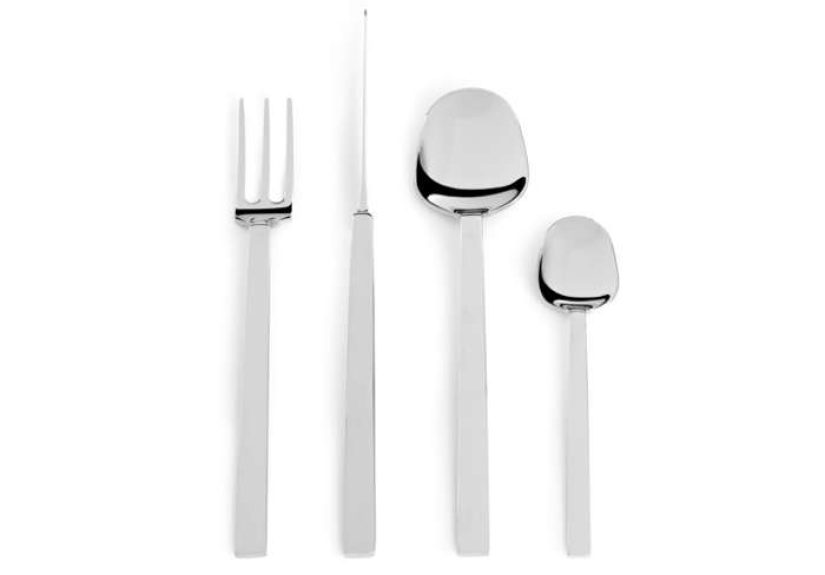
The genius of John Pawson flatware is that it does not feel “designed” in the fussy sense. It feels resolved. The knife, fork, spoon, and teaspoon share a unified handle language, creating visual continuity across the table. Each piece has a slender, almost architectural silhouette. The design removes visual clutter but keeps the pleasure of use. It is minimal, yes, but not cold. Think monastic discipline with excellent table manners.
The original Pawson cutlery for When Objects Work was fabricated in mirror-finished 18/10 stainless steel. The sterling silver edition takes the same restrained vocabulary and gives it the richness, weight, and patina potential of a traditional precious metal. For collectors and design lovers, that combination is especially compelling: modern minimalist flatware made in a material associated with heirlooms, celebration, and old-fashioned good silver.
The Origin: A Monastic Table With Modern Precision
The Pawson tableware collection began with a highly specific purpose: equipping the refectory of the Abbey of Our Lady of Nový Dvůr in Bohemia. That origin story matters because it explains why the flatware feels so disciplined. It was not created as a luxury accessory first. It was conceived for a community where function, ritual, humility, and beauty needed to exist together without excess.
Monastic life is not known for tolerating unnecessary drama. A spoon has a job. A fork has a job. A knife has a job. Pawson’s design respects those jobs, but it also treats them with almost spiritual seriousness. The flatware reflects an idea central to Pawson’s work: keep reducing until nothing more can be removed without damaging the whole.
This is why John Pawson sterling silver flatware feels different from many decorative silver patterns. Traditional sterling silver flatware often celebrates ornament. Pawson celebrates proportion. The drama comes from restraint, not embellishment. It is a very grown-up kind of luxurythe kind that does not need to announce itself because it knows the table is already listening.
Design Details: The Beauty of Almost Nothing
A Unified Handle Form
One of the defining features of Pawson’s cutlery is the shared handle form across knife, fork, spoon, and teaspoon. This gives the place setting a calm, ordered presence. The pieces look related without feeling repetitive. On the table, the effect is clean and deliberate, especially when paired with simple stoneware, linen napkins, clear glassware, and food that does not require a degree in plating architecture.
Three-Prong and Five-Prong Fork Options
The design is known for offering both three-prong and five-prong fork versions. The three-prong fork has a historical echo, recalling earlier Georgian simplicity, while the five-prong fork feels slightly more contemporary and distinctive. Choosing between them is partly practical and partly aesthetic. The three-prong fork looks more austere and old-world; the five-prong fork brings a crisp modern twist. Either way, your salad will survive.
Precise Dimensions and Slender Proportions
The official John Pawson cutlery dimensions list the knife at 238 mm long, the fork at 200 mm, the spoon at 201 mm, and the teaspoon at 140 mm. These measurements reveal how carefully the set balances scale and usability. Nothing looks bulky. Nothing feels visually loud. The long, slim knife especially gives the table a refined line, almost like a drawn stroke in metal.
A Knife That Can Stand Upright
Some retailers have noted one particularly charming feature: the knife can stand upright. This detail feels very Pawsonquietly clever, slightly surprising, and achieved without ornament. It is the design equivalent of a well-timed eyebrow raise.
Why Sterling Silver Changes the Experience
Sterling silver is traditionally defined as 92.5 percent pure silver, often marked “925,” with the remaining metal added for strength. Pure silver is beautiful but too soft for serious everyday use, so sterling gives the metal enough durability for practical objects such as jewelry and silverware.
When Pawson’s minimalist flatware is made in sterling silver, the design gains a different emotional register. Stainless steel is crisp, practical, and modern. Sterling silver is warmer, more tactile, and more personal over time. It develops a patina. It responds to use. It carries the memory of meals, holidays, late-night desserts, and the occasional “we are using the good silver because Tuesday deserves better.”
This makes John Pawson sterling silver flatware especially interesting. It merges two traditions that do not always sit together: radical simplicity and heirloom luxury. Many sterling silver patterns lean decorative because the material has historically been used to display craftsmanship through engraving, scrollwork, borders, and motifs. Pawson goes in the opposite direction. He lets the silver itself become the ornament.
John Pawson Sterling Silver Flatware vs. Stainless Steel
The stainless steel version of John Pawson cutlery is more widely available today through design retailers and is typically made in Belgium from 18/10 stainless steel. It is dishwasher safe according to several retail descriptions, practical for daily use, and more accessible in price. For many buyers, it offers the pure Pawson design experience without the maintenance expectations of silver.
The sterling silver version is rarer and more collectible. Remodelista’s archived product listing describes the March offering as made in Belgium from sterling silver, with pieces made to order and delivered after a production period. At the time of that listing, prices ranged from several hundred dollars per piece or setting, depending on the item. That puts the sterling version firmly in the category of luxury tableware, not “I just need forks because my roommate lost three.”
So which version is better? It depends on the table. Stainless steel is better for busy households, frequent dishwashing, and relaxed daily dining. Sterling silver is better for collectors, design enthusiasts, special dinners, heirloom-minded buyers, and anyone who enjoys the ritual of caring for beautiful objects. Stainless says, “Let’s eat.” Sterling says, “Let’s make this meal count.”
How to Style John Pawson Sterling Silver Flatware
Keep the Table Quiet
Pawson flatware looks best when it has room to breathe. Pair it with white, ivory, gray, stone, or warm neutral dinnerware. Avoid overly busy plates that compete with the flatware’s lines. The goal is not a table that looks empty, but one that feels edited.
Use Natural Textures
Linen napkins, stoneware plates, handmade bowls, pale wood, matte ceramics, and clear glass work beautifully with the restrained silver form. The contrast between soft textile, earthy ceramic, and polished metal creates a table that feels elegant without being stiff.
Let Food Add the Color
Minimalist tableware does not mean minimalist dinner. A Pawson setting can handle roasted carrots, green herbs, seared salmon, dark chocolate tart, or a messy bowl of pasta with quiet confidence. The flatware provides the calm frame; the food can do the salsa dancing.
Mix With Modern or Antique Pieces Carefully
Because the design is so pure, it can pair well with both modern and antique table elements. The trick is restraint. A single antique candlestick? Lovely. Six crystal animals, three floral runners, and a centerpiece shaped like a swan? The fork may quietly file a complaint.
Care Tips for Sterling Silver Flatware
Sterling silver rewards use. In fact, many silver experts recommend using silver regularly because frequent handling and washing can help reduce heavy tarnish buildup. The best routine is simple: wash soon after use, use mild dish soap, rinse well, and dry immediately with a soft cloth.
Avoid leaving sterling silver soaking in the sink. Do not let acidic foods, salty sauces, eggs, mustard, or vinegar sit on the surface for hours. Silver has patience, but not infinite patience. Also avoid harsh abrasives, chlorine, bleach, and overly aggressive dip cleaners unless a qualified silver professional recommends them for a specific situation.
Dishwasher advice varies. Some silver care sources say certain sterling pieces may go through a dishwasher under strict conditions, while others strongly recommend hand-washing, especially for knives or pieces with constructed handles. For a rare designer sterling set like John Pawson’s, hand-washing is the safer and more respectful choice. Think of it as a tiny post-dinner meditation, possibly improved by music and dessert leftovers.
For polishing, use a quality silver polish and a soft cloth. Polish lengthwise rather than in harsh circular scrubs. Store the flatware in a tarnish-resistant cloth roll, lined drawer, or silver chest. Keep it away from rubber bands, newspaper, plastic wrap, and high-sulfur materials, which can accelerate tarnish.
Buying Considerations: What to Know Before You Invest
Confirm the Material
Because the stainless steel version is more common, buyers should confirm whether a listing is truly sterling silver or stainless steel. Look for descriptions such as “sterling silver,” “925,” or verified retailer documentation. If buying secondhand, request clear photos, provenance, and any maker or retailer information.
Understand Availability
The sterling silver edition appears to have been a special made-to-order offering rather than a mass-market product. That means availability may be limited, and listings can be rare. The stainless version, by contrast, is easier to find through design retailers that carry When Objects Work.
Check Set Composition
Some Pawson flatware sets are sold as 24-piece sets, often including knives, forks, spoons, and teaspoons for six place settings. Individual pieces may also be available in stainless steel. For sterling silver, confirm exactly what is included: dinner fork, three-prong fork, five-prong fork, spoon, teaspoon, knife, or full place setting.
Think About Use, Not Just Display
The best reason to buy John Pawson sterling silver flatware is not simply to own it. It is to use it. Pawson’s design philosophy is deeply tied to function. These pieces are meant to be held, placed, washed, polished, and returned to the table. A spoon that never meets soup is living a very limited life.
Why Collectors Love It
Collectors are often drawn to objects that hold a clear design point of view. John Pawson sterling silver flatware does exactly that. It is not generic luxury. It is specific, disciplined, and connected to an important minimalist designer. It also sits at the intersection of architecture, table culture, Belgian craftsmanship, and contemporary silver design.
Unlike ornate antique silver, Pawson’s flatware does not depend on decorative pattern names or historical nostalgia. Its value comes from proportion, rarity, authorship, and material. It appeals to people who love Donald Judd furniture, quiet interiors, handmade ceramics, gallery-like kitchens, and dinner tables where every object has earned its place.
It is also surprisingly flexible. While the design looks natural in a minimalist home, it can also sharpen a traditional table. Place it beside simple white china and a linen napkin, and it feels serene. Place it beside antique porcelain, and it becomes a modern counterpoint. It is the dinner-table version of a perfectly tailored black coat.
Experience Notes: Living With John Pawson Sterling Silver Flatware
Using John Pawson sterling silver flatware is less about showing off and more about noticing. The first experience is visual. You set the table and realize that the pieces do not decorate the setting so much as organize it. The knife draws a clean line. The spoon holds a soft oval of light. The fork, whether three-prong or five-prong, looks almost graphic against a folded napkin. The table becomes calmer before the food even arrives.
The second experience is touch. Sterling silver has a different feel from stainless steel. It can seem warmer in the hand, slightly more substantial, and more responsive. Pawson’s proportions make that tactile quality especially important. The handle does not rely on curves, ridges, or ornament to guide you. Instead, balance does the work. The object feels deliberate, and that deliberateness changes the pace of a meal.
There is also a ritual quality. Taking sterling silver out of storage, laying it on the table, washing it by hand, and drying it carefully can feel like a small ceremony. In a world where many kitchen objects are designed to be replaced quickly, silver insists on continuity. It asks for a little attention. Not a dramatic amountno one needs to light incense for the teaspoonbut enough to remind you that care is part of ownership.
One of the pleasures of Pawson’s design is that it makes ordinary food feel more considered. A simple breakfast of soft-boiled eggs and toast becomes a study in shape and texture. A bowl of soup feels cleaner and more composed. Even a weeknight pasta dinner gains a quiet sense of occasion. The flatware does not make the food taste better by magic, of course, but it changes the environment around the meal. And environment matters. Ask any sandwich eaten at a desk under fluorescent lighting.
Guests tend to notice the flatware slowly. It is not the kind of silver that immediately triggers compliments from across the room. Instead, someone picks up the fork, pauses, and says, “This is beautiful.” That delayed reaction is part of its charm. Pawson’s work often rewards attention rather than demanding it. The flatware behaves the same way.
The experience also teaches restraint. Once you use pieces this simple, overly decorative table settings can start to feel noisy. You may find yourself choosing fewer flowers, cleaner plates, better napkins, and more intentional lighting. The flatware quietly edits the rest of the table. This is both wonderful and mildly dangerous, because suddenly the chipped novelty mug shaped like a raccoon may seem less charming than it did yesterday.
For daily life, sterling silver requires a realistic attitude. It will tarnish. It may show fine marks. It will not remain showroom-perfect forever, and that is not a flaw. Patina is part of the story. With Pawson’s minimal design, those signs of use can actually make the pieces more personal. The clean surfaces become records of real meals, not museum behavior.
The best experience comes from using the flatware often enough that it becomes familiar but caring for it well enough that it remains special. Save it only for holidays, and it may feel too precious. Use it with complete recklessness, and you miss the point. The sweet spot is somewhere in the middle: Sunday dinners, birthdays, small gatherings, quiet celebrations, and any evening when the table deserves a little grace.
In the end, John Pawson sterling silver flatware is not just about minimalism. It is about attention. Attention to proportion, material, touch, silence, ritual, and the daily act of eating. It proves that a fork can be humble and luxurious at the same time. It also proves that “simple” is not the same as “easy.” True simplicity takes discipline, and in this case, it looks beautiful next to a plate of roasted potatoes.
Conclusion
John Pawson sterling silver flatware is a rare meeting of minimalist design and heirloom material. It takes the precise, monastic clarity of Pawson’s original cutlery for When Objects Work and gives it the warmth, value, and evolving character of sterling silver. For some buyers, the stainless steel version will be the more practical everyday choice. For collectors, design lovers, and hosts who believe a table can be both simple and unforgettable, the sterling silver edition offers something more poetic.
Its appeal lies in what it refuses to do. It refuses to be ornate. It refuses to chase trends. It refuses to make the table louder than the meal. Instead, it brings discipline, proportion, and quiet beauty to one of the most familiar objects in the home. That is the magic of John Pawson flatware: it reminds us that even the smallest daily tools can carry serious design intelligence. And yes, it also makes dessert feel slightly more important.







 Close
Close